
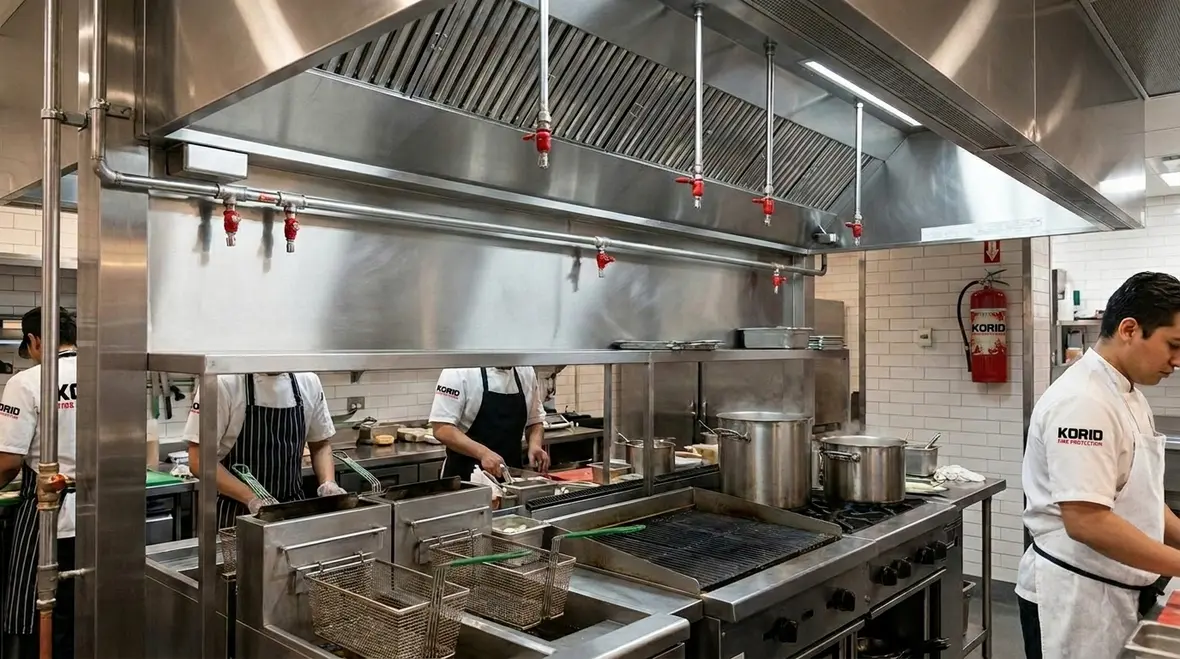
Ghost Kitchen Fire Suppression for Commissary Kitchens
Ghost kitchen fire suppression keeps meals moving when pressure rises, because one kitchen fire can turn a dinner rush into a detour. In multi-tenant commissary and ghost kitchen setups, flames do not care about business models, rent schedules, or which delivery app is trending. They only follow physics. That is why fire suppression for these kitchens must handle real cooking risks, shared equipment, and fast-growing grease and electrical hazards. When this work gets paired with Kord Fire Protection, safety shifts from a checkbox to a dependable system that teams can trust. And yes, nobody wants their brand trending for the wrong reason, like a viral “why did the hood ignite” clip.
In practice, ghost kitchens and commissary kitchens behave like high-output restaurant lines packed into tighter footprints. Multiple brands may share one hood bank, one prep room, and one deadline that was already too aggressive before the lunch tickets started flying. That means a small oversight can grow legs fast. A fryer flare-up, an overloaded circuit, or neglected grease in the hood path can interrupt production for every operator in the space, not just the one closest to the problem. Strong suppression planning keeps that domino effect from becoming the main event.
Kord’s own resources on advanced commercial kitchen fire safety strategies, kitchen suppression systems for equipment and grease fires, and UL 300 restaurant systems point to the same idea: kitchen fire protection works best when design, suppression, inspections, cleaning, and crew response all support each other. That is especially true in ghost kitchens, where shared operations can make one incident everybody’s problem in a hurry.

Ghost kitchen fire suppression risks that grow fast
Ghost kitchens often concentrate cooking in one space, which means hazards stack up. For example, a deep fryer can produce heavy grease vapors, while a clogged hood can trap residue that feeds flames. At the same time, smaller stations like grills, warming units, and ovens can add ignition sources that seem minor until they become a chain reaction. Furthermore, commissary kitchens typically handle bulk prep, which increases clutter, cardboard staging, and electrical load.
So, the risk is not just a single “fire moment.” It is the speed of growth. Grease fires spread differently than ordinary combustibles. In addition, ventilation systems may push heat and smoke across the room, which can reduce visibility and slow response. Kord Fire Protection helps operators map those realities to the right suppression design, so the system responds like it understands the kitchen, not like it came from a generic brochure.
Why shared kitchens create compound hazards
A standard restaurant already has enough moving parts to keep managers humble. A commissary or ghost kitchen adds more tenants, more menus, more delivery pressure, and more opportunities for fire to find fuel. One operator may be running high-heat saute stations while another is cycling fryers all day, and a third is stacking packaging nearby because the next courier pickup is ten minutes late. None of that sounds dramatic until heat, oil, and poor housekeeping decide to collaborate.
That is why suppression planning should consider workflow, not just appliance count. If grease-laden vapors increase, if duct surfaces collect residue faster, or if electrical demand rises with added equipment, the hazard changes. Kord Fire’s commercial kitchen resources repeatedly stress matching protection to the cooking reality, not a generic template that assumes every hood line lives the same life.
What commissary fire suppression must cover
Commissary kitchens run like production lines. Because of that, suppression needs to cover the cooking process, not just the building shell. A strong plan typically targets key areas where fires start and where they spread.
- Cooking appliances and exhaust hoods, since grease accumulation becomes fuel
- Ceiling and hood duct pathways, because heat can travel above the line of sight
- Storage and prep areas, since packaging, oils, and cleaning chemicals add complexity
- Electrical and mechanical rooms, where failures can start smoldering and hidden ignition
Then there is the operational side. Fire suppression for busy kitchens must not disrupt service in a way that creates chaos. That means the right agent type, the right detection, and the right layout. It also means crews can understand and maintain the system without needing a PhD in fire science. Kord Fire Protection supports this with clear guidance, proper inspection planning, and consistent follow-through.
This is also where UL 300 level protection enters the conversation. Kord’s UL 300 restaurant systems page highlights design, installation, and maintenance built for commercial cooking conditions. That matters in commissary spaces because coverage has to follow the actual equipment lineup. If a hood protects fryers, griddles, ranges, and changing tenant setups, the suppression plan has to reflect those details rather than hoping one old layout still applies to today’s operation.

How suppression systems work in real kitchens
Fire suppression is not one device. It is a coordinated set of components that detects conditions, releases the right agent, and helps stop the fire before it grows beyond control. In many food service environments, hood and duct systems hold the center of gravity because they manage the grease-laden air that can feed ignition.
When a system triggers, it needs to do so reliably. For that reason, design and placement matter. Detection must match the heat patterns of cooking equipment. Meanwhile, nozzles and valves must align with the hood geometry. In addition, the kitchen team must know what happens next. They should understand the reset steps, documentation requirements, and how to continue safely after an event. Kord Fire Protection plays a vital partner role here by helping operators plan service and inspection schedules that reduce surprise downtime.
What activation should accomplish in seconds
In a real kitchen, a useful suppression response does more than spray agent and hope everyone sorts it out later. It should quickly interrupt the fire’s fuel path, protect the hood and cooking area, and support an orderly shutdown. Kord’s restaurant kitchen fire suppression materials emphasize that heat detection, discharge, and equipment shutoff are part of a coordinated response. In plain language, the system should act fast enough to turn a disaster into a controlled interruption, not a five-alarm lesson in regret.
That is why nozzle placement, hood geometry, duct coverage, and service condition matter so much. If any one of those is off, performance can slip when the kitchen needs it most. The whole point is reliability under pressure, because nobody wants to discover a design mismatch during peak service with the cameras rolling and the delivery queue backing up.
Designing for multiple tenants and shared spaces
Ghost kitchens often share walls, vents, and traffic flow. Therefore, a fire protection plan must reflect shared risk and shared responsibility. If one tenant’s cooking method produces more grease vapor, that changes the risk profile. If another tenant runs higher heat appliances, the system response timeline must match the hazard level.
Also, kitchens change. New stations go in, layouts shift, and hood duct routes sometimes get altered during remodeling. Consequently, suppression design must stay accurate over time. A business that updates equipment without updating protection invites mismatch. Kord Fire Protection helps reduce that gap by encouraging review cycles when operational changes happen, so the system keeps pace with the business. Because in this world, “we’ll fix it later” is basically a sequel nobody asked for.
This is one reason Kord’s broader fire suppression service coverage matters near the planning stage. Shared kitchens do not always fit into one narrow category. They may need coordinated suppression support, inspection planning, and system updates as the business grows. When a facility adds tenants or replaces cooking equipment, it is smart to review the whole protection picture rather than just the part visible from the cookline.

Inspection, maintenance, and compliance that teams can handle
Maintenance turns a fire suppression system into a living safety feature. Without it, even well-designed systems can lose performance. Grease can impact components, dust can affect detection, and mechanical wear can reduce reliability. Thus, regular inspection and cleaning matter as much as the initial installation.
In commissary and ghost kitchen settings, maintenance also needs to fit production schedules. Many operators prefer inspections during off-peak hours, with clear checklists and fast access. Additionally, documentation must track inspection results so owners can prove compliance and reduce administrative stress.
Here is where Kord Fire Protection can become vital. They help operators build a practical maintenance rhythm that supports compliance and readiness. Instead of firefighting paperwork, teams can focus on cooking, packing, and delivering. And if you are thinking, “We will handle it when we see a problem,” remember this: fire does not send advance emails.
Cleaning and inspections support each other
Kord’s commercial kitchen safety articles repeatedly connect grease management with suppression readiness for a reason. Suppression can control a fire, but it cannot magically erase the fuel that poor cleaning leaves behind. Hood filters, ducts, discharge components, and surrounding cooking surfaces all need consistent attention. When inspection results and cleaning routines speak to each other, managers can spot patterns earlier and keep minor issues from graduating into expensive surprises.
Training crews so suppression matches the response plan
Even the best ghost kitchen fire suppression setup needs trained staff. Detection and release happen automatically, but people still manage the scene. They must understand evacuation flow, how to shut down equipment, and when to call emergency services. Furthermore, they need to handle cleanup and restart decisions safely, so the kitchen does not return to normal while hazards remain.
Training should include scenarios that reflect day-to-day cooking. For example, staff should practice response during hood overheating, oil pan ignition, or a triggered protection event tied to a cooking surface. Then they should learn how to preserve the scene for investigation if required.
To help stakeholders visualize the workflow, Kord Fire Protection often supports structured planning and coordination. Here is a simple two-column snapshot of what matters most:
| What to prepare | Why it matters |
| Clear shutdown steps for cooking systems | It stops fuel and reduces re-ignition |
| Evacuation routes and assembly points | It supports safe, calm movement under stress |
| Post event reset and documentation guidance | It keeps the business compliant and safe to restart |
Frequently asked questions about fire suppression for ghost kitchens
Final word: protect the line, protect the business
Fire suppression for ghost kitchens and commissary kitchens must move beyond installation and into daily reliability. When hazards stack, response time becomes the difference between a close call and a full shutdown. Kord Fire Protection can become a vital partner by supporting system readiness, inspections, and maintenance plans that fit real operations.
If an operator wants fewer surprises, stronger compliance, and calmer crews, now is the time to plan. Reach out through Kord’s restaurant kitchen fire suppression systems service page or review broader options on the all fire suppression page to build a safer fire protection strategy.

Join Our Newsletter!
Get the latest fire safety tips delivered straight to your inbox From our Newsletter.



