Industrial Fire Pump Capacity Sizing for Large Facilities
Quick Answer: Large facilities need an engineered fire pump system sized to the required flow and pressure, based on the hazard level, sprinkler or hydrant demand, pipe losses, and water supply limits. The right industrial fire pump capacity prevents chronic underperformance and messy test failures. Kord Fire Protection can handle the full sizing and documentation with clear, audit friendly outputs.
In Australia, large industrial, retail, and commercial sites do not get to “hope” their fire pumps work. They have to prove it. That is why calculating necessary fire pump capacity starts with real demand data and ends with practical system design choices. When the industrial fire pump capacity is right, the building’s fire protection system responds the way it should, even when conditions get ugly. And yes, ugly is a technical term in fire protection, right after “hydrant pressure that vanished during commissioning.”
If your team is also reviewing broader system readiness, it helps to coordinate pump sizing with full fire protection services so hydraulic calculations, inspections, and future testing all point in the same direction.
Understand the demand first before sizing anything
Engineers begin with the fire protection requirements, then translate those needs into pump duty points. First, they confirm whether the system relies on sprinklers, standpipes, hydrants, or a combination. Next, they use the standards that match the facility type and hazard level. Then they calculate required flow and pressure at the system connection, considering simultaneous operations where required.
For large facilities, it matters that the calculation covers both the design scenario and the credible worst day. If the building has process risks, special storage, or higher hazard areas, the fire pump performance must reflect that reality, not a generic brochure number. Also, pipe network details influence final results, so the calculation cannot be “close enough.”
Why the design scenario is only the beginning
A lot of pump sizing mistakes happen because someone picks a number that looks respectable on paper and treats it like the answer. It is not. A large facility may have remote areas, mixed occupancies, staged process lines, loading docks, mezzanines, or storage patterns that shift over time. Each of those can change the way water needs to move through the system. A pump that looks fine for a neat simplified case can start sweating the moment the real site conditions enter the room.
How facilities across Australia determine hazard and flow
To size the industrial fire pump capacity properly, the design team determines the hazard category and the expected discharge pattern. For industrial sites, this can include manufacturing spaces, loading bays, warehousing, and areas with combustibles. For retail, the storage layout, ceiling height, and concealed spaces can shift the required performance. For multi use commercial facilities, the scope can change floor by floor.
In practice, professionals often pull together three inputs. One, they review the sprinkler or hydrant design basis. Two, they verify the water distribution scheme, including any zones. Three, they confirm how the site behaves during a fire, including remote valve positions and possible hose demand. After that, they can set a clear pump duty curve target rather than guessing.
Hazard categories are not decoration
Hazard classification sounds dry until you realize it controls whether your pump is a disciplined performer or an expensive apology. A facility storing moderate combustible loads is not the same as a plant handling hotter process risks or warehousing dense stock over serious floor area. The expected discharge density, operating area, hose allowances, and probable simultaneous demands all shape the final target. In other words, hazard level is not a label to drop into a report and forget. It is the reason the report exists.
Water supply limits and why pumps fail on paper
Then comes the water supply reality check. Municipal mains, on site tanks, bore systems, or water recycling lines each behave differently under pressure draw. A key step involves understanding the available static pressure, residual pressure, and pumpability during peak demand. If the supply is limited, the industrial fire pump capacity must make up the difference without pushing the system into inefficient or unsafe operating ranges.
Many designs fail due to missing assumptions. For example, someone may assume the town main delivers a stable pressure at the design flow, only to discover pressure drop when other facilities draw water at the same time. Also, strainer fouling, check valve behavior, and friction losses can reduce performance more than expected. So, the calculation must treat the water supply and the piping as one system.
This is also where teams stop confusing “there is water available” with “there is enough usable water available at the right pressure.” Those are not twins. They are not cousins. They barely return each other’s calls. A source that looks generous during a calm condition can sag badly when the system demands serious flow. That gap between optimistic assumption and tested reality is where paper compliant designs go to embarrass people during commissioning.
Calculate system friction losses with realistic pipe data
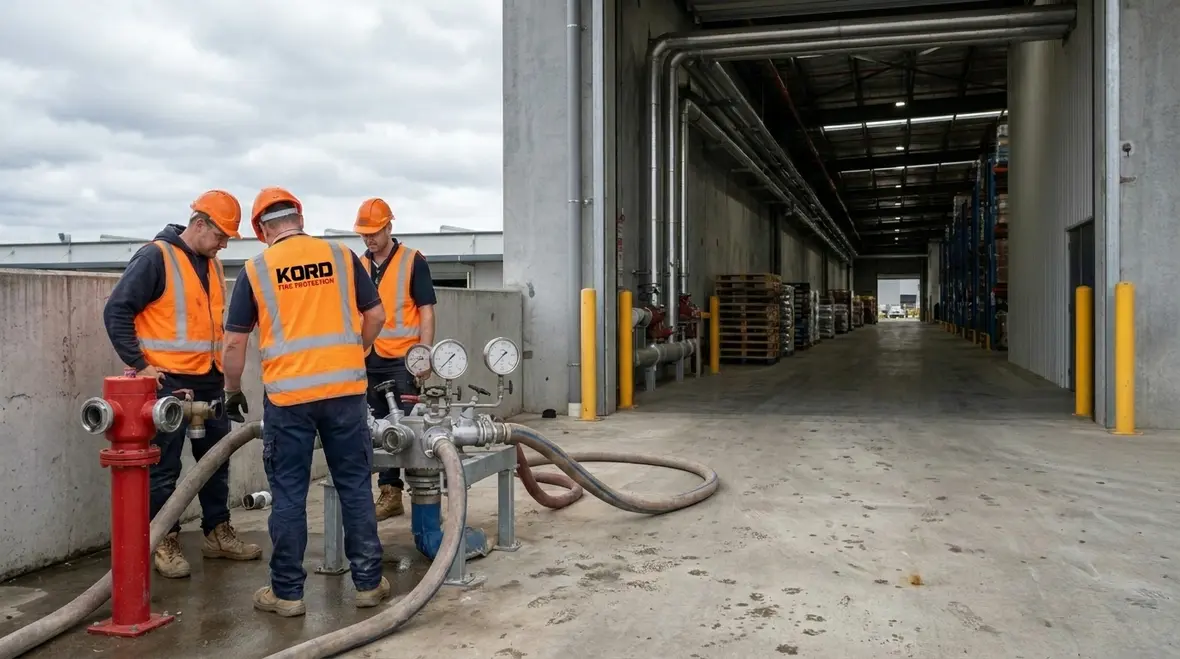
Now the math moves from “what is required” to “what the pipes demand.” Friction loss calculations account for pipe length, diameter, fittings, valves, and changes in elevation. Large facilities typically have complex routing from plant rooms to remote hazard zones. Therefore, the losses can stack up, especially where older building services were modified multiple times.
To avoid surprises, the design team confirms the as built or updated drawings, and checks details that get missed in early estimates. They validate valve types and operating configurations. They confirm whether there are abnormal layouts, temporary bypasses, or sections with reduced diameters. And, crucially, they incorporate the impact of flow conditions on friction. In other words, the pump does not fight fire alone; it fights pipe resistance too.
Why old drawings can quietly wreck a new calculation
Facilities that have lived a busy life almost always carry a few surprises in their piping. A branch was rerouted. A valve was replaced with a different pattern. A section necked down because someone had to work around another service. None of that looks dramatic until every little resistance adds up. Then the remote point loses pressure, the pump runs off the expected curve, and everyone suddenly becomes deeply interested in whether the drawings were ever updated. They should have been.
For teams working through inspection benchmarks later, connecting the hydraulic design to practical verification is much easier when it aligns with fire pump testing requirements early instead of after the equipment is already installed and everyone is pretending the test header will solve everything.
Select a pump that matches the duty point and the controls
With the required flow and pressure calculated, the next step is selecting the pump and drive configuration. The pump must meet the duty point with the right margin, while staying within safe performance limits. That means checking best efficiency range, ensuring the system curve intersects the pump curve where it should, and confirming the pump can handle the expected operating transitions.
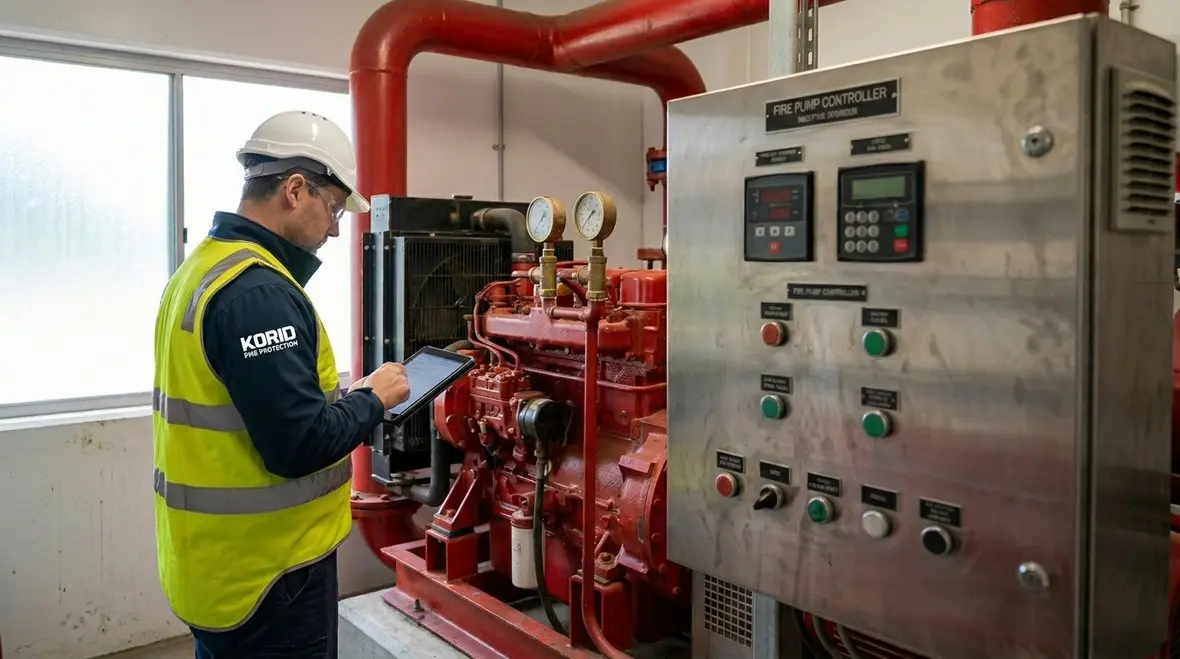
In large systems, there is often a duty standby arrangement, and sometimes lead lag based on demand patterns. Controls must coordinate with tank levels, pressure sensing, alarm outputs, and start logic. They must also support testing without compromising fire readiness. If the control scheme is unclear, commissioning becomes a stress test for everyone involved, including the people who swore they “only needed a quick change.”
At this point, Kord Fire Protection can act as a vital partner by connecting the calculation to buildable, certifiable outcomes. They can help translate hydraulic design results into a system plan that aligns with installation realities, commissioning requirements, and documentation expectations.
Controls matter almost as much as the pump itself
A correctly sized pump paired with sloppy controls is still a problem wearing nicer shoes. The controller settings, start sequence, sensing arrangement, and alarm logic all shape how the system actually behaves under pressure drop conditions. If the controls are mismatched, nuisance starts, delayed starts, confusing alarm behavior, and ugly test results can follow. The hardware may be capable, but the system as a whole will still act like it missed rehearsal.
Common mistakes that lead to wrong industrial fire pump capacity
Even experienced teams can stumble. The usual problems tend to fall into a few buckets, and they show up during commissioning and routine testing.
- Using outdated drawings and ignoring later modifications in piping routes or sprinkler zone layouts.
- Assuming water supply performance without pressure tests at realistic flow rates.
- Underestimating friction losses from fittings, valves, and elevated runs common in large facilities.
- Skipping system curve review, which can cause the pump to operate outside its best range.
- Weak documentation, making it harder to prove compliance during audits or authority reviews.
- Control logic gaps, including pump start and stop sequencing that does not match the design basis.
When these issues show up late, the fix often costs more than doing a tight calculation early. And no one wants to “upgrade after commissioning.” That is like training for a marathon by buying shoes the night before. It feels productive. It is not.
Another frequent issue is treating documentation as an afterthought. In large facilities, the numbers have to travel. They move from design to procurement, from procurement to installation, from installation to commissioning, and from commissioning to inspection records. If the basis of design, water supply assumptions, friction calculations, and final pump selection are not documented clearly, the project can still end up with a decent pump and a terrible paper trail. That is not a win. That is just a future argument waiting for a meeting invite.
Plan for commissioning, testing, and ongoing reliability
Finally, the design must survive contact with the real world. Commissioning verifies that the pumps deliver the expected pressure at the required flow and that the control system behaves correctly under demand. For large facilities, this includes confirming sequencing, alarms, and power fail behavior. It also involves reviewing the set points used by pressure switches and controllers.
Then comes operational reliability. Fire pumps do not like long periods of neglect. Therefore, plans should include maintenance steps, performance checks, and inspection schedules that align with the site’s duty cycle. Kord Fire Protection can support this broader life cycle thinking, ensuring the system stays ready, not just “ready on paper.”
Build for the test you know is coming
The smartest sizing work anticipates future testing instead of acting surprised by it. Access to test headers, gauge locations, controller visibility, safe discharge planning, and clean record keeping all matter once the system has to prove itself. A well sized fire pump is not just one that meets the design duty point. It is one that can keep proving that performance through commissioning, routine testing, inspections, and the awkward moments when someone asks for records right now.
FAQ
Ready to lock in the right pump performance?
Calculating necessary fire pump capacity for large facilities is not guesswork, it is engineered performance. If your site needs a dependable design that will pass commissioning and stay reliable, Kord Fire Protection can partner with your team from demand review through system readiness.
Reach out to discuss your facility scope, water supply situation, and performance targets, and get a clear path to a pump system that performs when it matters. The goal is simple: no fuzzy assumptions, no mystery pressure losses, and no unpleasant surprises when the testing starts.

Join Our Newsletter!
Get the latest fire safety tips delivered straight to your inbox From our Newsletter.