Advanced Fire Alarm System Troubleshooting in Australia
Quick Answer: Advanced fire alarm troubleshooting starts with verified site conditions, clean documentation, and tight test routines. Technicians isolate trouble by checking power, devices, signaling paths, and panel history, then validate repairs with controlled functional tests. For fast turnaround in Australian industrial and retail sites, Kord Fire Protection can act as a vital partner.
When a commercial site reports repeating faults, the job quickly stops being “just maintenance” and turns into fire alarm system troubleshooting with real consequences. In the first 100 to 150 words, here is the reality: modern panels track events, but errors still come from field issues like dirty detectors, wiring faults, improper resets, and device drift over time. Therefore, a disciplined process matters. Technicians who use advanced techniques do not guess, they prove. And yes, proving a fault can feel like chasing a gremlin, but the gremlin usually lives in the terminal block, not in the wiring universe.
For teams that need practical support near the start of the process, Kord Fire Protection’s fire alarm services fit naturally into this kind of work. They also connect well with broader planning around fire alarm integration for smarter building safety, especially when troubleshooting involves relays, controls, HVAC responses, or door release sequences.
What counts as an advanced troubleshooting method for commercial panels
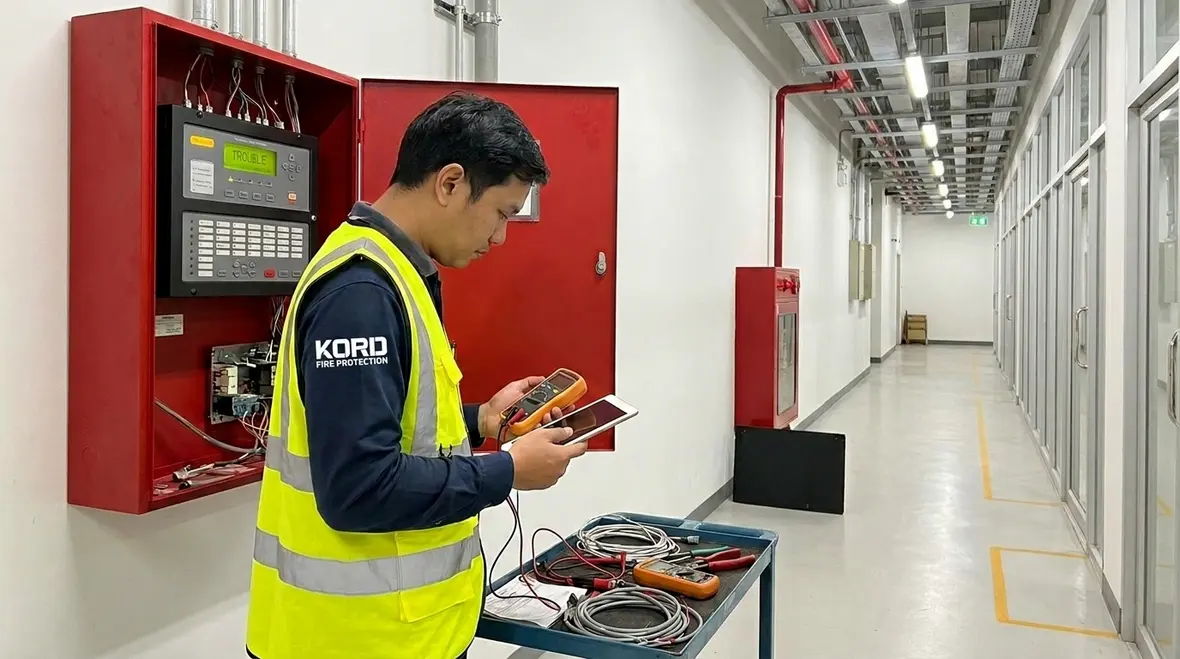
Advanced fire alarm system troubleshooting goes beyond “press reset and hope.” A strong approach uses layered checks that separate panel logic problems from field problems. First, the technician confirms the exact panel type, firmware version, and software configuration. Then, they review the event log and trouble history to identify patterns, not just single alarms.
Next, they verify the site’s current operating conditions, because a system that worked last week can fail after a construction change, a temporary power event, or a HVAC adjustment that affects smoke behavior. Furthermore, they inspect device status points at the panel and on the device itself, since the panel can show trouble even when the physical device looks fine. Finally, they document every step so the next technician does not inherit a mystery.
Why disciplined sequencing beats random testing
An advanced method also means using a repeatable order. Confirm the panel. Confirm the history. Confirm the site changes. Confirm the field condition. Then test the likely cause before jumping to the next possibility. That rhythm matters because commercial sites are full of variables, and a rushed technician can accidentally create a second issue while chasing the first one. In other words, the best troubleshooters are not the most dramatic people in the room. They are the calm ones with a meter, a notebook, and enough patience to annoy a fault into confessing.
How technicians isolate power, wiring, and device faults
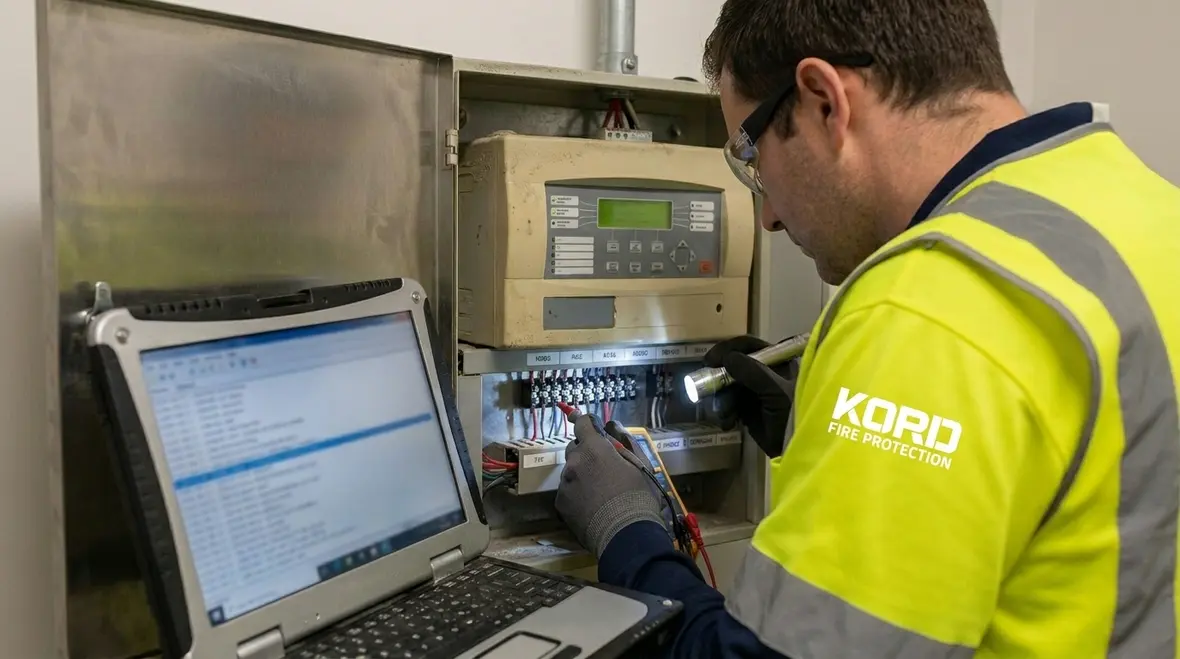
Commercial systems often fail in categories: power issues, signaling path issues, or device failures. To isolate power problems, technicians measure voltage under load, not just at rest. They confirm battery condition, check charger output, and inspect fuses and earth reference. Additionally, they check for frequent voltage dips that can trigger trouble states and cause nuisance reports.
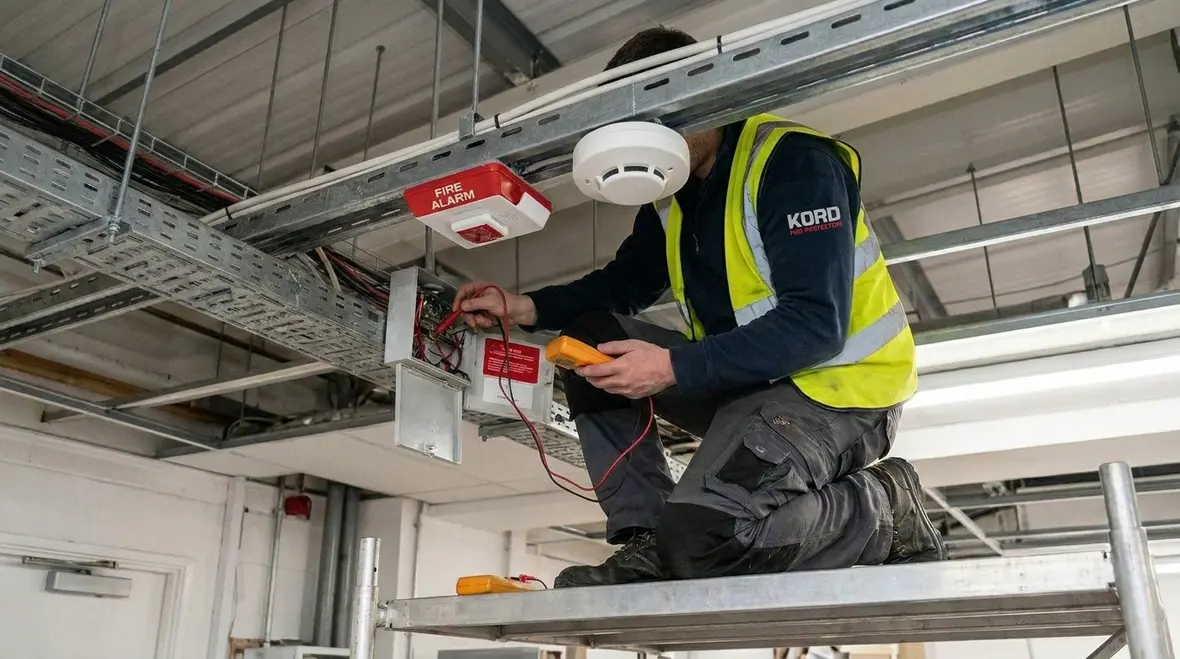
For wiring faults, technicians use meter readings and loop tests that match the panel design. They then compare conductor resistance values with expected ranges and verify polarity. If a site has multiple zones or loops, they isolate segments to pinpoint the exact section. At this stage, the smart move is not to chase the entire building. Instead, they narrow the fault and test section by section.
For device faults, advanced work includes cleaning where allowed, checking detector chamber contamination, verifying detector type, and confirming head placement. Moreover, technicians confirm that device addressing and mapping align with as built drawings. When drawings do not match reality, the panel might display a device that is not even installed where it should be. That is how you end up troubleshooting a “fault” that is really a labeling issue. The panel is not lying, it is just following the story it was given.
Power first, then path, then point device
A helpful way to think about isolation is to work from broadest cause to narrowest cause. If the panel is unstable from power quality, every downstream test becomes messy. If the loop has a path fault, a healthy device may still report trouble. If the path is clean, the attention can shift to the individual detector, module, relay, or base. That order keeps troubleshooting logical and stops everyone from treating the fire panel like it is making up problems for sport.
Using panel history like a detective, not a guesser
Most panels store event history, system status, and maintenance records. Technicians treat that data like a case file. First, they look for the timeline: does the trouble appear right after power restoration, after a timer cycle, or during a specific shift change? Then, they identify recurring trouble codes, which often relate to a specific wiring segment, device type, or environmental condition.
Next, they examine whether the trouble escalates or clears on its own. For example, transient faults that clear may point to a loose connection or intermittent device sensitivity drift. On the other hand, persistent faults usually indicate a real path or device failure. Additionally, technicians cross check panel logs with work orders from the last few weeks. Construction activities, door closers, duct modifications, and ceiling tile replacements can all disturb device positions or introduce dust and moisture.
Patterns tell the story faster than memory does
A site manager might remember that “it started acting weird on Tuesday,” but the panel can usually tell you whether Tuesday was really the start or just the day somebody noticed it. Time stamped history helps separate anecdote from evidence. That is important on busy industrial and retail sites where multiple contractors may have touched ceilings, doors, ducts, or control interfaces in the same week. The panel history often behaves like the one organized witness in a room full of people talking over each other.
Advanced functional tests that prove the system works
After isolating the likely fault source, technicians validate repairs with functional tests. They do this in a controlled way so they can confirm the signal path and not just reset a fault. For detection devices, they confirm correct response behavior and time to alarm, using approved methods for the device type. Then they verify that the panel activates the correct outputs, including sounders, beacons, and relays.
For signaling circuits, they test end of line behavior and confirm supervision states. If the system uses addressable signaling, they check for correct reporting on the panel and that the annunciator output matches the correct address. Furthermore, technicians test interface modules that connect to other building systems. Many commercial sites depend on relays for fan control, door hold release, or smoke management actions, so technicians do not stop at “it’s silent again.”
In addition, technicians verify monitoring points and fault reporting behavior. That means they test both alarm and trouble reporting, since a system that alerts reliably is the system that gets trusted. And trust is what keeps everyone calm when the real emergency arrives. Calm beats panic, every time, even if TV dramas like to do the opposite.
Testing outputs matters as much as clearing inputs
A cleared detector trouble is not the finish line if the system still fails to release a door, report to monitoring, or command a connected fan state correctly. That is why troubleshooting should end with proof, not optimism. If the system talks to other building functions, those handshakes need to be tested too. Kord’s own integration content makes this point clearly: connected safety only works when each linked action performs in sequence, not when everyone assumes the other component did its job.
Common error patterns in Australian commercial sites
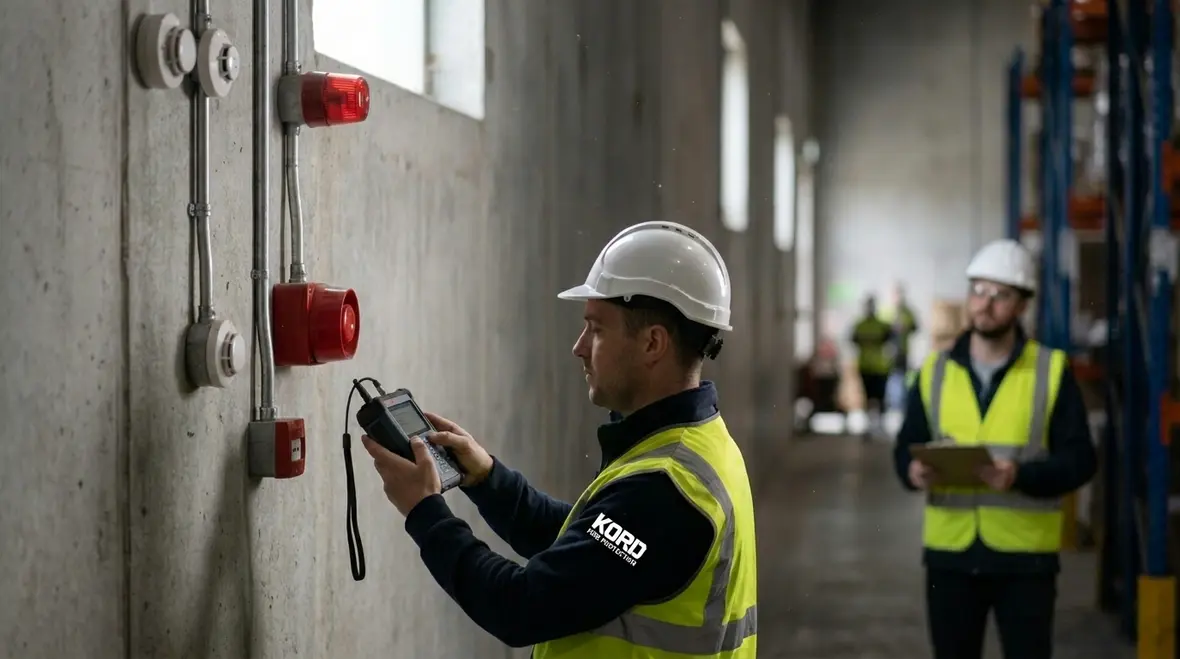
Across industrial, retail, and facilities in Australia, certain error patterns show up repeatedly. For industrial sites, dust loading can impact smoke detectors, especially near bays where forklifts stir up fine particles. Therefore, technicians schedule cleaning and sensitivity checks based on actual environment, not just calendar dates.
In retail spaces, changes happen fast. New displays, signage, and temporary construction often alter airflow patterns near detectors, or block line of sight for beam systems. Consequently, trouble events can follow shop fitting work. Technicians respond by verifying the detector coverage plan and confirming device placement after renovations.
For facilities with multiple tenancies, shared infrastructure can cause confusion. Technicians should confirm which loop segments belong to which area and confirm that each tenant change does not leave behind wiring stress or improper sealing. Moreover, moisture and condensation can create intermittent faults, so technicians look for patterns during weather changes or after maintenance plumbing work.
When teams manage faults with discipline, they reduce repeat calls. However, when they treat alarms like a “reset and forget” hobby, the building keeps sending messages like a push notification you cannot swipe away.
Why Kord Fire Protection can be a vital partner on troubleshooting jobs
Commercial sites run on deadlines, and fire alarm faults rarely wait for a convenient time. Kord Fire Protection can become a vital partner by supporting fast response, proper testing routines, and ongoing improvement plans that reduce recurrence. Instead of treating each fault as a standalone issue, the partnership can help teams link panel history, device behavior, and site change activity into a clear troubleshooting workflow.
Furthermore, Kord Fire Protection can help maintain documentation accuracy, which matters when fault reports reference specific zones, addresses, or device types. They can also support scheduling that fits shift work, retail trading hours, and industrial safety requirements. As a result, the site gets fewer disruptions, and the system stays compliant with the operational needs of commercial facilities across Australia.
Think of it like having a calm co pilot in the cockpit. The technician still pilots the work, but Kord helps manage the route, the checklist, and the paperwork that keeps everyone from arguing about what was installed last year.
Field checklist for the next troubleshooting visit
Technicians who use a clear checklist reduce mistakes and speed up resolution. They also keep communication tight across contractors, site managers, and facility teams.
Key steps to include
- Confirm the panel details: device types, firmware, and configured zone or loop mapping.
- Review event history: identify the exact trouble start time and any repeating codes.
- Verify power: measure voltage under load, inspect charger and battery condition, check earth reference.
- Isolate wiring segments: use supervised circuit checks and compare readings against expected ranges.
- Inspect devices: check cleanliness, placement, addressing, and any recent service changes.
- Perform functional tests: confirm alarm activation and correct output behavior.
- Record everything: capture readings, device IDs, and test results for next visits.
Next, teams should share the findings with the site stakeholders. Clear notes prevent “phone game” confusion later, and nobody enjoys a troubleshooting call where everyone has a different version of the truth.
FAQ
Final word: choose reliability, then call Kord
Advanced troubleshooting saves time, reduces repeat faults, and protects operations. When a commercial site faces recurring trouble, teams should rely on disciplined isolation, verified tests, and clean documentation instead of guesswork.
Kord Fire Protection can support your fire alarm system troubleshooting with practical response and ongoing improvement planning across industrial, retail, and facilities throughout Australia. Contact Kord Fire Protection today to turn alarms from a recurring problem into a controlled, measurable process.

Join Our Newsletter!
Get the latest fire safety tips delivered straight to your inbox From our Newsletter.