Standpipe System Hydraulic Pressure for Commercial Buildings
Quick Answer: Commercial standpipes must deliver the right flow and pressure at the right locations, during the full duration firefighters need. This hinges on hose sizes, building height, pipe friction, and system valves. When teams understand those factors, the standpipe system stays ready. And yes, it matters even on the busiest fire day.
In commercial buildings, the standpipe system hydraulic pressure sets the tone for what firefighters can actually do, not what a plan says they can do. Early in the design and testing phase, engineers and fire protection teams calculate how pressure holds up across floors, standpipe risers, hose connections, and the real piping path. Then, they confirm performance under fire conditions. After that, the work shifts from theory into a practical, verifiable system that facilities can operate and maintain with confidence. In Southern California, where properties range from tall mixed-use towers to sprawling warehouses, getting it right the first time saves time, money, and the kind of headaches no one ordered.
If your property team is already reviewing broader life safety readiness, it also helps to coordinate standpipe planning with related services like full fire protection services for commercial buildings. Near the same stage, many facilities also pair hydraulic verification with fire alarm service systems so detection, notification, and water delivery all stay aligned instead of acting like distant cousins at a holiday dinner.
Why commercial standpipes demand careful hydraulics
Commercial standpipes support firefighting by providing accessible water to hose lines. However, the job does not stop at having water. The system must deliver enough flow at usable pressure so a nozzle team can make effective attack lines and reach upper levels. Therefore, hydraulic requirements focus on two core targets.
First, they establish the required flow rate at specific standpipe outlets. Second, they confirm the standpipe system hydraulic pressure along the riser, through floors, and at connection points. As water travels through pipe, it loses energy due to friction. Consequently, the design must account for pressure drops from fittings, valves, elbows, and length of run.
Facilities teams often underestimate how fast friction adds up. In practice, a few extra bends and aging valves can turn a good on paper system into one that struggles when it counts. That is why hydraulic calculations and field verification matter, especially for industrial, retail, healthcare, education, and commercial buildings that rely on dependable access for fire crews.
Why pressure matters more than assumptions
A plan set might show a neat vertical riser and clean hose valves on each floor, but real buildings are rarely that polite. Piping detours around structural beams, tenant improvements shift routing, and valve conditions change over time. Hydraulic design fills the gap between the tidy drawing and the messy reality. Without that step, the standpipe may technically exist while still falling short where firefighters actually connect. That is not a fun surprise for anyone, and it definitely should not debut during an emergency.
Key inputs that shape standpipe performance
Hydraulic design works like a recipe: if someone changes the ingredients, the outcome changes too. To meet operational needs and support dependable response, teams typically base calculations on a group of critical inputs that influence both flow and pressure at the most demanding outlet.
- Building height and floor layout so the system supports the most demanding outlet
- Hose connection and nozzle selection including hose diameter and nozzle flow requirements
- Pipe size and material which affects flow capacity and internal roughness
- Riser configuration such as single standpipe versus multiple zones
- Number of outlets and whether simultaneous operation is assumed
- Valve types and their expected flow characteristics
- Hydraulic continuity ensuring the system stays stable under demand
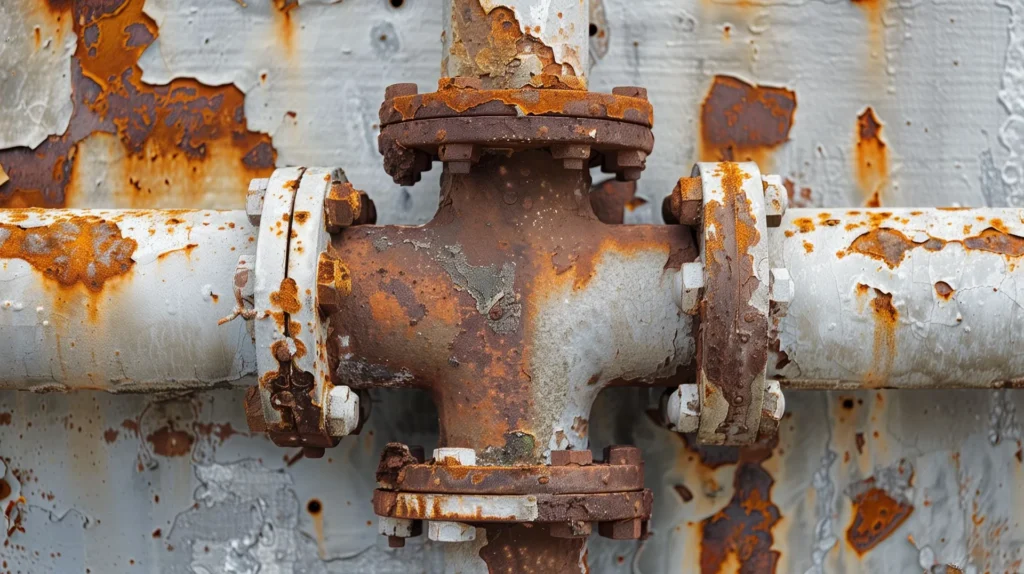
Then the design team estimates losses due to friction and minor losses from components. Even small differences in valve wear, corrosion, partial obstruction, or pipe condition can alter actual performance. Therefore, teams should also plan for commissioning, acceptance testing, and ongoing checks rather than trusting math alone to carry the whole story.
And just to keep things grounded, a standpipe is not like a smartphone battery. You cannot charge it up later once it underperforms. The design needs realism, good field data, and a little humility before the building teaches everyone a more expensive lesson.
The difference between design intent and field reality
One of the most common gaps in commercial work appears when a system is calculated correctly for one version of the building and then quietly changed over time. A remodel adds fittings. A tenant buildout reroutes branch piping. A neglected valve no longer behaves like the cut sheet promised. None of those changes ask permission before affecting pressure. That is why reliable standpipe performance depends on both initial design accuracy and disciplined verification later.
How friction loss changes the real pressure at the outlet
As water moves through a standpipe riser, pressure decreases because the system resists flow. That resistance comes from friction along the pipe wall and turbulence at fittings. Consequently, the outlet pressure is not just the source pressure. It is the source pressure minus every pressure loss along the path.
For example, longer risers and numerous elbows increase friction loss. In multistory retail centers, office towers, hotels, and large industrial facilities, the route from the pump room to a high-level connection often includes many valves and transitions. Therefore, hydraulic models need accurate measurements rather than rough assumptions. Guesswork belongs in board games, not in fire protection infrastructure.
Facilities managers may ask, If the pump meets the duty, why does the outlet pressure still fall short? The answer is simple: the pump can deliver, but the piping network can drain that delivery through friction losses. In practice, this is where standpipe system hydraulic pressure calculations must reflect the true system geometry, not a simplified diagram that politely leaves out the annoying parts.
To avoid surprises, teams should validate pipe runs, component schedules, and as-built dimensions. They should also confirm that maintenance history supports expected flow, especially where systems have been idle for long periods or where renovations may have created hidden restrictions.
Working pump strategy and system zones for buildings
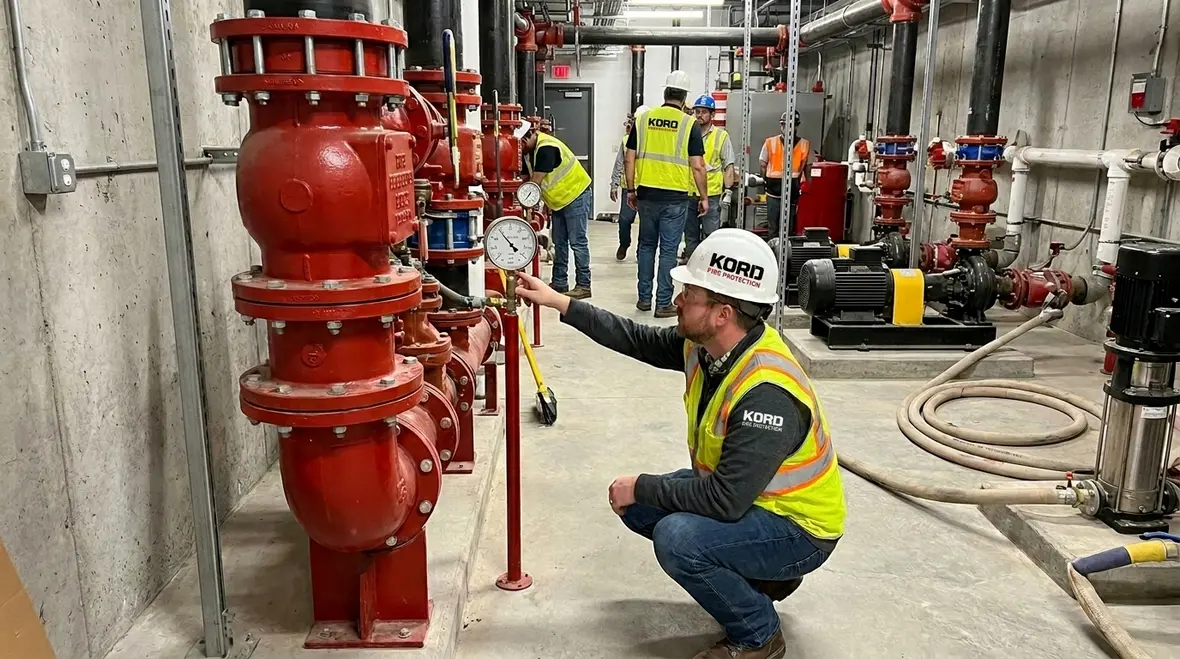
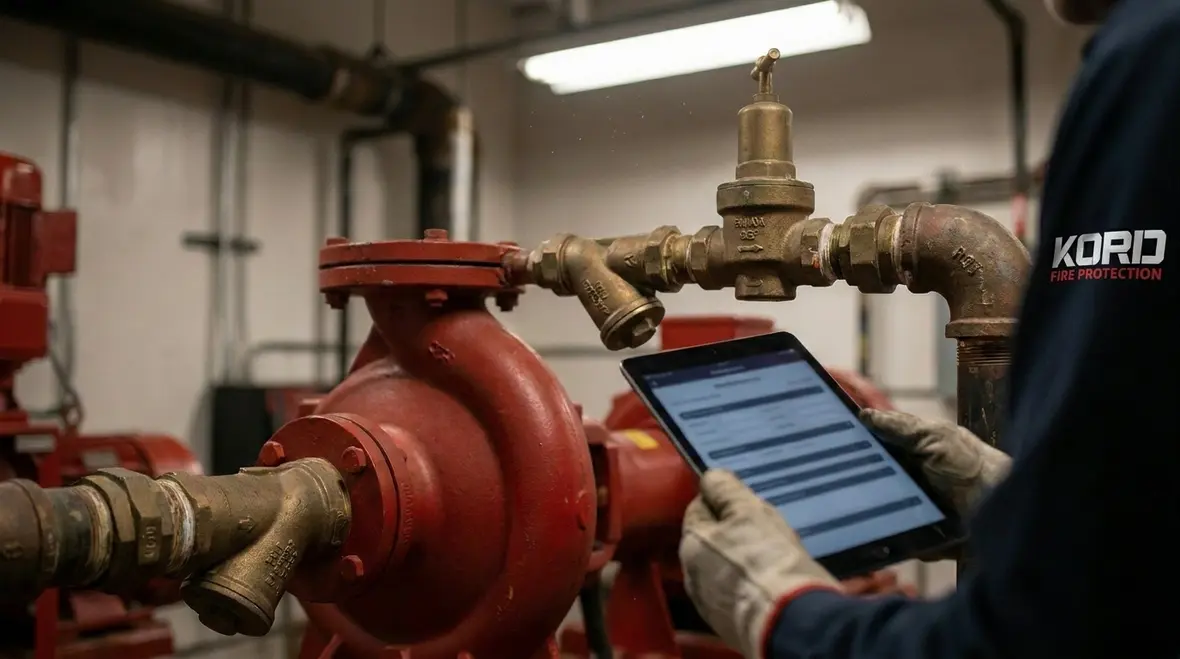
Commercial buildings often combine pumps, tanks, or a municipal water supply with a standpipe system. The hydraulic requirement drives how pumps operate and how zones behave during demand. Therefore, designers should coordinate standpipe requirements with pump curves, pressure set points, and any automatic controls.
If the building uses multiple zones, the design team needs to clarify what happens when firefighters open connections in different areas. For instance, simultaneous demand may influence pump behavior, control valves, and pressure stability. As a result, the system must maintain reliable pressure where crews operate, not merely at the pump discharge where everything looks impressive on paper.
This is also where service coordination matters. Property teams that already maintain or upgrade standpipe systems Class I-II-III service can use that work to support better testing access, cleaner records, and more reliable follow-through after modifications. In complex facilities, linking hydraulic review with practical service planning is often what separates a dependable system from one that only behaves on its best day.
And when teams skip these details, it becomes like inviting the Avengers to a movie and then forgetting the popcorn. The hero arrives, but the experience fails. Firefighting reliability depends on the full system, not just the flashy equipment list.
Testing, commissioning, and keeping data current
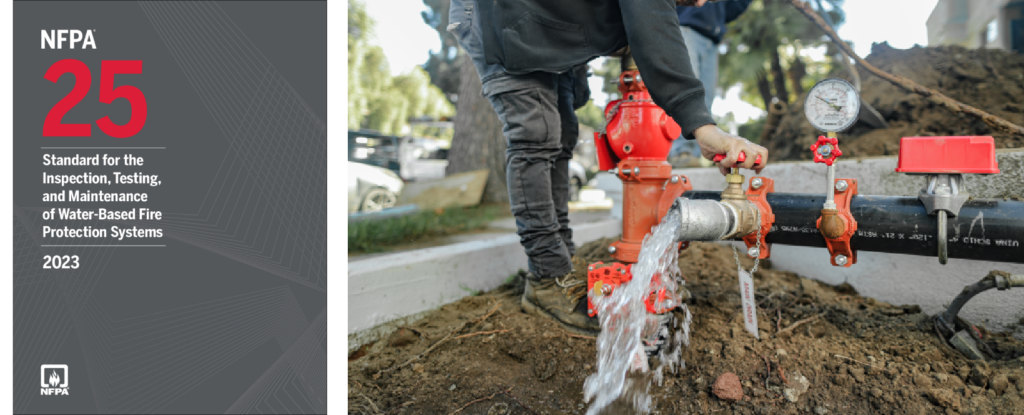
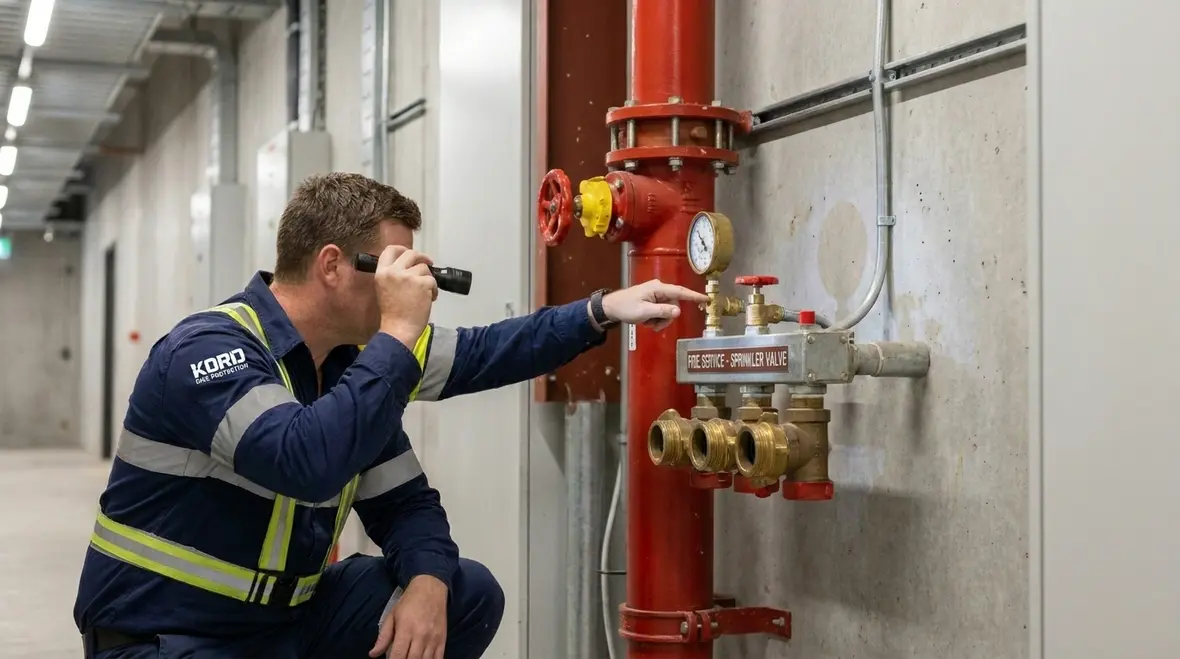
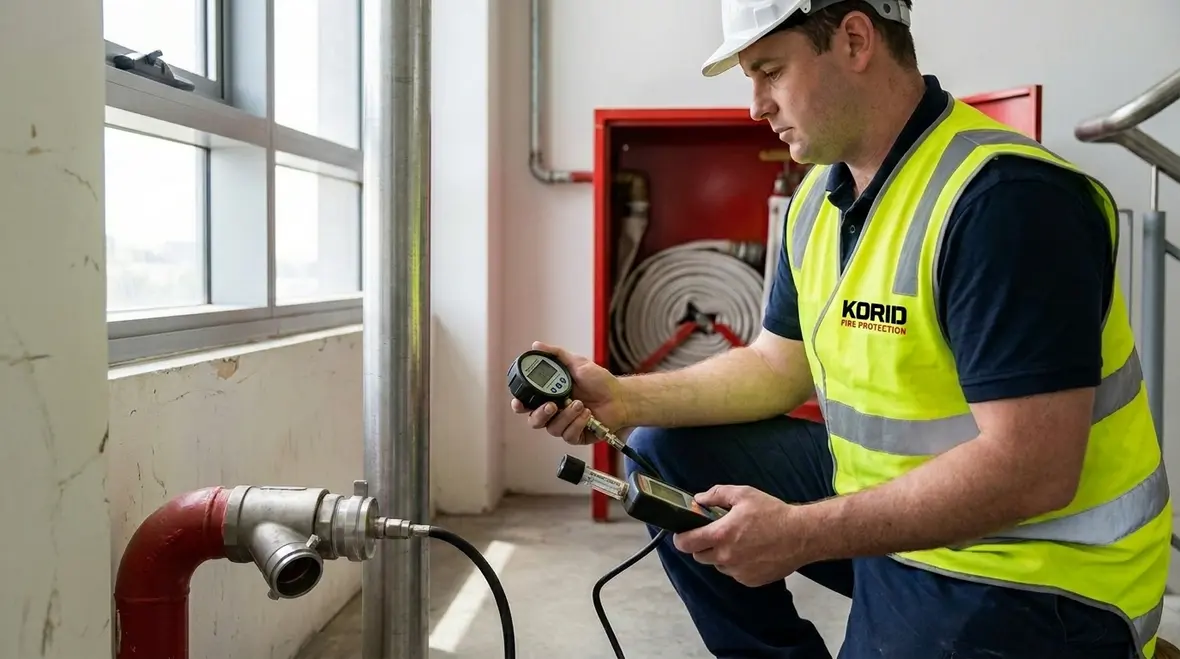
Hydraulic design gives a target. Testing confirms the target. Commissioning verifies actual performance through functional checks, flow tests, and pressure readings at key outlets and gauges. It also validates that valves open correctly, that controls respond as expected, and that the system sustains performance for the needed duration.
After commissioning, facilities teams should treat standpipes as living infrastructure. Pipe roughness can change, valves can drift, and access routes can be modified during refurbishments. Therefore, ongoing maintenance and periodic testing should align with the site risk profile and the real pace of building changes.
To keep records useful, technicians should document results in a way that supports future audits and troubleshooting. Clear data helps teams detect slow performance degradation before it becomes a compliance issue or a frantic pre-inspection scramble.
This is where Kord Fire Protection can become a vital partner with this service job. Their team supports installation coordination, commissioning readiness, and performance verification so stakeholders can compare design intent with actual field results. In other words, they help teams make sure the system behaves like the calculations describe, not like a mystery novel with the ending removed.
Common challenges in industrial and retail sites
Industrial and retail facilities bring unique constraints. These sites often include service corridors, process equipment, mezzanines, tenant improvements, storage changes, and frequent fit outs. Therefore, standpipe routing and valve placement can become more complex than in a simple office layout.
- Frequent renovations that adjust ceilings, pipe boxing, and access panels without updating hydraulic assumptions
- Plant area obstructions that create routing detours and increase friction loss through added fittings
- Disruption risks during testing, especially where operations cannot shut down
- Valve condition variability in sites where crews do not routinely exercise standby systems
- Multiple water demands where other systems compete during emergencies
When those issues appear, the team should revisit the hydraulic model and confirm the real pressure delivery. Then they should align maintenance schedules with the findings. This is also where Kord Fire Protection’s collaboration can add value by coordinating service and ensuring the system stays reliable after changes, not just after installation.
Dual viewpoint: design team and facilities team expectations
To make standpipes work long term, both teams must agree on the outcomes. The design team aims for calculated hydraulic performance. The facilities team aims for dependable operation during emergencies and straightforward maintenance afterward.
Design focus
- Confirm required flow and pressure at critical outlets
- Model pressure losses from pipe length and fittings
- Coordinate pump strategy with system zones
Facilities focus
- Maintain valve readiness and unobstructed access
- Schedule testing that proves real performance
- Update records after fit outs and refurbishments
This shared alignment reduces the odds of last-minute fixes. It also prevents the we thought someone else handled it scenario, which is common enough to deserve its own award show and probably a mildly stressful soundtrack.
FAQ
Final thoughts and a smart next step
Commercial standpipes succeed when teams treat hydraulics as a complete system story, from pump strategy and friction loss to commissioning data that stays current. Properties can avoid costly rework by verifying standpipe system hydraulic pressure outcomes early and again after changes. It is a practical habit, not just an engineering exercise, and it pays off long before anyone needs a hose connection in a bad moment.
If a project needs dependable calculations, coordination, and practical field verification, Kord Fire Protection can help. A clear next step is reviewing the property’s current standpipe system service options and aligning them with broader building readiness. That way, compliance and performance stay connected instead of introducing themselves awkwardly halfway through the job.

Join Our Newsletter!
Get the latest fire safety tips delivered straight to your inbox From our Newsletter.