
Resilient Industrial Fire Suppression Layouts for Australia
Quick Answer
Resilient fire suppression layouts protect people, assets, and downtime budgets by balancing hazard risk, water supply realities, and safe access for crews. The best designs use zoning, redundancy, and practical installation details. Kord Fire Protection can support this whole effort, from planning to upgrades, so your system performs when it matters.
For facilities needing coordinated system support, Kord Fire Protection also offers full fire protection services that help align suppression, alarms, inspections, and long term readiness under one plan.
Why resilient industrial fire suppression planning starts with how facilities actually operate
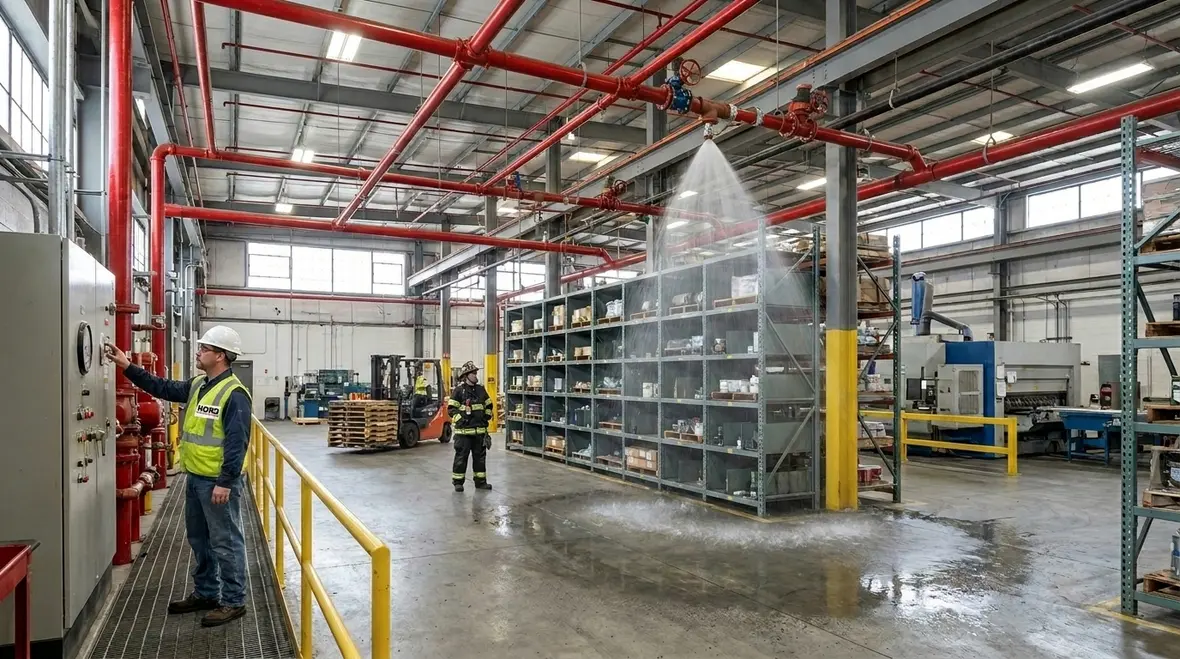
Industrial fire suppression planning works best when it fits the real world, not a perfect paper world. Kord Fire Protection often sees the same pattern across Australia: teams design around a standard template, then later learn production lines, storage practices, and access routes changed years ago. That mismatch creates weak spots. Therefore, a resilient layout begins with how the facility runs today, including shifts, loading areas, ventilation patterns, and where crews can reach quickly.
In addition, a robust plan accounts for fire behavior, not just code checkboxes. For example, a warehouse stocked with mixed packaging behaves differently than a metal fabrication bay with grinding sparks. Then again, people sometimes treat the fire risk like it will politely follow the rules. Fire does not follow rules. Fire follows chemistry.
That is also why teams benefit from studying adjacent guidance like warehouse fire protection strategy when industrial storage, access lanes, and operational changes begin to influence suppression outcomes. A resilient plan is never just about heads, pipes, and panels. It is about how the building breathes, moves, stores, and reacts under pressure.
How to map hazards into suppression zones that do not fight each other
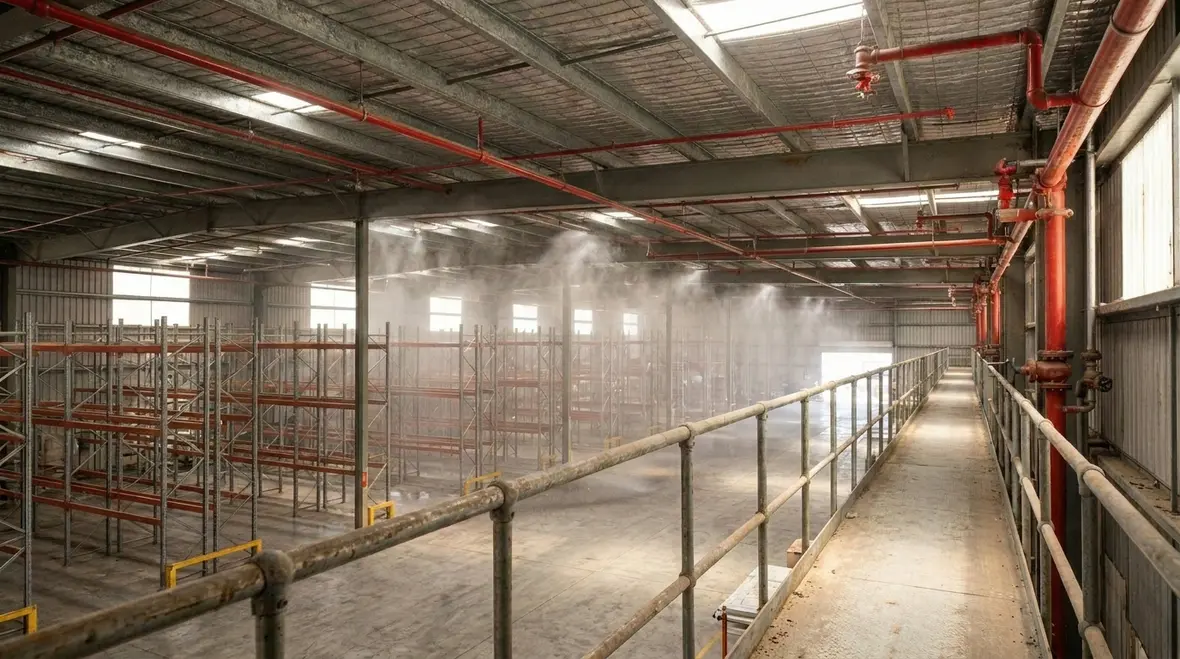
A facility should not rely on one giant “cover everything” idea. Instead, designers build zones that match hazard levels and fire growth speed. When zone boundaries align with actual construction fire separation, the system reacts faster and helps limit spread. Also, zoning reduces water or agent use during incidents, which improves pressure stability and reduces system stress.
To do this well, planners look at occupancy and process hazards in a structured way. They identify ignition sources, fuel loads, and exposure risks. After that, they decide where detectors feed into the control strategy and where discharge areas must stay protected. Finally, they verify that suppression coverage does not create blind spots, especially near openings, ceiling voids, and ducted ventilation paths.
Even small layout features matter. A cable tray line that blocks spray patterns, a mezzanine that traps heat, or a conveyor that carries goods into an uncovered bay can turn “good coverage” into “interesting paperwork.”
Practical zoning details that improve real response
Good zoning is part engineering, part site realism. Designers should review where stock turns over, where temporary materials collect, and where maintenance work creates ignition conditions that were never shown on the original layout. The best zone map is the one that still makes sense after a busy quarter, not just on the day the drawing was issued. In facilities with high racking or fast moving goods, that same logic overlaps neatly with lessons found in Kord Fire Protection’s commercial fire prevention planning for industrial warehouses, where the real layout matters more than anyone’s favorite spreadsheet.
Designing for water supply, pressure loss, and the reality of Australian site conditions
Resilient layouts respect hydraulics. Designers calculate pipe sizing, elevation changes, friction losses, and expected pressure drops during operation. However, the most resilient designs also plan for uncertainty, like aging mains, variable tank levels, seasonal demand, and site constraints that change during construction.
For facilities across Australia, designers often face long pipe runs, limited pump options, or water supply fluctuations tied to town infrastructure. Therefore, a resilient fire suppression layout includes pressure management and reliable pump performance. It may also include redundancy so a single component failure does not take the whole response offline.
Moreover, designers consider water hammer risks and ensure that control valves operate consistently. If the system depends on equipment that fails quietly, the design is not resilient. Kord Fire Protection can help partners assess these practical site issues early, so design decisions match commissioning results rather than guesswork.
Why hydraulic confidence beats optimistic assumptions
Hydraulic resilience comes from proving the ugly details, not ignoring them. Long branch lines, awkward building elevations, phased expansions, and fluctuating municipal feeds all have a way of exposing lazy assumptions at the worst possible time. Teams that review these variables early usually avoid the awkward moment where the drawing looked heroic but the test results looked deeply unimpressed. Where storage conditions overlap with warehouse operations, Kord Fire Protection’s warehouse fire safety regulations guide is a useful companion read because it reinforces how water supply calculations and hardware performance have to work together, not separately.
What redundancy should look like in resilient system layouts
Redundancy does not mean installing extra gear just to feel safer. Instead, it means protecting the function that must work during a fire. In a resilient system layout, redundancy targets critical paths. That can include pump reliability, power supply arrangements, and control circuit integrity.
Designers also build operational resilience through compartmentalization. When the layout confines fire spread to manageable areas, the suppression system avoids “full facility discharge” scenarios. As a result, teams can maintain control and limit damage.
In addition, redundancy can show up as layered detection and response. Sensors located with good placement reduce nuisance events and speed activation when real conditions develop. Then the discharge strategy stays aligned with zone design, so suppression targets the right spaces.
Yes, it costs more to do this right. But the alternative costs more too, and it does it loudly, with smoke alarms that refuse to be quiet like a coworker who keeps interrupting meetings.
Integrating access, signage, and maintenance so the system stays ready
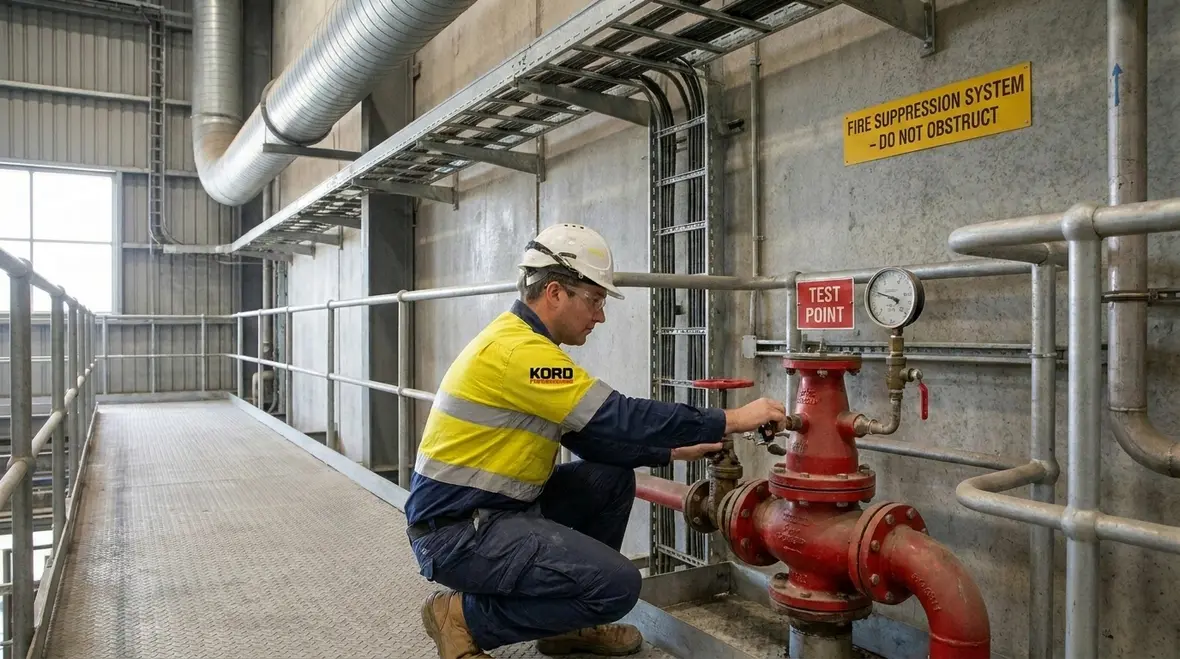
A fire suppression layout must be serviceable, not just functional. Technicians need access to valves, pumps, drains, and test points. Therefore, designs should include safe walkways, clear labeling, and layout details that support routine inspection schedules.
Maintenance resilience also includes component selection suited to the environment. Dust, corrosive atmospheres, vibration, and heat cycles affect performance. So designers choose materials and protection methods that match industrial reality. They also plan for inspection routines that do not require major shutdowns.
Furthermore, resilient planning includes commissioning and documentation quality. That means clear as built drawings, updated hazard notes, and test procedures that reflect the final configuration. Without that, future upgrades turn into detective work.
Kord Fire Protection can become a vital partner here, because they bring the practical lens needed to connect design intent to real service outcomes. In other words, they help ensure the layout does not just look good on a drawing, it behaves well on the day of testing.
Serviceability is part of resilience, not an afterthought
This is the part many teams underestimate. A technically sound layout can still become unreliable if valves are hard to reach, drains are awkward to test, labels vanish into visual chaos, or shutdown steps live only in one supervisor’s memory. Resilience depends on repeatable maintenance just as much as initial design. If detection coordination is part of the system strategy, Kord Fire Protection’s warehouse fire alarm design for high-ceiling facilities offers a useful reminder that placement only works when real airflow, obstructions, and service realities are taken seriously.
Case-based decisions: what changes for warehouses, retail, and processing floors
Different facility types demand different suppression strategies. In warehouses, fuel load and storage arrangement often dominate the risk picture. Designers pay close attention to rack protection, height coverage, and obstruction impacts. Because goods can block discharge patterns, the layout needs careful coordination with ceiling heights and storage clearance.
In retail environments, the hazard profile shifts toward finishes, displays, packaging near customer pathways, and rapid smoke movement through openings. Therefore, resilient designs consider detection placement, compartment response, and fast activation without creating excessive water damage where possible.
For processing floors, ignition sources may include hot work, mechanical sparks, electrical panels, and chemical processes. So the design considers local hazard zones, protection of control equipment, and safeguarding spaces where fire can start and grow quickly.
Across these environments in Australia, the common thread is this: resilient layouts align suppression with the way fire actually spreads through the building, not the way people assume it spreads.
One principle, different environments
The smartest layouts do not force one template onto every site. They adapt. Warehouses usually demand close attention to commodity type, storage height, and travel paths. Retail settings care more about occupant movement and open connections between spaces. Processing floors often require localized protection around machinery, controls, or chemical points of use. The principle stays the same, but the expression changes. That is the difference between a resilient suppression layout and a very expensive assumption wearing a hard hat.
Featured Snippet FAQ
Conclusion: choose a partner that protects the details, not just the paperwork
Resilient layouts come from smart zoning, dependable water or agent performance, and maintenance ready design decisions. Therefore, industrial teams should plan for real operations, real hazards, and real site conditions.
Kord Fire Protection can partner with your project team to strengthen industrial fire suppression planning from concept through commissioning and upgrades. If you want a system that stands up in the moments that count, contact Kord Fire Protection today.

Join Our Newsletter!
Get the latest fire safety tips delivered straight to your inbox From our Newsletter.



