Warehouse Fire Protection Strategy With Kord Fire Protection
Quick Answer: A strong warehouse fire protection strategy reduces risk, speeds response, and protects assets across industrial, retail, and facilities sectors. It blends hazard reviews, code aligned systems, and practical staff training. Kord Fire Protection can act as a long term partner, supporting audits, upgrades, and ongoing inspections so nothing is left to chance.
Large warehouses do not fail quietly. They fail fast, spread heat quickly, and create conditions where smoke travels before anyone has time to react. That is why teams build a detailed warehouse fire protection strategy early, then keep refining it as stock, racking, and workflows change. In the intro, it starts with a clear plan for detection, suppression, compartment control, and response coordination. From there, it grows into a living program that supports real operations, not just a checkbox. And yes, while fire protection can feel like paperwork in steel-toe boots, it actually keeps business moving when things go sideways.
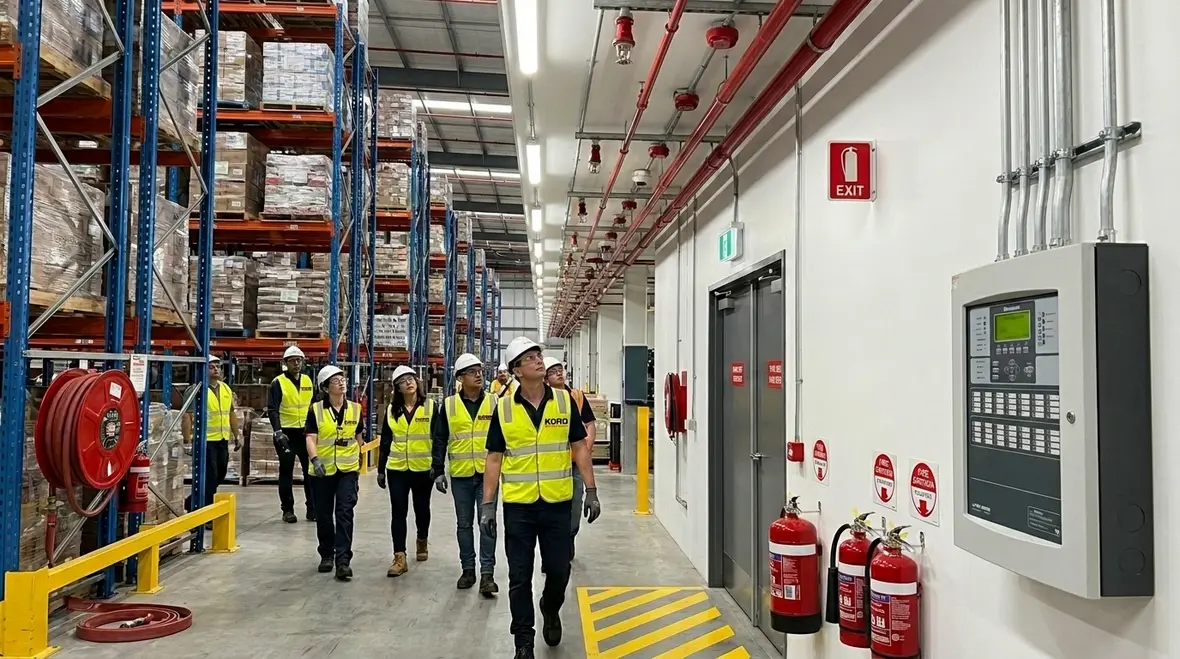
When that effort is managed with focus, Kord Fire Protection becomes a vital partner. They support the full lifecycle: design input, system checks, compliance documentation, and practical improvements that make sense on site. Facilities that need broader support can also explore full fire protection services to coordinate alarms, extinguishers, sprinklers, and inspections under one reliable team.
Risk mapping that actually matches how warehouses operate
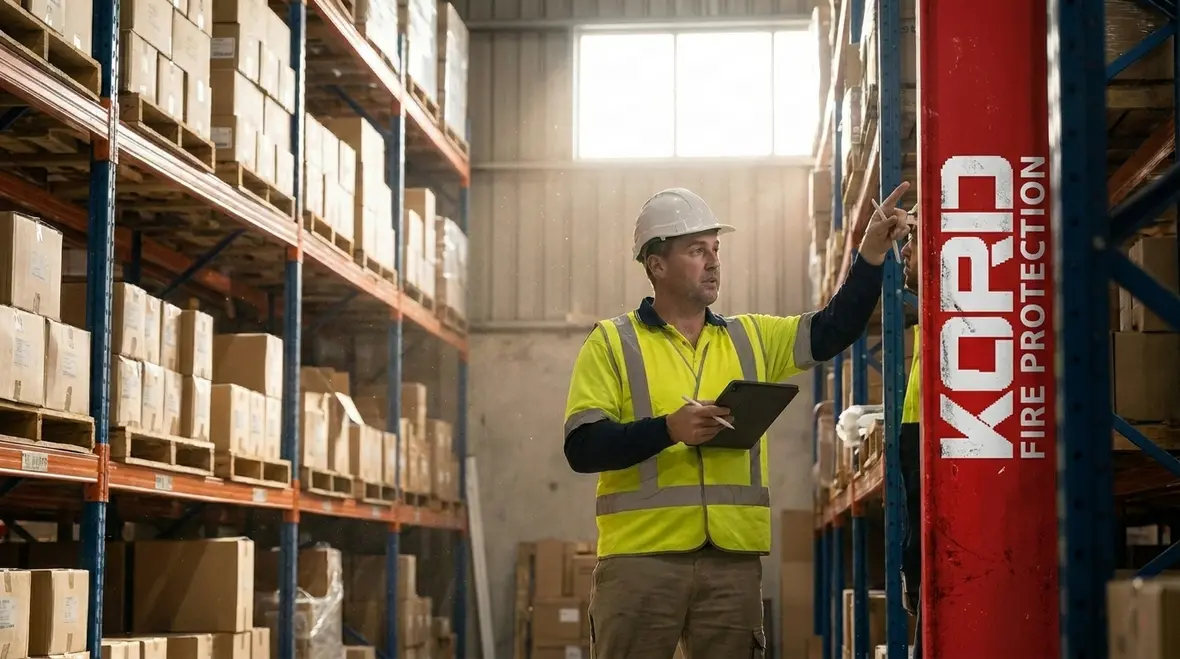
A comprehensive plan begins with a risk review grounded in daily reality. Warehouse leaders often think they already know the risks because they have labels for them. However, hazard mapping goes further. It links risk sources to how people move, how products load, and how processes run during peak periods.
Teams typically evaluate storage arrangements, aisle widths, rack heights, commodities, and ignition sources. They also consider how fast fires can grow when fuels are stacked closely and ventilation patterns push heat toward concealed spaces. Next, they analyze credible worst case scenarios, including blocked egress, delayed discovery, and rapid involvement of high density storage.
To keep the warehouse fire protection strategy grounded, the review should include recent changes. If the business added new lines, new solvents, or changed packaging suppliers, the fire behavior can shift. Therefore, the risk map stays current instead of freezing in time like a pop song stuck on repeat.
What a useful risk map usually includes
- Commodity types and packaging materials
- Rack height, spacing, and storage density
- Ignition points near charging, electrical, or process areas
- Travel paths, egress patterns, and pinch points during busy shifts
- Operational changes that may affect airflow or suppression performance
That kind of review turns vague concern into something operational teams can actually use. It helps maintenance staff, safety managers, and supervisors talk about the same problem using the same map. Which is refreshingly rare in any building where three departments can look at one aisle and describe three different realities.
Designing detection and suppression for scale and complexity
Large sites need systems that can detect and control a fire before conditions become catastrophic. This is where the warehouse fire protection strategy moves from ideas to engineered coverage. Detection choices must align with ceiling height, obstruction, and smoke layers. If smoke cannot reach detectors quickly due to airflow or storage density, detection timelines suffer.
Suppression design also must match the environment. Water based systems require correct spacing, reliable water supply, and protection of critical zones. Where water alone may not be enough, the design considers targeted approaches based on hazard type and equipment sensitivity. For example, control rooms, electrical rooms, and data areas often need special attention so suppression does not create secondary damage.
In addition, teams plan for interface points. That means coordinating alarms, panel behavior, shutdown sequences, door releases, and emergency communications. If everything triggers, but nothing guides action, the system does not help as much as it should. Therefore, the design should aim for control, not chaos.
That is also why many facilities pair this planning with dedicated industry fire sprinkler systems for industrial safety guidance when storage layouts, ceiling conditions, or fuel loads become more demanding. The sprinkler conversation is not separate from the warehouse strategy. It is the strategy wearing a hard hat.
Why system coordination matters more than people expect
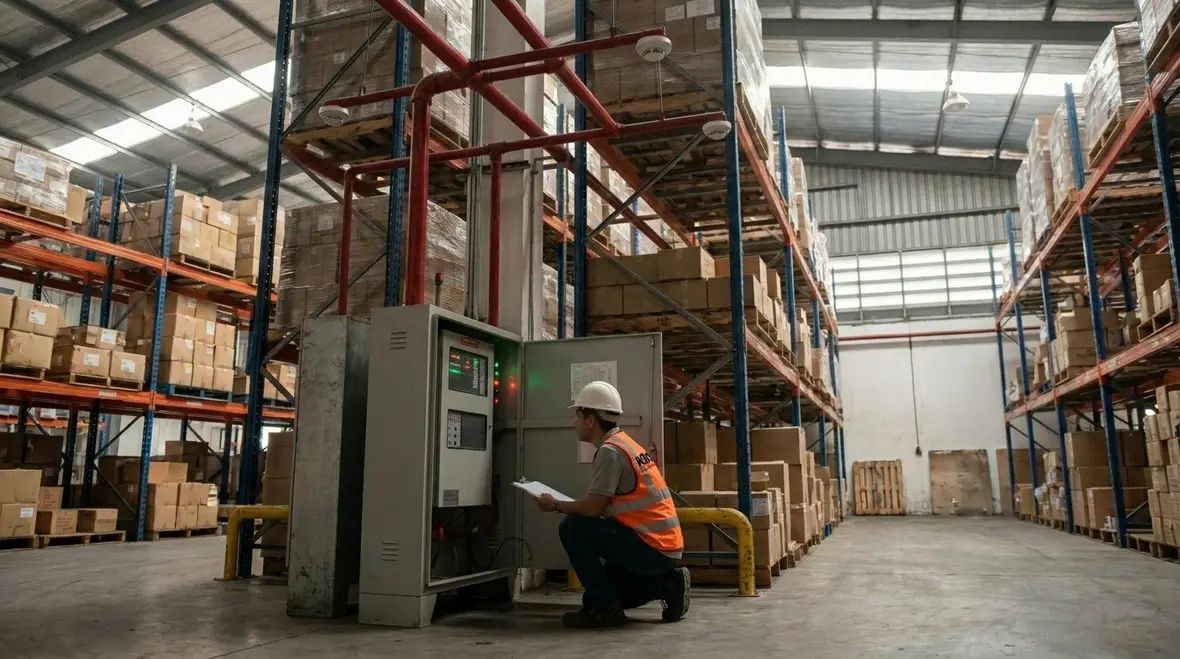
A detector may activate. A panel may signal. A sprinkler may discharge. Yet if mechanical shutdowns lag, notifications fail, or access points stay locked when they should release, response gets messy fast. Good design closes those gaps before the emergency starts. It gives every part of the building a role and every person a clearer next step.
Compartmentation and fire doors: the quiet heroes
Warehouses can feel like open fields, yet fires behave better when barriers exist. Compartmentation slows spread, buys time for safe evacuation, and limits damage so recovery stays realistic. That involves maintaining fire rated walls, sealing penetrations, and managing openings where services run through the structure.
Fire doors often get treated like background characters in a movie. They look important, but nobody thinks about them until they do not close. However, doors, dampers, and shutters must function as intended. Teams should verify door integrity, closure timing, and signage. They must also manage workflow so doors remain in the correct position during operations, not propped open “just for a minute.” Spoiler: fire does not care about a “minute.”
This part of the strategy rarely gets applause because it is less flashy than alarms and sprinklers. Still, passive protection does quiet, stubborn work. It contains smoke, protects routes, and helps firefighters operate in conditions that are at least somewhat less awful than they would have been otherwise.
Maintenance, inspection, and performance testing that teams can sustain
Many organizations install systems, then hope for the best. That approach works about as well as trusting a gym playlist to motivate discipline. Instead, a comprehensive warehouse fire protection strategy includes an inspection and maintenance program with clear ownership.
Key steps typically include routine checks of detection devices, alarm panels, sprinkler components, fire pumps, valves, and water supplies. Teams also verify that obstruction conditions have not changed. If stock shifts, rack extensions add barriers, or new seasonal displays appear, coverage and response can change.
Performance testing matters too. Testing should confirm that systems respond within required timelines and that alarms reach the right people quickly. When testing results highlight defects, the program must close the loop with corrective actions, document updates, and re checks. Over time, that method reduces downtime surprises and supports audit readiness across multiple facets of industrial, retail, and commercial facilities.

A sustainable program is better than a heroic scramble
The goal is not to panic beautifully the week before an audit. The goal is to build repeatable routines that make the audit boring. Boring is underrated. In fire protection, boring usually means organized records, functioning equipment, and fewer unpleasant surprises.
Training and drills: the difference between “it alarmed” and “it worked”
Systems protect the building, but people protect the business. Therefore, training must translate hazard knowledge into action. Warehouse teams should understand alarm meaning, evacuation routes, assembly points, and how to assist without putting themselves at risk.
Drills should use realistic prompts. For example, they can simulate a blockage scenario, a false alarm pattern, or a delayed detection outcome in a high density zone. When drills reflect real layouts, response becomes muscle memory rather than theory.
Additionally, roles should remain clear. Who performs isolations, who liaises with emergency services, and who verifies areas? When responsibilities blur, delays creep in. And delays can be expensive, even for businesses that pride themselves on speed. Because fast shipping does not help if safety coordination stalls.
Compliance documentation and audit readiness
Industrial and commercial operators often juggle multiple sites, different tenancy setups, and changing operational demands. As a result, compliance needs a structured approach, not scattered folders. A strong warehouse fire protection strategy organizes documentation so it stays usable for audits, insurer reviews, and safety governance.
That means keeping design basis records, commissioning outcomes, maintenance logs, test reports, and contractor sign offs. It also means tracking changes. A warehouse that adapts quickly should still keep a paper trail that explains what changed, why it changed, and how protection stayed aligned.
Here is where Kord Fire Protection can become a long term partner. They help teams stay confident with system checks and documentation support. In practice, that reduces last minute scrambling and makes improvement planning easier.
How Kord Fire Protection supports end to end improvement
A comprehensive fire plan does not end at installation. It evolves with the warehouse. Kord Fire Protection supports the full cycle with a practical mindset that helps facilities teams avoid “install and forget.” They focus on steady performance, clear reporting, and the kind of site aware guidance that respects how warehouses actually run.
Support often includes system assessments, inspection coordination, corrective action follow up, and planning for upgrades when hazards shift. Furthermore, they help businesses build a safer operating rhythm so staff feel prepared, and systems remain trustworthy.
For operators with complex storage conditions, mixed commodities, or expanding facilities, that outside perspective matters. It is easier to keep a strategy alive when someone is helping translate technical requirements into plain next steps instead of leaving the whole thing to a binder no one has opened since the commissioning photo.
FAQ
Next steps for a safer warehouse
Fire protection works best when it is planned, tested, and improved like a business process. If your industrial, retail, or commercial facility needs a stronger warehouse fire protection strategy, start with a risk review and confirm system performance. Then align training, compartment integrity, and documentation so everyone knows what to do.
Contact Kord Fire Protection to build confidence, reduce surprises, and keep protection working when it matters most. A better strategy does not just protect a building. It protects continuity, accountability, and the people who have to move through that space every day without guessing what happens when alarms sound.

Join Our Newsletter!
Get the latest fire safety tips delivered straight to your inbox From our Newsletter.