Warehouse Fire Safety Regulations Guide
Warehouse Fire Safety Regulations Explained
Warehouse Fire Safety is not just a line item on a compliance checklist. It is the thin red line between smooth operations and a five alarm disaster that ends up on the evening news. In large storage facilities filled with pallets, machinery, fuel sources, and human movement, even a small spark can grow into a serious threat. That is why regulations exist, and more importantly, why they must be understood. As Kord Fire Protection technicians often explain to facility managers, fire codes are not written to complicate life. They are written because someone, somewhere, learned a hard lesson the hard way.
So let us walk through what those regulations mean, why they matter, and how businesses can meet them with confidence instead of crossed fingers.
The Foundation of Warehouse Fire Safety Regulations
At its core, Warehouse Fire Safety regulations aim to protect people, property, and continuity of operations. They draw from national and local fire codes, building standards, and occupational safety rules. While the exact requirements vary by region, the principles remain consistent.
Assessing fire risk inside the warehouse
First, facilities must assess fire risk. This includes understanding what materials are stored, how high they are stacked, and whether they are combustible. For example, cardboard, plastics, and certain chemicals increase fire load. Therefore, regulators require specific sprinkler designs and spacing.
Detection, alarms, and response time
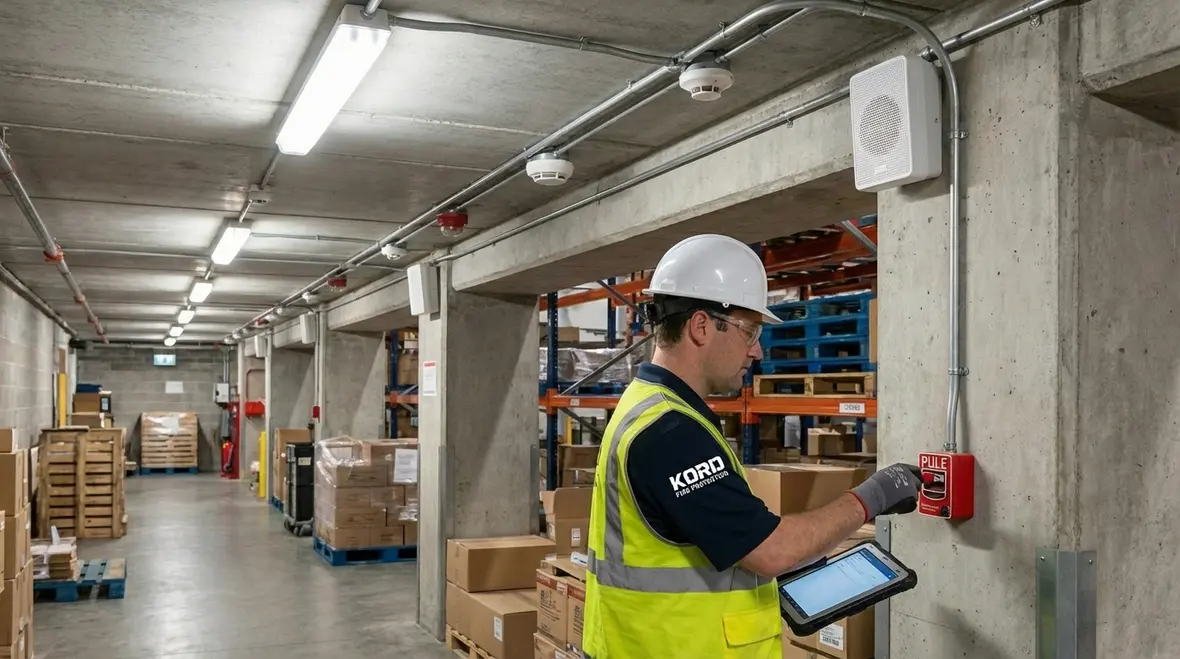
Second, buildings must include approved fire detection and alarm systems. These systems must alert occupants quickly and notify emergency services. In addition, they must be inspected and maintained on a schedule.
Access for fire crews and safe evacuation
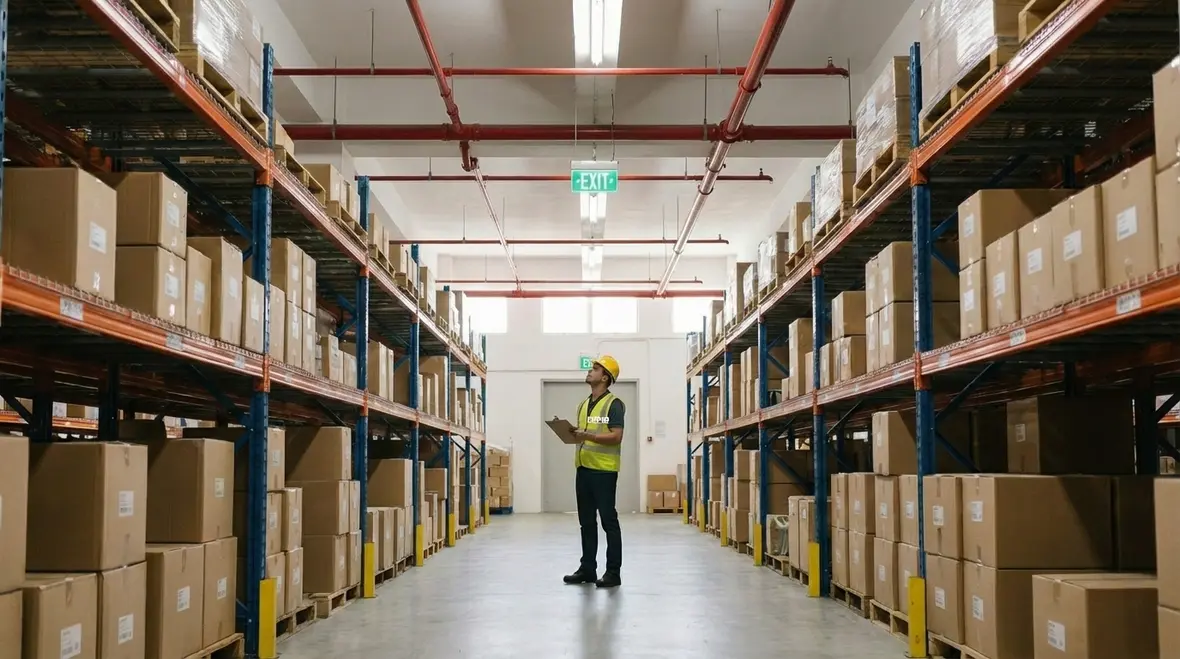
Finally, clear access for fire crews is mandatory. Fire lanes, marked exits, and unobstructed pathways are not optional. They are lifesaving essentials. As one Kord Fire Protection technician puts it, a blocked exit is like locking your parachute in the trunk before a skydive. It defeats the purpose.
How Sprinkler Systems Meet Compliance Standards
If fire protection had a superhero, it would be the sprinkler system. It does not wear a cape, but it does show up right on time. However, not all sprinklers are created equal.
Warehouse Fire Safety codes require systems designed for the specific hazard classification of the building. Light hazard, ordinary hazard, and high piled storage each demand different flow rates and coverage. For example, high rack storage of plastics may require in rack sprinklers in addition to ceiling units.
Water supply, pumps, and hardware performance
Kord Fire Protection technicians often explain that water supply calculations matter just as much as hardware. A system must deliver adequate pressure and volume for a defined duration. Therefore, engineers test pumps, inspect control valves, and confirm that nothing has been altered without approval.
Inspection schedules that keep sprinklers ready
Moreover, routine inspections are not just a suggestion. Monthly visual checks, quarterly testing, and annual full inspections ensure the system performs as designed. After all, a sprinkler system that fails during a fire is about as useful as a smoke detector with no batteries. It looks impressive, but it does nothing.
Fire Alarm and Detection Requirements
Early detection saves time, and in a warehouse, time is everything. Regulations require approved fire alarm systems that match the size and layout of the building. These systems typically include smoke detectors, heat detectors, manual pull stations, and audible alarms.
In larger facilities, voice evacuation systems may be required. These systems provide clear instructions during an emergency. Instead of a simple siren, occupants hear guidance on where to go. Consequently, evacuation becomes organized rather than chaotic.
Integrated systems for a coordinated response
Technicians from Kord Fire Protection emphasize that integration is key. Alarm systems often connect with sprinkler monitoring and sometimes with security systems. If one device activates, the system communicates across platforms. This coordinated response reduces delay and improves safety.
Regular testing remains mandatory. Authorities typically require annual inspections, and some components demand more frequent checks. Documentation must be accurate and accessible. When inspectors arrive, having organized records can make the difference between a smooth visit and a long afternoon.
What Do Inspectors Look For During a Warehouse Fire Safety Audit?
This is the question many managers type into search bars late at night. Fortunately, the answer is straightforward.
Inspectors focus on compliance with fire codes and operational readiness. They review:
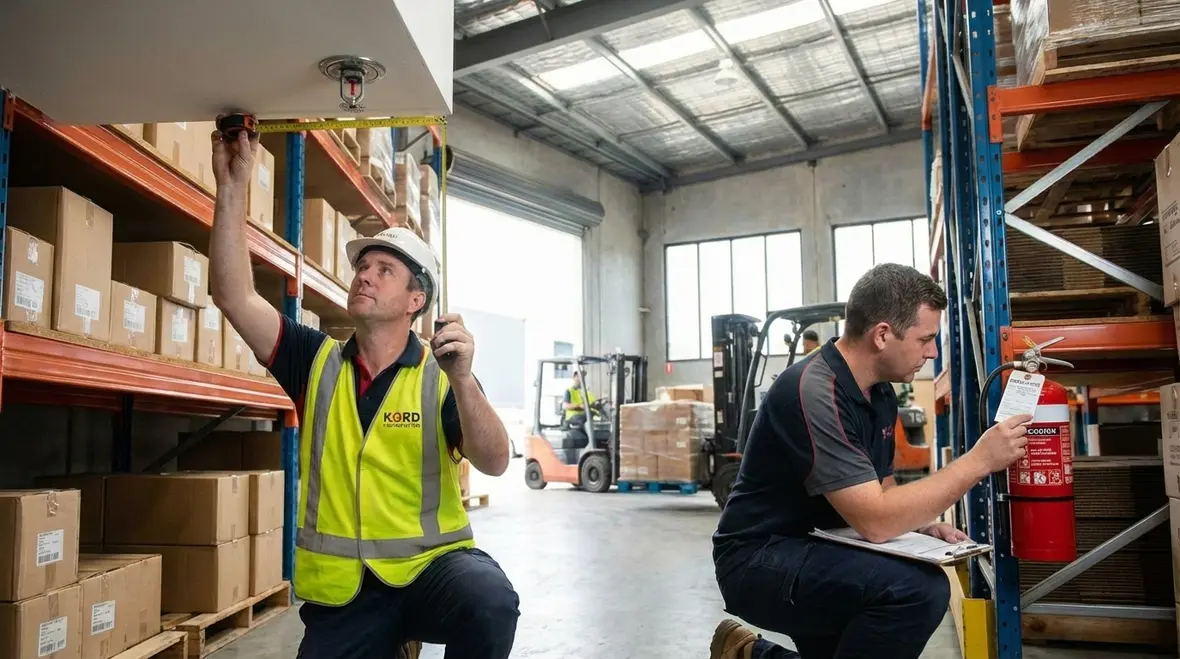
- Sprinkler system condition and clearance below heads
- Proper storage height and spacing
- Functioning fire alarms and pull stations
- Clear exit routes and illuminated exit signs
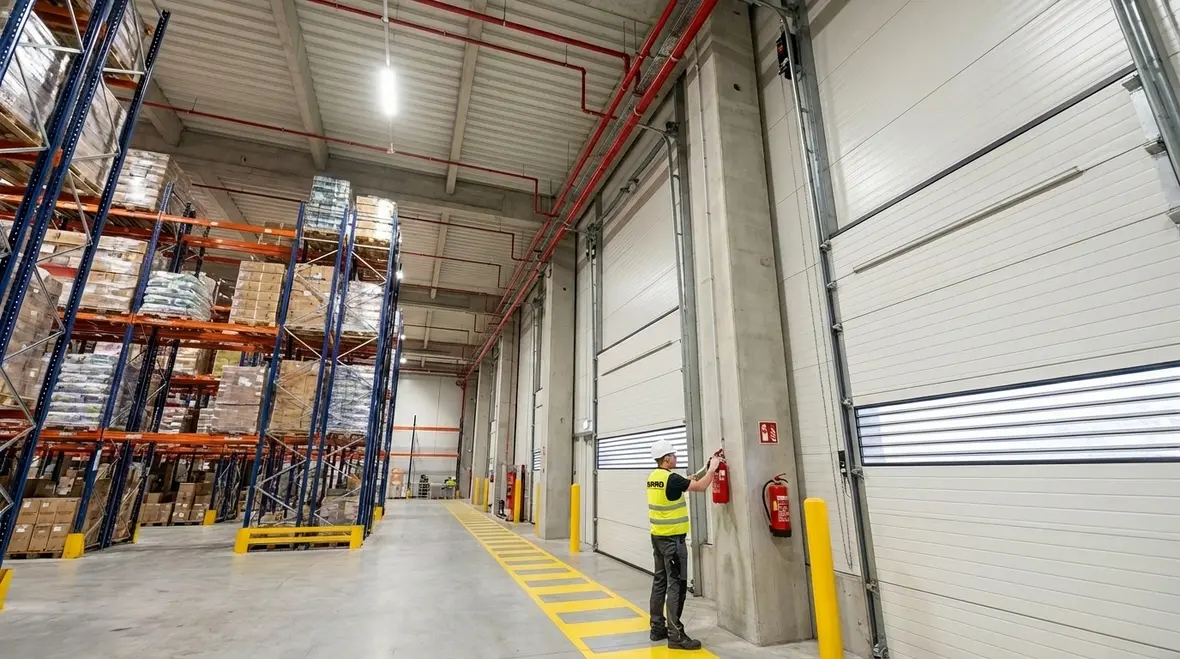
- Accessible fire extinguishers with current inspection tags
- Electrical panel clearance and safe wiring
In addition, they check housekeeping practices. Dust buildup, cluttered aisles, and blocked fire doors raise red flags. Although it may seem minor, poor housekeeping can accelerate fire spread.
Kord Fire Protection technicians often prepare clients before inspections. They walk the site, identify gaps, and recommend corrective action. This proactive approach turns inspections into confirmations rather than confrontations. Nobody enjoys surprises, especially the kind that come with fines.
Storage Practices and Material Handling Rules
Warehouses exist to store goods. However, how those goods are stored directly affects compliance. Regulations limit stacking height based on sprinkler design. If storage exceeds approved levels, the entire fire suppression strategy may fail.
Furthermore, flammable liquids require special cabinets or dedicated storage rooms. These areas must include ventilation and spill containment. Forklift charging stations also need separation from combustible materials because batteries produce heat and sometimes sparks.
Common storage categories and their fire protection controls
To clarify complex requirements, the following overview highlights common storage categories and related safety controls:
Storage Type Required Fire Protection Measures
General palletized goods Standard sprinkler coverage with height limits
High piled rack storage Enhanced sprinkler density and possible in rack systems
Flammable liquids Approved cabinets and spill control
Aerosols or plastics Specialized sprinkler design due to rapid fire spread
These distinctions matter because not all fires behave the same way. Plastics, for example, generate high heat and dense smoke. Therefore, suppression must respond faster and more aggressively.

Training and Emergency Planning Requirements
Even the best equipment cannot replace informed people. Regulations require employee training on fire prevention, extinguisher use, and evacuation procedures. In many regions, facilities must conduct regular fire drills.
Emergency action plans should outline clear roles. Who calls emergency services. Who accounts for staff. Who shuts down critical systems if safe to do so. When these steps are defined in advance, response becomes steady rather than frantic.
Kord Fire Protection technicians often assist in reviewing these plans. They translate technical code language into practical steps. As they like to say, a plan sitting in a binder is not a plan. It is just paper.
Additionally, signage must remain visible and up to date. Maps showing exits and assembly points help visitors who may not know the layout. Because warehouses can feel like mazes, clarity becomes essential during an emergency.
Maintaining Compliance Through Documentation and Routine Service
Compliance does not end after installation. In fact, it begins there. Authorities require detailed records of inspections, repairs, and system tests. Without documentation, proving compliance becomes difficult.
Routine service schedules should include:
- Monthly extinguisher checks
- Quarterly sprinkler valve inspections
- Annual full system testing
- Five year internal pipe inspections where required
Because regulations evolve, staying informed matters. Codes update to reflect new research and technology. Therefore, facility managers should review changes regularly and consult professionals when unsure.
Kord Fire Protection technicians guide clients through these updates. They evaluate existing systems and recommend adjustments before problems arise. This steady approach protects both safety and budgets. After all, planned upgrades cost less than emergency retrofits.
Frequently Asked Questions
Conclusion and Next Steps
Warehouse Fire Safety is not a background detail. It is the backbone of responsible operations. When regulations are understood and followed, businesses protect their people and their future. Kord Fire Protection technicians stand ready to explain requirements, inspect systems, and guide improvements with clarity and calm expertise.
For facilities that value safety and stability, now is the time to review, upgrade, and strengthen fire protection measures before risk becomes reality. Connect with Kord Fire Protection to align your warehouse with current codes, streamline inspections, and keep your operation off the evening news for all the right reasons.
Know Your Weapon Before You Fight the Flame
Kord Fire Protection is your go-to when it comes to all things fire protection. For over 20 years, we’ve been serving Southern California with the quality service and equipment to keep your home or business safe at all times. Our competitive prices reflect our unwavering commitment to protecting what matters most in the event of a fire emergency. Give us a call, send an email, or use that form!

Join Our Newsletter!
Get the latest fire safety tips delivered straight to your inbox From our Newsletter.