
Commercial Fire Prevention Planning for Industrial Warehouses
Industrial warehouse fires do not usually start with a dramatic explosion. More often, they begin quietly, with a smolder, a blocked vent, or a small electrical fault that grows into a big problem before anyone says, “Wait… why does that smell like burning regrets?” That is why commercial fire prevention planning matters. It gives warehouse leaders a clear, proactive system for reducing risk, improving readiness, and keeping operations moving. In this article, Kord Fire Protection technicians break down how to build a practical fire prevention plan that fits how warehouses actually run, including storage layouts, high racks, busy loading docks, and the daily rhythm of people and equipment.
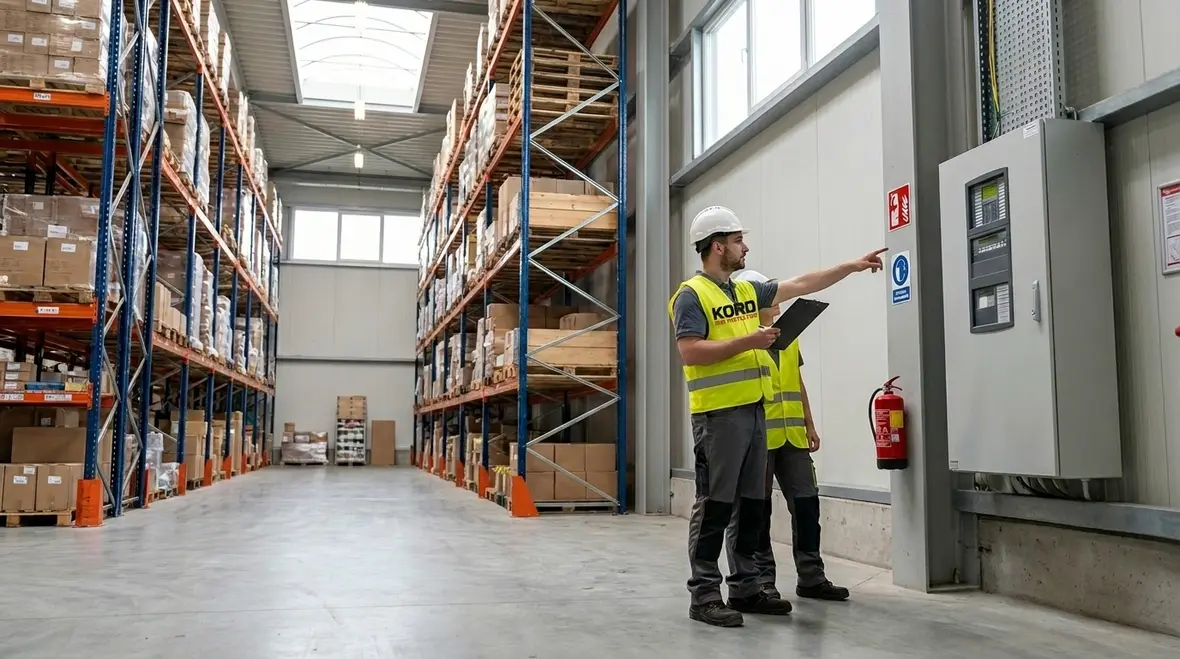
How a warehouse fire prevention plan reduces risk before emergencies hit
A proactive plan works because it focuses on causes, not just reactions. Instead of waiting for a fire alarm to do the talking, the plan sets rules and checks that prevent common ignition sources. As a result, managers can spot gaps early, correct unsafe conditions fast, and document improvements for audits and insurers.
Kord Fire Protection technicians often point out that warehouses behave like living systems. First, materials change, like seasonal inventory swaps and new packaging types. Then, workflows shift, such as expanded picking zones or updated dock schedules. Finally, people learn new routines. Therefore, the plan must adapt. It cannot be a paper poster that looks nice but never helps when real conditions change.
In the real world, a fire prevention approach also lowers downtime risk. When staff know what to do and when they do it, the business loses less time during incidents. That is not just safety. It is operational control, and frankly, warehouses love control almost as much as they love forklifts. Almost.
Why prevention planning works better than reaction alone
Prevention planning creates repeatable habits. It tells supervisors what to inspect, operators what to report, and maintenance teams what to fix before a problem grows teeth. It also creates accountability. If a dock area keeps collecting packaging debris or a charging station keeps showing damaged cords, those issues stop being vague annoyances and start becoming tracked action items with deadlines.
That structure pairs well with broader compliance conversations too. If your operation includes shared spaces, leased areas, or mixed occupancy concerns, it helps to connect warehouse planning with related guidance on fire code compliance multi tenant responsibilities. Clear ownership is one of those deeply unglamorous things that becomes wildly exciting the moment something goes wrong.
Start with a hazard walk and inventory that actually matches reality
The first step is to understand what sits in the building, where it sits, and how it behaves during everyday operations. A hazard walk includes storage review, housekeeping patterns, waste management routes, and ignition source mapping. Moreover, teams should examine hot work areas, charging stations for equipment, and locations where maintenance occurs.
Kord Fire Protection technicians typically recommend that the plan reference the warehouse’s real layout, including rack rows, aisle widths, and door locations. Additionally, the plan should list how materials vary by season. For example, winter storage often includes different pallets, shrink wrap, or foam packaging than summer inventory.
To keep the plan usable, staff should label risks in plain terms. Instead of vague notes like “electrical issue,” the team records items like “damaged cord near packing station” or “missing cover on junction box near maintenance bay.” Then, leaders assign owners and due dates. That approach turns the walk from a “nice tour” into a control system.
What to include on the walk so it does not become a checkbox parade
A solid hazard walk should follow the path of actual work, not just the prettiest route through the building. Start at receiving, move through storage, packing, charging areas, maintenance points, and loading docks, then end where waste exits the site. That sequence shows where cardboard piles up, where equipment pauses, where temporary staging turns permanent, and where “we’ll move it later” becomes a surprisingly dangerous decorating style.

Build practical rules for housekeeping, storage, and separation
Housekeeping becomes a fire prevention tool when it is consistent and measurable. Accordingly, the plan should define what “clean” means for each zone. It might include clear aisle standards, limits on debris build up, and specific storage rules for trash, cardboard waste, and packaging film. If the building allows temporary staging, the plan should state time limits and where staging may occur.
Storage and separation rules protect both people and property. That means the plan addresses how far combustibles stay from heat sources and how products spread across racks. It also covers what happens when inventory levels surge, such as when pallets pile up because a truck runs late. As a result, staff have a safe process rather than relying on guesswork and hope.
Kord Fire Protection technicians also stress controlling “hidden fuel.” For example, cardboard dust in corners, lint near fans, or residue around warehouse doors can quietly accumulate. Therefore, the plan should include inspection points for these areas and define the cleanup method, not just the goal.
And yes, this is the boring part that prevents the exciting part. Like wearing a seatbelt. Nobody cheers for seatbelts until the day they save your life.
Examples of warehouse rules that people will actually follow
- Maximum time limits for temporary pallet staging near docks
- Daily cleanup expectations for shrink wrap, cardboard, and loose packaging
- Required clearance around panels, extinguishers, and alarm equipment
- Defined locations for battery charging and damaged equipment isolation
- Assigned ownership by role, not by hopeful eye contact in the break room
Define ignition source controls for equipment, electrical, and hot work
Industrial warehouses rely on powered equipment, and powered equipment can ignite fires if maintenance, charging, or wiring controls fail. So, the plan should include clear guidelines for battery charging locations, charging cable inspection, and ventilation expectations where required. It should also state how staff report damage and how quickly they remove unsafe equipment from service.
For electrical controls, the plan should cover damaged cords, overloaded power strips, and recurring breaker trips. Instead of generic statements like “inspect electrical,” the plan defines inspection frequency, labeling, and escalation steps. This is where many plans fall short, because they say “check it” but do not say “who checks it” or “what happens if it fails.”
Hot work controls matter too. The plan should include permit steps, fire watch rules, safe distances from combustibles, and proper extinguisher placement for the task type. Moreover, it should document training for staff who request permits and staff who carry out inspections after the work ends.
Kord Fire Protection technicians explain that ignition source control works best when it has a routine. Then, when staff see a problem, they follow the routine instead of improvising under pressure. That can mean the difference between a small smoke event and a full incident.
Where ignition source controls usually break down
Most failures are not mysterious. They happen when damaged chargers stay in service, when extension cords become permanent architecture, when maintenance slips behind schedule, or when hot work gets treated like “just a quick task.” A prevention plan is there to make “quick” less reckless. It sets the expectation that if something sparks, overheats, arcs, smells wrong, or trips breakers repeatedly, it gets removed from service first and debated later.
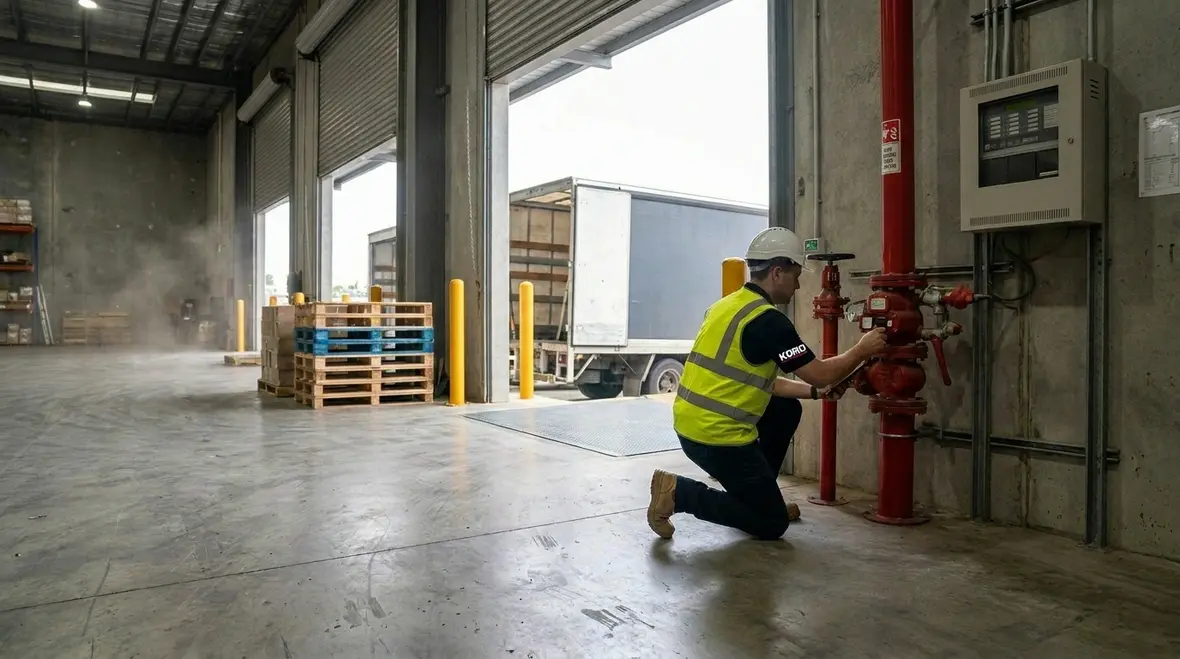
How the plan uses fire protection system readiness and inspections
A proactive plan must connect prevention to the actual fire protection systems in the building. That means leaders should include inspection and testing expectations for alarm systems, suppression equipment where present, and related components. However, the plan should also cover readiness tasks that do not belong only to inspections, such as keeping access clear, verifying panels are not blocked, and ensuring signage stays visible.
Transitioning from “systems exist” to “systems are ready” requires a clear schedule. Therefore, the plan should list who checks what, when checks happen, and what records get stored. It should also address how staff handle repairs and how they manage temporary shutdowns so the building stays as protected as possible.
In warehouses, access becomes a real issue. A team might schedule an inspection but still find that racks were moved or storage expanded into access aisles. So, the plan should define access clearances as a rule, and it should assign responsibility for maintaining them.
Kord Fire Protection technicians often remind clients that good prevention also supports testing outcomes. When the building stays organized and control points remain accessible, inspections run smoother and results feel more trustworthy. Nobody wants an inspection that turns into a scavenger hunt. The only scavenger hunt that should happen is for the missing end cap on a dock door, not for valves and panels.
Connect readiness tasks to service support before the emergency
It helps to pair your prevention plan with a service partner that can support inspections, repairs, and system follow through. Kord Fire Protection’s full fire protection services page outlines support for sprinklers, alarms, extinguishers, and readiness across commercial and industrial properties. When prevention planning connects to actual service capacity, the plan stops being theory and starts behaving like infrastructure.
Train people, run drills, and document everything the business will ask later
Fire prevention fails when training stays theoretical. So, the plan should include short, role based training for supervisors, warehouse operators, maintenance teams, and contractors. It should cover how they report hazards, how they manage ignition sources, and how they respond to early warning signs. Then, it should include expectations for drill participation and after action reviews.
Moreover, the plan should document learning. After drills, the team captures what worked, what did not, and what steps leaders will adjust. That documentation supports continuous improvement and helps during audits, insurance questions, or incident reviews.
To keep documentation practical, leaders should store key records in a system that staff can access quickly. For example, the plan can include checklists, training logs, and inspection results. Additionally, it should list contact roles and escalation paths so the right people act fast.
At the same time, the plan must address contractor control. Warehouses often bring in outside vendors for repairs, upgrades, and cleaning. The plan should require contractor compliance with fire prevention steps, including hot work permissions, housekeeping rules, and access expectations.
Documentation that saves time when everyone suddenly needs answers
When leadership, auditors, insurers, or investigators ask what happened, good records keep the answer from sounding like a dramatic retelling based on vibes. Maintain logs for training dates, drill observations, corrective actions, equipment issues, service tickets, and completed repairs. A prevention plan that produces clean documentation is easier to improve, easier to defend, and much easier to trust.
FAQ for industrial warehouse fire prevention planning
Next steps: make the plan real with Kord Fire Protection technicians
Warehouse leaders who act early prevent fires and protect uptime. Kord Fire Protection technicians help teams build commercial fire prevention planning that fits the warehouse layout, the daily workflow, and the actual risk profile. They guide hazard walks, refine housekeeping and ignition source rules, connect prevention to system readiness, and help leaders document training and inspections.
If the current plan feels like a binder on a shelf, it is time to upgrade. Reach out through Kord Fire Protection’s service team to build a practical plan for your operation, not a generic checklist. The goal is simple: fewer surprises, stronger readiness, and a warehouse that smells like productivity instead of burning regrets.

Join Our Newsletter!
Get the latest fire safety tips delivered straight to your inbox From our Newsletter.