Fire Alarm Power Supply Backup For Reliable Secondary Power
Quick Answer: Fire alarm systems need steady, reliable secondary power so alarms run through outages without delays. Facilities teams should size backup correctly, test it on a schedule, and verify the right charging and supervision. Kord Fire Protection can become a vital partner by designing, verifying, and maintaining power reliability across commercial and industrial sites.
When the main power fails, fire alarm systems must still do their job fast, clearly, and without drama. That is where fire alarm power supply backup earns its place, because the panel must keep signaling, supervising circuits, and managing device status while other systems respond. Batteries and converters that look fine on paper can misbehave in real time, which is why facilities should treat secondary power like life support for the building’s safety network, not a box to tick.
To set the tone, think of it like a backup plan for your morning coffee. Sure, you can survive without it, but you will regret it. Now imagine that regret, but with smoke, people, and compliance involved. Secondary power has to work, every time.
For facilities that want a dependable partner early in the process, Kord Fire Protection also provides full fire protection services that help teams coordinate alarm reliability with the rest of the site’s life safety work. And when the focus is specifically on alarms, their dedicated fire alarm service supports inspection readiness, testing discipline, and ongoing system care.
Why reliable secondary power matters for life safety
Fire alarm systems rely on more than logic and wiring. They depend on power stability to ensure the system can continue to monitor initiating devices, supervise circuits, and transmit outputs. When a power disturbance occurs, the panel and control logic must transition into standby without resetting, dropping supervision, or losing notification output. If the transition is slow or unstable, the system can show faults, miss a state change, or delay alarm signaling.
Secondary power is also about maintaining the right behavior during abnormal conditions. Instead of only powering the panel, it keeps the system supervised, so technicians and authorities can trust the reported status. In commercial, retail, and industrial facilities, that means fewer surprises during inspections, fewer emergency callouts, and fewer “it worked last week” moments.
Stable power protects more than the panel
A healthy backup arrangement protects confidence in the entire system. If operators cannot trust what the panel says during an outage, response slows down, fault chasing increases, and maintenance becomes reactive instead of controlled. That is why reliable secondary power is not just electrical support. It is operational support.
How to size and select backup power correctly
Proper selection prevents failure from day one. First, the facility must determine the required standby and alarm durations for the system. Then, it must calculate the load, including the panel, sounders, beacons, relays, communication modules, and any device type with high current draw. Next, it must account for the system’s expected behavior during an alarm event, when loads can rise.
Once the load is clear, the right approach includes choosing cells or batteries rated for the needed capacity, environmental conditions, and cycle behavior. The charging method matters too. A charger that undercharges reduces battery health, while one that overcharges shortens lifespan and increases risk. Furthermore, cable runs, voltage drop, and terminal connections influence performance. A “close enough” wiring choice can steal voltage right when the panel needs it most.
Finally, a responsible team considers age and maintenance history. Batteries rarely fail all at once like a movie villain. They usually degrade quietly, then fail in ways that are hard to predict without real testing.
Good calculations beat expensive guessing
Sizing is not glamorous, but it saves teams from painful surprises. A system can appear fine during casual checks and still come up short when the site demands full standby and alarm performance. That is why every addition, modification, and tenant change should trigger a fresh look at load assumptions.
What tests and inspections confirm secondary power reliability
Paper specs do not protect a site during an outage. Testing does. A strong secondary power program typically includes scheduled battery capacity checks, functional output verification, and charger performance checks. It also includes verifying that supervision and fault signaling behave properly while running on backup power. This step matters because a panel that can sound alarms but does not report correctly still creates operational risk.
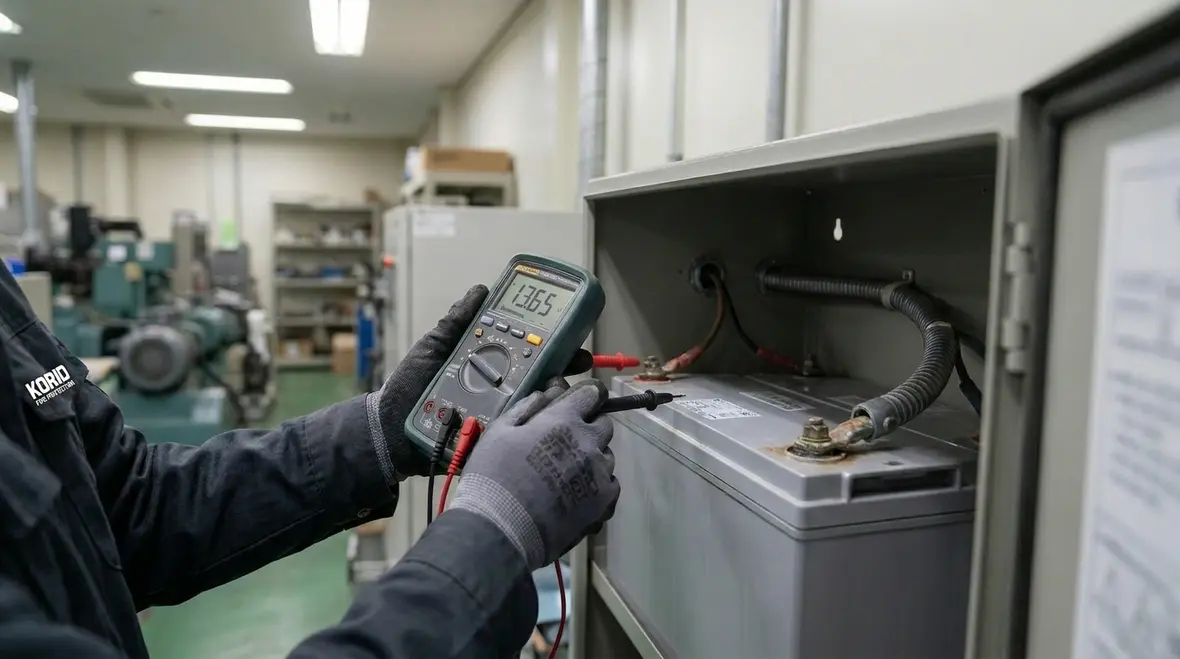
To make testing effective, the team should follow a consistent procedure. They should measure voltage under load, confirm charging behavior, and check for loose terminations, corrosion, and heat damage. After that, they should document results, track trends over time, and plan replacements based on condition rather than a vague “sometime next year” plan.
Transition words like therefore, however, and next help teams stay systematic. For example, they can test, then validate results against expected performance, and only then move forward. That sequence reduces confusion and helps keep compliance evidence clean.
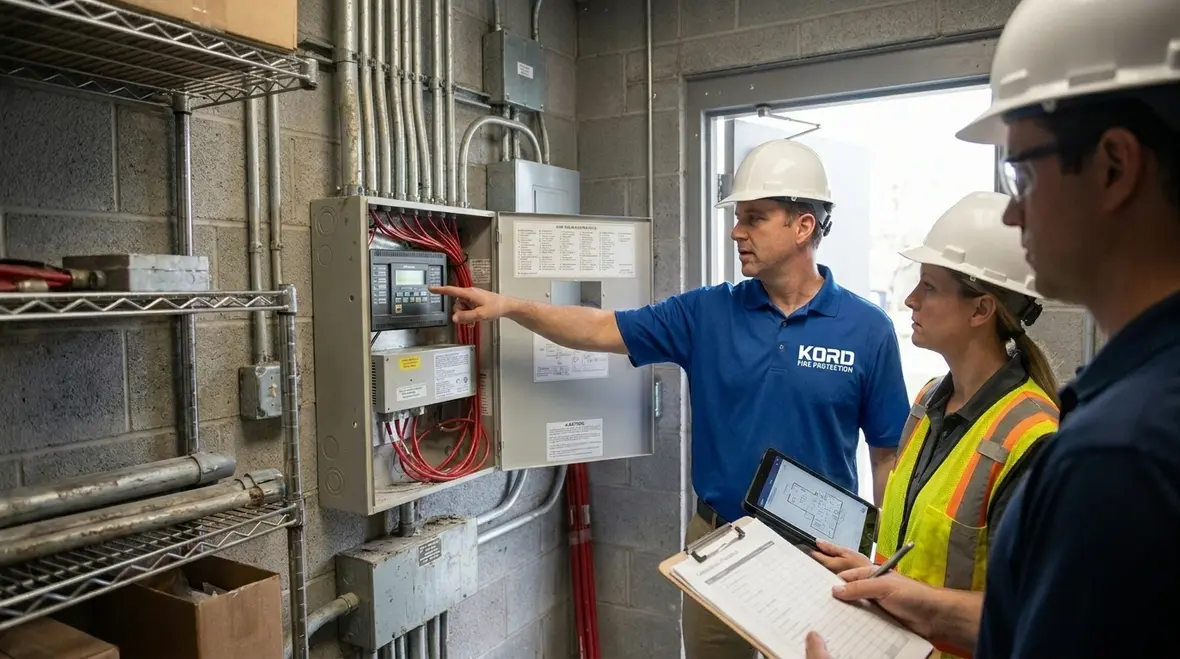
How charger behavior impacts the fire alarm power supply backup system
The charger often decides whether the secondary power supply lasts or struggles. A battery does not just sit there. It receives charging control that must match battery chemistry and temperature conditions. If the charging voltage is off target, the batteries may look healthy but actually lose capacity early. Then, during a real outage, the backup power can fall short.
Some facilities also assume the panel will handle everything because it is “smart.” Yet, a panel can supervise faults while still running a charger that drifts out of range. Therefore, the best practice includes periodic charger verification and inspection of charging circuits, including fuses, resistors, and connections.
Temperature effects add another layer. If the batteries sit in a cabinet that runs hot, the charger settings might require adjustment and monitoring. Heat is a quiet thief, and it works overtime. So, technicians should check cabinet ventilation, cable routing, and enclosure conditions.
When the charger and batteries align, the system maintains readiness with consistent voltage. And when they do not, the facility often finds out during a test that feels like a pop quiz without studying. Nobody wants that.
Charging discipline keeps backup from becoming a weak link
The charger is easy to overlook because it usually works quietly in the background. Unfortunately, quiet problems still become loud emergencies later. A steady verification routine helps expose drift before the batteries are asked to carry the building through a real event.
Designing redundancy for industrial, retail, and commercial sites
Large facilities and complex layouts need more than a single backup approach. Some sites require multiple notification zones, remote panels, or distribution that can add load at different points in the system. That is why design must consider circuit lengths, device density, and the sequence of alarm outputs.
In industrial environments, the system also faces vibration, temperature swings, and dust exposure. In retail, rapid renovations, changing floor plans, and frequent tenant modifications can affect loads and connections. In commercial facilities, the building’s lifecycle changes often introduce new devices, communications modules, or wiring extensions.
Therefore, the design process should include a method to manage change. It should track additions and ensure secondary power calculations remain accurate. Next, it should ensure that any updated wiring stays within voltage drop limits. Then, it should confirm that the supervision remains stable under standby and alarm conditions.
Why Kord Fire Protection becomes a vital partner
Facilities teams often juggle contractors, compliance expectations, and long maintenance windows. That makes it easy for secondary power tasks to become fragmented. Kord Fire Protection can become a vital partner by coordinating reliability across the entire service job, not just installing components and walking away.
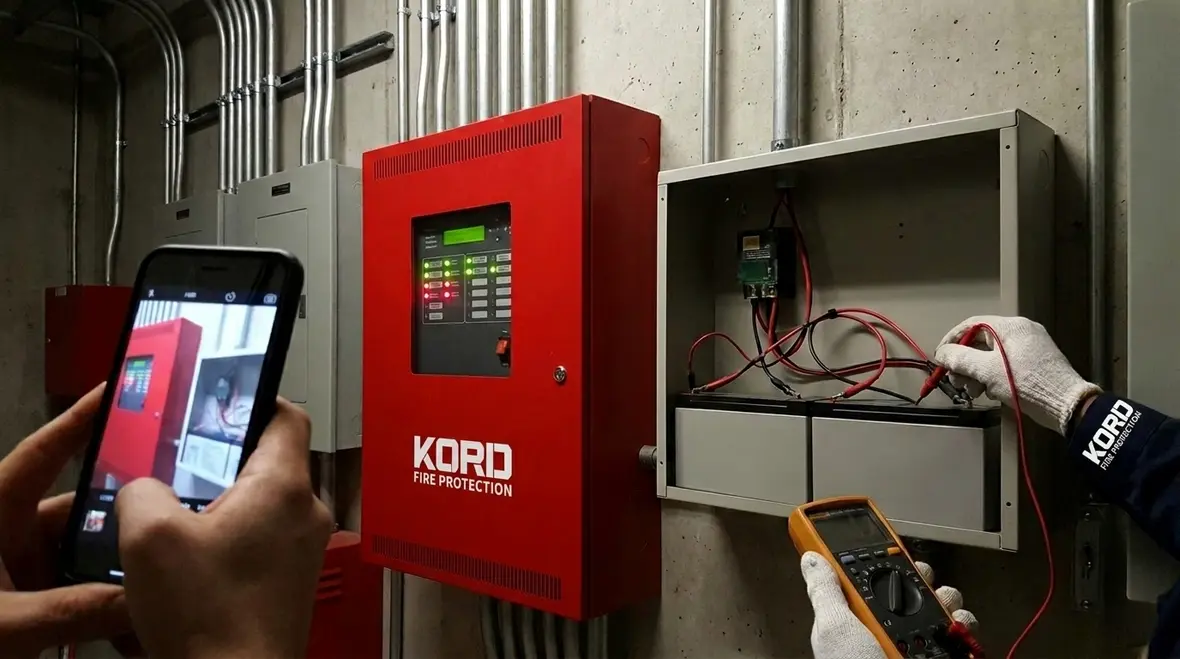
They can help teams by reviewing the system design, validating power calculations, and verifying real-world performance through structured testing. They can also support ongoing maintenance planning, including battery replacement strategy, charger verification, and documentation that supports inspection readiness.
And because every site carries its own “surprises,” Kord Fire Protection can help identify risk patterns early. For instance, they may notice that cabinet temperature trends reduce battery life or that a recent device upgrade increased load beyond the earlier calculations. In other words, they help prevent small issues from turning into big alarms.
To be clear, this kind of partnership reduces downtime and improves confidence. It also helps facility managers sleep a little better, even if their phones never fully stop buzzing. (Phones, like batteries, always have a lifespan.)
Using power supply backup to avoid nuisance faults and downtime
Secondary power problems can create nuisance faults that waste time and damage trust in the system. A battery that sags under standby load can trigger trouble indications. Meanwhile, a charger that oscillates or loses output can cause repeated fault states. Even if alarms still work, frequent trouble signals can overwhelm maintenance teams and lead to delayed response when a real alarm occurs.
However, with careful commissioning and later verification, teams can reduce false alarms. They should confirm connector integrity, inspect voltage regulation, and test outputs during battery operation. Next, they should ensure the system’s supervision thresholds and circuit expectations match the installed hardware. Then, they should maintain a schedule that includes load checks rather than only visual inspections.
Dual view checklist for secondary power reliability
Facility team actions
- Schedule access
- Log outages and faults
- Track device changes
- Keep records of battery dates
Service partner actions
- Verify calculations
- Test standby and alarm performance
- Confirm charger behavior
- Document results and recommendations
FAQ
Final CTA: build dependable backup with a partner that stays on the job
Reliable secondary power is not guesswork. It requires correct sizing, disciplined testing, and ongoing verification of charger and battery performance. For industrial, retail, and commercial facilities, teams can reduce downtime and inspection stress by setting up a clear maintenance plan now.
Contact Kord Fire Protection to review your fire alarm power supply backup approach, validate performance, and keep safety systems ready when the lights go out.

Join Our Newsletter!
Get the latest fire safety tips delivered straight to your inbox From our Newsletter.