Fire Protection for Data Centers with Kord Fire Protection
Quick Answer: Mission critical data centers need more than basic sprinklers and prayers. They require engineered suppression, disciplined detection, compartment control, and strict inspection routines that match real risk. With the right support, kord fire protection can help teams design, verify, and maintain systems that protect uptime and revenue.
In mission critical data center environments, the cost of fire is measured in more than dollars. It is measured in downtime, lost transactions, compliance gaps, and customer trust. That is why fire protection for data centers must act like a system, not a collection of devices. When the facility team works alongside kord fire protection, the job shifts from “install and hope” to careful planning, verification, and ongoing performance. And yes, hoping is great for sports, bad for suppression systems. After all, servers do not run on vibes.
Near the front end of that planning, many operators benefit from aligning data hall strategy with dependable full fire protection services so inspection, testing, suppression, alarms, and room integrity support are not treated like separate islands. Early coordination with fire alarm service also helps detection logic stay sharp when airflow patterns, rack density, and operating conditions get complicated.
Assess risk like a mission brief, not a checklist
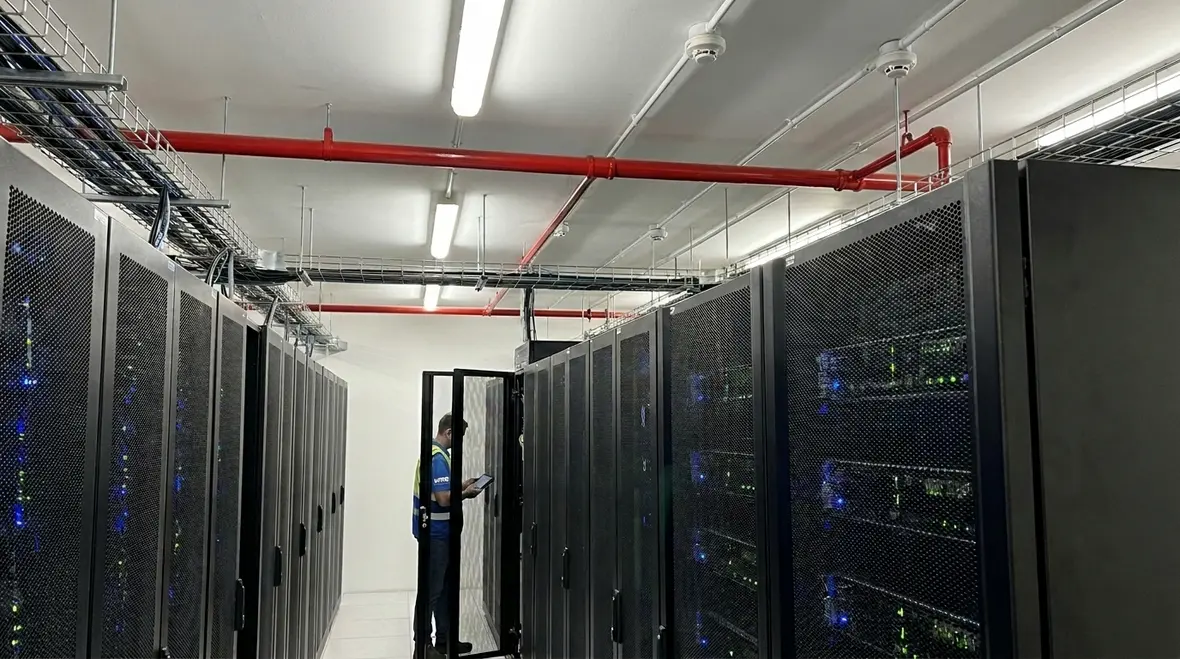
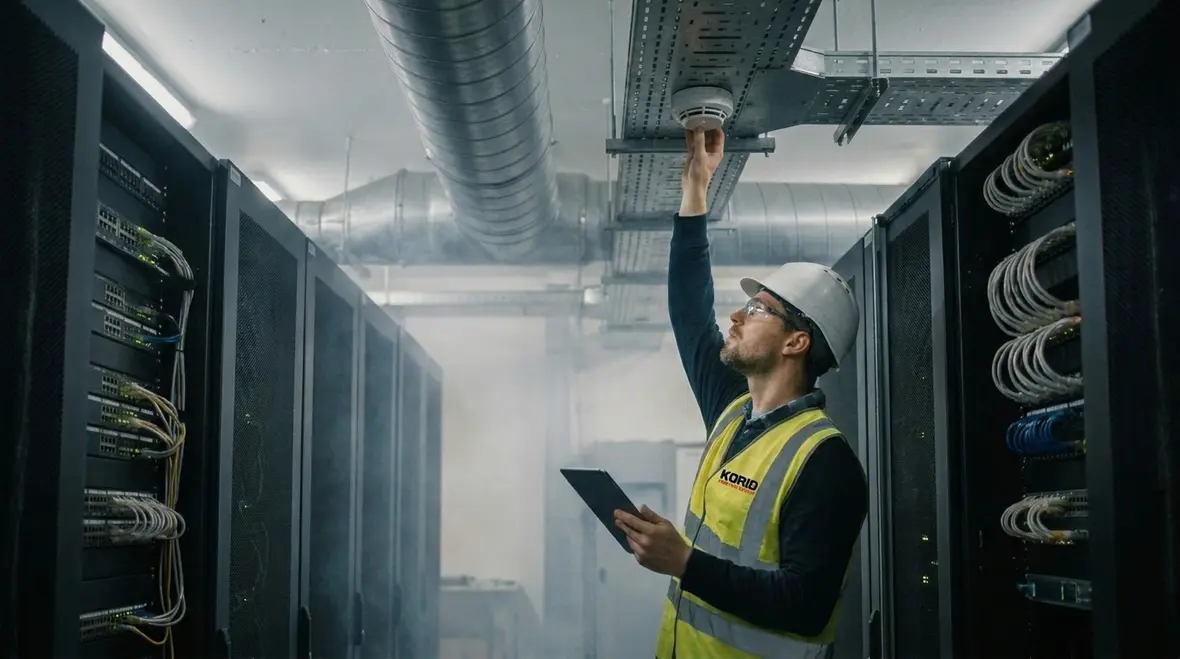
To protect mission-critical infrastructure, teams begin by mapping risk drivers in a way that reflects how the building actually operates. First, they identify high fuel load materials, cable trays, server cabinets, raised floors, and airflow pathways. Then they connect those findings to fire scenarios that can start inside racks, behind walls, or in cable bundles.
Next, they evaluate where smoke travels and how ventilation changes behavior. For example, airflow from cooling systems can move heat and smoke faster than a typical room model expects. Therefore, detection placement and alarm logic must consider real airflow, not just floor plans.
Finally, they align requirements with the facility’s operational goals such as rapid server restart, reduced smoke damage, and minimal downtime. This is where fire protection for data centers planning becomes more precise: it defines what to protect, how to protect it, and what “success” means for each zone.
Why airflow changes the whole conversation
In a standard commercial room, smoke behavior can be easier to predict. In a data hall, not so much. Hot aisle and cold aisle layouts, underfloor supply, overhead returns, and high-volume cooling all influence how early a detector sees trouble. That means a risk review cannot stop at “equipment present.” It has to track movement, containment, and how quickly a small incident could become a cross-room problem before anyone even notices the smell of trouble.
Engineered detection that reacts early, but not randomly
In data halls, the biggest enemy of reliability is the wrong kind of alarm. When detection reacts too slowly, fire grows. When it reacts too broadly, operations ignore it. So the approach uses both speed and logic.
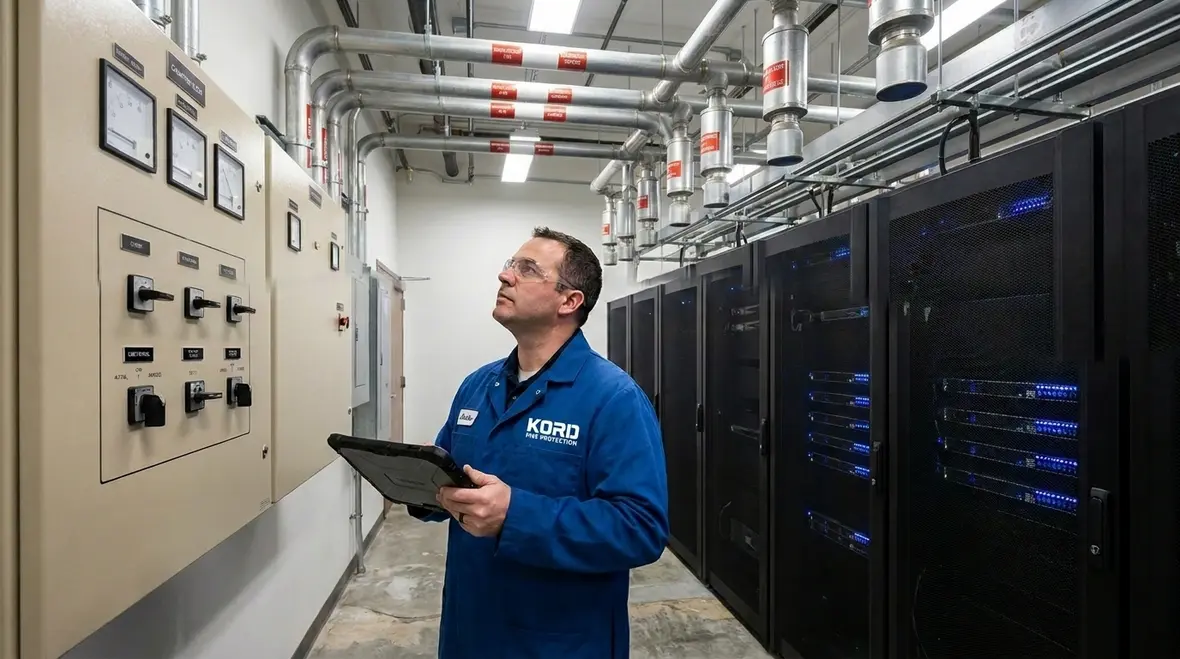
Teams often use layered detection strategies, including point detectors and aspirating systems, depending on the environment. Additionally, they set alarm thresholds that account for dust, humidity, and normal server area conditions. Then they tune response stages so staff has time to investigate without delaying critical action.
To avoid nuisance activation, they also test sensor health and sampling performance. Moreover, they review how the fire alarm and suppression panels communicate. When these interfaces function properly, the system can trigger the correct action for the correct location.
When kord fire protection supports the service side, it can strengthen this phase by helping teams document testing results, update operational sequences, and verify that detection and control logic match actual site behavior.
Detection is only helpful when people trust it
That trust comes from consistency. If teams get frequent nuisance alarms, they start treating alerts like background noise. That is dangerous in any facility, but in a mission critical environment it is especially risky because seconds matter and investigation paths can be long. Reliable tuning, staged responses, and documented testing build confidence that when the system speaks up, it actually has something important to say.
Suppression strategies tailored to racks, aisles, and airflow
Suppression in a data center requires discipline. It must extinguish the fire, control thermal spread, and limit damage to equipment. At the same time, it should avoid downtime caused by ineffective release or poor containment.
Many facilities deploy clean agent systems, water mist, or specialized approaches based on occupancy, electrical layout, and compartment design. However, the best system still depends on how the room is built and sealed. Therefore, teams focus on integrity of partitions, doors, cable penetrations, and floor openings.
They also plan for discharge consequences. For instance, the system must match the room volume, verify cylinder pressure curves, and confirm that airflow and pressure relief paths do not reduce effectiveness. Meanwhile, staff needs clear procedures for evacuation and post discharge recovery so operations can act without guesswork.
In practice, fire protection for data centers works best when suppression is paired with a containment plan. Without compartment control, even high tech suppression can behave like throwing water at a leak in a bucket with the lid missing.
Containment and compartment control that prevents spread
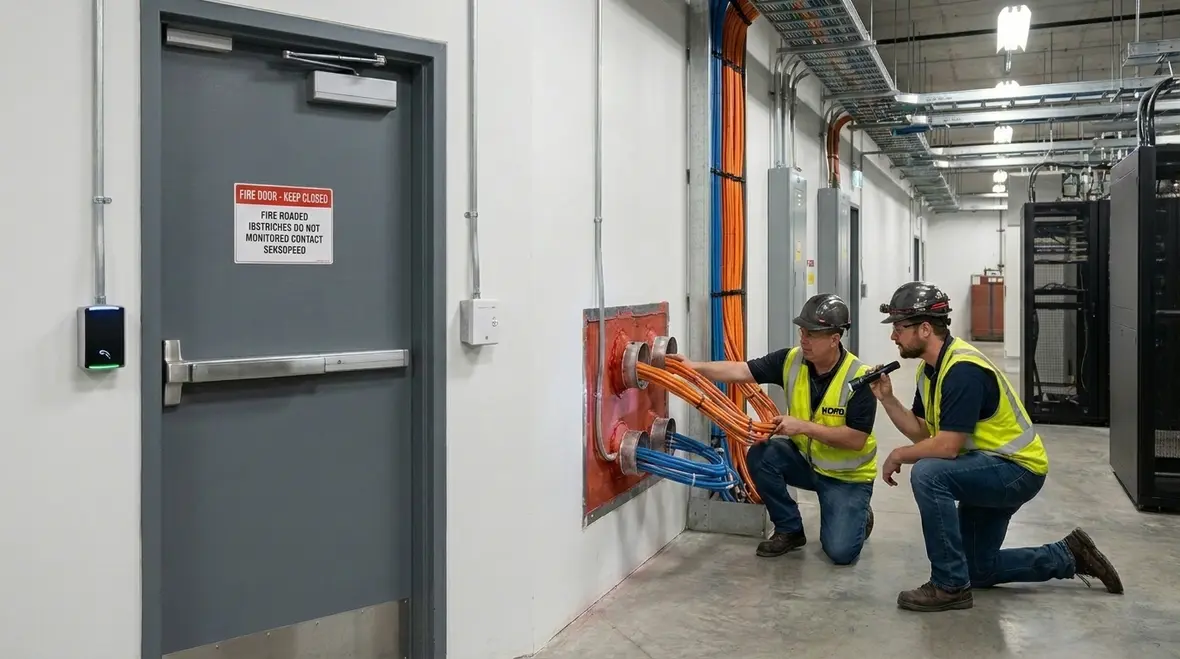
Fire spreads through paths that people do not always think about: cable penetrations, service shafts, dropped ceilings, and gaps around mechanical runs. So compartment control becomes a core strategy.
Teams seal and maintain penetrations using appropriate fire stopping methods. They also review door operation and latch integrity on enclosure boundaries. If doors sit open for cooling logistics, smoke and heat can travel. Therefore, the facility may implement door status monitoring and enforce operational discipline.
They then verify compartment performance during commissioning and periodic audits. After all, a room that looked sealed during installation can degrade over time due to maintenance work, new cabling, or tenant fitouts.
When kord fire protection partners on inspection and ongoing service, it helps ensure the compartment strategy stays consistent. It is easier to prevent problems than to explain to leadership why “the system should have worked” when it technically did not match site reality.
Operational testing, commissioning, and maintenance for uptime
In mission critical settings, fire protection cannot be a “set it and forget it” asset. It must work during real conditions and respond correctly during maintenance windows. So service planning matters.
First, teams implement commissioning that confirms detection response, alarm routing, and suppression release sequences. Then they verify interlocks such as shutdown logic for specific equipment that could worsen conditions.
Next, they schedule ongoing testing for sensors, control panels, detection sampling equipment, and suppression components. Additionally, they track service history and remediate recurring issues quickly. This helps reduce the risk of hidden failure modes such as drifting sensor performance or restricted sampling pathways.
They also prepare documentation so stakeholders can review system health without drowning in technical jargon. And yes, stakeholders love reports, especially when they prove the facility protects data and people. It is like a report card, but for life safety systems.
With kord fire protection involved as a vital partner, the facility team gains consistency across inspections, corrective actions, and upgrades, which helps keep fire protection for data centers aligned with how the building actually performs.
Maintenance protects performance, not just compliance
A checklist may satisfy a file cabinet, but uptime depends on how systems behave in the real world. Preventive maintenance catches drift, blocked pathways, damaged seals, disabled devices, and communication faults before they create ugly surprises. In other words, maintenance is not paperwork with a flashlight. It is operational risk control dressed as routine service.
Design for real site conditions
Climate, dust, humidity, maintenance access, and evolving fitouts all influence fire behavior and system performance. Heat and airborne particles can affect detection stability and component wear. Meanwhile, expansions and hardware refresh cycles can change risk faster than traditional plans assume.
Therefore, teams design with local realities in mind. They consider enclosure integrity during expansion, cable management changes during staging, and airflow changes from cooling upgrades. They also ensure that service access supports safe testing, so technicians can reach components without bypassing protective barriers.
In commercial, retail, and industrial portfolios, decision makers often juggle multiple compliance obligations across multiple properties. So the approach integrates fire protection service planning with operational schedules and risk priorities. Consequently, upgrades and maintenance get timed to reduce disruption to critical workloads instead of landing at the worst possible moment, which somehow always seems to be five minutes before something important.
Training and response procedures that staff can execute under pressure
Even the best systems fail when people cannot follow the playbook. So teams build response procedures that match the facility’s actual layout and control logic.
They train staff on alarm interpretation, evacuation steps, and how to coordinate with incident command. They also practice scenarios such as partial discharge, prolonged detection, and delayed access due to security controls. In mission critical rooms, doors and badge systems must support both security and fast response.
Then they update procedures after drills and after any design changes. In other words, they treat training like a living process, not a one time video course that nobody watches. Pop culture teaches us that people always forget the emergency plan when the lights flicker. Real life should do better.
FAQ
Conclusion: Protect uptime, not just equipment
Mission critical data protection demands more than hardware. It requires engineered detection logic, suppression aligned to containment, disciplined maintenance, and staff procedures that hold up under pressure. Facilities that treat fire protection as an ongoing system outperform those that treat it as a one time installation.
kord fire protection can become a vital partner for service and job support, helping teams protect uptime with practical coordination across inspections, corrective actions, and evolving system needs. Reach out to plan the next phase of protection.

Join Our Newsletter!
Get the latest fire safety tips delivered straight to your inbox From our Newsletter.