Data Center Fire Protection and NFPA 75 Guide
In the quiet hum of servers and blinking lights, there is an unspoken truth. Data is power. And power, when left unchecked, can burn. Our data center fire protection approach exists for one reason: to protect the digital backbone of modern business without slowing it down. Because in this world, downtime is not an inconvenience. It is a headline.
As Kord Fire Protection technicians often explain to clients, protecting a data center is not like protecting an office kitchen. You are not guarding paper and desks. You are guarding transactions, medical records, financial systems, and sometimes the backbone of entire cities. Therefore, the strategy must be deliberate, layered, and built to act before flames ever take shape.
This guide walks through what actually works, what does not, and why standards like NFPA 75 matter more than most realize. For a deeper dive into the standard itself, Kord Fire’s NFPA 75 for IT environments and data centers guide breaks down classifications, risk levels, and compliance expectations in detail.
Why Data Centers Are Different From Typical Buildings
First, understand the stakes. A data center contains high value equipment packed tightly together. Servers generate constant heat. Electrical systems run at heavy loads. Meanwhile, the expectation is simple: zero downtime.
Unlike an office, where a sprinkler discharge may cause inconvenience, in a server room even minor water exposure can lead to cascading outages. In addition, many facilities operate 24 hours a day. There is no safe window for shutdown.
NFPA 75, the Standard for the Fire Protection of Information Technology Equipment, recognizes this difference. It outlines requirements for construction, detection, suppression, and risk management specific to IT environments. In other words, it acknowledges that a data center is not just another room with computers. It is mission critical infrastructure.
Kord Fire Protection technicians often compare it to a hospital operating room. You cannot simply spray everything down and hope for the best. Precision matters.
Understanding the Real Fire Risks Inside a Data Center
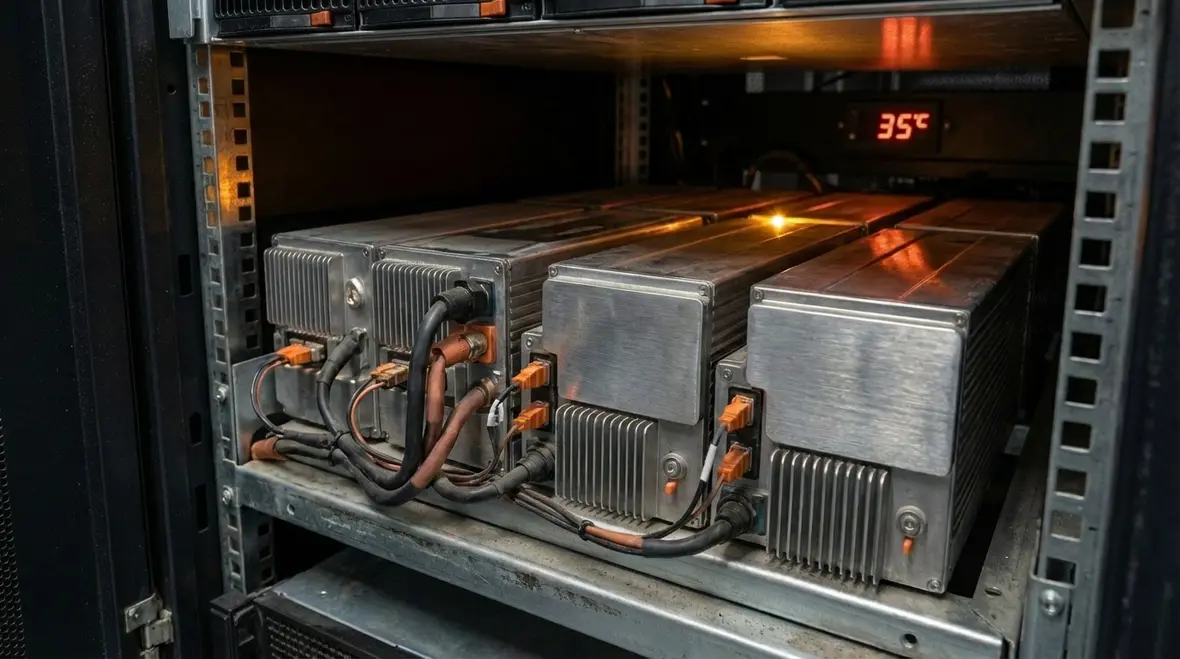
People often picture fire as open flames. However, in server environments, danger usually begins quietly. A faint odor. A tiny spark. A battery overheating in the corner.
The most common risks include:
Lithium ion batteries
Battery backup systems keep facilities online during outages. However, lithium ion cells can enter thermal runaway if damaged or improperly managed. Once that chain reaction begins, it spreads quickly and burns hot.
Power distribution units
Heavy electrical loads create heat. Loose connections or overloaded circuits can arc. Over time, dust buildup makes matters worse.
Cable trays
Miles of cabling often run overhead or under raised floors. If not properly rated, insulation can contribute fuel to a fire.
HVAC systems
Cooling systems move large volumes of air. While they regulate temperature, they can also spread smoke rapidly if not integrated with detection systems.
Because of these factors, early detection and fast response become essential. Waiting for visible flames is not a strategy. It is a mistake.
System Breakdown: What Actually Works in Data Center Fire Protection
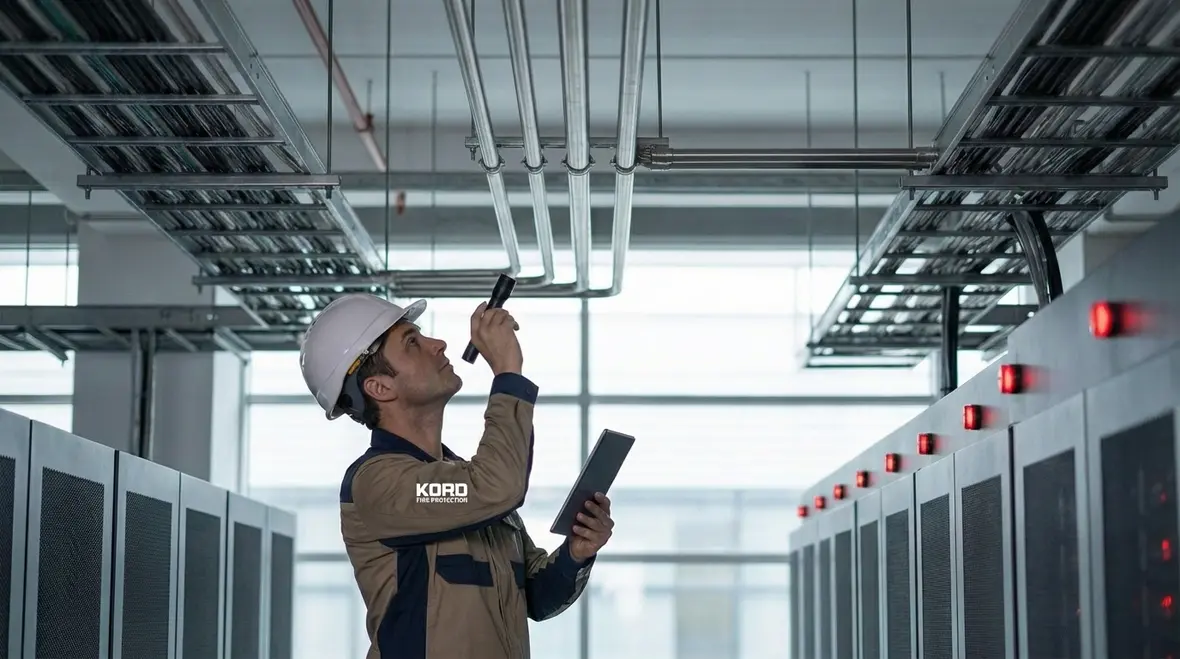
Effective data center fire protection relies on layers. Each layer serves a purpose. Together, they create resilience.
Early Detection With VESDA
Very Early Smoke Detection Apparatus, known as VESDA, samples air continuously. Instead of waiting for smoke to rise to a ceiling device, it actively pulls air through pipes and analyzes particles at a microscopic level.
As a result, technicians can detect issues during the incipient stage, often before visible smoke appears. This early warning allows staff to investigate and correct faults before suppression systems activate. Think of it as a smoke detector with a PhD and a caffeine habit.
Clean Agent Suppression
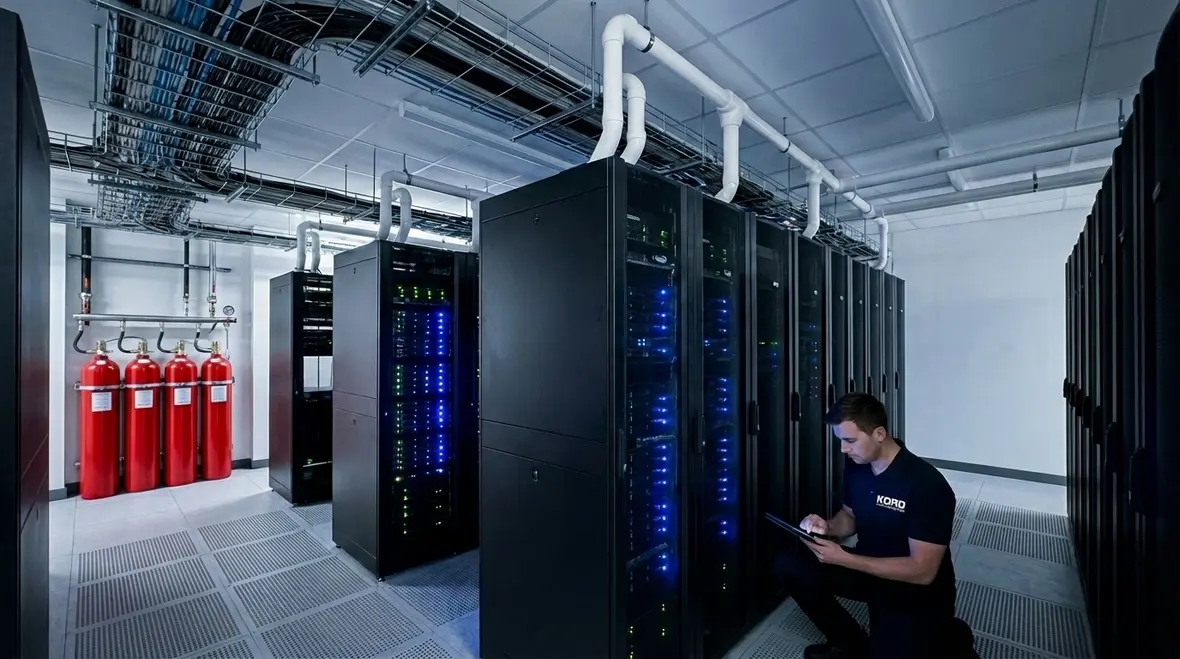
Clean agent systems discharge gas that absorbs heat or interrupts the chemical reaction of fire. Common agents leave no residue and do not damage electronics when properly designed.
These systems flood the protected space quickly. Therefore, they extinguish flames without soaking servers. Kord Fire Protection technicians emphasize proper enclosure integrity testing. If the room cannot hold the agent concentration, the system loses effectiveness.
If you want to explore agents, applications, and code requirements in more depth, Kord Fire’s clean agent fire suppression system services page explains how different clean agents are selected and applied in critical environments like data centers.
Pre Action Sprinkler Systems
Pre action systems add a layer of confirmation before water enters the pipes. Typically, detection must activate first. Only then does water fill the piping network. Additionally, individual sprinkler heads must open from heat before water discharges.
This dual trigger reduces the chance of accidental water release. While water remains one of the most reliable suppression tools on earth, in data centers it must be controlled with care.
Why Water Alone Is Not Enough
Water extinguishes many types of fire effectively. However, relying solely on traditional sprinklers in a server environment invites risk.
First, water can damage sensitive electronics instantly. Even a small discharge can corrode circuits and disrupt operations. Second, electrical fires may continue if power remains energized. Third, lithium ion battery events can reignite after initial suppression.
Therefore, modern strategies combine detection, clean agents, and controlled sprinkler systems. Water becomes the backup, not the only plan.
Kord Fire Protection technicians often say, “Water is a hero, but even heroes need a team.” It is a fair point. Batman rarely works alone, and neither should a suppression system.
Side by Side: Suppression Methods Compared
Suppression Method Best Use in Data Centers
Clean Agent Rapid knockdown without equipment damage
Pre Action Sprinkler Backup protection with reduced accidental discharge risk
Traditional Wet Pipe Limited use, higher risk to electronics
VESDA Detection Early warning before flames develop
This layered approach aligns with NFPA 75 guidance. Detection initiates response. Clean agent handles incipient fire. Pre action sprinklers provide redundancy. Each system supports the next.
What Is the Cost of Failure?
The cost of failure extends far beyond charred equipment. In fact, downtime often causes more damage than flames.
Consider financial loss. Many enterprises lose thousands of dollars per minute during outages. For large operations, that number climbs into six figures quickly. Moreover, service level agreements may trigger penalties.
Then there is data loss. Although backups exist, recovery takes time. Customers may lose trust. In healthcare or finance, liability risks increase.
Additionally, regulatory scrutiny can follow. Investigations may examine whether the facility met NFPA 75 recommendations and local code requirements. Insurance providers will ask hard questions. So will clients.
As Kord Fire Protection technicians explain during consultations, investing in prevention costs far less than explaining failure to a board of directors. No one enjoys that meeting.
Designing a Compliant and Resilient Strategy
Strong data center fire protection begins during design, not after construction. Engineers must consider room layout, airflow patterns, cable management, and battery placement. Detection zones should align with airflow to avoid blind spots.
Furthermore, enclosure integrity testing ensures clean agent concentration remains at effective levels. Routine inspection and maintenance keep systems reliable. After all, even the best equipment fails if ignored.
Training also plays a role. Staff should understand alarm sequences and emergency procedures. Clear communication reduces panic and prevents accidental shutdowns during minor events.
Finally, documentation supports compliance. Detailed records demonstrate adherence to NFPA 75 and local codes. In the event of an incident, that paper trail becomes invaluable.
FAQ: Data Center Fire Protection
Protect the Backbone of Your Business
Data centers power modern life. Therefore, protecting them requires precision, foresight, and layered defense. From early detection to clean agent suppression and compliant design under NFPA 75, every element must work in harmony. Kord Fire Protection technicians bring clarity to complex systems and design strategies that prevent loss before it begins.
When uptime matters and risk is not an option, it is time to act. Protect the infrastructure that protects everything else. To explore how clean agents can be tailored to your server rooms, network hubs, or full data center, connect with Kord Fire’s clean agent fire suppression system services team and start designing a protection strategy that matches the value of your data.
Know Your Weapon Before You Fight the Flame
Kord Fire Protection is your go-to when it comes to all things fire protection. For over 20 years, we’ve been serving Southern California with the quality service and equipment to keep your home or business safe at all times. Our competitive prices reflect our unwavering commitment to protecting what matters most in the event of a fire emergency. Give us a call, send an email, or use that form!

Join Our Newsletter!
Get the latest fire safety tips delivered straight to your inbox From our Newsletter.