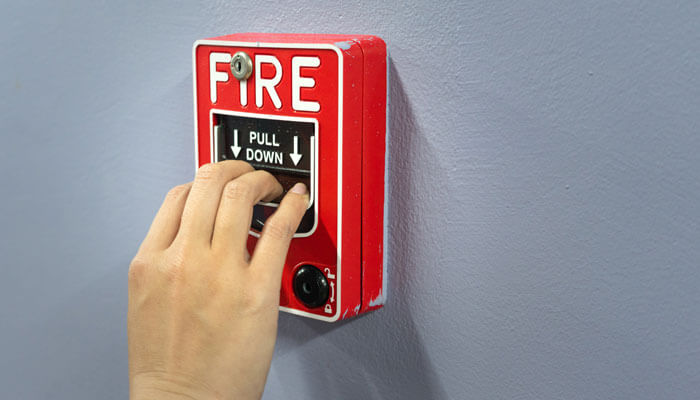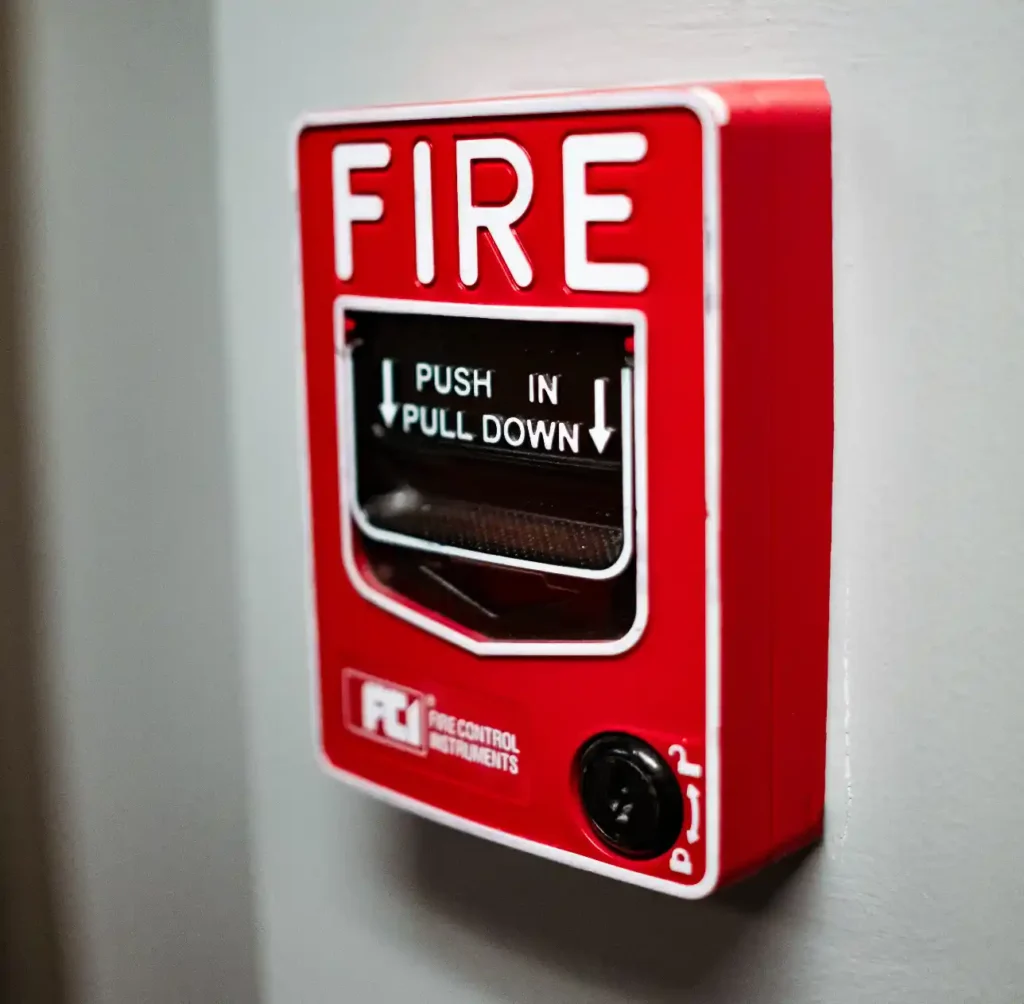
Commercial Fire Alarm System Troubleshooting for Aussie Sites
Quick Answer: Commercial fire alarms often fail from dirty sensors, loose wiring, nuisance signals, or system age. Effective fire alarm system troubleshooting starts with simple checks, then moves to testing the right devices in the right order. When faults repeat, professionals must inspect loops, panels, power supplies, and documentation.
In many Australian commercial sites, the fire alarm never “just acts up.” It usually tells a story, but you have to read it calmly. When an alarm panel starts beeping, reporting trouble, or triggering nuisance events, teams often begin with fire alarm system troubleshooting by checking power, silence/reset behavior, and obvious device faults. Then, they run into the part where guessing gets expensive, and time gets tighter than a Sunday line outside a popular coffee chain.
Below, this article walks through the most common commercial fire alarm issues and the professional fixes that keep industrial, retail, and facilities operations running safely across Australia. Near the start, it also helps to know that stronger outcomes usually come from pairing troubleshooting with a broader fire alarm service program, especially when faults are recurring instead of random. And yes, kord fire protection can become a vital partner here, because the right service team turns alarms from “mystery noise” into dependable protection.
Why commercial fire alarm trouble codes keep coming back
Fire alarm trouble signals tend to repeat when the root cause stays in place. For example, a building may experience intermittent faults due to moisture, vibration, or gradual insulation failure in cables. As a result, the system may show a loop fault, ground fault, sensor trouble, or communications issues.
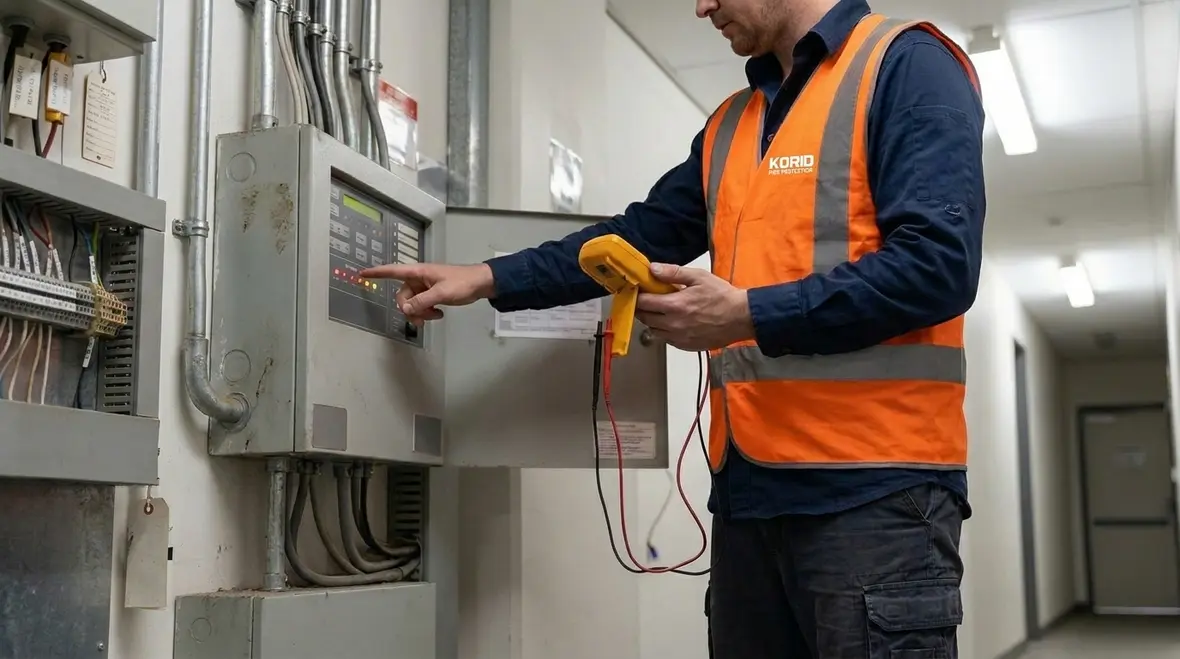
Professional technicians treat these events like a chain, not a single snap. First, they verify the panel history log. Then, they inspect wiring terminations and test device sensitivity and calibration. After that, they confirm the system can return to normal without forcing resets that merely “hide” a problem.
Check what changed before blaming the panel
In facilities with frequent trades work, new conduits and maintenance changes can also disturb wiring. Therefore, good fire alarm system troubleshooting includes checking recent work records and comparing device mapping with what the panel actually reports. It is not glamorous work, but neither is paying for the same fault three service calls in a row.
Nuisance alarms in retail and warehousing: what usually causes them
Nuisance alarms frustrate everyone, and they train staff to ignore alerts. That is the last thing any manager wants, because during a real event, delayed action costs lives and property.
Common causes include dust or aerosols on smoke detectors, airflow patterns that carry steam or cooking vapors into detector zones, and devices installed in spots that do not match their intended application. Another frequent culprit is poorly adjusted sensitivity after cleaning. Sometimes, teams clean a sensor, reinstall it, and move on, without verifying that it still meets design thresholds.
Professionals fix nuisance alarms by confirming detector type, location design, and environment. They then perform guided testing and, where allowed, adjust sensitivity within the required limits. They also check detector heads for contamination, verify spacing, and ensure the device settings align with the hazard classification. In modern facilities, they may add or reposition detectors to match airflow and activity patterns rather than simply chasing single false activations.
And for the record, if the alarm triggers because someone burnt toast, that is not “a fire safety system.” That is your smoke detection system auditioning for a comedy sketch.
Dirty sensors and aging devices: the fix goes beyond a wipe-down
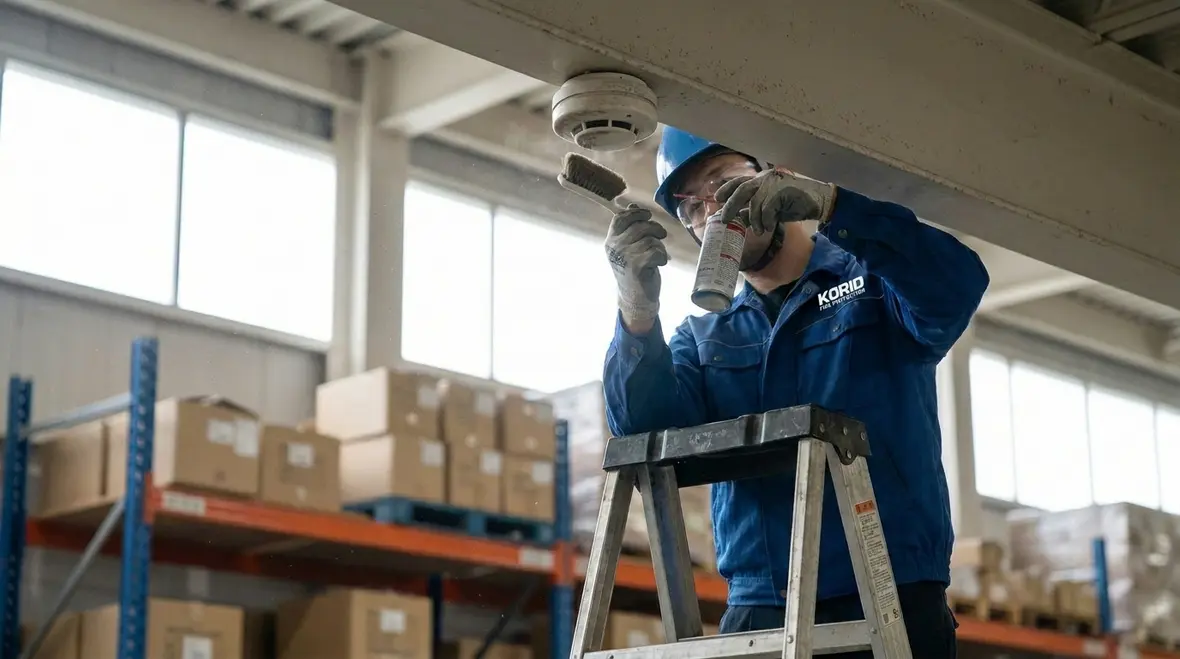
Over time, detectors accumulate residue from manufacturing processes, warehouse dust, and general site grime. Even in commercial offices, construction dust or periodic maintenance can affect performance. Meanwhile, older detectors can drift from their expected response characteristics, especially when they sit in harsh temperature cycles.
Routine cleaning helps, but professionals go deeper. They inspect detector bases, check contacts, and verify compatibility with the installed panel. Then they test each device in the loop and verify that alarm thresholds still respond correctly. In some cases, the fix requires replacement rather than cleaning, particularly when detectors show signs of internal degradation or repeated fault states.
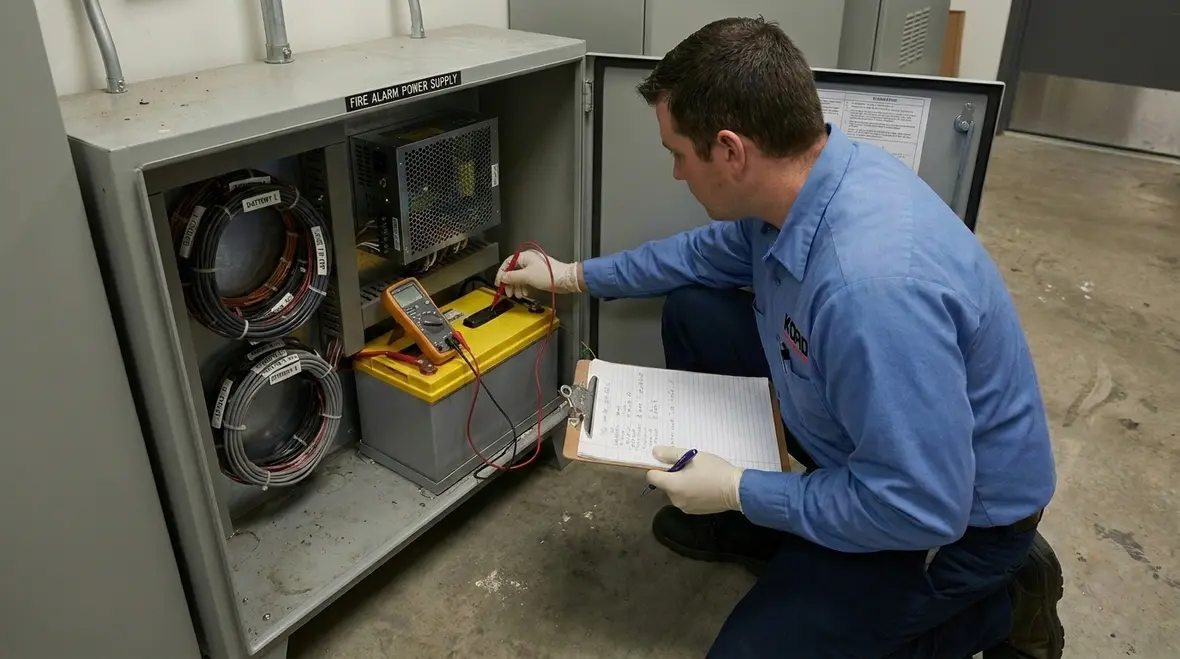
Additionally, aging panels and power supplies can create weird symptoms. For instance, a system may intermittently report low battery conditions, even if the building believes the batteries were recently “changed.” Technicians verify battery health, measure voltage under load, and check charger operation. That ensures reliability when the building loses mains power.
By the way, replacing components without testing the whole system is like changing a tire without checking the suspension. It feels productive, but it does not solve the real issue.
When replacement is smarter than repeated cleaning
A detector that keeps slipping out of tolerance, even after proper cleaning and testing, usually costs more in downtime than it saves in parts. Commercial sites with high dust loads, temperature swings, or constant movement often benefit from replacing problem devices before they become the system’s favorite recurring joke.
Wiring faults, loop issues, and panel communication errors
Wiring faults and loop issues can show up as intermittent device dropouts, unexpected resets, or communications trouble between the main panel and remote modules. These events often connect back to installation quality, cable damage, corrosion at terminations, or movement from ongoing site works.
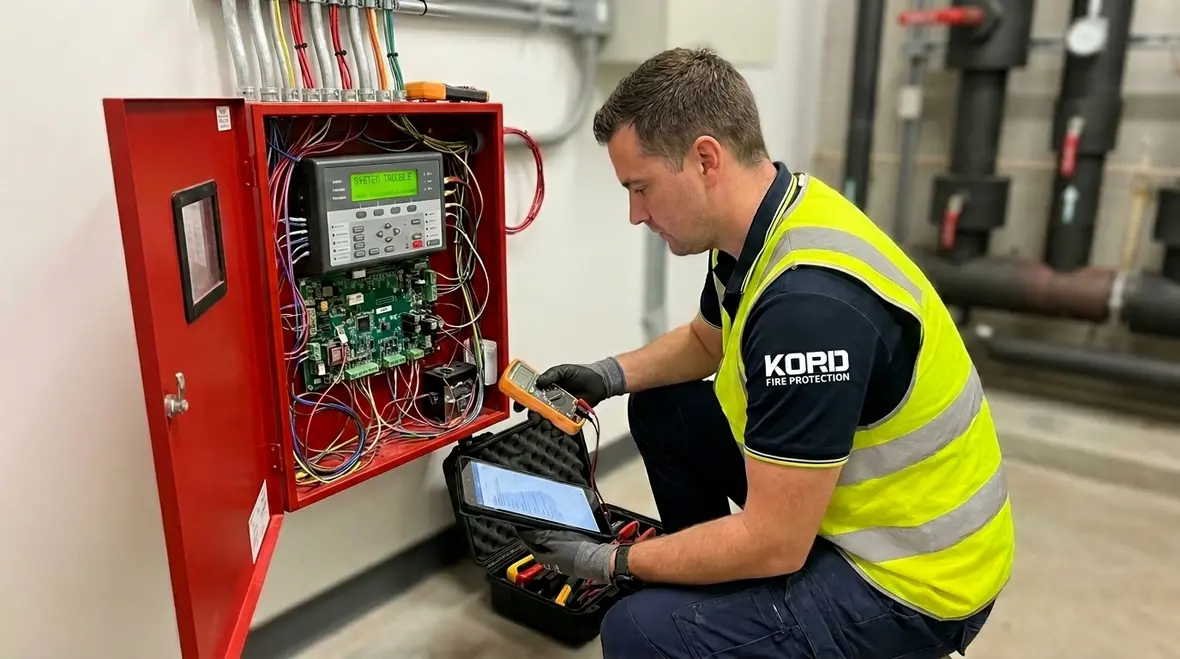
Professional fixes start with disciplined diagnosis. Technicians confirm loop resistance, inspect cable runs, check for shorts and opens, and examine connectors for corrosion or poor seating. They also test isolation points and verify that the loop design remains within spec. If a module communicates incorrectly, they check addressing, wiring polarity, and panel configuration.
In facilities that operate across multiple zones, a partial wiring failure can lead to sections that appear “fine” until a particular activation pattern occurs. Therefore, a proper service visit includes functional testing that matches the site’s risk layout, not just checking that the panel powers on.
When kord fire protection supports this work, teams benefit from a consistent troubleshooting approach that reduces repeat callouts. kord fire protection can also help coordinate documentation updates, so the asset record reflects what was actually found and fixed. For sites planning upgrades or replacement work, it also makes sense to review options for commercial and residential fire alarm installation when the existing setup keeps fighting back.
Power supply problems and backup battery failures
Fire alarms must remain dependable during power loss. Unfortunately, power supply issues often appear first as subtle trouble messages. Later, they surface as delayed fault detection or failure to signal correctly during emergencies.
Professionals address this by testing the standby power system. They confirm the charger output, check battery condition, and measure voltage during simulated loads. They also verify battery installation dates and confirm correct battery type and capacity. If the site has long cable runs or older panels, technicians review voltage drop and ensure wiring supports required performance.
Another common issue involves power supplies used for auxiliary equipment. When auxiliary loads increase through upgrades, the system may run closer to its limit. As a result, the panel may behave unpredictably under certain conditions.
Here, it helps to treat fire alarm power as a living system, not a one-time installation. Therefore, planned testing and clear records prevent “mystery trouble” from returning at the worst possible time.
What battery issues look like in the real world
Sometimes the clue is a low battery trouble that appears after hours and clears by morning. Sometimes it is a panel that resets oddly during testing. And sometimes it is a site manager insisting the batteries are new because someone changed them “not that long ago,” which, in facilities language, could mean anything from last month to the previous Olympic cycle.
How pro teams test and document fixes for compliance and safety
Commercial fire alarm maintenance should not rely on quick fixes and hope. Instead, professionals test devices, verify system operation, and document outcomes clearly for safety teams, owners, and auditors.
Effective service uses a step-by-step process. First, the technician reviews the panel log and any previous service reports. Then they carry out device testing in zones, perform checks on control panel functions, and verify transmission pathways to any monitoring or alarm interfaces. After that, they update system records with findings, device replacements, and configuration changes.
This matters because many “small” issues compound. A sensor that fails intermittently can hide wiring problems. A panel setting that drifts can trigger nuisances. Documentation prevents guesswork during the next visit and reduces downtime for operations.
kord fire protection can become a vital partner by providing consistent service cycles and clear reporting that aligns with how facilities teams actually manage assets. When one partner understands the system history, the site spends less time debating what happened last time and more time protecting people and property.
Integrating kord fire protection for smoother alarm maintenance
For industrial, retail, and multi-facility operations across Australia, the biggest challenge is not just fixing alarms. It is coordinating inspections, scheduling, access, and follow-up action without disrupting work.
kord fire protection supports this by bringing service structure and practical planning into the process. They help teams identify patterns across trouble calls, prioritize repairs that affect safety and compliance, and recommend improvements that reduce nuisance events. In addition, they assist with system troubleshooting in a way that preserves continuity, so operations managers know what changes and why.
If the alarm system feels like a recurring problem, it likely needs a partner that treats it as a whole system. And no, resetting it with a hopeful button press does not count as a plan.
FAQ: Commercial fire alarm issues and professional fixes
Call kord fire protection for the next alarm problem
If commercial alarms keep creating trouble, kord fire protection can help your team move from resets to real fixes. Get a structured service approach that diagnoses loop faults, nuisance causes, power issues, and device aging, then documents everything clearly.
Reach out to schedule support and reduce downtime while improving safety across your Australian sites. When the system starts telling a story again, bring in a team that knows how to read the plot before it becomes an expensive sequel.

Join Our Newsletter!
Get the latest fire safety tips delivered straight to your inbox From our Newsletter.