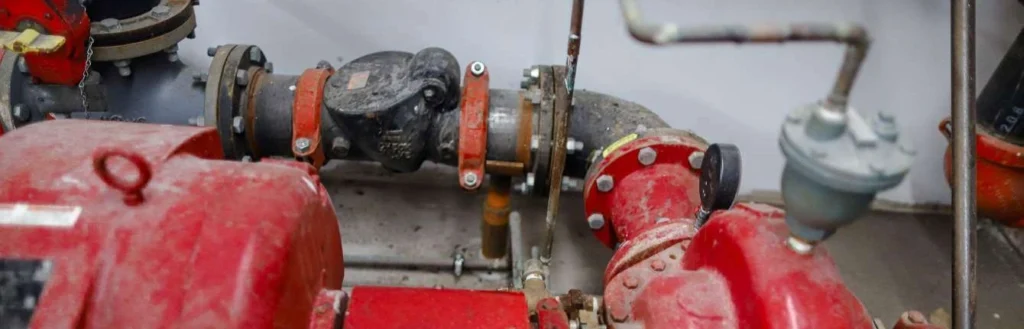
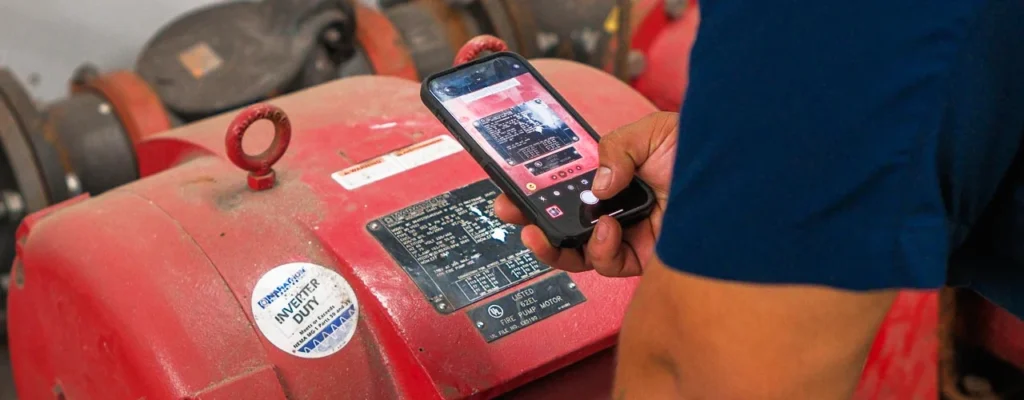
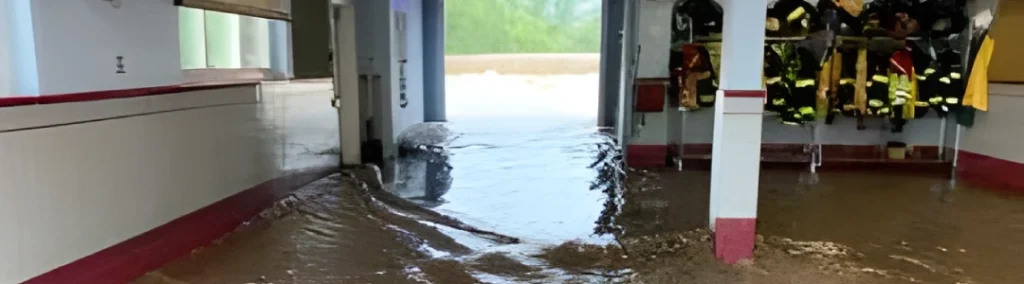
In industrial facilities, the fire pump system does not get to “maybe” work when it matters. That is why the industrial fire pump controller must run at peak performance, not just pass an inspection. Kord Fire Protection Technicians regularly see the same pattern: systems that are installed correctly but later drift out of tune because no one keeps an eye on pumps, sensors, and control settings as the facility changes. And yes, things change. New loads arrive, tanks get refilled with different water conditions, electrical supply quality shifts, and controllers age like everything else. The good news is that smart optimization improves reliability, reduces nuisance events, and helps keep the fire protection program strong.
Plan the right performance goals for a fire pump control loop
A facility manager can start with clear goals before touching any settings. Then the team can measure what “good” looks like. Kord Fire Protection Technicians often recommend defining performance targets in plain terms: pressure stability, pump start reliability, and safe behavior during abnormal conditions. For example, a control system should maintain required discharge pressure without wild hunting between setpoints. In addition, it should start within acceptable time windows and transition smoothly between pump stages.
From there, the technicians typically map the control strategy to real site needs. They look at design demand, typical operating ranges, and how quickly the system must recover from events. Also, they review how operators expect the system to respond during testing. If the goals are fuzzy, the controller will chase fuzzy outcomes, and nobody wants a control loop that behaves like a caffeinated intern.
To optimize performance, technicians also consider the “why” behind the controller logic. The industrial fire pump controller is not just a screen of lights. It coordinates inputs such as pressure switch status, flow demand, and motor health signals, then it commands outputs like starter operation. Therefore, the performance goal must match the actual control sequence the site uses.
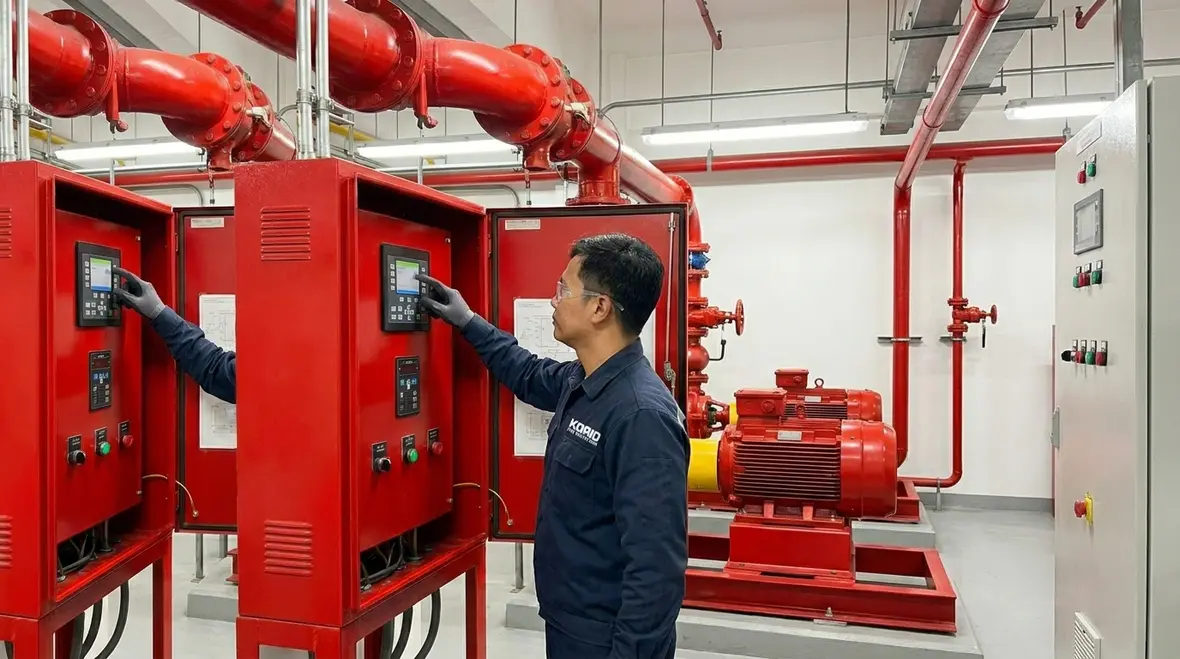
Calibrate sensors and pressure settings so the controller reads reality
When an industrial fire pump system underperforms, the controller usually does not fail in isolation. Instead, it receives incorrect or inconsistent information. So the first optimization step often involves verifying sensors, transmitters, and pressure switch settings. Kord Fire Protection Technicians explain this clearly: if the controller thinks the pressure is high while it is actually low, it will delay or stop pumps at the wrong time. That is not “fine tuning.” That is a logic mismatch.
Technicians commonly check these areas
- Pressure transmitter calibration, including range and scaling
- Pressure switch trip points for pump start and stop sequences
- Wiring integrity and signal quality, including shield grounding
- Location of sensors relative to hydraulic losses and flow patterns
Additionally, they validate that the controller setpoints align with the hydraulics of the system piping. Over time, wear and corrosion change flow losses. Meanwhile, valves can partially stick. Consequently, the controller setpoints may need adjustment to restore stable control.
During this work, technicians also watch for drift. In many facilities, the pressure readings look “close enough” until the day a demand event exposes the error. And that day usually arrives without a calendar invitation. So they measure, compare, and adjust with intent.
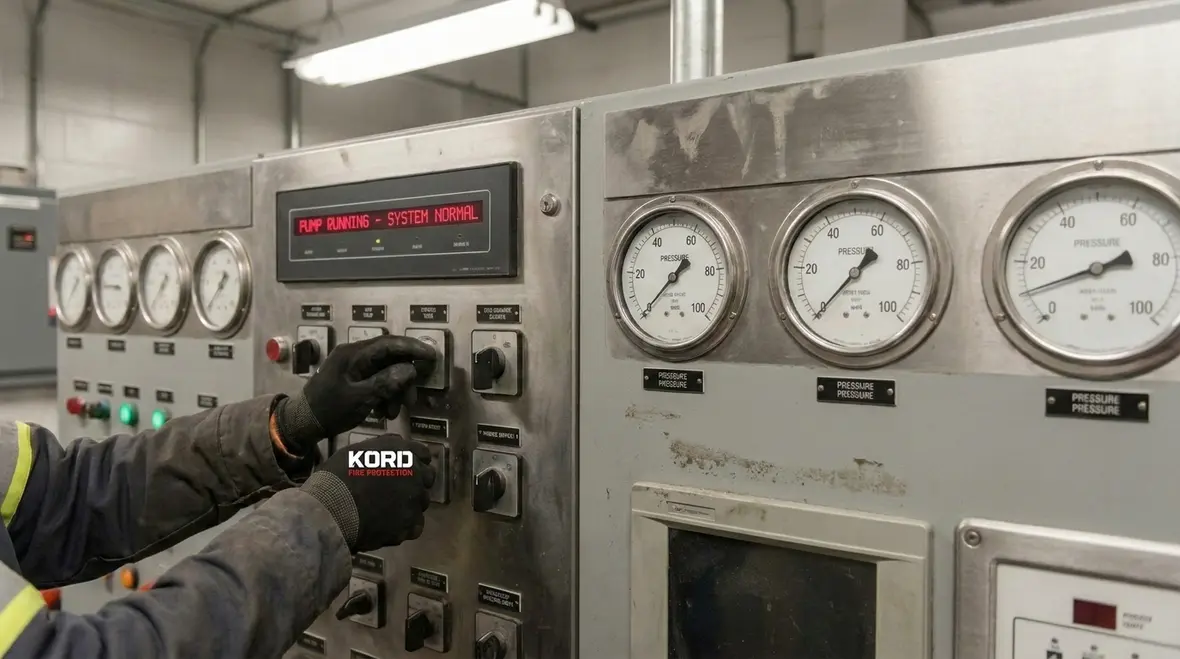
Optimize start and transfer sequences to reduce failures and nuisance trips
Industrial environments do not run on perfect conditions. Therefore, the controller’s start and transfer logic must handle real behavior: variable pressure, changing demand, and motor response times. Kord Fire Protection Technicians often say that a controller should act decisively, not hesitantly. That means tuning delays and transfer conditions so the system responds quickly yet avoids false starts.
Key optimization targets include
- Motor start timing, including pre start checks and permissives
- Sequencing between pump stages to avoid pressure oscillation
- Alternation logic for duty and standby pumps, so wear stays balanced
- Alarm and interlock thresholds that prevent unsafe operation
Technicians also verify that the controller handles abnormal signals correctly. For instance, if a sensor momentarily drops out, the controller should follow a documented safe strategy rather than jumping to random conclusions. In other words, the industrial fire pump controller should not “improvise” like an actor with no script.
Another frequent improvement involves reviewing controller timers used during testing. Some systems run longer than needed due to conservative timer values. Others act too quickly, especially after maintenance or wiring updates. By aligning timers with actual motor and pump characteristics, technicians can shorten response time while keeping operation stable.
A quick reality check: the sequence has to match the site
Optimization is not a spreadsheet exercise. It is about making the controller behave like your system actually behaves on a typical day and during the seconds that matter most. When the start sequence, the transfer conditions, and the sensor feedback line up, the controller stops “guessing” and starts protecting.
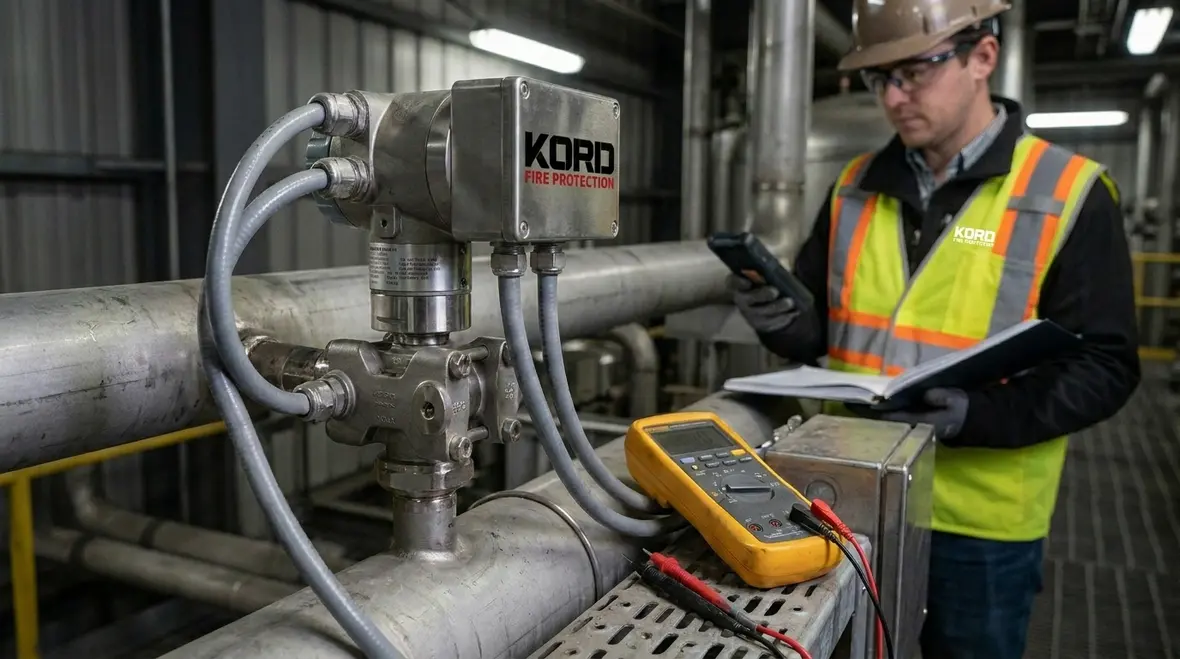
Improve electrical reliability, supervision, and alarm quality
Fire pump performance depends on power quality and control reliability. If the electrical side wobbles, the controller cannot guarantee dependable operation. Kord Fire Protection Technicians routinely evaluate the inputs that keep the system honest, such as phase loss detection, voltage monitoring, and contact supervision.
Optimization often focuses on the electrical conditions that create intermittent issues. A controller may log alarms that appear sporadic, and operators may shrug. Then, the next test reveals the problem was real all along. Therefore, technicians verify:
- Incoming power stability and correct protective device settings
- Contact wear and contactor operation in the starter circuit
- Battery or power supply status for control logic where applicable
- Wiring torque, terminations, and signs of heat damage
Alarm quality matters too. If alarms are unclear, teams chase ghosts. So technicians confirm the alarm mapping in the controller, ensuring that each alarm points to an actionable condition. They also ensure the event history in the controller keeps the right details. That way, a troubleshooting session becomes a calm investigation rather than a “who moved the cheese” mystery.
Use structured testing and controller event review for continuous tuning
Optimization is not a one time task. It is an ongoing cycle of measuring, adjusting, and verifying. Kord Fire Protection Technicians recommend building a routine that links test results to controller adjustments, while keeping changes controlled. They typically stress that changes must follow the facility’s documentation process and code requirements.
A strong approach includes
- Baseline measurements, including pressure response during simulated demand
- Review of controller logs, including last start time and fault codes
- Trend tracking of sensor readings and start counts
- Verification after maintenance, software changes, or wiring updates
When the team reviews event logs, they can spot patterns early. For example, repeated starts at similar pressure levels may indicate setpoint drift. Likewise, recurring faults tied to a specific pump can indicate mechanical drag, valve issues, or worn components. And because the controller keeps a record, the facility avoids guessing.
Additionally, technicians can refine how the controller handles test mode versus alarm mode. Some facilities test the system in ways that mask real behavior. Therefore, tests should reflect realistic demand and ensure the system transitions exactly as the design requires.
Document changes, train staff, and keep the system audit ready
No optimization effort survives long without good documentation. If the controller gets reconfigured and nobody can explain the change later, the facility loses value fast. Kord Fire Protection Technicians often help clients build a simple change record: what changed, why it changed, when it changed, and what results improved after the update.
Documentation should include the current setpoint values, sensor calibration records, verification results, and any software or configuration notes. It should also include a quick guide for operators on what alarms mean and what actions they should take. That guide helps during shift changes, emergencies, and after maintenance.
Training matters for another reason. Staff members often interpret controller behavior through the lens of routine. So technicians show the difference between a normal test behavior and a genuine demand event. In practice, this reduces confusion during inspections and improves response speed during real alarms. It also helps prevent well meant actions that accidentally interfere with system operation. Because even good intentions can cause chaos if they are not aligned with procedures.
By keeping records and training current, the facility stays audit ready and reduces downtime risk. Also, it supports smarter budgeting, since recurring issues become measurable rather than anecdotal.
FAQ: industrial fire pump controller optimization
Conclusion and next step
Optimizing an industrial fire pump controller helps an industrial facility stay ready when pressure, flow, and power conditions matter most. Kord Fire Protection Technicians can assess sensor accuracy, start sequences, electrical supervision, and controller event trends, then recommend changes with clear documentation and verification. If the system has nuisance events, unstable pressure, or repeated faults, it is time to stop guessing and start tuning. Contact Kord Fire Protection to schedule a controller performance review and build a plan that keeps your fire protection program steady, calm, and audit friendly.
Need a related deep dive? If you’re also working on readiness routines, review Fire Pump Testing Requirements – Things To Know to connect testing discipline with controller performance.
Know Your Weapon Before You Fight the Flame
Kord Fire Protection is your go-to when it comes to all things fire protection. For over 20 years, we’ve been serving Southern California with the quality service and equipment to keep your home or business safe at all times. Our competitive prices reflect our unwavering commitment to protecting what matters most in the event of a fire emergency. Give us a call, send an email, or use that form!

Join Our Newsletter!
Get the latest fire safety tips delivered straight to your inbox From our Newsletter.