Red Fire Hydrant Meaning and Color Codes Explained
At first glance, a bright hydrant on a street corner looks simple. It waits. It stands. It does not speak. Yet many people wonder about the red fire hydrant meaning and whether that bold color signals danger, pressure, or something more mysterious. The truth is both practical and surprisingly interesting. Hydrant colors can reveal valuable information, but they can also mislead the untrained eye. According to Kord Fire Protection technicians, understanding what those colors truly represent can make a real difference during an emergency. So let us slow down, take a closer look, and decode what those bright shades actually say.
Why Hydrant Colors Matter More Than Most People Realize
Most people pass a hydrant without a second thought. However, firefighters do not have that luxury. When crews arrive at a fire scene, every second counts. They need to know how much water a hydrant can deliver before they even twist the cap. That is where color coding steps in.
Across many parts of the United States, hydrants follow guidelines set by the National Fire Protection Association. These guidelines suggest specific colors for the tops and caps of hydrants to show water flow capacity. Therefore, the paint is not decorative. It is data.
Kord Fire Protection technicians often explain it this way. The hydrant body color usually identifies the water system or municipality. Meanwhile, the cap and bonnet colors typically signal available gallons per minute. In other words, what looks like a simple splash of paint is actually a quick reference tool for first responders. For a deeper breakdown of how this color language works in the field, you can also review Kord Fire Protection’s guide on fire hydrant color codes.
Still, while color coding helps, it does not tell the whole story. And that is where many myths begin.
Red Fire Hydrant Meaning Explained Clearly
When someone sees a red hydrant, they often assume one thing. High power. Hollywood has trained people well. In movies, red hydrants explode with water pressure the moment a hero bumps into them. It is dramatic. It is cinematic. It is also not how real systems work.
So what is the red fire hydrant meaning in practical terms?
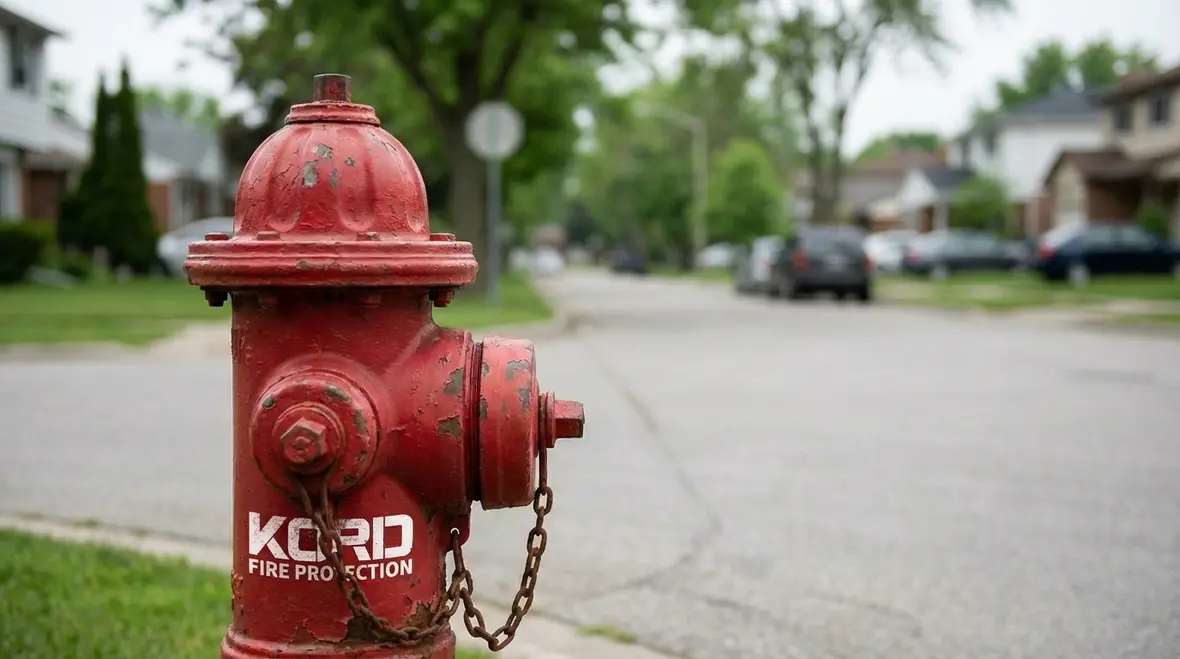
In many municipalities, a red cap or top indicates a hydrant with lower flow capacity. Typically, this means it can deliver less than 500 gallons per minute. That amount may be sufficient for small residential fires. However, it may not support large commercial incidents.
That said, there is an important detail. Not every city follows the exact same system. Some towns paint the entire hydrant red regardless of flow rate. Others use red to indicate private hydrants. Therefore, context matters.
Kord Fire Protection technicians regularly remind property managers that relying solely on color without knowing local standards can lead to wrong assumptions. Fire departments always test and document hydrant flow rates. The paint supports that data, but it does not replace it.
So while the red fire hydrant meaning often relates to lower flow classification under NFPA guidance, it is never wise to guess without confirmation.
What Do Other Hydrant Colors Tell You
Color coding becomes clearer when viewed as a system. Although red draws the most attention, other shades speak just as loudly to trained eyes.
Below is a general guide commonly used in many areas:
Typical Hydrant Cap Color and Flow Capacity
Blue
1500 gallons per minute or more. This is the heavy hitter. Firefighters see blue and breathe a little easier.
Green
1000 to 1499 gallons per minute. Strong and reliable for many commercial needs.
Orange
500 to 999 gallons per minute. Moderate capacity, often found in mixed residential areas.
Red
Below 500 gallons per minute. Limited flow, usually in smaller residential zones.
Because these colors indicate flow range, they help crews choose the best water source quickly. However, technicians still perform annual flow testing. Paint fades. Systems change. Neighborhood demand increases. As a result, regular inspection keeps information accurate.
It is worth noting that some communities reverse or modify this scheme. Therefore, firefighters train extensively within their own jurisdictions. They do not rely on guesswork, and neither should property owners.
What Hydrant Colors Can Not Tell You
Now here is where things get interesting. While color coding offers helpful clues, it has limits. And understanding those limits matters just as much as knowing the basics.
- First, hydrant color does not confirm water pressure at a specific moment. Flow capacity ratings come from controlled tests. Real world conditions can change. A water main break, heavy usage, or maintenance work can affect available supply.
- Second, color does not reveal pipe condition. A hydrant may wear a confident shade of blue, yet aging underground pipes could still reduce efficiency. That is why municipalities invest in system maintenance, not just fresh paint.
- Third, color does not guarantee accessibility. A hydrant buried in snow or blocked by landscaping will not serve anyone well, no matter how powerful it is. Kord Fire Protection technicians often stress clear space requirements around hydrants for this exact reason.
- Finally, paint does not indicate whether a hydrant is public or private unless local codes specify it. Some private systems use unique color schemes. Therefore, verifying ownership and maintenance responsibility remains essential.
In short, hydrant colors speak. Yet they do not tell the whole story. Think of them as chapter titles, not the full novel.
How Fire Departments and Technicians Verify Hydrant Performance
Since color alone is not enough, professionals rely on testing. This is where the science steps forward.
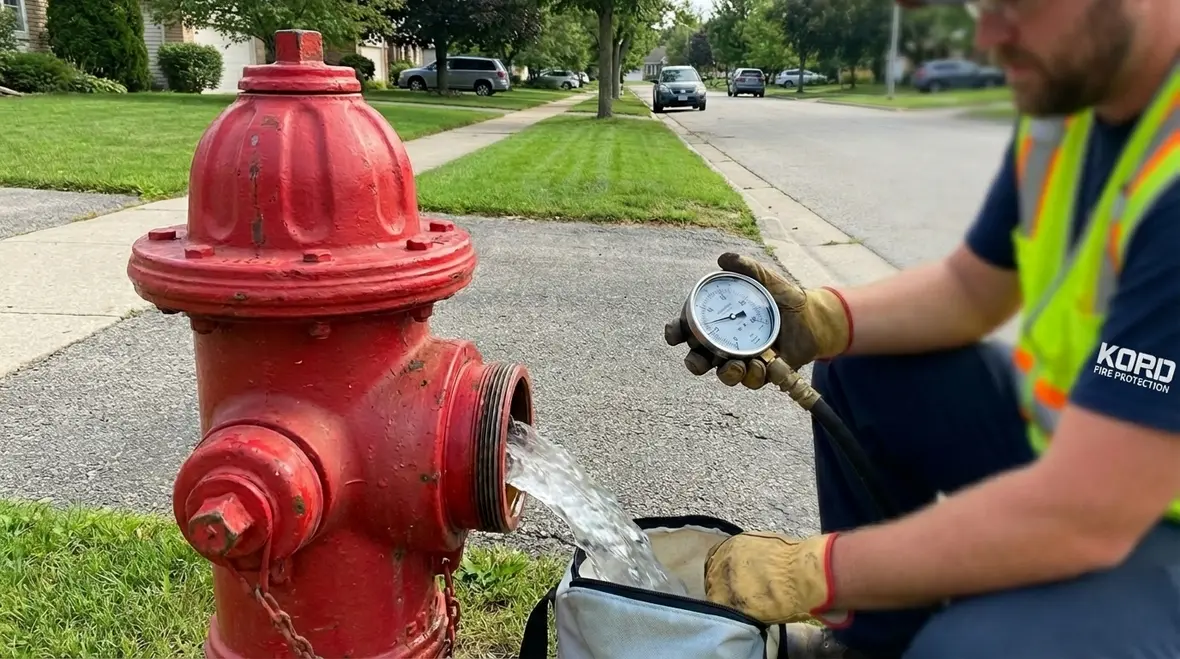
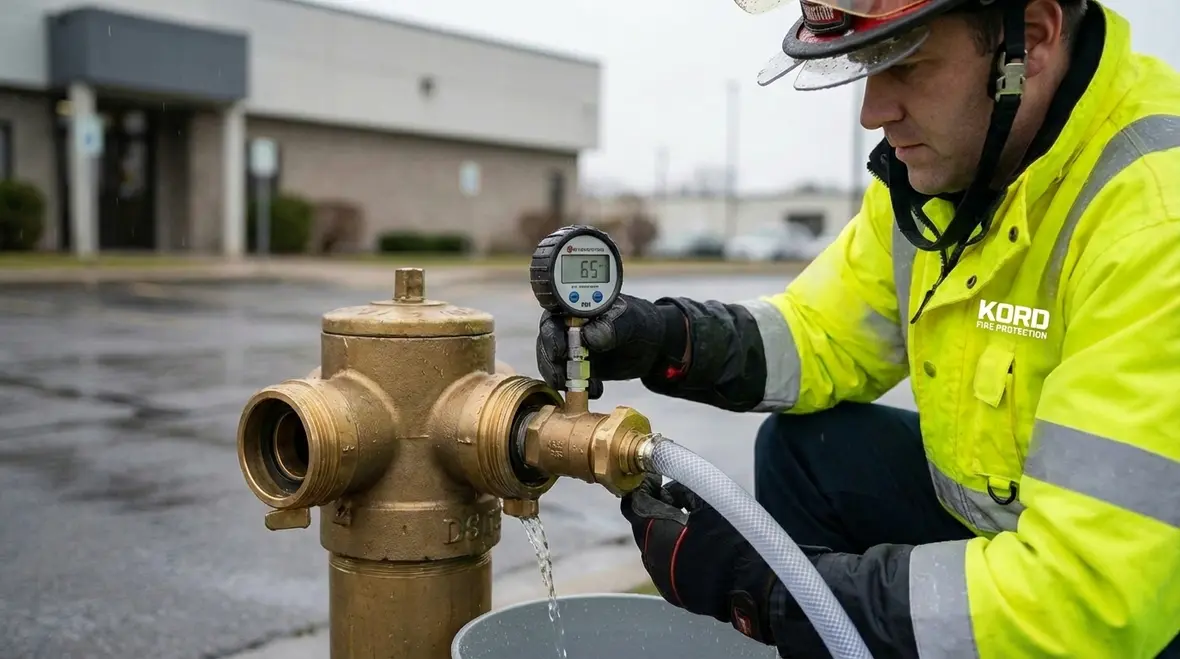
Kord Fire Protection technicians conduct flow tests using calibrated gauges. During a test, they measure static pressure, residual pressure, and flow rate. By opening the hydrant and recording these readings, they calculate how much water the system can supply during an emergency.
Moreover, technicians document results for compliance and planning. Insurance providers often review this data. Developers also rely on it when designing sprinkler systems. Therefore, accurate hydrant performance impacts far more than firefighting alone.
Testing also supports infrastructure planning. If an area grows rapidly, demand increases. Consequently, older mains may no longer meet required flow. When that happens, upgrades become necessary.
While paint offers quick visual guidance, data drives real decisions. As any seasoned technician might say, trust the gauge, not just the gloss.
Why Consistent Hydrant Maintenance Protects Communities
A hydrant is only as reliable as its maintenance program. Even the clearest red fire hydrant meaning becomes irrelevant if the unit fails to operate.
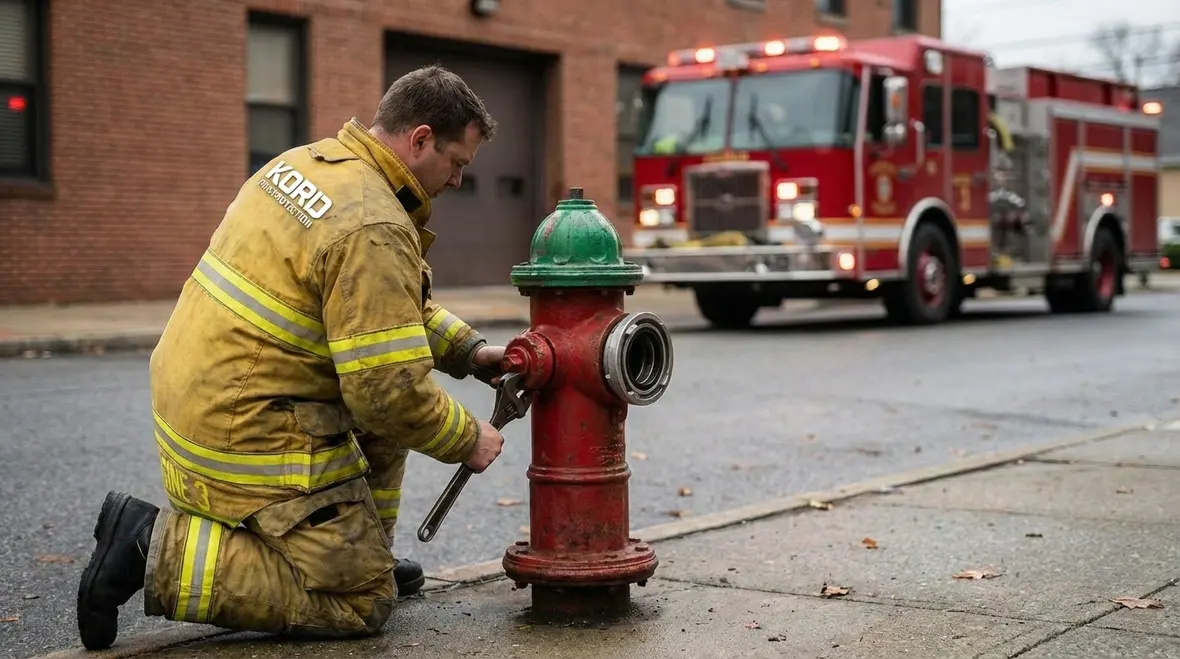
Routine maintenance includes lubrication of operating nuts, inspection for leaks, flushing to remove debris, and verification of valve function. Additionally, technicians check caps, threads, and gaskets. Small issues can grow quickly if ignored.
Furthermore, visibility plays a key role. Overgrown shrubs, parked vehicles, or construction materials can block access. In colder climates, snow removal around hydrants becomes critical. Seconds matter during emergencies. Therefore, clear access saves time and possibly lives.
Kord Fire Protection technicians often encourage property owners to view hydrants as active safety tools rather than passive fixtures. After all, nobody wants to discover a problem when smoke fills the sky. That would be like checking your smoke alarm batteries during the fire. Not ideal.
By keeping hydrants tested, painted according to code, and unobstructed, communities strengthen their first line of defense.
Understanding Local Codes and Variations
Although national guidelines exist, local authority always governs final standards. Therefore, the exact red fire hydrant meaning can vary depending on city or county regulations.
Some municipalities require specific body colors to indicate potable versus non potable water systems. Others assign unique markings for private hydrants located on commercial properties. Additionally, industrial sites may implement internal coding systems that differ from public streets.
Because of these variations, coordination between property owners, contractors, and fire officials remains essential. Before repainting or modifying any hydrant, owners should confirm local requirements. A well intentioned paint job could create confusion if it conflicts with established standards.
Kord Fire Protection technicians routinely guide clients through these regulations. They help ensure compliance while maintaining clarity for responding fire crews. After all, during an emergency, clarity beats creativity every time.
FAQ About Hydrant Colors and Meanings
Conclusion and Next Steps
Understanding hydrant colors is more than trivia. It supports faster decisions, safer communities, and smarter planning. While the red fire hydrant meaning often points to lower flow capacity, real insight comes from testing, maintenance, and local knowledge. Kord Fire Protection technicians stand ready to inspect, test, and clarify hydrant performance for any property.
Contact their team today to ensure every hydrant on site delivers exactly what safety demands. To go even deeper into standards that govern testing and markings, explore their NFPA 291 fire hydrant testing and marking guide, then schedule professional fire hydrant testing services to verify that your system is ready long before the sirens sound.
Know Your Weapon Before You Fight the Flame
Kord Fire Protection is your go-to when it comes to all things fire protection. For over 20 years, we’ve been serving Southern California with the quality service and equipment to keep your home or business safe at all times. Our competitive prices reflect our unwavering commitment to protecting what matters most in the event of a fire emergency. Give us a call, send an email, or use that form!

Join Our Newsletter!
Get the latest fire safety tips delivered straight to your inbox From our Newsletter.