
Private vs Public Fire Hydrants Guide for Property Owners
There is something quietly heroic about our fire hydrants. They stand on sidewalks, in parking lots, beside warehouses and apartment buildings, painted red, yellow, sometimes blue. Most people walk past them without a second thought. However, when flames rise and sirens echo, those humble water outlets become the frontline defense. For property owners, understanding the difference between private and public systems is not just helpful. It is essential. As the technicians at Kord Fire Protection often explain in calm, steady tones, knowing who owns, maintains, and tests these hydrant systems can mean the difference between a controlled incident and a headline no one wants to read.
This guide walks through the details with clarity, a touch of humor, and the kind of grounded authority that makes complex topics feel manageable.
Fire Hydrants: The Complete Guide for Property Owners

Why Property Owners Need to Understand Fire Hydrants
Property ownership comes with many responsibilities. Roofs leak. Pavement cracks. Tenants call at midnight. Yet water supply for fire protection often sits quietly in the background. Until it does not.
Fire hydrants connect buildings to the municipal or private water supply during emergencies. Therefore, their performance directly affects how quickly firefighters can act. When hydrants fail, pressure drops, or access is blocked, valuable minutes disappear.
Kord Fire Protection technicians often tell property managers that a hydrant is not lawn décor. It is not a place to chain a bicycle. And it is certainly not a suggestion. It is a life safety device.
Moreover, insurance providers, local codes, and fire departments require routine inspection and testing. Ignoring these rules can result in fines, higher premiums, or liability issues. In short, understanding the hydrant system is not optional. It is part of responsible ownership.
If you want to go deeper into how hydrant performance, flow, and color coding all tie together, Kord Fire has an excellent breakdown in their Fire Hydrant System: Types, Colors, and How They Work guide, which pairs well with what you are reading here.
Hydrants as Part of Your Life Safety Strategy
A hydrant is just one piece of your fire protection puzzle, alongside sprinklers, standpipes, alarms, fire pumps, and suppression systems. But when firefighters arrive, it is often the first piece they reach for. A strong life safety strategy treats the hydrant with the same respect you give to your sprinkler riser or fire alarm panel.
Private vs Public Hydrants Explained Clearly
One of the most common questions property owners ask is simple. Who owns the hydrant?
The answer depends on location and water supply layout.
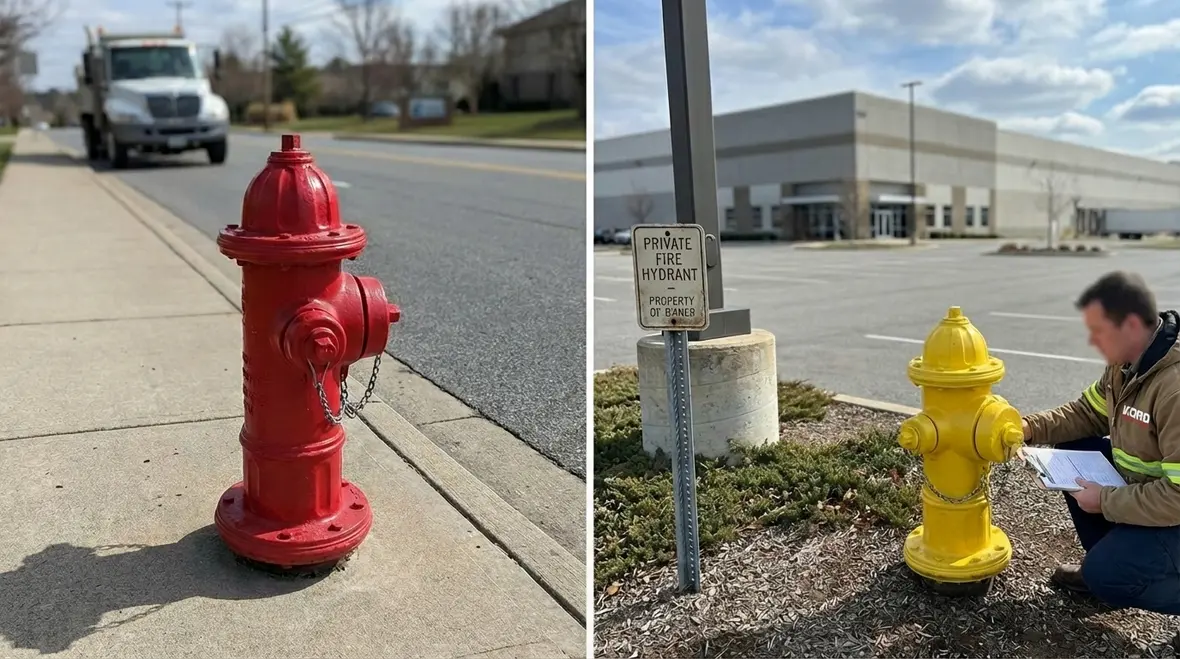
Public fire hydrants are typically installed and maintained by a city or water authority. They connect directly to municipal water mains in public rights of way. In most cases, the city handles repairs, flow testing, and major maintenance.
Private hydrants, however, sit on privately owned property and connect to a private fire service line. Shopping centers, industrial facilities, hospitals, and large apartment complexes often have them. In these situations, the property owner carries responsibility for inspection, testing, and repair.
Kord Fire Protection technicians frequently explain this distinction during site visits. While the hydrant may look identical from the outside, ownership changes everything behind the scenes. Maintenance schedules, compliance documentation, and repair costs all shift to the property owner when the system is private.
Think of it like sidewalks. Some belong to the city. Others fall under the property owner’s care. The concrete does not know the difference. The budget certainly does.
How to Tell If a Hydrant Is Private or Public
If a hydrant is located within your property line, is fed from your private fire service main, or appears on your site utility drawings, chances are it is private. City-owned public hydrants typically sit in public right-of-way and are tied directly into the municipal main. When in doubt, your local water authority or a fire protection contractor like Kord Fire can help you confirm ownership before the next inspection cycle sneaks up on you.
How Do Private Fire Hydrants Work on Commercial Property?
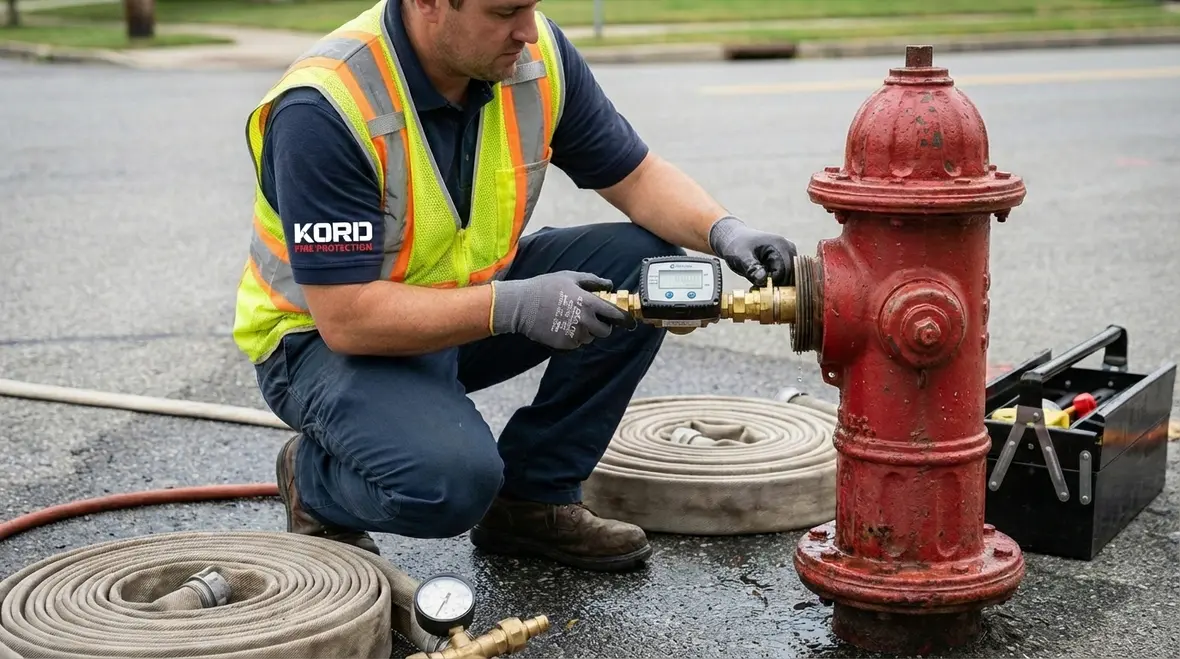
Private hydrants connect to a dedicated fire service line that branches off the main water supply. This line feeds sprinkler systems, standpipes, and exterior hydrant outlets. Therefore, the hydrant becomes part of a larger, integrated fire protection system.
Water flows from the municipal source or a private water tank through underground piping. When firefighters attach hoses and open the valve, pressure forces water through the nozzle and into suppression lines.
Key Components of a Private Hydrant System
However, several components must function properly:
- Underground piping must remain free of corrosion and leaks.
- Main control valves must stay open and accessible.
- Backflow preventers must operate correctly to protect the public water supply.
- The hydrant barrel and operating nut must turn smoothly without damage.
Kord Fire Protection technicians often demonstrate how a simple obstruction underground can reduce flow dramatically. Consequently, annual flow testing and visual inspections are not mere formalities. They verify that the system delivers enough gallons per minute at the required pressure.
In other words, a hydrant that looks fine from the outside may still underperform. Appearances can be deceiving. Just like that “quick five minute fix” that somehow turns into a three hour project.
If your property relies on tanks or pumps to support hydrant performance, it is worth reviewing how NFPA 22 regulates private fire protection water tanks. Kord Fire’s resource on How NFPA 22 Regulates Fire Protection Water Tanks can help you see how the water source, pump, and hydrants all work together.
Inspection, Testing, and Compliance Requirements
Codes and standards require regular inspection of private fire hydrants. Although requirements vary by region, most jurisdictions follow national guidelines for frequency and documentation.
What to Expect from Regular Hydrant Service
Typically, property owners should expect:
- Annual flow testing to measure water pressure and output
- Visual inspections for leaks, damage, and accessibility
- Lubrication of operating components
- Verification of proper drainage after operation
- Clear space around the hydrant, often three feet in all directions
Furthermore, inspection results must be documented. Fire marshals may request records during audits or after an incident. Without proper documentation, owners may face citations.
Kord Fire Protection technicians approach these inspections methodically. They test static and residual pressure, calculate flow rates, and confirm that caps and threads remain in good condition. Then they provide clear reports so property owners understand the system’s health.
It is not glamorous work. No one writes action movies about annual hydrant flow tests. Yet those quiet checks ensure reliability when it matters most.
Responsibilities Comparison for Property Owners
To simplify the distinction, consider the following comparison.
Public Hydrants
Ownership: Municipality or water authority
Routine Maintenance: City managed
Flow Testing: Often city conducted
Repairs: Municipal responsibility
Compliance Records: Maintained by city
Private Hydrants
Ownership: Property owner or facility owner
Routine Maintenance: Owner must schedule and fund
Flow Testing: Required annually by owner
Repairs: Owner responsibility
Compliance Records: Must be kept by owner
This side by side view helps property managers quickly identify their obligations. If the hydrant sits inside the property line and connects to a private fire service main, the responsibility likely rests with the owner.
Kord Fire Protection technicians often advise clients to confirm boundaries through site plans and water utility maps. Because assumptions lead to surprises. And surprises in life safety systems rarely bring joy.
Common Problems That Affect Fire Hydrants
Even well installed systems face wear over time. Weather, corrosion, and accidental damage all take a toll.
Issues That Silently Weaken Your Hydrant System
First, sediment buildup inside the barrel can restrict flow. Although water systems are treated, minerals and debris may accumulate. Therefore, regular flushing is essential.
Second, mechanical damage occurs more often than one might think. Parking lots introduce hydrants to delivery trucks. The hydrant usually loses that encounter.
Third, improper drainage after use can cause internal freezing in colder climates. When water remains trapped, winter temperatures turn it into ice. Ice expands. Metal cracks. And the next emergency becomes complicated.
Additionally, blocked access presents a frequent issue. Landscaping, fencing, or stored materials can obstruct firefighters. A hydrant hidden behind shrubs may look charming. It will not feel charming during an emergency.
Kord Fire Protection technicians emphasize prevention. By identifying minor issues early, property owners avoid larger repairs later. It is the difference between tightening a bolt and replacing the entire assembly.
What Property Owners Should Ask During a Site Visit
When scheduling an inspection, property owners can prepare by asking focused questions.
- Is the hydrant receiving adequate pressure and flow?
- Are underground valves clearly marked and accessible?
- Does the system meet current local code requirements?
- Are there signs of corrosion or mechanical wear?
- Is documentation complete and ready for review?
These questions help owners move beyond surface level understanding. Instead of simply checking a compliance box, they gain insight into system reliability.
Kord Fire Protection technicians often walk clients through test results step by step. They translate numbers into practical meaning. For example, they explain how pressure readings affect hose stream reach and suppression capability. This clarity empowers owners to make informed decisions.
After all, knowledge reduces stress. And in property management, reduced stress feels like a rare and valuable gift.
Fire Hydrants and Insurance Considerations
Insurance carriers assess risk carefully. The presence and condition of nearby fire hydrants influence property ratings and premiums. Therefore, a well maintained hydrant system can support favorable coverage terms.
- Distance from buildings to the nearest hydrant
- Verified flow test results
- Inspection frequency and documentation
- Overall condition of the fire protection system
If a private hydrant fails during a fire and records show missed inspections, liability may shift toward the property owner. Consequently, proactive maintenance becomes more than a code requirement. It becomes financial protection.
Kord Fire Protection technicians frequently coordinate with property managers to ensure reports align with insurance expectations. Clear records provide evidence of due diligence. And due diligence often speaks louder than promises.
FAQ About Fire Hydrants
Conclusion and Next Steps
Fire hydrants may stand quietly, but their role speaks loudly when needed. Property owners who understand the difference between private and public systems protect lives, assets, and peace of mind. Kord Fire Protection technicians stand ready to inspect, test, and explain every component with clarity and care. Schedule a professional evaluation today, ensure compliance, and give your property the steady protection it deserves.
Because preparation today prevents regret tomorrow, it is smart to connect your hydrant strategy with your broader fire protection plan. If your property is in Southern California, explore Kord Fire’s regional Hydrant Services and Fire Protection offerings to coordinate hydrant testing with sprinkler, standpipe, and fire pump services. One coordinated plan, fewer surprises, and a system that is ready when the sirens start.
Know Your Weapon Before You Fight the Flame
Kord Fire Protection is your go-to when it comes to all things fire protection. For over 20 years, we’ve been serving Southern California with the quality service and equipment to keep your home or business safe at all times. Our competitive prices reflect our unwavering commitment to protecting what matters most in the event of a fire emergency. Give us a call, send an email, or use that form!

Join Our Newsletter!
Get the latest fire safety tips delivered straight to your inbox From our Newsletter.


