Emergency Electrical System Design for Fire Safety Australia
Quick Answer: Resilient emergency power for commercial facilities starts with smart emergency electrical system design, the right standby or backup sources, and strict transfer and testing plans. Facilities teams in Australia also need code-aligned fire safety coordination, so systems work together when it matters most. Kord Fire Protection’s fire protection support can help connect those dots.
In the first minutes of a power failure, commercial facilities do not have time for guesswork. That is why emergency electrical system design must be deliberate, layered, and built for real-world conditions across Australia, from coastal storms to grid hiccups that feel like they were scheduled. A well planned design keeps lighting, life safety loads, communications, and critical equipment alive, while also preventing backfeed and dangerous interactions between power sources.
And yes, the goal is not to create a movie-worthy “everything is on fire” scenario. It is to make sure the facility keeps functioning, exits stay lit, alarms stay heard, and staff can respond without the lights going out like a bad Netflix ending.
Assessing load requirements before anyone buys equipment
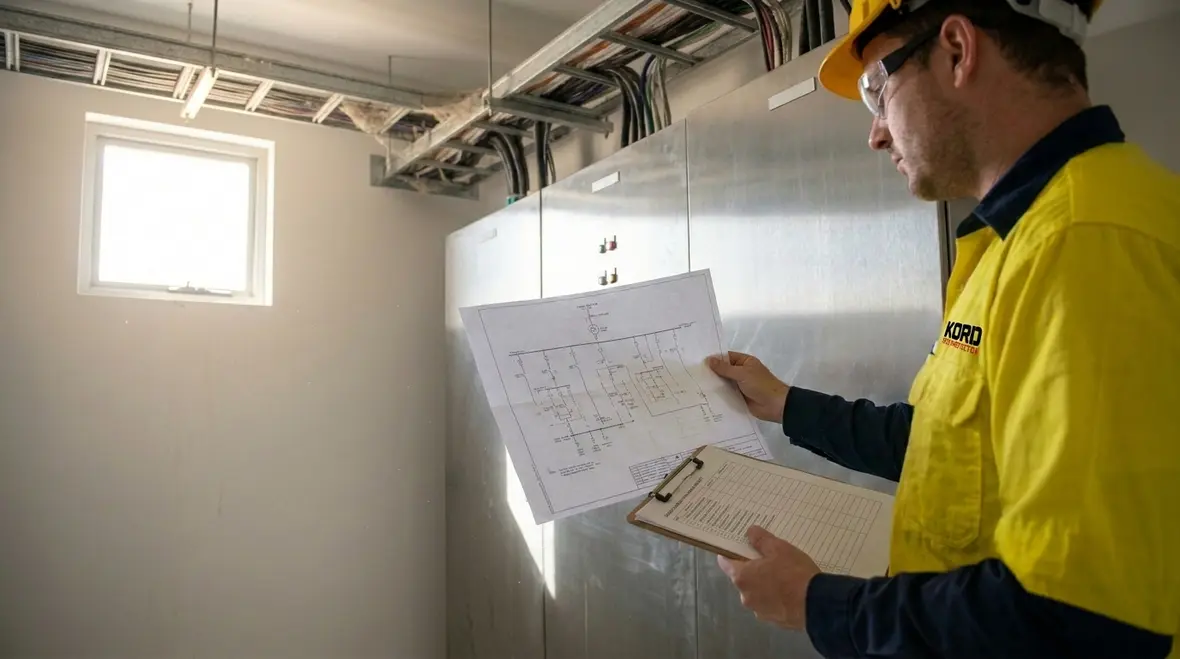
The first step is not selecting generators or batteries. It is mapping what must run, for how long, and under what conditions. Facility owners and electrical engineers review essential loads such as emergency lighting, fire alarm panels, smoke control systems, access control, pumps, essential HVAC, communications, and critical servers. Then they separate them by priority and duration so the emergency power system supports the right circuits, not everything that might be “nice to have.”
Next, they confirm load types and starting behavior. Large motors can create inrush currents that upset the voltage and frequency. Therefore, design teams use demand data, short-circuit calculations, and voltage drop checks to prevent nuisance trips. At this stage, they also consider how loads respond during transfer, because some equipment does not like surprises.
A strong load study also forces useful conversations early. Which systems absolutely must stay live in the first 10 seconds? Which ones can wait for stable backup power? Which loads need ride-through, and which only need restoration within a short transfer window? When teams ask those questions up front, they avoid the classic project habit of buying expensive equipment first and figuring out the mission later. That approach works about as well as assembling flat-pack furniture without checking whether the screws are still in the box.
Why clear documentation matters later
Finally, they document assumptions so maintenance teams can test against the same logic later. When design decisions are clear, commissioning becomes smoother, and troubleshooting becomes less like playing whack-a-mole with a torch. That documentation also helps when facility ownership changes, contractors rotate, or an upgrade happens years later and someone asks the dangerous question: “Why is this circuit on emergency power again?”
Choosing backup power sources that match the facility reality
Commercial facilities typically use generator sets, battery energy storage, uninterruptible power systems, or combinations. Each option has strengths. Generators handle longer runtimes. Batteries bridge the gap instantly and can reduce generator start time. UPS systems protect sensitive electronics from short interruptions. Together, they form a resilience stack rather than a single point of failure.
Then they match the source to the risk profile. A retail site with frequent utility flickers may benefit from batteries and UPS on key systems. A logistics warehouse may need generator capacity for fire pumps and ventilation. A multi level commercial building may require careful coordination for elevators, life safety loads, and compartment ventilation. Because Australia covers varied climates, teams also plan for ambient temperature, air quality, and fuel handling practices.
Layered power beats wishful thinking
Also, they plan for reliability details that customers rarely brag about. Fuel quality and transfer rules, battery replacement cycles, ventilation for generator rooms, and protective grading for outdoor cabinets all matter. When these details get ignored, the system fails quietly, like a “supporting actor” who never shows up when the plot goes sideways.
For many facilities, the smartest answer is not generator versus battery. It is generator plus battery, with UPS protection where control systems or communications cannot tolerate even a short interruption. That layered approach aligns well with Kord’s related guidance on battery backup vs generator for emergency lighting, especially where emergency lighting performance and outage response times need to work together instead of competing for attention.
Emergency electrical system design for safe transfer and protection
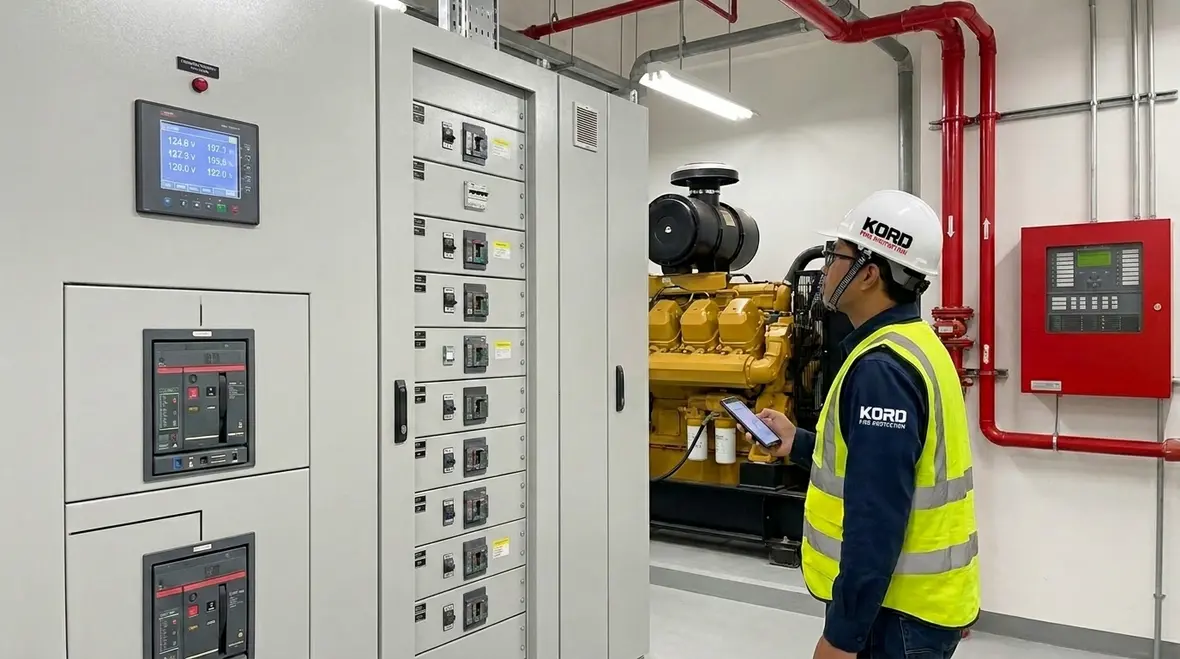
The heart of resilience sits in how the facility moves between normal power and backup power. Emergency electrical system design focuses on transfer equipment, protection settings, and coordination so the changeover remains stable under stress. Automatic transfer switches, transfer panels, and synchronising strategies must prevent backfeed and avoid simultaneous supply that could damage equipment.
At the same time, they apply selective coordination. Circuit breakers and relays must trip in the right order so one fault does not shut down the entire emergency system. Voltage and frequency monitoring also improves outcomes, because some loads require tight tolerances to operate correctly during generator operation.
Controls need backup too
Moreover, the design accounts for control power. If controls lose power during transfer, alarms and control logic may not function when operators need them most. Therefore, teams include battery backed control circuits where required and verify that supervisory signals work during extended outages.
Then commissioning tests prove the design works. Step load tests, transfer tests, and simulated faults build confidence. After all, if the system only behaves during a perfect scenario, it is not resilience. It is just a well dressed gamble. Teams that want an even broader reliability approach often benefit from thinking in terms of redundancy across the electrical chain, not just at the generator, so the design supports the same real-world performance Kord discusses in its emergency power reliability content.
Coordinating life safety systems with fire protection partners
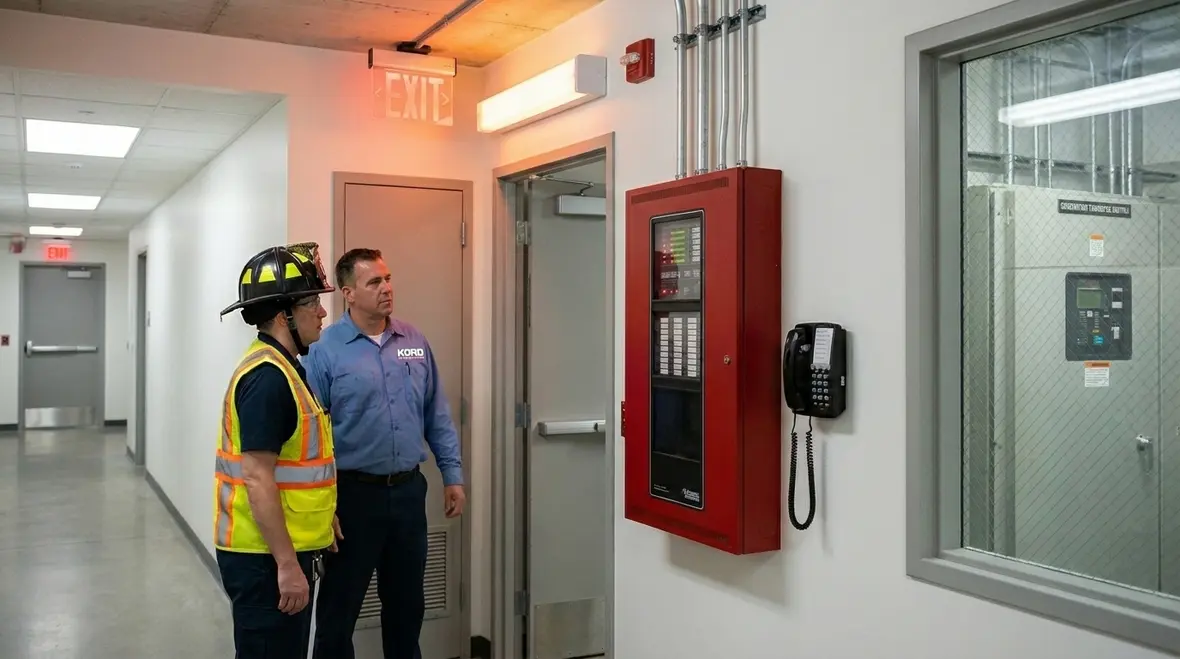
Emergency power does not live in isolation. Fire alarm systems, emergency lifts coordination, smoke control strategies, fire pump controllers, and emergency communications rely on electrical integrity during outages. Therefore, the facility needs a coordinated plan between the emergency power team and fire protection professionals.
This is where Kord Fire Protection becomes a vital partner. Fire protection specialists help ensure that the emergency electrical system design supports life safety devices and fire related control equipment in a compliant way. They can align the expectations for fire alarm panel operation, power supplies to detection and notification circuits, and the performance of fire pump power requirements. They also help verify that the overall life safety strategy, including alarm signaling and emergency response interfaces, works during loss of normal power.
Stop the “electrical says yes, fire says no” problem
As a result, the facility reduces the risk of “electrical says it is fine, fire says it is not.” Instead, both sides share test evidence, verification steps, and acceptance criteria. And yes, that alignment can prevent costly rework. It is not a romantic part of the job, but neither is waiting on hold with customer support for three hours.
This coordination becomes even more important where fire pump controls and related electrical standards come into play. Kord’s content on fire pump motor controllers and electrical standards compliance reinforces why documentation, settings, supervision, and joint verification are not side notes. They are the difference between equipment that exists on paper and equipment that performs when normal power disappears.
Built to last: protection, maintenance, and testing schedules
A resilient system does not end at commissioning. The best emergency power installations include a practical maintenance plan and a testing calendar that matches operational risk. That includes load bank testing for generators, functional tests for transfer switches, inspection of distribution gear, battery capacity checks, and verification of supervisory alarms.
In addition, teams plan for the real wear and tear of commercial operations. Dust, humidity, vibrations, and equipment heat all affect performance over time. So they set maintenance intervals based on manufacturer guidance and site conditions rather than treating every facility like it lives in the same climate controlled box.
Testing should reflect how the site actually operates
They also document test results and trends. When frequency and voltage logs show drift, technicians can address issues before the next outage. Meanwhile, operators gain confidence because they see what the system does under controlled conditions.
Transitioning into operations, the facility trains staff on how to respond during changeover. Staff do not need engineering degrees. They need clear instructions and quick guidance on what alarms mean and where to check status indicators. For sites with fire pumps in the mix, routine verification aligns naturally with Kord’s broader material on fire pump testing requirements, since emergency readiness is much easier to maintain when electrical and fire protection testing calendars stop pretending they live on different planets.
Designing for Australia: site conditions, standards, and practical compliance
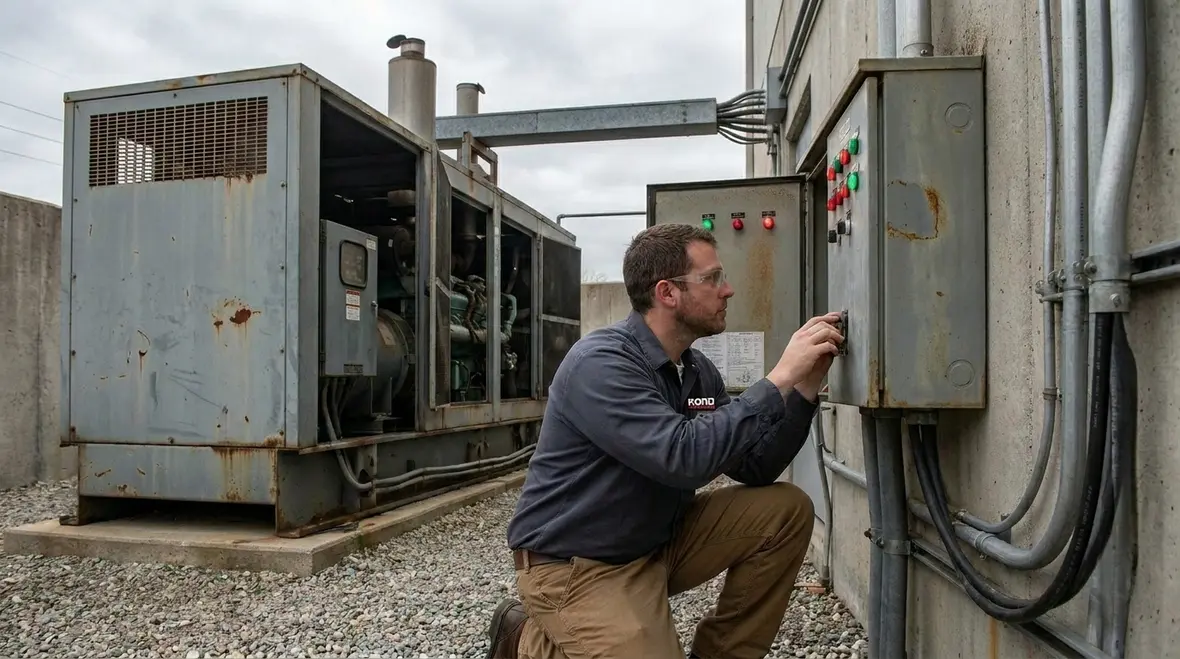
Commercial facilities across Australia experience a mix of challenges. Extreme heat affects generator performance. Bushfire smoke can influence air intake and filtration decisions. Coastal environments drive corrosion risk for outdoor equipment. Therefore, design teams select protective enclosures, apply suitable coatings, and plan for airflow requirements and maintenance access.
In parallel, they align with relevant regulations and standards that govern emergency systems, fire safety integration, and electrical installation practices. While each site has its own requirements, a consistent approach keeps compliance manageable. Teams also prepare cut sheets, single line diagrams, and commissioning packs that auditors and stakeholders can review without hunting through a digital maze.
Compliance is easier when information is organised
Also, they consider fuel logistics where generators run on diesel or other approved sources. Storage capacity, delivery scheduling, and safe handling practices affect how long the system can actually run. Resilience is not measured by nameplate capacity. It is measured by what stays available during the long shift when the grid cannot be trusted.
In practice, facilities that stay audit-ready tend to keep one thing in common: they make system information easy to verify. Drawings match the installation, labels are readable, sequences are documented, and maintenance records do not vanish into someone’s email archive. That kind of boring excellence is exactly what makes a stressful outage less dramatic later.
What a strong project delivery looks like, end to end
Successful projects follow a clear path. First, the team completes a site survey and load study, including emergency durations and circuit prioritisation. Next, they design the system architecture, select switchgear and cabling routes, and define control logic. Then they coordinate with other trades so pathways, penetrations, and segregation requirements make sense.
After that, they install and verify equipment, then commission through structured tests that reflect real outage behavior. Finally, they hand over documentation, training, and maintenance guidance so operations and facilities teams can keep the system ready.
Good coordination saves time at the end
During the entire process, communication reduces surprises. When electrical and fire protection teams coordinate early, the emergency power system design aligns with fire life safety expectations and reduces the chance of late-stage changes. That means fewer redraws, fewer awkward site meetings, and fewer moments where everyone stares at a wall penetration and pretends it was always part of the plan.
FAQ
Ready to strengthen emergency power and fire safety coordination?
Resilience takes planning, not luck. A well executed emergency electrical system design keeps life safety and critical systems operating during outages, while routine testing keeps it dependable. For commercial and industrial facilities across Australia, Kord Fire Protection can help align life safety needs with the electrical plan so nothing gets missed.
From load prioritisation and transfer strategy to coordinated fire safety verification, the right process pays off when conditions stop being polite. Request an assessment and move forward with confidence, knowing your emergency power approach supports the systems people rely on most when normal power checks out without saying goodbye.

Join Our Newsletter!
Get the latest fire safety tips delivered straight to your inbox From our Newsletter.