Fire Extinguisher Cabinet Lighting Compliance Australia
Quick Answer: Fire extinguisher cabinet area lighting must support safe access, quick identification, and reliable visibility during an emergency. This means correct illumination levels, safe wiring practices, and appropriate fittings for the room type. When the site follows proper Fire extinguisher cabinet lighting compliance, occupants can find and use extinguishers faster, and everyone goes home.
In Australia, facility teams often focus on the extinguisher itself, then forget the light that helps people use it under stress. Yet proper Fire extinguisher cabinet lighting compliance drives visibility, reduces response time, and supports safe access when smoke, power fluctuations, or crowding make everything harder. This article guides facilities across industrial, retail, and commercial sites on electrical requirements for extinguisher cabinet area lighting, and it explains why full fire protection services from Kord Fire Protection can fit naturally into a broader compliance plan. And yes, that saves time, money, and the kind of rework nobody wants to do twice.

Site Safety Goals for Extinguisher Cabinet Lighting
First, the purpose of cabinet area lighting is simple: it helps people locate and operate the equipment quickly. Therefore, the electrical design needs to deliver clear visual cues, stable lighting output, and safe installation practices. When lighting fades or fails, the extinguisher becomes just a box on a wall, and emergencies rarely wait for electricians to get to it next week.
Next, facilities must consider the real conditions of use. Retail aisles may have reflective surfaces, industrial zones often include dust or vibration, and commercial corridors can include night mode or power cycling. Consequently, lighting design should account for the environment so that visibility remains consistent during both routine operations and abnormal events.
Visibility is the whole point
A cabinet can be technically present and still practically useless if the lighting around it is weak, patchy, or blocked. Safety goals should focus on the real user experience: can a person under pressure spot the cabinet, confirm what is inside, and reach it without hesitation? If the answer is maybe, the lighting plan still has work to do.
What Electrical Installations Typically Must Support
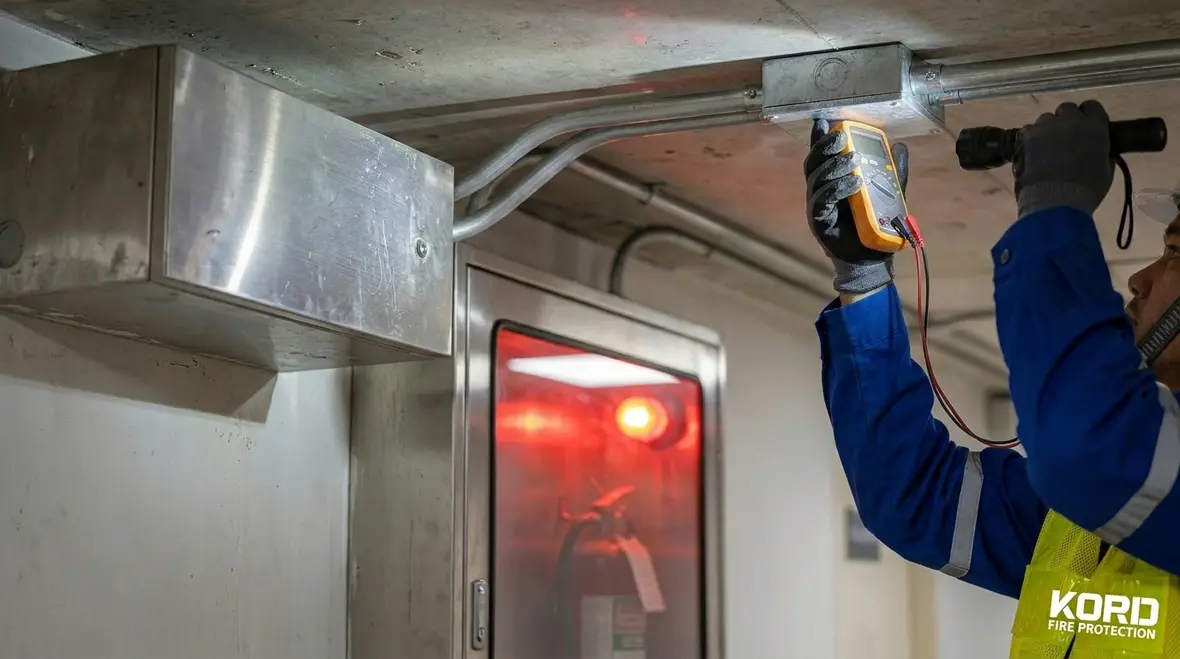
Electrical requirements for extinguisher cabinet area lighting usually include reliable power, safe conductors, and suitable controls. In practice, this often means dedicated circuits, proper protection devices, and correct cable routing that avoids physical damage. Moreover, teams should ensure that the cabinet lighting does not create glare that hides signage or makes the extinguisher location harder to read.
Additionally, the installation should meet local safety expectations for wiring methods and protection. That includes correct earthing practices, suitable segregation from other services where needed, and the use of appropriate junctions and enclosures. If the wiring runs through areas where forklifts, shelving, or foot traffic can disturb it, then the risk grows quickly. Good installers plan for that up front.
Design for abuse, not just for handover day
Plenty of installations look beautiful for exactly one week. Then the space gets busy, stock moves in, maintenance teams start adding things, and the tidy cable route suddenly has a new enemy. Cabinet lighting should be installed with enough protection and forethought that it still performs after the site begins acting like a real site. That is not pessimism. That is experience wearing steel capped boots.
Illumination Levels and Visibility During Emergencies
Effective cabinet lighting does not just turn on. It must produce enough light to guide users to the correct cabinet even when conditions are not perfect. Therefore, the design should target practical visibility: the cabinet frame, the extinguisher label area, and any directional signage should be easy to spot.
Moreover, emergency conditions can affect performance. Smoke reduces contrast, while power interruptions can remove normal lighting. For that reason, many sites build in an emergency lighting approach, so cabinet area visibility continues when the rest of the building shifts to backup supply.
Importantly, the lighting should avoid flicker and should start reliably when conditions change. A light that delays by even a few seconds can cost the user time, and time matters when someone is making a split second decision. Facilities should treat this like safety-critical equipment, not like decorative lighting for the hallway.
Emergency conditions expose weak designs fast
Normal operation can hide a mediocre setup. During an emergency, the flaws suddenly become obvious. The contrast is worse, people are moving faster, and no one has spare patience for a dim fitting that sort of helps if you already know where the cabinet is. Good lighting removes doubt. Great lighting removes delay.
Emergency Power, Backup Supply, and Control Strategy
Next, facilities often ask how cabinet area lighting stays available. Typically, this involves emergency power arrangements and proper control wiring. When normal supply fails, the lighting must maintain operation so occupants can find extinguishers without guessing.
Accordingly, the control strategy should be clear and testable. Site managers benefit when the configuration supports routine testing, fault indication, and accessible maintenance. If the system uses drivers, battery backups, or power modules, then the service schedule should include inspections and performance checks that align with site risk.
Also, the design should prevent unwanted outages. For example, shared circuits that feed both general lighting and cabinet lighting can cause cascading failure. Therefore, teams commonly isolate cabinet lighting so an unrelated switch or maintenance action does not take out the emergency access light.
This is also a sensible place to link broader electrical reliability thinking with fire protection planning. Teams reviewing cabinet lighting resilience may also benefit from Kord Fire Protection’s article on fire pump controller surge protection for reliable performance, because emergency systems tend to appreciate stable power just as much as people do.
Control logic should be boring in the best possible way
In safety systems, boring is beautiful. You want controls that respond exactly as expected, every time, with no mysterious interactions and no surprise dependencies hiding behind another panel. If someone can accidentally switch off critical cabinet lighting while trying to service something unrelated, the design has already written its own punchline.
Fixture Selection for Harsh Retail and Industrial Areas
Fixture choice often decides whether the lighting survives the real world. In retail spaces, cabinets may sit near doorways where humidity and frequent movement can increase wear. In industrial settings, areas near machinery can face dust, temperature swings, and impact risk. Consequently, the selected fittings should match the environment and use correct ingress protection where required.
In addition, the fixture placement matters. The goal is to avoid shadows, ensure even illumination across the cabinet, and keep light directed toward the extinguisher location. If the luminaire ends up behind a sign, behind pipes, or blocked by storage, then the installation fails its mission. It is like putting a lighthouse behind a shopping trolley. Technically possible, practically unhelpful.
Kord Fire Protection often supports teams by reviewing cabinet locations, lighting lines of sight, and installation constraints so the final layout meets the intended visibility outcome. That same practical mindset appears in related guidance like the Kord Fire Protection article on fire extinguisher cabinet lighting electrical requirements, which pairs well with this topic when teams need a wider planning view.
Maintenance, Testing, and Documentation That Pass Real Audits
Electrical work is only half the story. The other half is how facilities maintain it and prove it still works. Therefore, teams should plan maintenance tasks that include checking connections, verifying illumination levels, confirming emergency operation, and inspecting fixtures for damage or contamination.
Meanwhile, documentation helps during inspections. Clear records of circuit details, fixture models, and commissioning tests make audits smoother. If a site has multiple departments, those records also reduce confusion when staff changes occur.
Kord Fire Protection can become a vital partner here. Instead of handing off a system and hoping it stays compliant, they support a joined-up approach that links extinguisher arrangements with the electrical and visibility needs around them. When fire protection and lighting work together, the site avoids the most common problem: the extinguisher is compliant, but the cabinet lighting fails the job in practice.
Audit proof usually means reality proof
The funniest part of compliance is that the boring paperwork often reveals the exciting mistakes. Missing records, unlabeled circuits, unclear test results, and mystery fittings with unknown specifications all make a site harder to maintain. Strong documentation is not admin theatre. It is the map that helps the next person avoid turning a small issue into a very expensive scavenger hunt.
How Kord Fire Protection Supports Fire Safety Projects in Australia
In many facilities across Australia, the challenge is coordination. Contractors may install extinguishers, then separate trades handle lighting, then another team manages emergency services. As a result, the final system can look correct on paper, but it does not deliver the needed access visibility.
That is where Kord Fire Protection helps. They can align design intent with real site conditions, clarify installation expectations, and support verification steps that help teams meet Fire extinguisher cabinet lighting compliance outcomes. When a single partner understands both fire protection and the lighting around it, the project runs like a well-practised call and response, not a confusing group chat.
For industrial, retail, and commercial sites, this partnership approach reduces rework and supports smoother commissioning, while also helping facilities plan ongoing checks with confidence. And confidence is a safety benefit people rarely measure, but it shows in the results.
FAQ
Conclusion: Next Steps for a Compliant, Reliable Installation
Fire extinguisher cabinet area lighting deserves the same seriousness as the equipment it supports. When facilities plan illumination, emergency power, fixture suitability, and maintenance together, they improve response speed and reduce audit headaches. For industrial, retail, and commercial sites across Australia, Kord Fire Protection can partner with teams to deliver practical results that align with Fire extinguisher cabinet lighting compliance and real-world access.
Reach out to Kord Fire Protection to review your layout and lighting approach before the next compliance moment. A well-lit extinguisher cabinet is not a flashy upgrade, but it is exactly the kind of practical decision that helps people act faster when something has already gone very wrong. That is a pretty solid return on one light fitting.

Join Our Newsletter!
Get the latest fire safety tips delivered straight to your inbox From our Newsletter.