Commercial Fire Standpipe Pump Wiring for Reliability
Quick Answer: Commercial fire standpipe pump wiring must stay reliable under heat, vibration, and long idle periods. A quality wiring plan covers correct circuits, protected routing, proper termination, testing, and documentation. Working with kord fire protection helps facilities keep systems monitored, compliant, and ready when seconds matter.
When a site relies on standpipe pumps, the wiring is not an afterthought. It is the quiet promise that power will reach the right components at the right time. This reliability guide supports Commercial fire standpipe pump wiring installations across Australia, especially for industrial, retail, and multi use facilities where downtime and non compliance can turn expensive fast. From pump control panels to annunciation devices, every cable, gland, and terminal plays a role.
And yes, the wiring must behave even when the rest of the building feels like it is running on coffee and hope. This article explains the checks and methods teams should use so the system performs when it truly counts. It also shows how kord fire protection can become a vital partner, from planning through ongoing verification, so the job does not end when the covers go back on.
Near the top of the process, facilities that want a broader maintenance strategy often pair wiring reliability work with expert fire pump service support so inspections, repairs, and documentation stay aligned with how the pump system actually performs in the field.
Planning a reliability first wiring approach
Commercial sites often treat wiring like a “run it and move on” task. Reliability flips that mindset. First, teams confirm the fire pump control philosophy, the voltage and current needs, and the required interlocks with valves, switches, and fire command systems. Then they build a wiring plan that matches how the system will actually work during a water demand event.
Before any conductor leaves the tray, qualified installers should review drawings, site hazards, equipment ratings, and cable schedules. Next, they should map cable routes around heat sources, mechanical wear points, and areas with likely condensation. After that, they should ensure the panel layout supports safe separation between power, control, and data conductors where applicable.
In practice, poor planning shows up as nuisance faults, delayed activation, or failed supervision signals. Meanwhile, careful planning reduces troubleshooting time and protects the asset across years of duty cycles, including long standby periods that many sites rarely think about until they fail a test.
Why early coordination matters
This is also the point where facility teams can improve outcomes by comparing the wiring plan with practical service realities. If a controller location makes future access miserable, or if cable paths run through likely impact zones, those issues are cheaper to fix on paper than after commissioning. A reliability first approach is not dramatic. It is just disciplined, which is much less exciting than panic, but far better for the budget.
Which wiring paths must stay dependable?
Reliability depends on the correct pathways for power and signal. Teams should focus on three areas: supply power to the pump controls, control circuits that command the pump start and stop functions, and monitoring circuits that report system state.
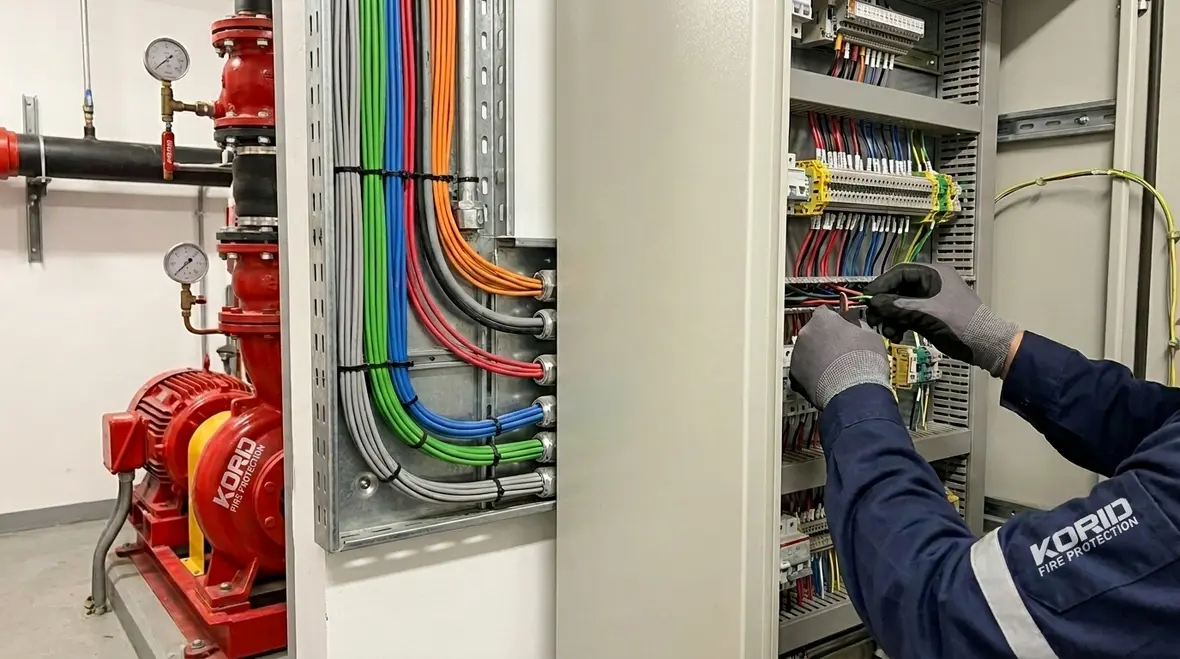
To keep the path dependable, installers should use correctly rated conductors and ensure termination quality at every junction. That means tight torque on terminals, proper ferrules where needed, and the right wire stripping length. It also means selecting cable types that suit the environment, such as where there is oil mist, vibration, UV exposure, or dampness.
Then comes routing discipline. Installers should avoid sharp bends, unsupported spans, and locations that invite physical impact. Additionally, they should ensure cable supports and trays follow good practice so gravity does not do its slow, silent damage over time.
Transitioning from one task to another, the crew should document route paths and identify endpoints clearly. That way, maintenance teams can trace circuits without guessing, which is how you prevent the classic “that wire was probably for something important” scenario. Every site deserves better than detective work.
Power, control, and monitoring are not interchangeable
It sounds obvious until a future modification blurs the lines. Power wiring feeds operation. Control wiring tells the system what to do. Monitoring wiring reports what just happened or what failed to happen. When teams protect all three pathways with the same seriousness, the standpipe pump system becomes easier to test, easier to troubleshoot, and much less likely to spring unpleasant surprises during an emergency.
How to protect cables from heat, water, and wear
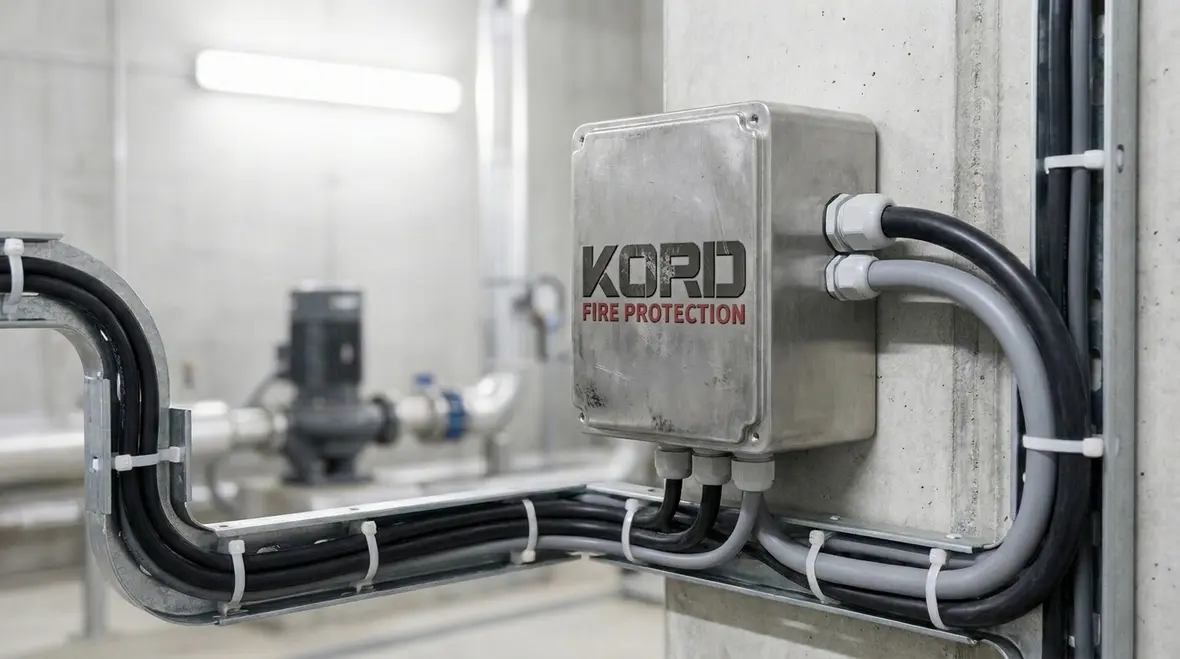
Standpipe pump rooms can be harsh. Heat loads, airflow, and humidity can stress insulation, while mechanical vibration can loosen connections if the installation is careless. Therefore, cable protection should be part of the design intent, not a late add on.
First, installers should secure cable in a way that prevents rubbing against metal edges. Second, they should use glands, fittings, and enclosures rated for the environment and install them correctly so seals stay intact. Third, they should ensure penetration seals maintain fire and smoke integrity where required.
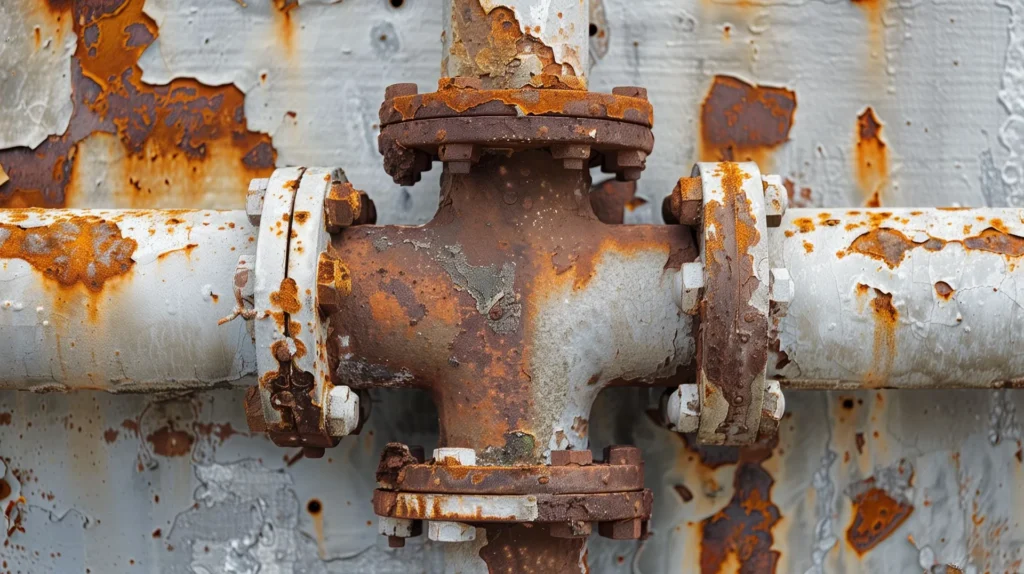
Water is another silent enemy. Even when the system is not active, condensation can form in cooler periods. Consequently, teams should support and route cables so water does not pool in enclosures. They should also avoid uncontrolled dips that trap moisture.
Finally, they should protect from impact. In retail and facilities with forklifts or frequent access, cable runs should sit behind guards or within protected trays. And if someone insists “it will be fine,” that person should try troubleshooting a corroded termination at 2am. Just saying.
Environmental protection is part of reliability
A wiring install can look neat on day one and still age badly if heat, moisture, and vibration were shrugged off. Reliable systems respect the environment they live in. That means cable support spacing, enclosure sealing, gland quality, and route choice all matter together, not as isolated box ticking exercises.
Termination quality and control circuit integrity
Correct wiring does not end at “connected.” Reliability also depends on termination quality and control circuit integrity. Each terminal should match the conductor size, the termination method should match the equipment requirement, and labeling should stay readable over time.
Teams should inspect for loose strands, improper stripping, and mismatched conductor types. They should also confirm polarity and correct phase connections for any motor starter or control supply. Next, they should verify that end devices and their wiring match the schematic, including auxiliary contacts and any stop start logic.
Because control circuits often include supervision and feedback, minor errors can create confusing symptoms. A swapped contact might stop the pump from starting, while an open circuit might trigger a fault that never clears. Therefore, crews should test control operation as a full chain, not as isolated point checks.
In addition, facilities should keep insulation resistance testing aligned to the manufacturer and system requirements. Transitioning from test planning to execution, they should record readings and compare them to acceptable baselines. That trend helps detect early degradation rather than waiting for a failure.
Good terminations save bad days
Loose torque, poor stripping, unreadable labels, and half documented field changes all create future headaches. Control circuits especially have a talent for failing in ways that waste everyone’s time. If the system is going to be trustworthy during an emergency, it has to be trustworthy during diagnostics too.
Testing and commissioning that proves reliability
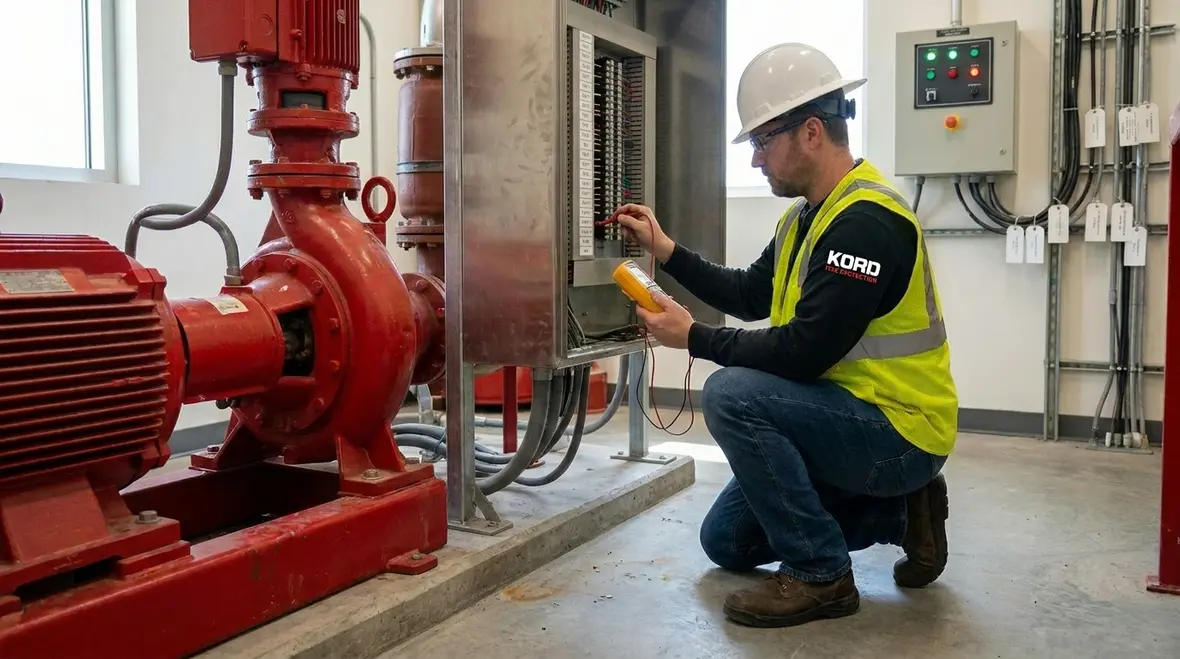
Testing should confirm that the wiring behaves under expected conditions, and not merely that it looks correct. A strong commissioning process typically includes functional checks of pump start, stop, alarm, and supervision signals, plus verification of interlocks with valves, pressure switches, and control panel logic.
Installers should perform tests with the correct operational sequence. Then they should confirm that each signal reaches the intended output, such as status indications, fault reporting, and any remote annunciation interfaces used on site. Also, they should verify that protection devices operate as designed if faults occur.
Because real reliability includes time, not just one moment, teams should schedule follow up checks after initial set up and after any plant changes. Additionally, when a facility expands, adds tenancy, or updates building management interfaces, they must ensure the standpipe pump wiring and control logic remain consistent.
This is where kord fire protection can become a vital partner. They support facilities with structured verification, practical documentation, and service planning that reduces the risk of “we tested it once” thinking. In many cases, kord fire protection also helps teams align installation outcomes with ongoing maintenance habits, so the system stays dependable long after the commissioning day ends.
Teams looking for more related reading can also browse the Kord Fire Protection blog or review the related article on standpipe system electrical needs for booster pumps to support broader planning and maintenance decisions.
Documentation and ongoing service for facilities across Australia
Good wiring documentation is a reliability tool. When it is clear, maintenance teams can act quickly during faults. When it is missing or messy, the crew spends time tracing circuits that should have been obvious.
Facilities should keep as installed drawings, circuit schedules, terminal block maps, and test records. They should also store updated labeling details, panel photos, and any changes made during commissioning. Additionally, they should record cable route descriptions and identification of junction points so future work does not accidentally interrupt an essential path.
Over time, ongoing service should include inspection of physical cable condition, panel cleanliness, termination tightness checks where allowed, and verification of supervision and alarm circuits. Transitioning through the year, service providers should also consider seasonal risks such as humidity swings, dust loads, and changes in building usage that affect access and vibration.
kord fire protection helps commercial and industrial sites maintain this continuity. They can support service intervals, keep records tidy, and make it easier for facility managers to demonstrate that the system remains in trusted condition. In short, they help prevent reliability from becoming a story people tell instead of a performance they can prove.
Common wiring mistakes that trigger failures
Even skilled teams can fall into predictable traps. One common issue is incorrect conductor sizing or using a cable type that does not match the environment. Another is weak termination practices, including poor stripping, loose torque, and incorrect ferrule usage. There are also failures caused by poor routing, such as cables passing through areas with vibration or rubbing against sharp metal.
Then there are control logic mistakes, like swapping auxiliary contacts or routing feedback signals incorrectly. Some sites also miss the effect of later modifications, where trades run new conduits and unintentionally damage or disturb existing runs. That is why change control matters, and why reliability cannot be a one-time event.
To reduce these risks, crews should use checklists at each stage: design review, material verification, installation verification, and commissioning proof. Furthermore, facilities should insist on clear labeling and test documentation so the next team does not inherit mystery wiring.
And if someone says “we will fix it later,” a small part of the fire pump system just sighs. The goal is to avoid that moment entirely.
FAQ about fire standpipe pump wiring reliability
Call kord fire protection for a reliability plan that lasts
Commercial fire standpipe pump wiring needs more than a tidy install. It needs protected routing, correct terminations, and proven testing that stays valid as the site changes. kord fire protection can partner with facilities across Australia to support commissioning readiness, ongoing service, and clear documentation.
If a facility manager wants fewer surprises and better audit confidence, they should contact kord fire protection today and lock in a reliability focused plan. Good wiring should not depend on luck, memory, or crossed fingers. It should be built, checked, documented, and ready.

Join Our Newsletter!
Get the latest fire safety tips delivered straight to your inbox From our Newsletter.