Private Fire Hydrant Inspection Requirements Guide
Private Fire Hydrant Inspection: What You’re Responsible For as an Owner
Every property owner likes to believe that if a fire ever breaks out, the nearest hydrant will stand ready like a silent hero waiting for its cue. However, that confidence only holds true when the private fire hydrant inspection requirements are met consistently and correctly. Local codes, national standards, and insurance policies expect owners to inspect, test, maintain, and document their private hydrants on a routine schedule. These obligations include annual flow testing, regular visual checks, lubrication, obstruction removal, and immediate repairs when defects appear. In the sections ahead, the details unfold clearly, just as Kord Fire Protection technicians explain them to clients every day, in calm, steady tones that make even compliance sound reassuring.
Because when it comes to fire protection, hope is not a strategy. Preparation is.

Understanding Your Legal Duty as a Property Owner
First and foremost, a private hydrant is not the same as a city owned hydrant on a public street. If it sits on private property, the responsibility usually falls on the owner, the facility manager, or the association in charge. Consequently, that responsibility does not pause on weekends, holidays, or during budget season.
Most jurisdictions adopt standards that outline private fire hydrant inspection requirements in clear language. These standards typically call for annual inspections and flow tests, along with periodic visual checks throughout the year. Additionally, local fire departments may require documentation that proves compliance. Without those records, an owner may face fines, failed inspections, or increased liability if a fire occurs.
Kord Fire Protection technicians often explain it this way. Owning a private hydrant is like owning a car. The vehicle may look fine in the driveway, but without regular oil changes and brake checks, it becomes a risk. Similarly, a hydrant that is never inspected may fail when firefighters need it most.
Moreover, insurance carriers frequently review maintenance records. If documentation is missing, claims can become complicated. Therefore, keeping organized inspection logs is not just smart practice. It is financial protection.
For a deeper breakdown of owner responsibilities across water-based fire protection systems, including private fire service mains that feed many hydrants, Kord’s NFPA 25 overview article is a helpful companion resource.
Private Fire Hydrant Inspection Requirements Every Owner Should Know
When someone asks, “What exactly must be done?” the answer is both simple and specific. The private fire hydrant inspection requirements focus on visibility, accessibility, mechanical function, and water flow performance.
Typically, these obligations include:
- Annual flow testing to verify water pressure and available gallons per minute
- Full operational inspection to ensure caps, stems, and valves function properly
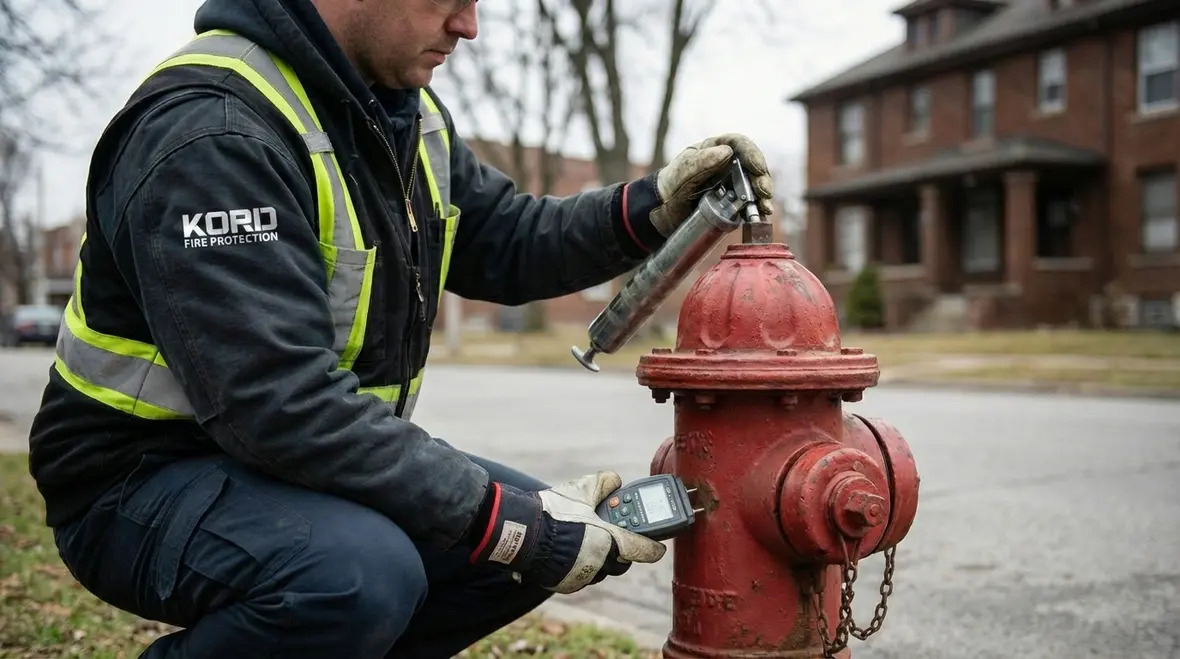
- Lubrication of moving parts
- Checking for leaks, corrosion, or physical damage
- Confirming proper color coding where required
- Ensuring hydrants remain clear of landscaping, vehicles, snow, or debris
In addition, many standards require hydrants to be flushed annually. Flushing removes sediment and ensures water flows cleanly and at the expected rate. While that may sound routine, sediment buildup can restrict flow significantly. And in a fire emergency, restricted flow is not a minor inconvenience. It is a serious hazard.
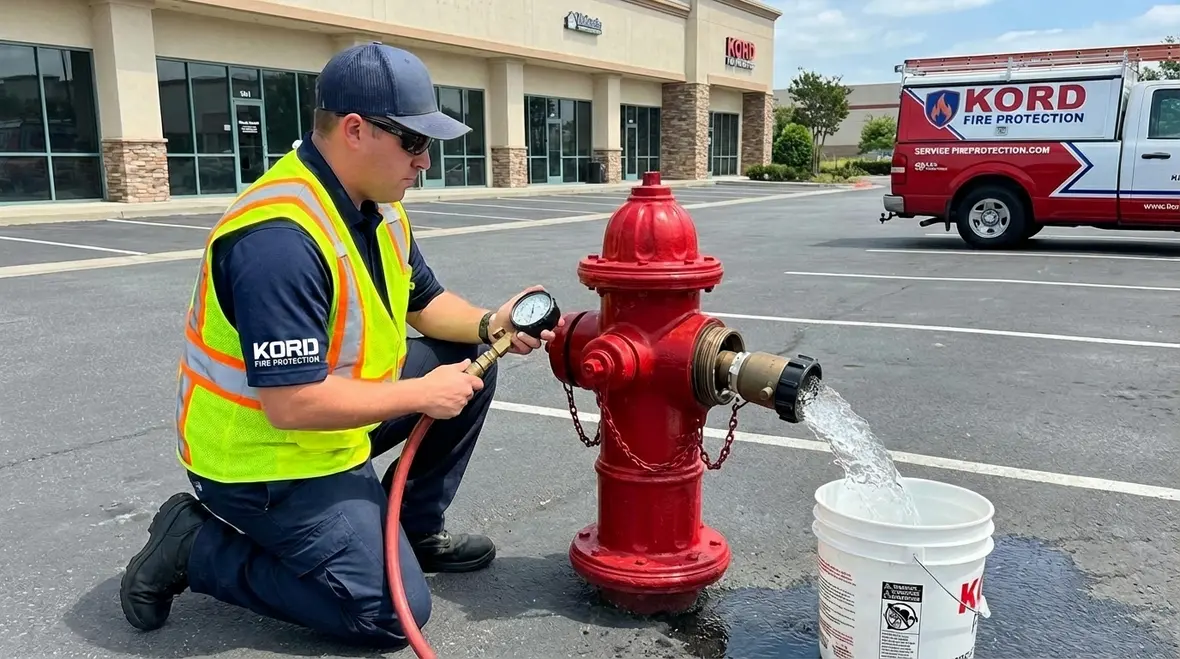
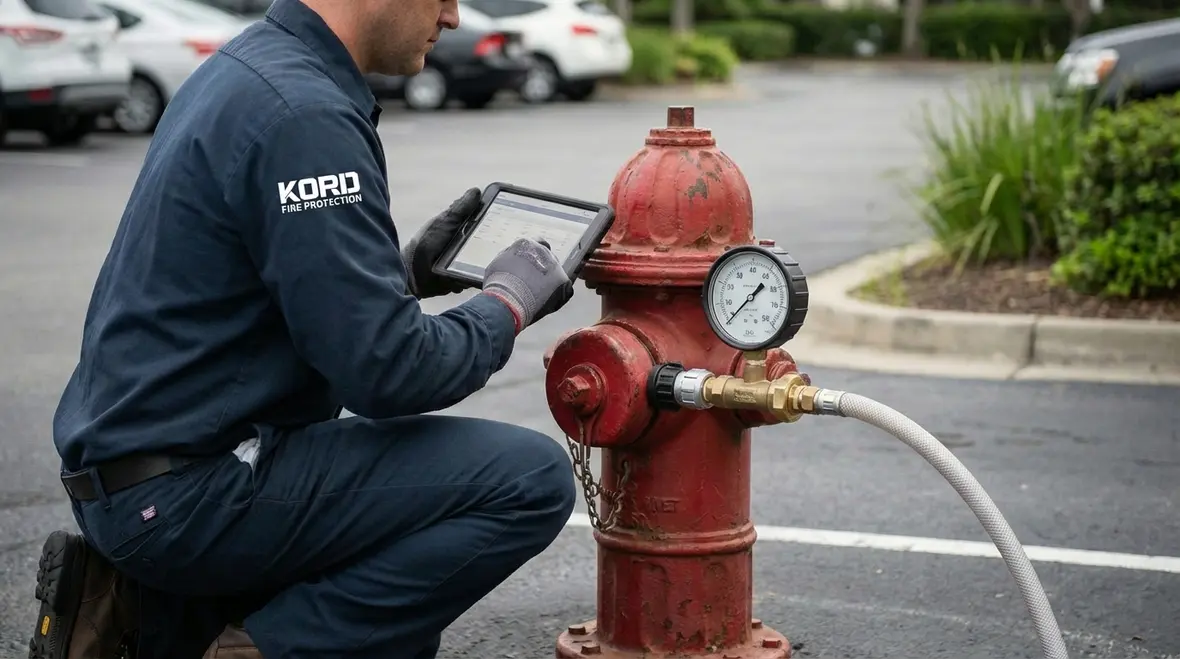
Kord Fire Protection technicians often demonstrate flow testing on site. They connect calibrated equipment, measure static pressure, record residual pressure, and calculate flow rates. Because they follow a precise method, owners receive accurate data that confirms system performance.
Furthermore, these tests provide insight into the broader water supply system. If pressure drops too low, it may indicate underground issues that need attention before they become costly repairs.
Connecting Hydrant Testing to Your Overall Fire Protection Strategy
Hydrants rarely exist in isolation. They support sprinkler systems, standpipes, and other water-based suppression equipment that must all be inspected and maintained on routine intervals. Many owners find it easier to fold hydrant inspections into a comprehensive program that also covers sprinklers, alarms, extinguishers, and fire pumps—similar to the integrated approach described in Kord Fire’s full fire protection services overview.
How Often Should a Private Hydrant Be Inspected and Tested?
This is the question many property managers type into search bars late at night. The answer is refreshingly clear.
Most standards require an annual inspection and flow test. However, visual inspections should occur more frequently. Many professionals recommend checking hydrants monthly or at least quarterly to confirm they remain accessible and undamaged.
For example, after landscaping work, construction activity, or heavy storms, hydrants deserve another look. Soil shifts. Vehicles bump into things. Snow piles up like it is auditioning for a winter movie scene. Therefore, frequent visual checks prevent small problems from growing quietly.
Kord Fire Protection technicians often remind clients that hydrants live outdoors year round. Unlike indoor equipment, they face weather extremes, accidental impacts, and corrosion risks. Because of that exposure, consistency matters.
Additionally, after any repair or modification to the water supply system, a follow up test should confirm proper operation. This proactive approach protects both property and people.
Aligning Inspection Frequency With Broader Standards
Hydrant testing and inspections often track alongside other water-based system requirements, such as those found in NFPA 25 for private fire service mains and related components. While hydrants may fall under different specific documents in your jurisdiction, thinking of them as part of a single, coordinated schedule makes compliance simpler and more reliable.
Common Issues Found During Inspections
Even well maintained properties encounter surprises during inspections. However, identifying these issues early prevents emergencies later.
Common findings include:
- Blocked hydrants hidden behind shrubs or fencing
- Painted caps that are sealed shut by layers of coating
- Leaking gaskets or worn seals
- Improper operating nuts that do not match fire department tools
- Low flow rates due to underground obstructions
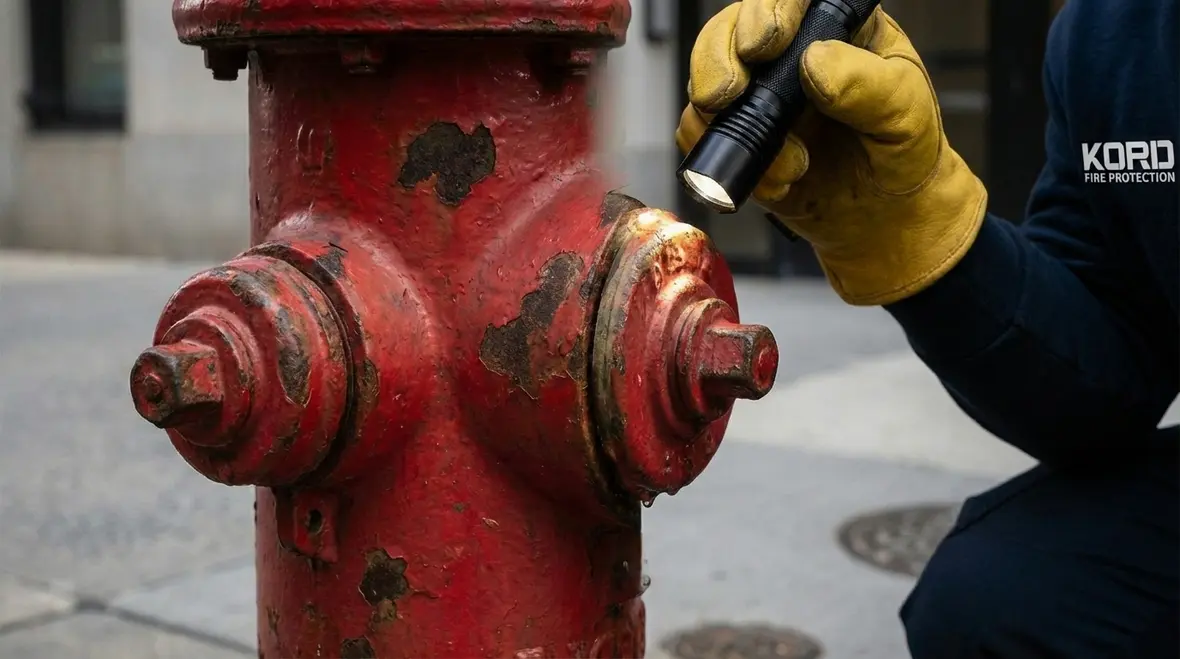
Sometimes the issue is as simple as a missing cap. Other times, corrosion inside the barrel restricts performance. Although these defects may seem minor at first glance, they can delay firefighters during a critical moment.
Kord Fire Protection technicians explain findings clearly, without overwhelming clients with jargon. Instead of delivering a lecture fit for a graduate engineering class, they break down each issue into plain language. They show the owner what they see. They outline the risk. Then they recommend practical steps to correct it.
That clarity builds trust. And trust builds safer properties.
Owner Responsibilities Versus Fire Department Responsibilities
There is often confusion about who does what. Therefore, clarity helps avoid costly misunderstandings.
| Private Property Owner Duties | Municipal Fire Department Duties |
| Schedule and pay for inspections | Maintain public street hydrants |
| Maintain accessibility on site | Conduct emergency response operations |
| Repair defects in private hydrants | Enforce fire code compliance |
| Keep inspection records | Perform periodic public system testing |
As shown above, the division of responsibility is straightforward. If the hydrant is private, the owner must ensure it meets inspection and maintenance standards. The fire department may verify compliance, but they do not maintain private equipment.
Consequently, waiting for the city to handle a private hydrant is like waiting for a neighbor to mow your lawn. It might happen in a sitcom. It rarely happens in real life.
Why Partnering With a Dedicated Hydrant Service Provider Helps
Because private hydrants fall squarely on the owner’s shoulders, many facilities choose to work with a single fire protection partner that understands hydrants, sprinklers, alarms, and pumps together. Kord’s dedicated fire hydrant testing services are designed to take that responsibility off your plate while keeping you code compliant and inspection ready.
Documentation, Reporting, and Record Keeping
Meeting private fire hydrant inspection requirements does not end with tightening a cap or completing a flow test. Documentation plays a central role.
Inspection reports should include:
- Date of inspection
- Name and credentials of the technician
- Static and residual pressure readings
- Calculated flow rates
- Observed deficiencies
- Corrective actions taken
These records should remain accessible for fire code officials and insurance representatives. Furthermore, organized documentation demonstrates a culture of safety within the organization.
Kord Fire Protection technicians provide detailed digital reports that owners can store securely. Because these reports include clear data and photographs, they remove guesswork during audits or reviews.
Additionally, consistent documentation helps identify trends over time. If pressure readings decline gradually each year, early detection allows for investigation before a crisis develops.
Why Professional Technicians Matter
Some owners consider handling inspections internally. While basic visual checks may seem manageable, flow testing and mechanical assessments require proper tools and training.
Professional technicians understand hydraulic principles, valve operation, and code standards. More importantly, they recognize subtle warning signs that untrained eyes might miss. A slight vibration during operation. An unusual pressure fluctuation. A faint leak beneath the surface. These clues tell a story.
Kord Fire Protection technicians approach each inspection with steady focus. They do not rush through checklists. Instead, they treat every hydrant as if it protects their own building. That mindset turns compliance into genuine care.
Moreover, professional inspections reduce liability. If a qualified expert performs and documents the work, the owner demonstrates due diligence. In legal terms, that matters. In practical terms, it offers peace of mind.
How Compliance Protects People and Property
At its core, compliance is not about paperwork. It is about performance when seconds count.
During a fire, firefighters rely on hydrants to deliver consistent water supply. If pressure drops unexpectedly or valves fail to open fully, response efforts slow down. Therefore, maintaining hydrants directly supports emergency teams.
Additionally, functional hydrants protect neighboring properties. Fire does not respect property lines. Consequently, one neglected hydrant can affect an entire block or complex.
Insurance providers also recognize the value of proactive maintenance. Properties with documented compliance often experience smoother underwriting processes. Although premiums depend on many factors, strong fire protection infrastructure certainly helps.
And then there is reputation. Tenants, clients, and visitors may never notice a well maintained hydrant. Yet they benefit from it daily. Safety rarely makes headlines. However, failures always do.
FAQ About Private Hydrant Responsibilities
Conclusion: Turning Responsibility Into Readiness
Private hydrants stand quietly on the edge of parking lots and near building corners, waiting for a day everyone hopes never arrives. Yet hope alone does not keep them ready. Consistent inspections, proper testing, and clear documentation do. Kord Fire Protection technicians guide owners through each step with calm expertise and steady assurance. When safety matters, and it always does, partnering with experienced professionals ensures every hydrant performs exactly as intended.
Schedule an inspection today and protect what matters most. Whether you manage a single private hydrant or an entire portfolio of properties, Kord’s specialized fire hydrant testing services and broader fire protection solutions help you stay compliant, confident, and ready for your next fire inspection—and the emergencies you hope never come.
Know Your Weapon Before You Fight the Flame
Kord Fire Protection is your go-to when it comes to all things fire protection. For over 20 years, we’ve been serving Southern California with the quality service and equipment to keep your home or business safe at all times. Our competitive prices reflect our unwavering commitment to protecting what matters most in the event of a fire emergency. Give us a call, send an email, or use that form!

Join Our Newsletter!
Get the latest fire safety tips delivered straight to your inbox From our Newsletter.