Preventive Maintenance for Electric Fire Pump Motor Longevity
Preventive maintenance for electric fire pump motor longevity starts with simple habits, and it pays off fast when the stakes get real. To support fire pump motor reliability, our kord fire protection technicians explain that a good plan does not wait for a failure. Instead, it controls heat, vibration, moisture, and electrical stress before they turn a dependable motor into an expensive surprise. And yes, the motor does not care about our busy schedules. It only cares about operating conditions. So this article walks through what teams should check, how often they should check it, and why each step protects performance over time, even when the pump room looks calm on the surface.
Electric fire pump motor longevity begins with a maintenance plan
When an electric fire pump motor runs, it turns electrical energy into motion. However, every start, every stop, and every heat cycle adds wear. Therefore, preventive maintenance for electric fire pump motor longevity means teams must manage the motor’s environment and its electrical health. In practice, the plan should map out inspections, tests, lubrication, and cleaning, plus clear records for each pump and motor assembly. In other words, it creates a timeline of care rather than a scavenger hunt after something breaks.
Our kord fire protection technicians often say that maintenance is like sports training. You do not show up only after you sprain something. You warm up, stretch, and keep form consistent, so the equipment performs under pressure.
A strong plan also works better when it connects the motor to the broader fire pump system. Teams that already follow a structured calendar for inspections and pump reviews can apply the same rhythm to the motor itself, which is why a practical schedule matters so much in the first place. For a related look at system planning, see commercial fire pump maintenance schedule optimization.
What a written maintenance plan should include
- Visual inspections for moisture, dust, corrosion, and physical damage
- Electrical checks for connections, control cabinet condition, and power stability
- Mechanical review of alignment, coupling condition, mounting, and bearings
- Lubrication intervals based on manufacturer guidance
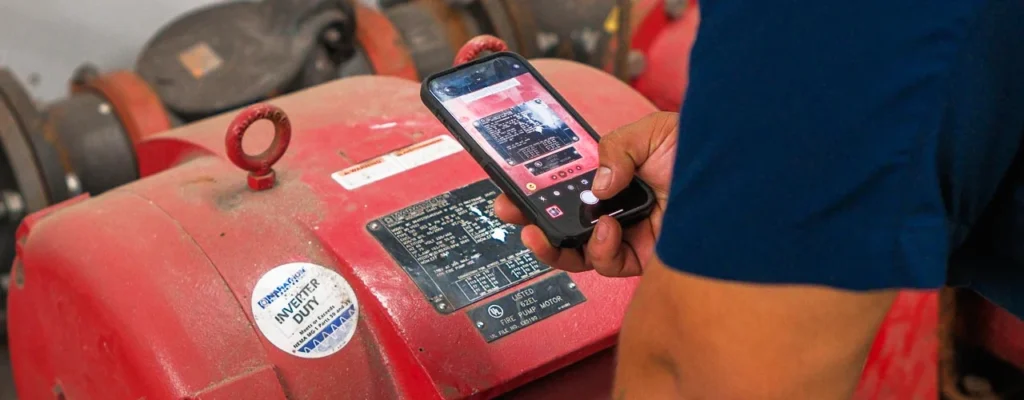
- Testing records for temperature, current draw, insulation resistance, and vibration
How do inspections protect the motor from hidden damage?
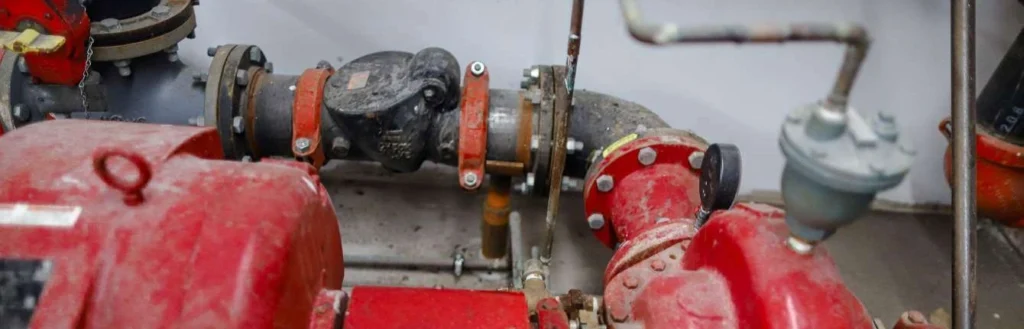
Inspections catch problems that people miss because they do not make obvious noise. For example, technicians should check for moisture intrusion, dust buildup, loose covers, and clogged ventilation paths. These issues may not stop the motor today, yet they can reduce cooling tomorrow. As a result, the motor runs hotter, and heat shortens insulation life.
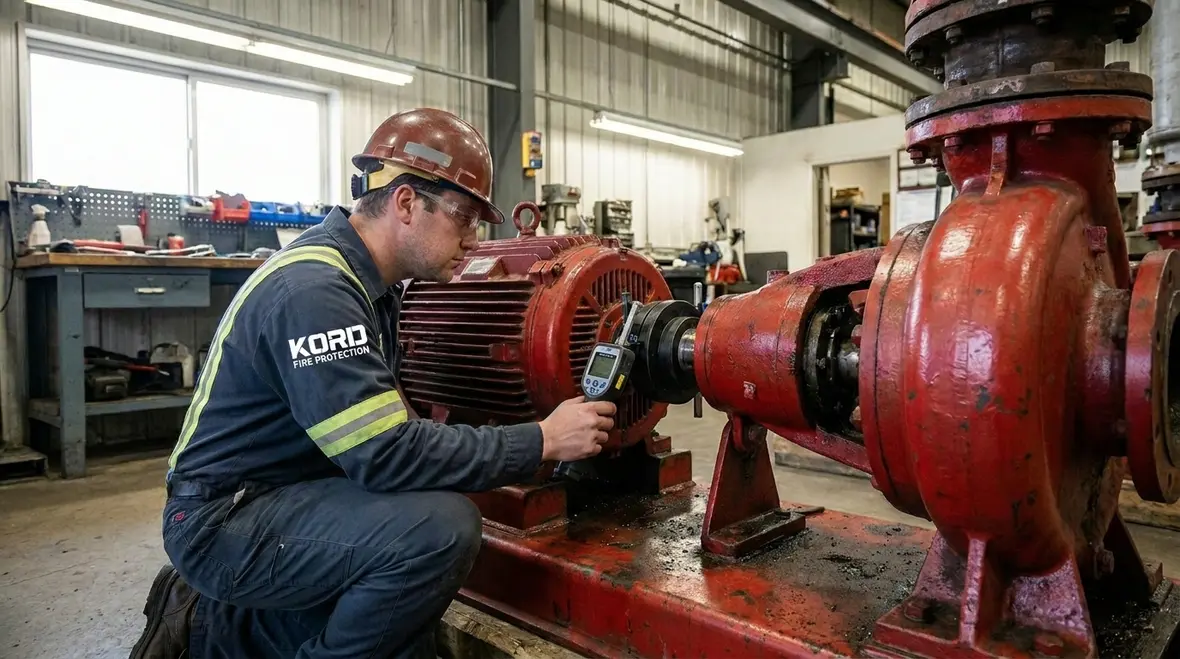
In addition, teams should visually inspect the coupling alignment between motor and pump. Misalignment can cause vibration, and vibration can loosen fasteners and wear bearings faster. Then comes the classic problem: the motor keeps running, but the pump system slowly drifts off its best performance. That drift can reduce flow when a demand event hits. So inspections need to include the “small stuff” like fastener condition, cable routing, and signs of oil or water around the motor base.
Our kord fire protection technicians emphasize that a good inspection also verifies that the control cabinet stays dry and clean. Dust and moisture can form a conductive path, and nobody wants to discover that during a test.
Inspection items that are easy to overlook
- Vent openings blocked by dust or storage items
- Loose terminal box covers and missing hardware
- Evidence of seepage or standing water near the base
- Subtle vibration marks at mounts and coupling guards
- Contamination inside the controller or cabinet enclosure
These details overlap with broader routine inspection practices for the pump assembly as well. If you want a system level view of why these checks matter, Kord Fire also covers it in routine fire pump inspections and their importance.
Electrical fire pump motor maintenance keeps starts dependable
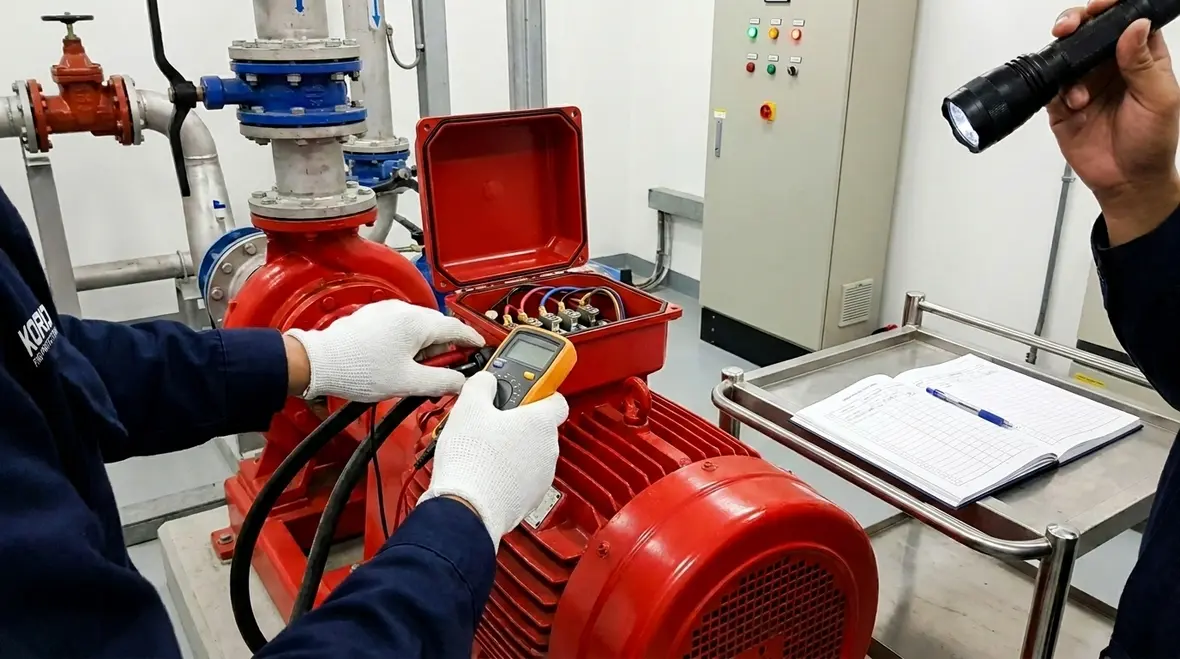
Fire pumps must start when they are asked to. Therefore, fire pump motor maintenance must focus on electrical readiness as much as mechanical upkeep. Technicians should inspect and test incoming power, verify contactor condition, and check overload devices. They should also confirm that fuses, breakers, and terminations stay tight and clean.
Heat and vibration can loosen connections. After that, resistance rises, and then the motor draws more current than expected. Over time, this can damage terminals and insulation. Consequently, routine checks help keep current draw stable and reduce unexpected faults.
Our kord fire protection technicians often explain it like this: electricity likes clean connections. If connections get loose, electricity starts acting like it forgot the rules. And when a fire pump has to perform, we do not want improvisation. We want precision.
Because electric fire pumps depend on stable design and control behavior, it also helps to understand the bigger electrical picture. For a related breakdown, visit essential fire pump electrical requirements and design.
Cooling, ventilation, and lubrication extend operating life
Even the best motor cannot survive neglect in a hot, dirty environment. So technicians should confirm that motor fans run properly, air intakes remain unobstructed, and vents allow airflow. If a motor runs with blocked ventilation, its temperature rises. Then the insulation ages faster. That aging is not dramatic on day one, but it builds quietly.
Lubrication matters too. Many pump motor systems rely on bearings that need correct lubrication type and correct fill level. Too little lubrication allows metal contact. Too much can overheat bearings. Therefore, the maintenance plan must follow manufacturer guidance for lubricant grade and schedule.
Our kord fire protection technicians recommend that teams also watch for bearing noise or increased vibration. If technicians detect changes, they should investigate early. In many cases, early action costs less than emergency replacement, and it protects readiness.
Why heat is such a quiet problem
Heat rarely announces itself with perfect timing. A motor may still start, still turn, and still look respectable while internal stress keeps building. That is what makes ventilation, cleanliness, and lubrication so important. They prevent the kind of slow decline that waits until a real emergency to become obvious. Calm pump rooms can be sneaky like that.
Testing and trending spot failures before they show up
Testing should not feel random. Instead, teams should follow a consistent schedule that includes operational checks and documented results. Technicians can track trends like vibration levels, insulation resistance, motor temperature data, and electrical readings during runs. When readings drift over time, that drift signals wear or tightening needs.
For instance, insulation resistance testing can show moisture or contamination in motor windings. If insulation drops, technicians can plan corrective steps before it becomes a shutdown event. Likewise, vibration trend checks can reveal bearing wear, alignment issues, or looseness.
To keep it clear, here is a dual column guide teams often use in the field for routine focus areas.
Our kord fire protection technicians also point out that a trend beats a one-time snapshot. One test tells a story, yet multiple tests show the plot.
Common mistakes that shorten motor life
Teams often think preventive work means only cleaning and tightening. While those help, several mistakes repeatedly reduce motor life.
First, skipping record keeping creates blind spots. If technicians cannot compare test values from prior months or years, it becomes harder to spot early decline. Next, using incorrect lubricant or an improper replacement part can cause misfit operation. Then comes the big one: delaying correction of alignment or vibration. A motor can “seem fine” while it slowly grinds away its own components.
Finally, teams sometimes overlook the cabinet. If control wiring gets moisture exposure or contamination, the system may fail to respond fast enough during demand. Therefore, fire pump motor maintenance must cover the whole assembly, not only the motor housing.
And for the record, no, “it ran last time” is not a maintenance strategy. That is a confidence plan. It just does not scale well under real fire conditions.
Short list of avoidable errors
- Ignoring gradual increases in vibration or temperature
- Using the wrong grease, lubricant amount, or replacement component
- Failing to document inspections and test values clearly
- Leaving cabinet contamination uncorrected
- Postponing alignment fixes because the motor still “seems fine”
FAQ: fire pump motor maintenance for featured snippet answers
Book preventive care to protect performance and readiness
Fire pump systems do not forgive shortcuts, and motors do not get better with age just because time passed. Our kord fire protection technicians help teams build a practical preventive maintenance plan, then execute inspections, electrical checks, and testing with clear records. If the facility runs critical life safety equipment, now is the best time to confirm motor health and performance trends.
When you are ready to move from “we should probably check that” to an actual plan, explore Kord Fire Protection’s fire pump services. It is a direct way to schedule maintenance support, inspections, and service for the equipment that has to perform when it counts. That is the kind of boring reliability we fully support.

Join Our Newsletter!
Get the latest fire safety tips delivered straight to your inbox From our Newsletter.