
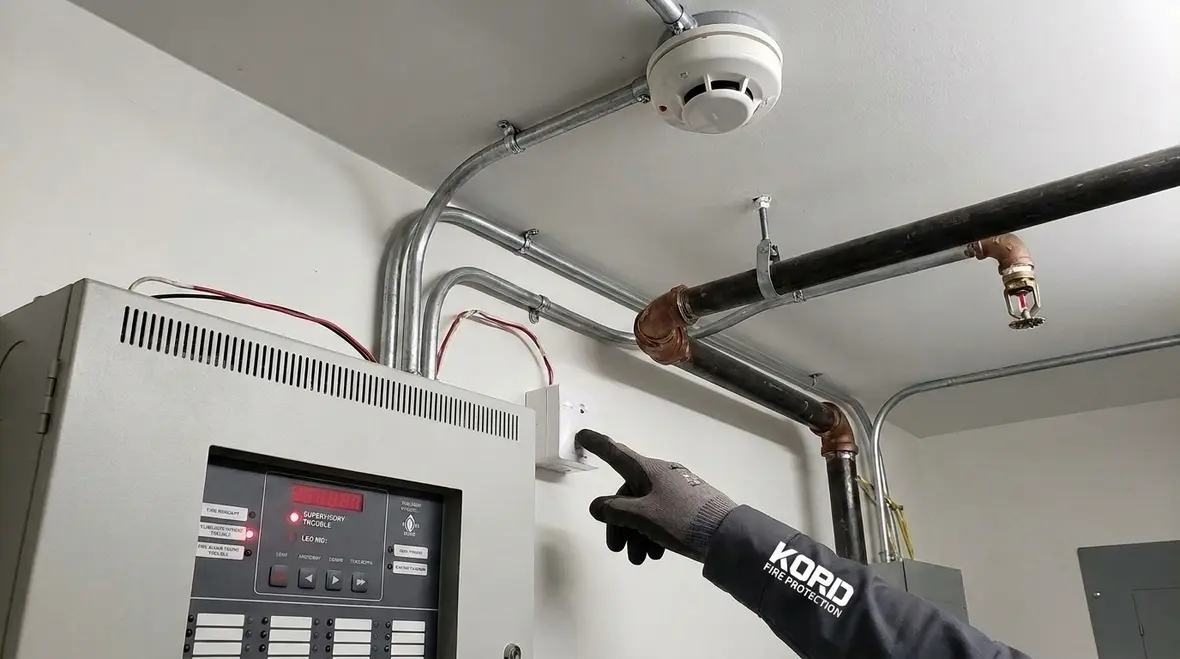
NFPA 15 Section 5.12 Detection Systems: Listing and NFPA 72 Supervision
Quick Answer: NFPA 15 Section 5.12 requires detection devices used to control or initiate water-based fixed systems to be properly listed, and it also aligns with NFPA 72 supervision requirements for alarm and initiating circuits. When designed correctly, the system monitors integrity, detects failures, and maintains code compliance during operations.
For a broader look at how monitored signals and suppression components work together in real facilities, it also helps to review suppression supervisory signal monitoring for fire suppression systems, especially when detection, reporting, and response all need to stay in sync without turning the panel into a mystery box.
What does NFPA 15 Section 5.12 require for detection systems?
In many commercial and industrial buildings, water based fire protection depends on reliable detection and prompt system actuation. The goal of NFPA 15 5.12 detection systems listed automatically supervised NFPA 72 is to ensure the devices used to initiate or influence water spray, deluge, and related fixed water systems are both listed for their intended use and kept under supervision so faults are detected quickly.
Practically, this means fire alarm and system interfaces must be engineered so detection and control circuits do not silently fail. Supervisory capability is critical because many detection failures show up as loss of protection rather than obvious alarms at the panel.
How “listed” detection devices affect system approval and field performance
NFPA 15 Section 5.12 focuses on the use of detection components that are listed for the application. “Listed” does not merely mean a device exists on the market. It means the specific device or arrangement is evaluated for the intended function under a recognized listing program and installation conditions.
Key listing considerations for designers and installers
- Intended use: Detection devices must be listed for the role they perform, such as initiating a releasing sequence, providing alarm input, or supporting control functions for water spray or deluge systems.
- Application environment: Temperature rating, moisture resistance, vibration exposure, and mounting configuration must match the listed installation instructions.
- Compatibility with control equipment: Listed detection devices must interface with the listed control panel or releasing control system in a manner permitted by both the listing and NFPA requirements.
- Circuit wiring method: Supervised wiring design, polarity requirements, and allowable wiring distances must follow the device and panel instructions.
In the field, the most common compliance failure is not the device itself. It is an incorrect method of connection or use outside the scope of its listing, especially when contractors substitute components late in the schedule.
For water based system context, see how water spray fixed systems integrate with compliant supervision and initiation design: NFPA 15 enhancing fire safety with water spray fixed systems.
Why NFPA 72 supervision matters for detection circuits
NFPA 72 supervision requirements ensure that control and initiating circuits connected to fire alarm and related system functions are monitored for faults. When supervision applies, the system identifies abnormal circuit conditions such as open circuits, short circuits, and loss of signal integrity.
What supervision typically covers
- Open circuit detection: Prevents a silent failure if wiring is broken or a terminal becomes loose.
- Short circuit detection: Alerts staff when conductors contact or insulation fails.
- Ground fault conditions: Helps identify insulation breakdown and wiring defects.
- Device removal or misalignment: Often captured as a supervisory trouble condition depending on circuit design.
The operational impact is straightforward: if detection circuits are not supervised, an initiating device may never send the correct signal. Supervisory trouble gives the facility the chance to repair before a fire scenario reveals the failure.
Design intent and wiring mechanics: what “automatic supervision” looks like
When detection systems are implemented to meet NFPA 15 5.12 detection systems listed automatically supervised NFPA 72, the design typically uses supervised initiating circuit pathways from the detection elements into the fire alarm control equipment or related releasing interface. The key is that the control equipment must continuously verify circuit integrity.
Operational sequence during normal and abnormal conditions
| Condition | Expected behavior | Facility impact |
|---|---|---|
| Normal | Circuit integrity checks pass. No supervisory trouble appears. | Protection remains ready and initiating signals can be trusted. |
| Initiating detection | Device activates and control logic proceeds per the releasing sequence. | Water system actuation occurs as designed. |
| Circuit open or wiring fault | Control panel reports a supervisory trouble condition. | Staff can correct the fault before an emergency. |
| Shorted circuit | Supervision identifies abnormal resistance or fault state. | Prevents undetected loss of initiating capability. |
| Device trouble or incorrect installation | Panel indicates trouble, often including device location mapping. | Facilitates targeted maintenance and faster restoration. |
From a maintenance and compliance perspective, these states must remain observable. If alarms or trouble signals are disabled, bypassed, or improperly configured to suppress trouble reporting, the supervision value disappears.
Commercial facility challenges that commonly break compliance
Even when the original design intent is correct, commercial facility realities often introduce risk. Buildings change. Trades work in the same ceilings. Renovations and re-lamping events can disturb detection pathways and interface wiring.
Common failure points
- Ceiling and racking modifications: Relocating piping, cable trays, or equipment can affect device spacing, mounting, or wiring integrity.
- Incorrect device replacement: Substituting a similar device type without confirming the exact listing and installation instructions.
- Connector or terminal degradation: Loose terminals create intermittent faults that may not be consistently detected without proper maintenance discipline.
- Bypassed supervisory functions: Temporary disables become permanent, especially after service interruptions.
- Interface misconfiguration: Control logic that does not properly interpret supervised inputs can result in trouble conditions that are not acted on or are incorrectly categorized.
Fire safety teams should treat detection supervision as an operational requirement, not a one-time installation requirement. Ongoing testing ensures the circuits behave as the code intends and that the supervisory reporting remains trustworthy.
For additional fire alarm and supervision background, Kord Fire Protection also covers related monitoring topics in fire alarm monitoring for fire suppression systems.
Inspection, testing, and maintenance to keep supervision effective
Compliance is not only about meeting NFPA 15 5.12 during installation. It also depends on verifying the system continues to function correctly under real-world conditions. A proper maintenance program ties detection and supervision into routine inspection and acceptance testing.
Practical maintenance actions that matter
- Functional circuit verification: Confirm each detection circuit reports trouble states and properly returns to normal after faults are cleared.
- Signal path validation: Confirm initiating device activation produces the intended control response for the water system interface.
- Supervisory trouble response testing: Verify that supervisory signals are visible, routed correctly, and handled through the facility’s documented response process.
- Documentation alignment: Ensure device numbering, mapping, and as-built drawings match field reality after renovations.
- Device condition checks: Inspect for contamination, physical damage, and environmental impacts that can affect device performance.
Kord Fire Protection supports commercial facilities by coordinating testing, troubleshooting, and corrective actions that keep detection systems listed and supervised as intended. This includes confirming that interface wiring, control logic, and supervisory reporting remain consistent after tenant fit outs, equipment swaps, and periodic service.
NFPA 15 5.12 and NFPA 72: how to align design, listing, and supervision
Successful compliance requires alignment across three layers:
- NFPA 15 Section 5.12: The detection components must be used in the manner required for water spray fixed systems and related arrangements.
- Listing: Each device and arrangement must match the evaluated installation and intended function.
- NFPA 72 supervision: The circuits must provide automatic supervision so faults are detected and signaled.
Commercial projects benefit from structured coordination between designers, electricians, fire alarm integrators, and sprinkler contractors. Where these disciplines operate in silos, miswiring and substitution errors become more likely. A documented verification plan reduces rework and accelerates commissioning.
For additional reference on water spray fixed systems and how they integrate with system initiation considerations, review: NFPA 15 enhancing fire safety with water spray fixed systems.
Frequently Asked Questions
Call to action
Ensure your water based protection system remains reliable by verifying that detection devices are listed for their exact application and that circuits remain automatically supervised to NFPA 72 expectations. Kord Fire Protection can support commissioning checks, periodic testing, trouble investigations, and documentation updates for commercial, industrial, and retail facilities. Contact Kord Fire Protection today to schedule an assessment and maintain ongoing code-aligned protection.

Join Our Newsletter!
Get the latest fire safety tips delivered straight to your inbox From our Newsletter.



