Portable Fire Extinguisher Placement for Large Warehouses
In a large warehouse, speed and control matter when fire starts. That is why many managers plan portable fire extinguisher placement with purpose, not hope. Kord Fire Protection technicians often explain that people do not think about fire until something goes wrong, and by then the “plan” is usually a panic playlist on the speakers. So they build a smarter map ahead of time, one that helps staff reach the right extinguisher fast, even when the building is long, busy, and full of obstacles.
Below, Kord’s technicians walk through how to place extinguishers strategically across big storage spaces, how to account for real travel paths, and how to keep coverage consistent as inventory, racks, and traffic patterns change.
Why warehouse layout decides extinguisher reach
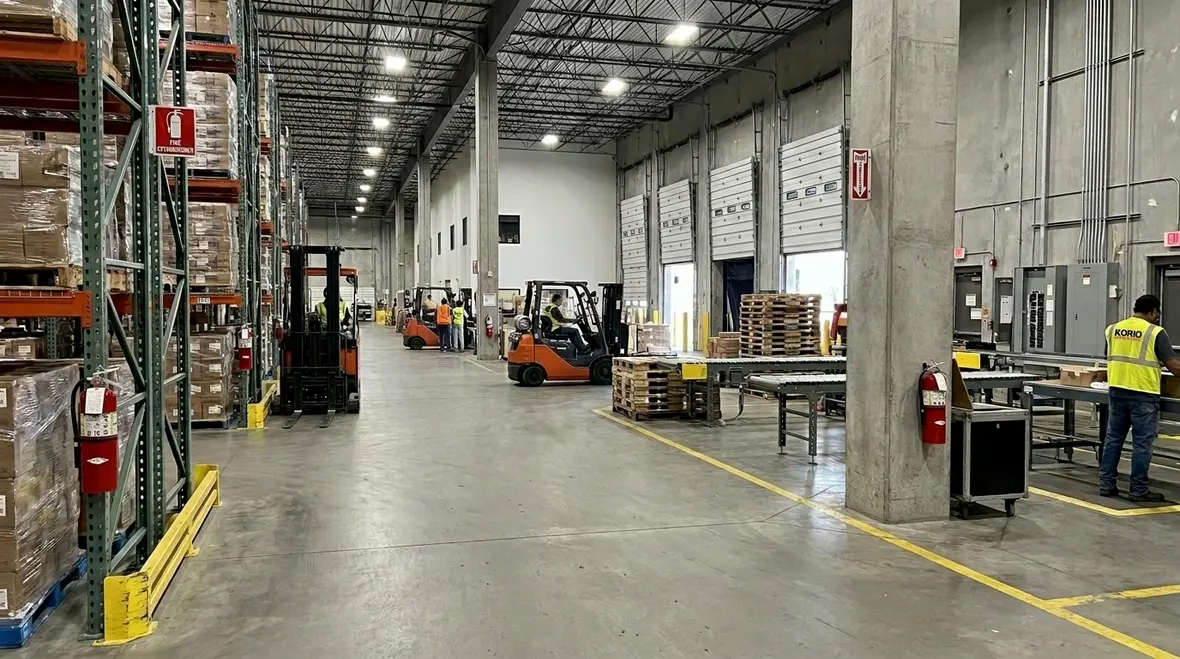
Warehouses stretch out like they were designed by a committee that never met a fire drill. Therefore, the layout plays a direct role in how quickly a worker can act. Kord Fire Protection technicians point out that placement must match how people actually move through the space, not how a blueprint predicts movement. This includes aisle widths, rack heights, dock locations, door swings, and areas where pallets stack high enough to block sightlines.
Strategic placement starts with identifying common paths and likely ignition zones, then aligning extinguisher locations along those routes. In other words, the extinguisher should feel “on the way” during normal work, not hidden behind a maze of shrink wrap and bad decisions. Teams reviewing warehouse layouts can also compare their approach with Kord Fire Protection’s related guide on fire extinguisher placement warehouses distance rules to sharpen visibility and travel path planning.
Real travel paths matter more than clean drawings
A line on a layout might look efficient, but workers do not walk through racks, dock plates, or forklift traffic like they are ghosts. They move through actual aisles, around corners, and past whatever the day shift decided to park in the worst possible spot. That is why placement has to reflect reality. If the route is awkward during normal work, it will feel worse during an emergency.
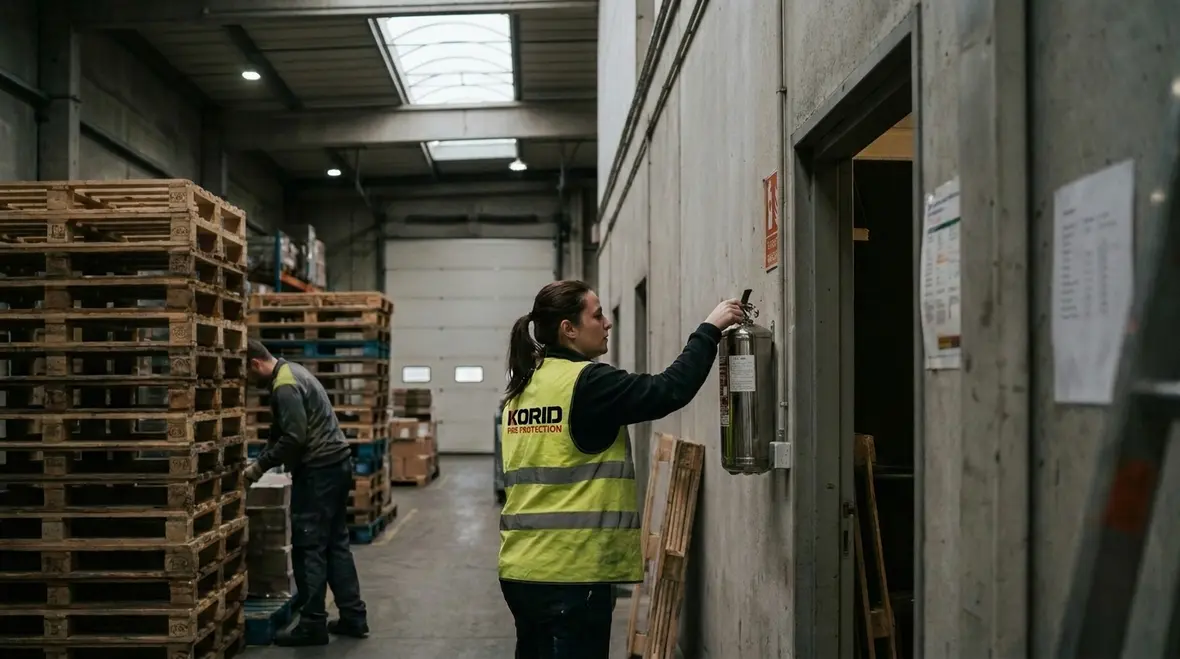
How far should workers travel during an emergency
Distance affects survival time. When workers need an extinguisher, they must reach it quickly while smoke, heat, and confusion build. Kord fire protection technicians explain that teams should evaluate travel distance from a realistic starting point, like the location of typical work tasks and loading activity, rather than using only door to door lines on a plan.
To keep this practical, facilities should review travel patterns across each floor zone. Then, they should place extinguishers so most workers can reach one within a short walk, even if one aisle is blocked by a pallet collapse or a stalled forklift. If an extinguisher sits in a corner that most employees never visit, it might as well be in a different warehouse.
Build in backup routes
Large warehouses rarely behave politely when something goes wrong. A blocked aisle, a shut roll-up door, or a forklift stopped sideways can change travel distance instantly. Smart placement anticipates that problem by giving workers more than one practical route to a nearby unit. A warehouse should not depend on one perfect hallway staying perfect all day.
Place extinguishers where they can be seen and grabbed fast
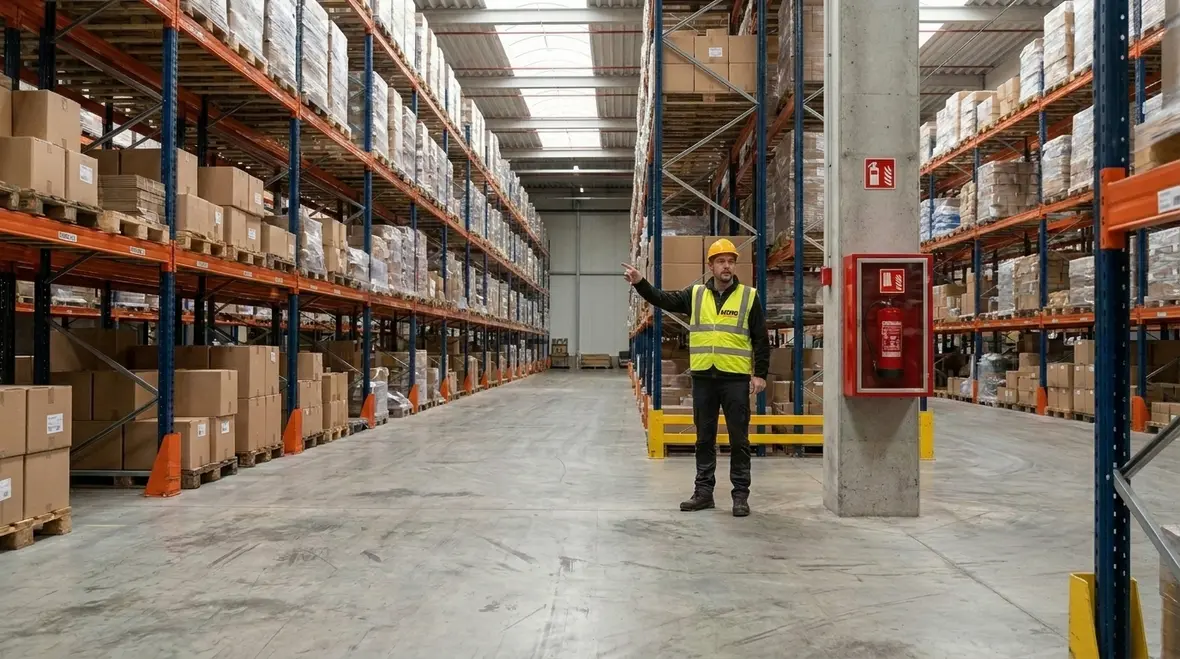
Even the best coverage fails if nobody spots the unit. Kord technicians stress visibility and access because people act under stress. Therefore, extinguishers should be mounted at heights that workers can reach without climbing. Also, they should remain clear of obstructions like stored materials, dock equipment, and seasonal displays.
In large warehouses, sightlines matter. If the extinguisher is behind a rack line or around a bend with poor lighting, then workers lose time. However, if the extinguisher sits near natural decision points, like corridor intersections and exits, then it becomes a reliable cue. Think of it like signage for your brain during a crisis. The brain can be dramatic, but it still follows what it can see.
- Mount units where workers already pass during normal operations.
- Keep the path to the unit clear of pallets, carts, and temporary storage.
- Use signs and lighting so the extinguisher stands out from the background.
- Review visibility after rack changes, not just after annual planning.
Match extinguisher type to hazards, not to guessing games
Warehouses contain different fuel sources and different risks. For that reason, extinguisher selection should track the hazard, such as electrical equipment, storage of flammables, or normal combustibles like cardboard and plastics. Kord fire protection technicians commonly explain that staff should not grab any extinguisher just because it is closest. That approach is like eating the wrong food at lunch and then calling it “fine.” It is usually not fine.
Facilities should do a hazard review by area. Then, they should plan coverage with the right class or rating for each zone. For example, electrical risk often appears near panels, chargers, and conveyor equipment. Meanwhile, storage areas may hold more ordinary combustibles. When selection matches hazards, response becomes safer and more effective. For facilities refining hazard-specific planning, Kord’s guide on class a fire extinguisher used for and placement adds helpful context for ordinary combustible areas.
Common zones that need closer review
Some areas deserve more attention than others. Battery charging stations, maintenance corners, loading docks, electrical rooms, and any storage area holding special materials can shift the hazard picture quickly. A warehouse is not one giant identical box. It is a collection of smaller risk zones pretending to be one building.
Coordinate placement with fire walls, doors, and control zones
Large facilities often divide space into control areas. Fire walls, smoke barriers, roll-up doors, and dock partitions can change where smoke travels and where workers can safely move. As a result, extinguisher placement must reflect those boundaries. If a barrier limits movement during an event, then the extinguisher count may need adjustment so each zone still has coverage.
Kord technicians also note that doors can be a double-edged sword. A door can protect a path during normal operations, but during an emergency it may be locked, blocked, or out of reach. Therefore, facilities should plan extinguisher placement along the safe egress routes that remain usable when systems activate.
To support planning, many teams use a simple approach: map each zone, mark the real travel routes during peak operations, and then place units so no area relies on a single escape hallway. This builds redundancy without cluttering the warehouse with random “extra” equipment.
Use data and routine checks to keep coverage consistent
Placement is not a one-time event. Warehouses change daily, and inventory moves like it has a schedule. Therefore, extinguisher locations should be reviewed when rack layouts change, when new work zones open, or when new equipment adds risk.
Instead of waiting for an inspection to discover gaps, facilities can run a regular walk-through. Kord fire protection technicians often suggest monthly checks that confirm three things: the extinguisher stays accessible, the route to it stays open, and the unit remains correctly mounted and unobstructed.
Below is a practical dual column guide facilities can use during checks.
| Check area | What to verify |
|---|---|
| Accessibility | Nothing blocks the path or hides the unit |
| Visibility | Signs and location remain easy to spot from normal routes |
| Condition | Gauge readings, tamper seals, and physical damage look normal |
| Hazard match | Extinguisher type fits the risk in that zone |
And yes, even if everything looks fine, the check matters. Smoke does not care about “we meant to update it later.”
FAQ: portable extinguisher placement in large warehouses
Request a plan that fits the building
Fire extinguisher coverage should feel calm, not random. Kord Fire Protection technicians help warehouses map the right portable fire extinguisher placement based on layout, hazard type, and real travel routes. When teams plan ahead and test placement through routine checks, they reduce delays and improve safety during real incidents. Take a walk through the facility with your team and request a placement review. Then upgrade your plan so your response matches your workload.
To connect extinguisher planning with broader protection, explore Kord Fire Protection’s fire alarm service systems page for coordinated building safety support. If your team wants a warehouse plan that works with daily traffic instead of against it, Kord’s related warehouse extinguisher guidance can help you turn a long facility into a smarter, faster response environment.

Join Our Newsletter!
Get the latest fire safety tips delivered straight to your inbox From our Newsletter.