
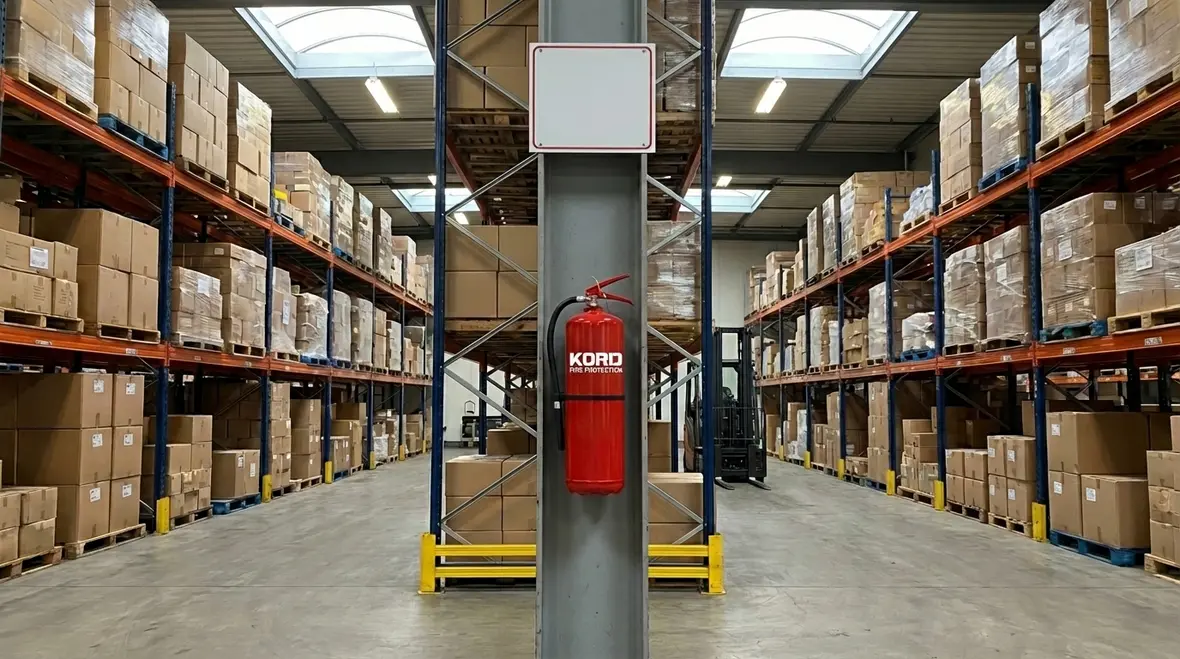
Fire Extinguisher Placement Warehouses Distance Rules
Fire Extinguisher Placement for Warehouses: Distance Rules and High Pile Storage Considerations
In the world of logistics and storage, few topics carry as much quiet authority as fire extinguisher placement for warehouses. It may not sound glamorous. There are no flashing lights or dramatic music. However, in a warehouse stacked to the rafters with inventory, proper extinguisher positioning can mean the difference between a small incident and a headline on the evening news. Within the first critical minutes of a fire, distance matters. Accessibility matters. Height, storage type, and aisle width matter. And as Kord Fire Protection technicians often explain, it is not about placing extinguishers where they look good. It is about placing them where they work.
Therefore, this guide walks through distance rules, high pile storage challenges, and the practical insights that keep warehouses compliant and protected.

The Foundation: Why Distance Rules Define Warehouse Safety
Warehouses operate on motion. Forklifts glide down aisles. Pallets rise toward ceilings. Workers move with purpose. Consequently, when a fire starts, response time shrinks fast. The National Fire Protection Association sets clear maximum travel distances based on hazard classification. In simple terms, employees should never have to run a marathon to reach an extinguisher.
For Class A hazards, which include common combustibles like cardboard and wood pallets, the maximum travel distance is typically 75 feet. However, for higher hazard areas, that distance drops. Class B hazards involving flammable liquids may limit travel to 50 feet. The rule is straightforward. The greater the risk, the shorter the distance.
Kord Fire Protection technicians often describe it this way. If someone has to think twice about where the nearest extinguisher sits, it is already too far away. That practical wisdom reinforces compliance with codes while keeping real world behavior in mind.
Moreover, extinguishers must remain visible and unobstructed. A beautifully mounted unit hidden behind stacked inventory is about as helpful as a flashlight with no batteries. Warehouses change daily. Inventory moves. Therefore, management must ensure that extinguisher locations stay clear as layouts evolve.
Key distance and visibility principles
- Match travel distance to hazard level instead of square footage alone.
- Measure distance along real walking paths, not straight lines through racks.
- Keep sight lines open with signage and strategic mounting height.
How Far Apart Should Fire Extinguishers Be in a Warehouse?
This is the question facility managers often type into search bars late at night. The answer begins with hazard assessment and ends with careful measurement.
Understanding travel distance, not “as the crow flies”
Travel distance is measured along normal walking paths, not in a straight line through shelving. That means aisles, corners, and access points matter. For example, a unit 60 feet away on paper may actually require a 95 foot walk around racking. Therefore, planners must trace the real route.
Extinguisher ratings and spacing
In addition, extinguisher ratings affect spacing. A higher rated unit can sometimes cover a larger area. However, coverage never overrides maximum travel distance rules. It complements them.
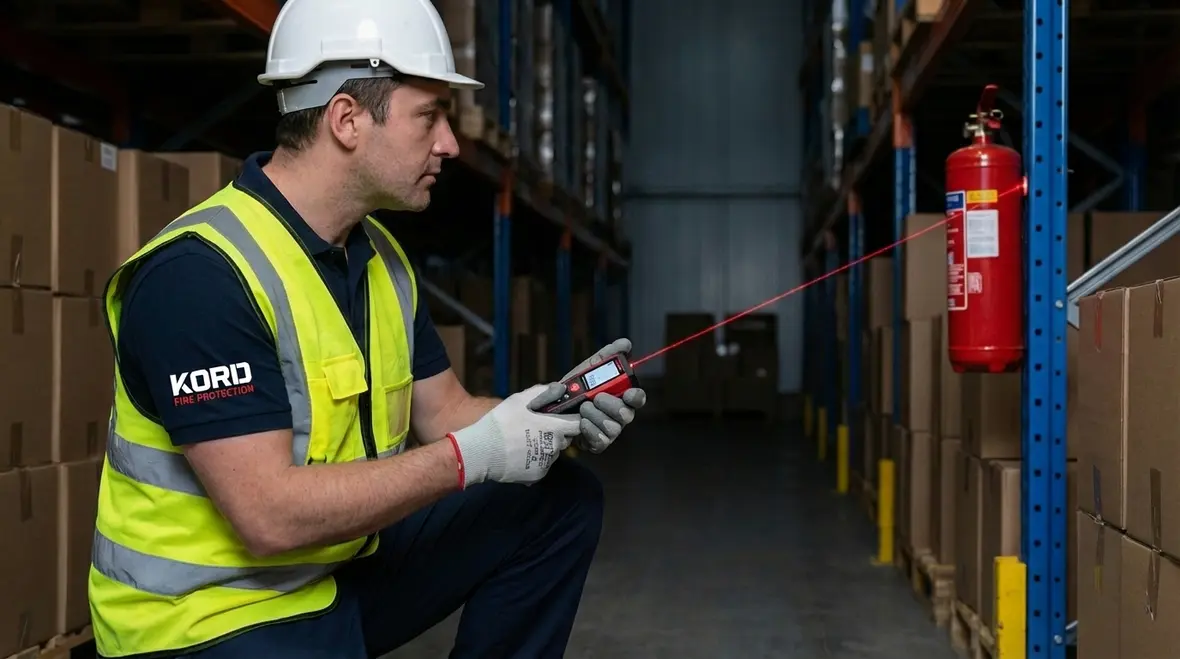
Kord Fire Protection technicians routinely walk warehouse floors with measuring tools in hand. They do not guess. They measure from workstations, loading docks, battery charging stations, and storage zones. Consequently, they build placement plans that align with both regulation and workflow. For a broader look at how travel distance works across different occupancies, many managers also review Kord’s guidelines for fire extinguishers in Anaheim and their breakdown of travel distance and visibility rules.
Mounting height and real-world usability
Furthermore, mounting height plays a role. Extinguishers weighing 40 pounds or less should have the top no more than 5 feet above the floor. Heavier units must sit lower. At the same time, the bottom must stay at least 4 inches off the ground. These numbers may sound minor. Yet they ensure that employees of varying heights and strengths can quickly remove and use the unit.
High Pile Storage Changes the Equation
Now imagine racks stretching 30 feet high, stacked with cartons of plastic wrapped goods. This is high pile storage, and it introduces serious fire load. Heat rises. Flames travel vertically. Sprinkler systems work harder. Consequently, extinguisher positioning must account for these realities.
High pile storage increases fuel load and can intensify fire growth. Therefore, warehouses with these configurations often require more strategic extinguisher distribution. While travel distance rules remain consistent, risk assessment may justify additional units near high density storage areas.
Layered protection: extinguishers and sprinklers
Kord Fire Protection technicians explain that high pile environments demand layered protection. Sprinklers handle overhead suppression. Extinguishers provide immediate manual response. Together, they create a safety net. Separately, they leave gaps.
Aisle width, access, and commodity type
Additionally, clear aisle width becomes critical. If racks block direct access, travel distance calculations must adjust. Wide main aisles may serve as primary extinguisher corridors, while cross aisles support secondary coverage. In this way, placement integrates with traffic flow rather than fighting it.
Furthermore, certain commodities such as plastics produce higher heat release rates. In those cases, extinguishers rated for higher capacity may be necessary. Therefore, warehouse managers should not assume one size fits all. A building storing paper goods differs significantly from one storing aerosol products.

Strategic Zones That Require Extra Attention
Although general spacing rules apply, some warehouse zones demand special consideration. These areas carry elevated ignition risk or operational intensity.
- Loading docks: Frequent truck movement and engine heat increase risk.
- Battery charging stations: Forklift batteries can spark or overheat.
- Maintenance areas: Tools, welding, and machinery introduce ignition sources.
- Flammable liquid storage rooms: Even small quantities change hazard classification.
Therefore, placing extinguishers near these zones shortens response time where it matters most. Kord Fire Protection technicians often recommend clearly marked units at dock entrances and near charging stations. Not hidden. Not tucked behind equipment. Clearly visible.
Meanwhile, signage supports placement. Even if an extinguisher sits around a corner, directional signs guide employees quickly. In large facilities, that extra visual cue can shave seconds off response time. Seconds matter.
Balancing Compliance and Real World Workflow
Warehouses are dynamic environments. Inventory rotates. Seasonal demand shifts layouts. Consequently, extinguisher positioning cannot remain static while everything else changes.
When to re-evaluate extinguisher placement
Facility managers should conduct periodic reviews of fire extinguisher placement for warehouses whenever racking configurations change. A new row of shelving might block an existing unit. Similarly, expanded storage height could increase hazard classification.
Kord Fire Protection technicians often advise integrating extinguisher checks into broader safety audits. During sprinkler inspections or alarm testing, teams can confirm that units remain accessible and properly mounted. This integrated approach prevents safety elements from operating in isolation. Their Los Angeles commercial fire code requirements guide is a useful companion for understanding how extinguishers fit within the wider code picture in warehouses and other commercial buildings.
Training that supports smart placement
Moreover, training reinforces placement strategy. Employees must know where extinguishers sit and how to use them. Even the best positioned unit serves no purpose if staff hesitate. Therefore, hands on demonstrations and routine refreshers keep confidence high.
One technician once joked that an extinguisher is not modern art. It does not exist for admiration. It exists for action. That small dose of humor underscores a serious truth.
Common Mistakes in Warehouse Extinguisher Distribution
Even well managed facilities make occasional missteps. However, awareness prevents repetition.
- Mounting extinguishers behind stacked pallets.
- Ignoring changes in aisle configuration.
- Overlooking battery charging areas.
- Assuming sprinkler systems eliminate the need for close extinguisher access.
- Failing to reassess after expanding high pile storage.
Additionally, some facilities cluster units near entrances for convenience. While this may look organized, it often leaves interior zones underserved. Travel distance rules apply throughout the building, not just near doors.
Kord Fire Protection technicians emphasize mapping the entire floor plan. They frequently overlay hazard zones, storage heights, and walking paths. Consequently, they identify gaps that casual observation might miss.
Distance Rules and Storage Type at a Glance
| Hazard or Storage Type | Key Placement Consideration |
| Class A Commodities | Maximum 75 feet travel distance under typical conditions |
| Class B Flammable Liquids | Often 50 feet travel distance or less |
| High Pile Storage Over 12 Feet | Evaluate added units near dense rack areas |
| Battery Charging Stations | Position units immediately accessible to operators |
| Loading Docks | Place near dock doors and traffic flow paths |
This simplified view does not replace a full code review. However, it highlights how storage type directly influences extinguisher distribution.
Integrating Fire Extinguisher Placement for Warehouses into Overall Protection Strategy
Effective fire extinguisher placement for warehouses does not stand alone. It operates as one layer in a broader protection plan that includes sprinklers, alarms, smoke control, and emergency lighting. Therefore, decision makers should evaluate how each system supports the others.
Extinguishers, sprinklers, and egress working together
For instance, high pile storage often requires specific sprinkler designs. Meanwhile, extinguishers provide immediate suppression before sprinklers fully activate. Consequently, positioning units along primary aisles supports quick intervention during early ignition.
Kord Fire Protection technicians frequently collaborate with warehouse designers during renovations. They review rack heights, commodity classes, and aisle spacing. Then they align extinguisher locations with egress routes. This ensures that employees can access a unit without moving deeper into a hazardous area.
Documentation, technology, and ongoing service
Furthermore, documentation matters. Maintaining updated floor plans that show extinguisher locations simplifies inspections and insurance reviews. It also helps new employees orient themselves quickly.
Technology can assist as well. Some facilities use digital inspection logs and asset tracking for extinguishers. As a result, maintenance teams receive reminders for monthly visual checks and annual servicing. Consistency strengthens reliability. For multi-site portfolios or facilities in Los Angeles County, many warehouse operators coordinate these efforts through Kord’s regional teams, such as their Downey fire protection services or Diamond Bar fire protection services, to keep inspections and documentation aligned across locations.
Frequently Asked Questions
Conclusion: A Smarter Approach to Warehouse Safety
Warehouses move fast. Risk moves faster. Therefore, thoughtful extinguisher positioning protects people, inventory, and operations when seconds count. Kord Fire Protection technicians bring clarity to complex codes and transform them into practical action plans. If a facility needs guidance on layout changes, high pile storage, or compliance updates, now is the time to act.
Schedule a professional assessment and ensure every step taken inside the warehouse moves toward safety. Kord’s full-service teams can review extinguishers, sprinklers, alarms, and emergency lighting together so nothing falls through the cracks. To get started, request a quote through their fire protection and safety inspection services page and align your warehouse extinguisher placement with a comprehensive, code-compliant protection strategy.
Know Your Weapon Before You Fight the Flame
Kord Fire Protection is your go-to when it comes to all things fire protection. For over 20 years, we’ve been serving Southern California with the quality service and equipment to keep your home or business safe at all times. Our competitive prices reflect our unwavering commitment to protecting what matters most in the event of a fire emergency. Give us a call, send an email, or use that form!

Join Our Newsletter!
Get the latest fire safety tips delivered straight to your inbox From our Newsletter.


