
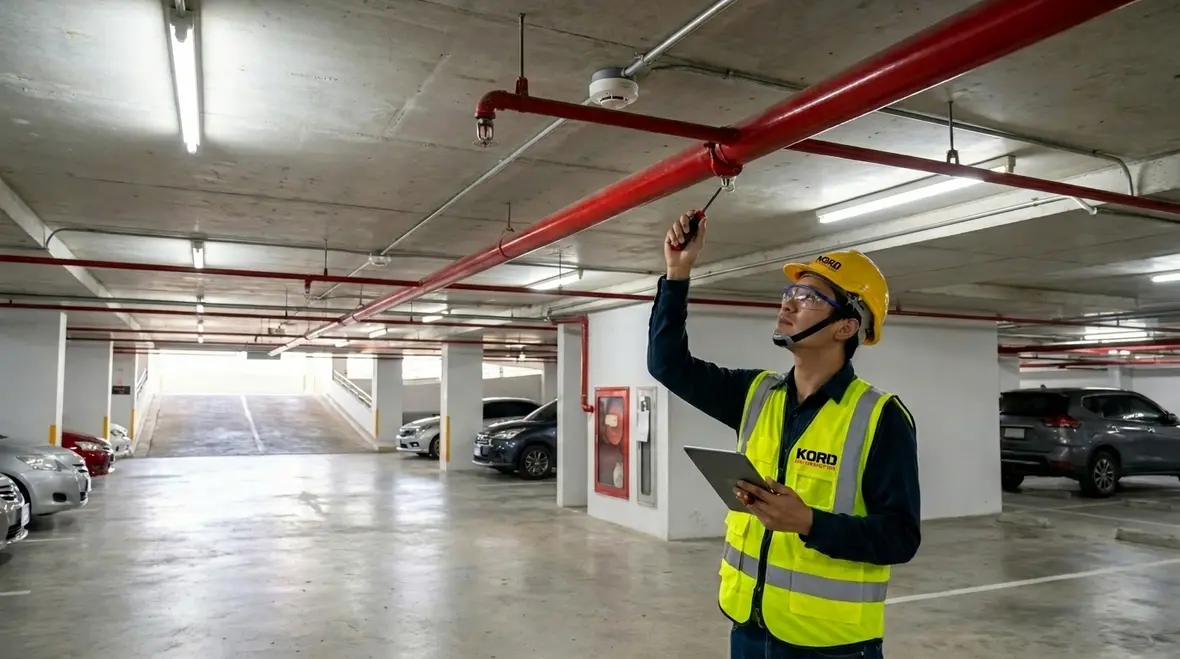
Parking Garage Fire Suppression with Kord Fire Protection
Parking garage fire suppression is not a “set it and forget it” system. It must work fast, stay reliable, and match the real behavior of fire inside enclosed parking structures. That is especially true in today’s garages where fuels, plastics, and added vehicle electronics can help a fire spread more quickly than people expect. As a result, fire suppression systems for parking structures need more than just basic coverage. They require the right design, correct installation, thoughtful testing, and ongoing inspection so the system performs when it matters most.
In this guide, third person detail will cover how these systems are built for the parking environment and why Kord Fire Protection can act as a vital partner, coordinating engineering, installation support, and service that keeps owners out of “surprise emergency mode.” And yes, emergency mode is exactly as fun as it sounds, like a horror movie where the exits are locked.
Parking structures are demanding spaces. They combine traffic flow, concrete decks, low clearance points, ventilation challenges, exposed utilities, and constant wear from vehicles moving in and out all day. That means a suppression system has to do more than meet a plan sheet. It has to fit the real environment, handle obstructions, and stay serviceable long after the ribbon cutting photos are over. A reliable system in a garage is not there for decoration. It is there to buy time, control heat, support evacuation, and help limit structural damage before the fire department takes over.
How fire behaves in parking structures
Parking structures create a unique fire scenario. Fire loads rise because vehicles concentrate heat, and many garages include oil, hydraulic fluids, and cleaning chemicals that burn differently than ordinary office materials. Meanwhile, smoke moves through ramps, stairwells, and ventilation pathways in ways that can confuse early detection. Therefore, effective design plans for both flame control and smoke management.
In addition, fires often start in hard to reach locations such as engine bays, under decks, or near electrical equipment. After ignition, heat can climb rapidly along structural steel, driving deeper damage even if flames look contained at first. Consequently, systems must activate early, distribute suppressant correctly, and hold performance long enough for evacuation and fire department response.
Why enclosed layouts increase risk
A garage is not an open parking lot with a roof slapped on top. It has columns, beams, low deck conditions, mechanical rooms, utility chases, and awkward corners where heat and smoke can collect. Even open-sided garages can behave unpredictably when fire starts near walls, under low ceilings, or close to parked vehicles packed tighter than anyone would like to admit. That is why suppression planning should reflect traffic patterns, structural geometry, and likely ignition points rather than pretending every parking level is one big empty rectangle.
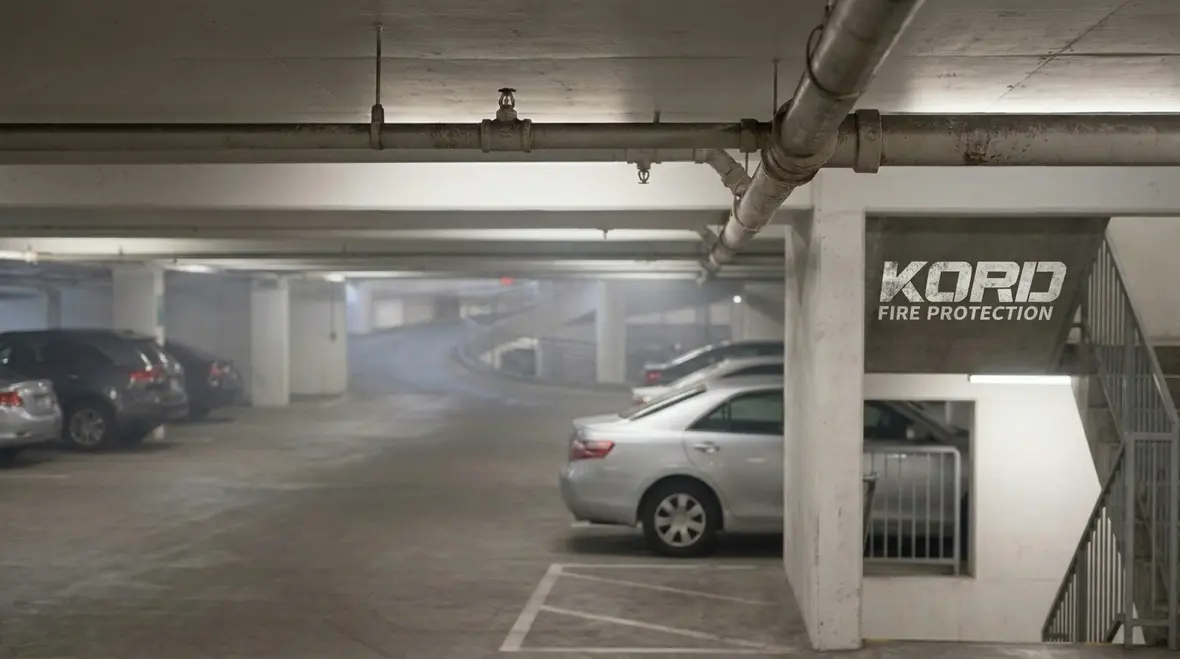
What fire suppression systems typically include
Parking environments usually rely on one or more suppression approaches depending on layout, code requirements, and risk level. Common components include detection devices, control panels, distribution piping or agent delivery systems, and water supply or stored agent sources. However, the “system” is more than hardware. It also includes supervision features, alarms, and interface planning with ventilation and emergency communications.
For example, detection and control work together. If detection occurs too late, suppression may not slow fire growth in time. If distribution coverage misses a high risk zone, the system can protect the wrong places. Because garages vary widely in height, ramp geometry, and ceiling construction, the design must map real travel paths for heat and smoke.
Meanwhile, many operators want minimal disruption. Therefore, modern planning often reduces shutdowns during maintenance through careful valve placement, testing schedules, and clear access routes. No one wants maintenance day to feel like moving day, but with more red tags.
The hidden value of supervision and coordination
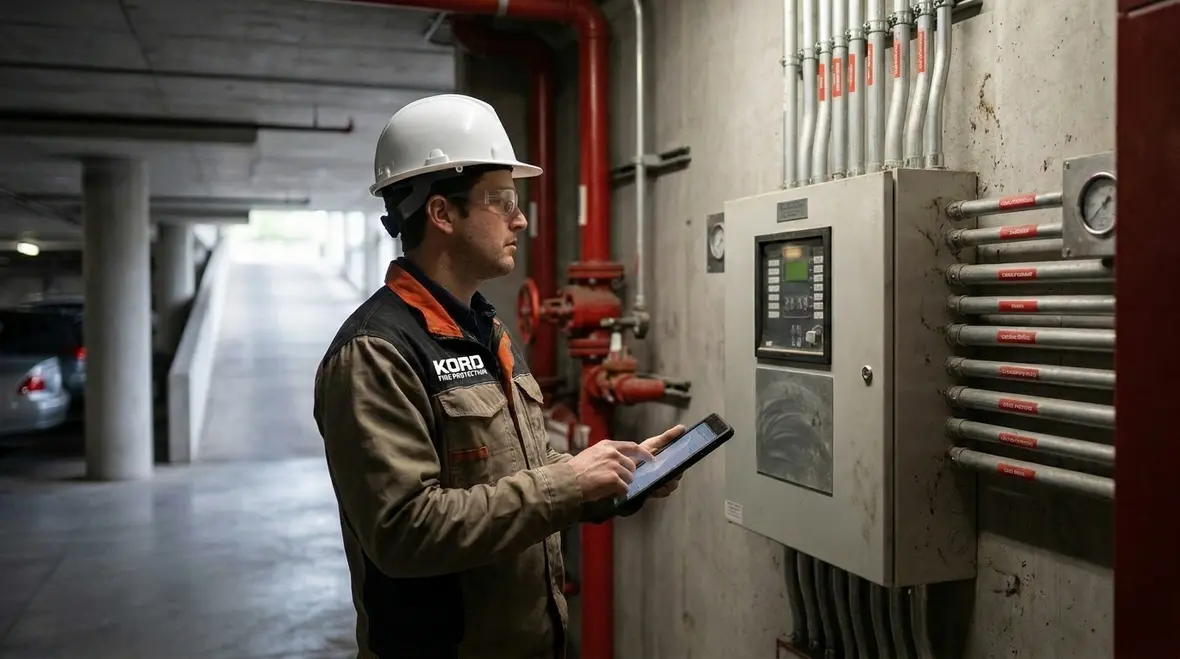
Supervision matters because suppression hardware only helps when the full chain is ready. Valves must be in the correct position. Alarms must report trouble conditions. Monitoring paths must stay active. Controls must communicate with related life safety systems. Garages also benefit when designers think ahead about access for future testing, because a system that is miserable to inspect often becomes a system that gets rushed, delayed, or only half loved by the maintenance calendar.
Design considerations for parking garage fire suppression
To deliver consistent results, designers account for several site-specific factors. First, they evaluate compartmentalization. Open bays behave differently than enclosed levels, so the system must match how heat spreads across floors and into ramps. Next, they review ceiling height, obstructions, and beam patterns that can block agent flow or affect spray coverage. Then, they analyze water demand or agent discharge needs based on the likely fire size and expected duration of suppression.
Equally important, they consider system supervision. Supervisory circuits monitor key components so faults show up early. When an owner waits until a failure is obvious, response becomes reactive instead of planned. Thus, a strong design includes reliable alarm pathways, clear zoning strategy, and enough back up to support continued function during abnormal conditions.
Finally, they plan for access and maintenance. If inspectors cannot reach valves, drains, or control panels without major work, testing quality suffers. As a result, the whole program becomes less dependable, and parking garage fire suppression may fail to perform at the exact moment it should.
Design details that owners should not ignore
Good garage design is practical, not theoretical. Teams should think about vehicle impact exposure, access lane clearance, freeze concerns where relevant, corrosion potential, and whether future tenant changes could alter use patterns. Owners should also consider nearby water supply details and exterior access strategy. Kord Fire’s article on fire hydrant clearance requirements and parking rules adds useful context because exterior access and water support can affect overall response efficiency around busy parking areas.
For facilities that need a broader understanding of ongoing inspection strategy, Kord Fire also covers how exposed sprinkler lines in parking structures can be affected by vehicle activity in its fire sprinkler inspection guide. That kind of context helps owners connect design choices with long term service realities instead of treating them as separate worlds.
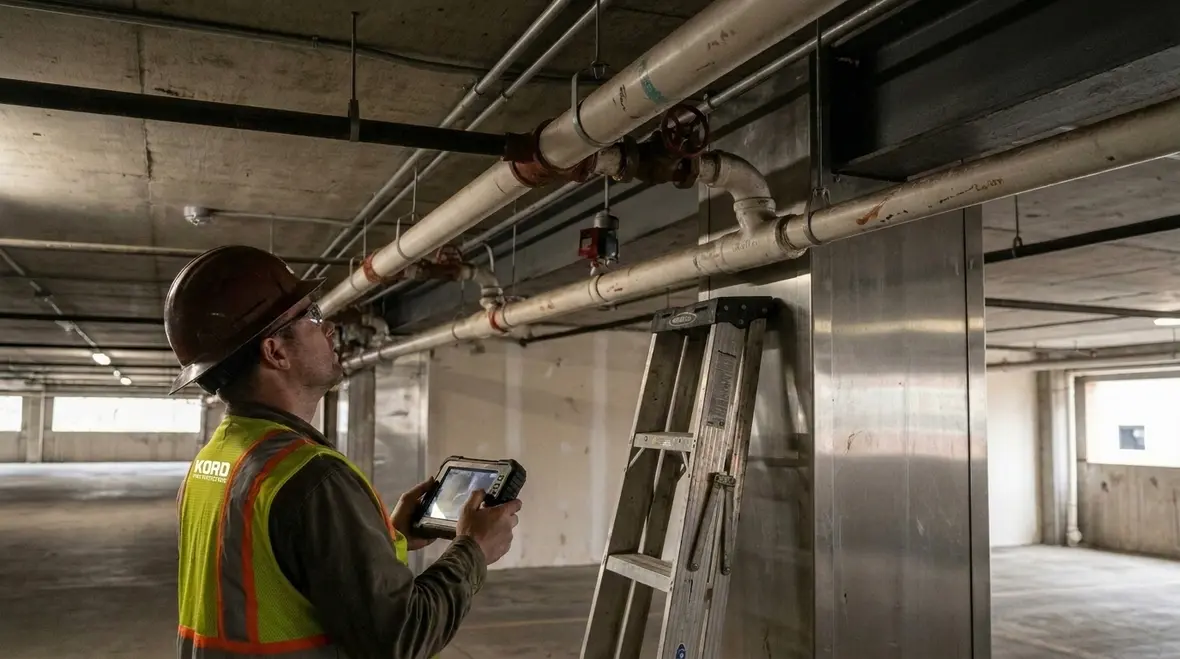
Installation, testing, and code compliance
Installation quality shapes long term performance. Technicians must follow drawings closely, pressure test piping where required, calibrate detection devices, and verify correct device placement. Even small errors such as incorrect spacing, misaligned spray patterns, or blocked nozzles can affect coverage when heat and smoke rise.
Then comes testing. A system can look good on day one and still underperform after months if inspections skip critical checks. Therefore, qualified teams perform functional tests, flow checks, alarm verification, and inspection of relevant components based on the facility schedule and applicable standards. In addition, service records should show what was tested, what passed, and what was corrected.
Code compliance also plays a big role in design and ongoing upkeep. Local requirements may drive specific installation details, maintenance intervals, and documentation needs. Consequently, owners who keep a clean compliance file reduce delays with insurers and authorities.
As a small pop culture nod, imagine trying to pass a final exam without studying. The system might still “work,” but it will not work how it should when the test day arrives, and fire is the kind of teacher that does not offer extra credit.
Documentation keeps small issues from becoming giant headaches
Testing without records is like doing homework and then throwing it into a bonfire. Owners need documentation that clearly tracks device conditions, impairments, corrections, dates, and responsible parties. Clean records help support compliance, simplify insurance conversations, and make future service visits much more efficient. They also help management teams understand whether a recurring issue is truly random or just the same problem wearing a different hat.
Why Kord Fire Protection becomes a vital partner
Fire suppression projects often fail during the handoff between design, installation, and long term service. Kord Fire Protection helps close that gap by acting as a vital partner from planning through maintenance. They support consistent documentation, practical service scheduling, and technician expertise that respects how parking structures operate.
First, they coordinate service tasks around real site operations. That matters in active garages where downtime can impact tenants and revenue. Next, they focus on dependable inspection routines that check system integrity before small faults turn into large problems. In turn, owners gain clearer visibility into what the system can do today, and what it needs next.
Also, Kord Fire Protection typically emphasizes communication. When inspections find issues, they explain the impact in plain terms and outline corrective steps. Therefore, stakeholders do not get lost in technical jargon or vague promises. And yes, nobody enjoys getting a report that reads like it was written for a secret society.
For those managing multiple properties, partnerships like this create consistency across sites, helping reduce variation in service quality. As a result, parking garage fire suppression remains dependable across levels, seasons, and changing occupancy needs.
Maintenance that keeps protection ready
Effective maintenance turns fire suppression into an active safety program rather than a yearly checkbox. Teams should keep a tight loop on inspections, testing, and corrective work. They should also verify water supply readiness where applicable, confirm controls and alarms function, and monitor for tampering or physical damage caused by daily operations.
In addition, garages experience wear from vibration, vehicle impacts, dust, and temperature changes. These conditions can affect valves, sensors, and wiring connections. Therefore, service programs should include checks tailored to the environment. Technicians may clean or replace components when needed, verify seals, and confirm that any hold open devices or release controls work as designed.
When owners maintain consistent records, they can spot recurring patterns. For example, if a zone repeatedly shows trouble after specific seasonal changes, service can target the cause instead of reacting each time. Over time, that approach reduces costs and improves reliability.
Ultimately, safety teams must remember the core truth. Fire suppression is not just “installed.” It is operated through disciplined maintenance.
A service partner should make readiness easier, not harder
This is where organized service really matters. Property teams need scheduling that fits real garage use, reporting that makes sense, and corrective recommendations that can be prioritized without drama. Kord Fire Protection’s full fire protection services page highlights the broader support available across inspection, testing, installation, and compliance coordination, which makes it a strong fit for facilities that want one dependable partner instead of juggling disconnected vendors.
Featured FAQ on parking garage fire suppression
Call Kord Fire Protection for the right plan
Fire suppression systems for parking structures deserve more than a quick installation. Owners need a design that matches real fire behavior, testing that proves performance, and maintenance that stays on schedule. Kord Fire Protection can help coordinate the full lifecycle, from project support to reliable service documentation. If the facility team wants protection that performs when it counts, it should reach out to Kord Fire Protection today.
For owners ready to move beyond guesswork, Kord Fire Protection’s fire sprinkler service page is a natural next step near the end of the planning process because it connects design, installation, repair, and maintenance into one practical path forward. After all, avoiding fire emergencies is a much better strategy than starring in one.

Join Our Newsletter!
Get the latest fire safety tips delivered straight to your inbox From our Newsletter.



