NFPA 20 Centrifugal Pump Factory Field Testing
Quick Answer
NFPA 20 Section 6.2 guides factory and field performance testing for centrifugal pumps used in fire protection systems. It ensures the NFPA 20 centrifugal pump factory field performance is verified through factory tests and on site checks. Kord Fire Protection can be a vital partner, coordinating testing, reporting and compliance across Australia.
Introduction to NFPA 20 Section 6.2
In industrial facilities, retail complexes and commercial sites across Australia, reliability is non negotiable. NFPA 20 Section 6.2 sets the framework for factory and field performance testing of centrifugal pumps that power fire protection systems. The goal is to confirm that pumps operate as designed under both controlled factory conditions and real on site environments. This approach minimizes surprises during emergencies and supports safe, compliant operation.
For broader context on system design, installation and compliance, see How NFPA 20 Regulates Fire Pump Systems.
What does NFPA 20 Section 6.2 require for testing?
The section requires a clear plan for testing that covers both factory tested performance and field verified performance after installation. It emphasizes accurate data collection, documentation of results, and alignment with the system design. In practice, the tests verify pump capacity, head, efficiency and reliability while accounting for site specific factors such as pipe configuration and available power. This ensures that the installed equipment meets the expected performance levels in real service, not just in a lab. When projects in Australia implement these tests, they gain a solid baseline for operation and maintenance decisions. The result is better readiness, fewer failures and a smoother regulatory path.
Why this matters in real world commissioning
A fire pump that looks perfect on paper still has to prove itself once it is installed. Factory performance tells you what the pump can do in a controlled setting. Field performance tells you what it actually does after it meets the piping, power supply and all the personality quirks of the site. That second part is where confidence gets real.
Factory Testing vs Field Testing
Factory testing happens in controlled environments, where variables are managed. On site testing, however, reveals how the pump behaves in the actual network, with the real friction losses and valve settings. Both stages matter. Factory tests establish a proven baseline for flow, pressure and motor load. Field tests confirm that the same pump still meets those targets after installation and connection to the system. The combination reduces risk and builds confidence that the pump will perform when it matters most. In addition, these tests provide a transparent trail for auditing and future maintenance planning.
Factory focused data
- Hydraulic test results
- Motor current
- Flow baseline
- Head baseline
- Power and speed readings
Field focused data
- On site flow readings
- Residual pressures
- Valve and piping effects
- System interactions
- Installation related deviations
This kind of side by side snapshot supports fast decision making while keeping records tidy for compliance so managers can answer audit questions without breaking into a cold sweat.
Key Steps in Factory Field Performance Testing
- Develop a testing plan that matches the system design and the site conditions
- Run factory tests to collect baseline data on flow, head, power and speed
- Prepare on site tests with calibrated instruments and safe access to the pump and piping
- Record real time data and compare with design curves and manufacturer specifications
- Analyze discrepancies and adjust system components if needed
- Compile a formal test report with measurements, calibration data and photos
- Close the loop with commissioning and hand over documentation to owners
Teams that want a stronger testing mindset may also find it useful to review this NFPA 20 fire pump acceptance testing guide for additional context on acceptance testing flow, documentation and readiness.
Kord Fire Protection as a Vital Partner
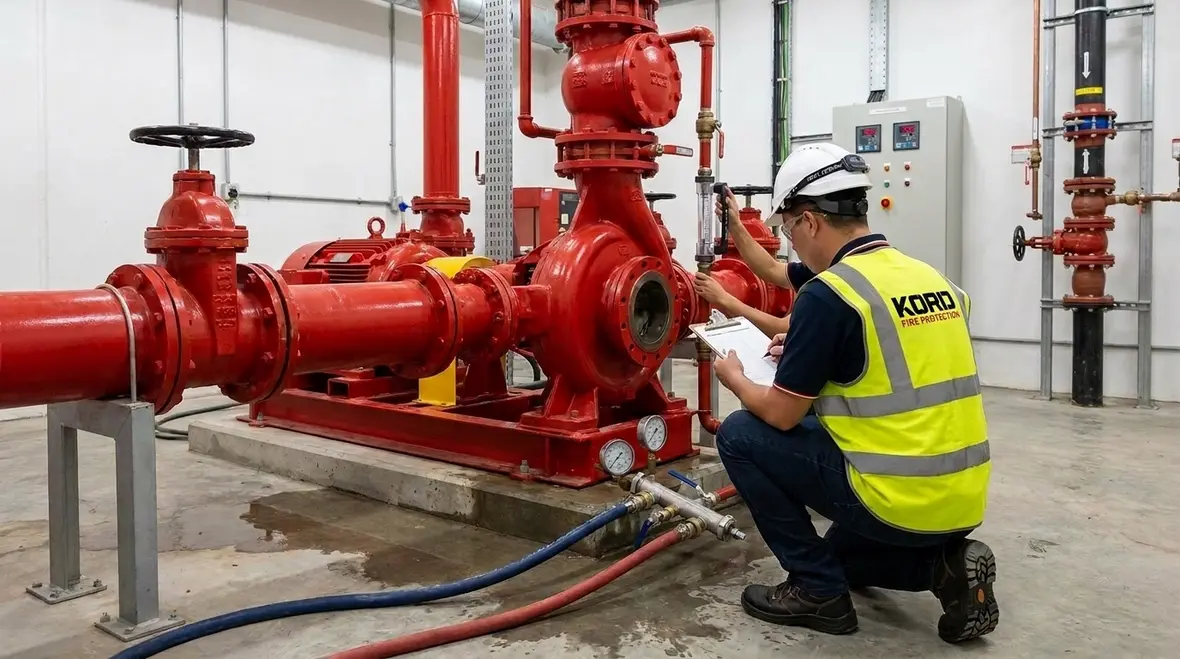
In today’s market, Kord Fire Protection stands as a trusted partner for testing services across Australia. They bring disciplined project management, qualified engineering support and seasoned technicians who understand both factory and field testing. The team helps plan the scope, calibrate instruments, perform tests safely and deliver clear, actionable reports. By coordinating equipment logistics, safety procedures and regulatory references, they reduce downtime and keep projects on track. With Kord on the team, clients gain confidence that NFPA 20 centrifugal pump factory field performance is rigorously verified from start to finish.
Where expert coordination makes the difference
Testing is not just about opening valves and watching gauges. It is about planning, calibration, safety control, reporting and making sure one missed detail does not come back later as a very expensive surprise. That is exactly where an experienced partner earns their keep.
Documentation and Compliance for Australian Markets
Local facilities must align NFPA expectations with national and state requirements. Proper documentation includes test procedures, calibration certificates, test results, as built drawings and a final commissioning report. These records support ongoing maintenance, future upgrades and regulatory reviews. Kord Fire Protection can prepare compliant documentation that satisfies engineers, authorities and asset managers. In addition, clear records help operators interpret pump performance during routine checks and emergency drills, improving overall safety and readiness.
Industries and Applications Across Australia
Factories, shopping centers, offices, hotels and hospitals rely on robust fire protection systems. Public infrastructure projects, mining sites and energy facilities also depend on dependable centrifugal pumps. NFPA 20 centrifugal pump factory field performance testing provides a consistent method to validate that these critical pumps will perform under pressure. The approach supports ongoing maintenance planning and reduces the chance of unexpected downtime, which is especially important in high occupancy environments and remote locations where field service windows are short.
FAQ
Conclusion and Call to Action
When fire protection reliability matters, pairing NFPA 20 centrifugal pump factory field performance testing with expert coordination from Kord Fire Protection creates a resilient path forward. Across industrial, retail and commercial facilities in Australia, a disciplined testing approach reduces risk, speeds up commissioning and supports safer operations. Contact Kord today to plan testing, review results and protect your assets with confidence.

Join Our Newsletter!
Get the latest fire safety tips delivered straight to your inbox From our Newsletter.