Fire Sprinkler Inspection Los Angeles Guide
What Happens During a Fire Sprinkler Inspection in Los Angeles
In a city where innovation rises alongside glass towers and historic storefronts, safety must stand just as tall. A fire sprinkler inspection Los Angeles commercial buildings rely on is not just a clipboard exercise. It is a disciplined, step by step evaluation that protects property, people, and peace of mind. From bustling high rises downtown to quiet medical offices in the Valley, these inspections ensure that when heat rises, protection follows. Throughout the process, Kord Fire Protection technicians take time to explain what they are doing and why it matters. After all, confidence grows when knowledge stands beside it.
So what really happens during one of these inspections? Let us walk through it slowly, clearly, and with just a hint of humor. Because while fire safety is serious business, understanding it does not have to feel like reading stereo instructions from 1987.

The Purpose Behind a Fire Sprinkler Inspection Los Angeles Commercial Buildings Depend On
First, context matters. Los Angeles enforces strict fire codes. Therefore, commercial property owners must schedule regular inspections in accordance with local and national standards. These standards often follow guidelines set by NFPA 25, which outlines how water based fire protection systems must be inspected, tested, and maintained. Many building owners also reference guides like Kord Fire’s breakdown of fire sprinkler testing in Los Angeles County to understand how those rules translate into real world schedules and responsibilities.
However, compliance is only part of the story. Inspections serve three core purposes:
- Life safety by ensuring occupants can evacuate safely.
- Property protection by controlling fire before it spreads.
- Liability reduction by demonstrating due diligence.
Because Los Angeles presents unique risks such as dense construction and varied building ages, routine inspections become even more critical. Older pipes may corrode. Valves may shift. Meanwhile, construction renovations may unknowingly block sprinkler coverage. Consequently, routine evaluation keeps systems ready for the unexpected.
Kord Fire Protection technicians often begin by explaining this bigger picture to property managers. They do not rush through jargon. Instead, they translate code language into clear steps. In other words, they make fire protection feel less like a mystery and more like a managed plan.
How Inspectors Prepare Before They Even Touch a Valve
Before the first wrench turns, preparation sets the tone. Technicians review past inspection reports, maintenance logs, and any noted deficiencies. This historical view reveals patterns. For instance, repeated pressure fluctuations may signal a deeper issue.
Next, they coordinate with building management. Because water flow testing may trigger alarms, occupants must receive notice. In addition, inspectors verify monitoring connections with alarm companies to prevent unnecessary emergency dispatch. Nobody wants a fire truck arriving for a test unless someone is filming a reboot of a disaster movie.
During this stage, Kord Fire Protection technicians explain the schedule for the day. They outline which systems will be tested and how long disruptions may last. As a result, property managers feel informed rather than surprised.

Step by Step Walkthrough of the Inspection Process
Now the real work begins. While each property differs, most inspections follow a structured flow.
Visual Inspection
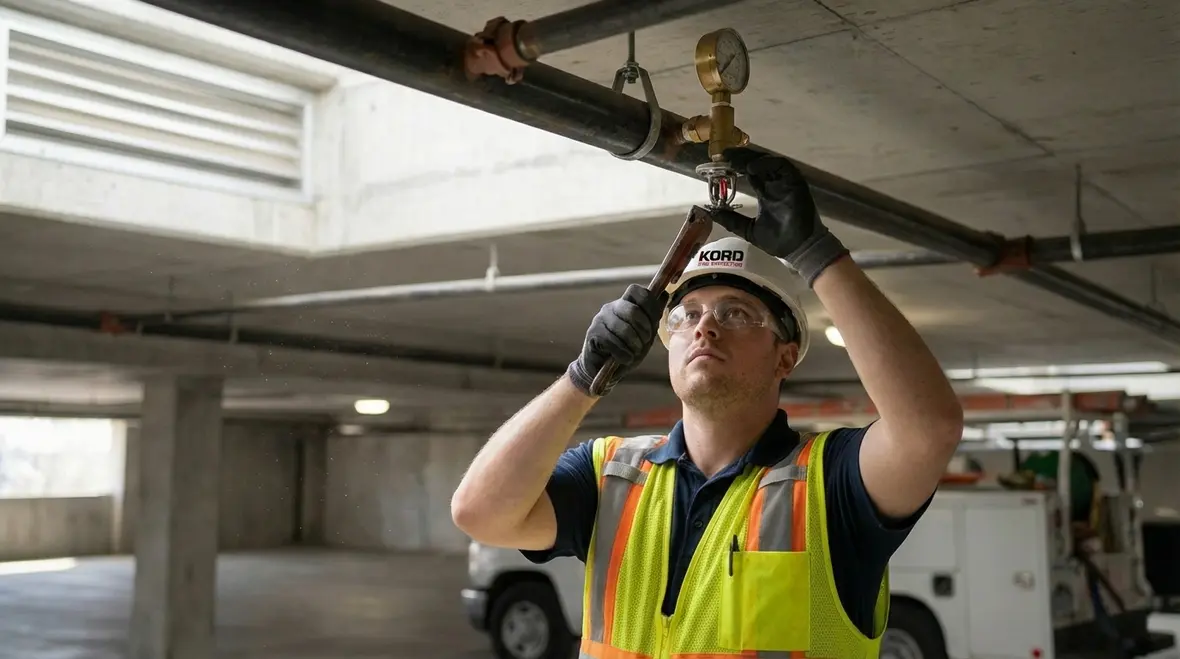
Technicians start with a thorough visual check. They examine sprinkler heads for damage, paint, corrosion, or obstruction. Even a decorative ceiling update can block spray patterns. Therefore, clearance around each head matters.
They also inspect piping for leaks, rust, or mechanical damage. In parking structures, for example, vehicle impact can compromise exposed lines. Consequently, even minor dents receive attention.
Control Valves
Control valves must remain accessible and properly sealed. Inspectors confirm that valves sit in the correct open position. They also check supervisory switches that send signals if someone tampers with the valve. After all, a closed valve turns a sprinkler system into expensive ceiling art.
Water Flow Testing
During water flow tests, inspectors simulate activation conditions. They open a test valve to allow water movement through the system. This action verifies adequate pressure and confirms that alarm signals transmit properly.
Because timing matters, technicians measure how quickly alarms trigger after water begins to flow. A delay could indicate mechanical or electrical issues. Kord Fire Protection technicians often narrate this process in real time, explaining how pressure readings align with expected performance.
Fire Department Connection
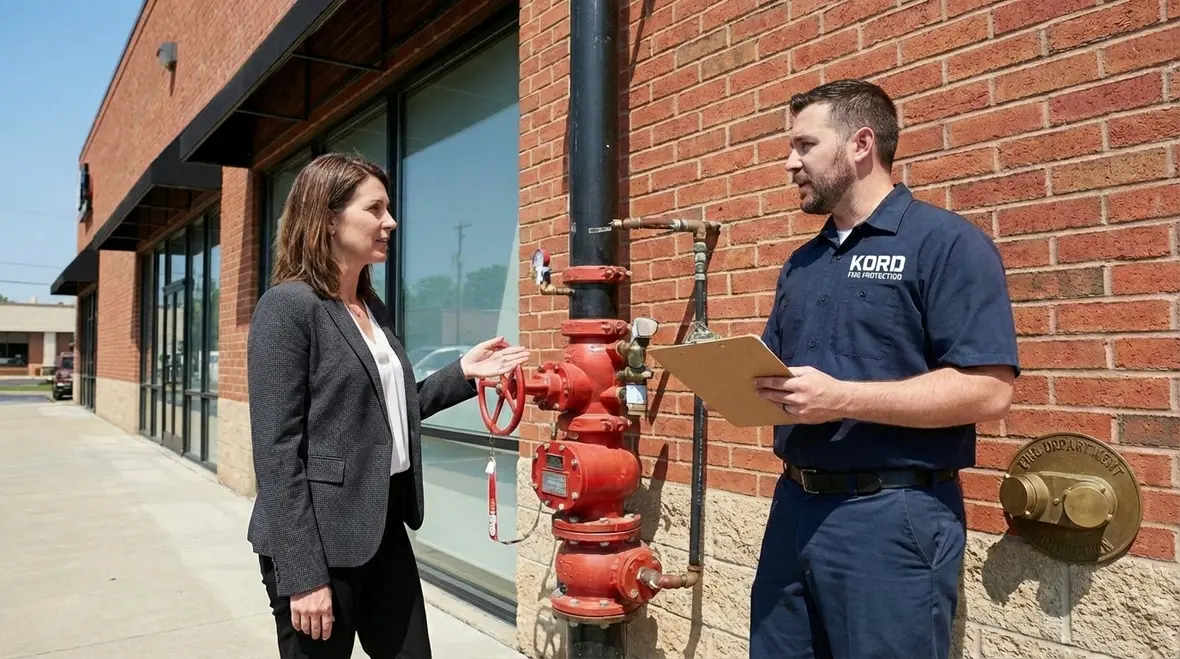
They also inspect the fire department connection outside the building. Caps must be secure, threads intact, and signage visible. In an emergency, firefighters rely on this connection to supplement water supply. Therefore, clarity and accessibility are essential.
What Building Owners Often Ask During an Inspection
Property managers frequently ask practical questions. How long will this take? Will tenants lose water? What happens if something fails?
Technicians address these concerns directly. Typically, inspections cause minimal disruption. However, certain tests may briefly affect water flow in specific zones. Therefore, communication remains key.
If inspectors find deficiencies, they document them clearly. Some issues require immediate repair, such as closed valves or impaired water supply. Others may involve scheduled corrections, like replacing aging sprinkler heads.
Rather than sounding alarms without context, Kord Fire Protection technicians explain the severity level of each finding. They outline options and timelines. In doing so, they transform what could feel like bad news into a manageable action plan.
Common Deficiencies Found in Los Angeles Commercial Properties
Although every building tells its own story, certain issues appear more often than others.
- Painted sprinkler heads that block heat sensitivity.
- Improper storage stacked too close to ceiling sprinklers.
- Corrosion in older galvanized piping.
- Missing or damaged escutcheon plates around sprinkler heads.
- Valves left partially closed after prior work.
Interestingly, many of these problems stem from renovations or routine tenant changes. A new retail display might look stunning. However, if it blocks sprinkler coverage, it introduces risk. Consequently, regular inspections catch these oversights before they escalate.
Dual Overview: Inspection Components and Why They Matter
| Inspection Component | Why It Matters |
|---|---|
| Sprinkler head condition | Ensures proper heat activation and water distribution |
| Control valves | Maintains water supply integrity throughout the system |
| Water pressure readings | Confirms system can deliver required flow during a fire |
| Alarm signal testing | Verifies communication with monitoring services |
| Fire department connection | Allows firefighters to supplement water quickly |
Each element works together. If one fails, the entire chain weakens. Therefore, inspections evaluate the system as a complete unit rather than isolated parts.
Understanding Frequency Requirements in Los Angeles
Inspection frequency depends on system type and local code. However, many components require quarterly, annual, or five year evaluations. For example, gauges may need monthly checks, while internal pipe inspections occur less often but demand deeper review. For a broader perspective on testing intervals, many property teams pair this guide with Kord Fire’s article on fire sprinkler testing in Los Angeles County, which maps out common monthly, quarterly, annual, and five year milestones.
Because regulations evolve, staying current proves essential. A reliable provider tracks these updates and adjusts inspection schedules accordingly. Kord Fire Protection technicians often remind clients that compliance is not static. Instead, it is a living process shaped by changing standards and building conditions.
Furthermore, insurance carriers may request proof of regular inspections. Therefore, detailed documentation supports both regulatory and financial protection.
Documentation and Reporting After the Inspection
Once field work concludes, paperwork begins. Yet this stage holds equal importance. Inspectors compile reports that outline tested components, measured data, and noted deficiencies.
Clear documentation serves several purposes:
- It demonstrates compliance during fire department audits.
- It guides repair planning and budgeting.
- It provides a record for insurance review.
Rather than delivering dense technical sheets without explanation, Kord Fire Protection technicians review findings with property managers. They answer questions and clarify next steps. As a result, decision makers understand both urgency and options.
How a Fire Sprinkler Inspection Los Angeles Businesses Schedule Reduces Risk
Risk reduction does not happen by accident. It happens through routine action. A properly maintained system can control or extinguish a fire before first responders arrive. Consequently, damage decreases and recovery accelerates.
Moreover, visible commitment to safety builds tenant trust. When occupants know that management invests in fire protection, they feel more secure. That confidence strengthens long term relationships.
In a city known for reinvention and resilience, proactive safety aligns with the culture. From film studios to tech startups, businesses thrive when infrastructure supports their ambition. A dependable inspection program ensures that protection stands ready behind the scenes, quiet yet powerful.
And yes, while no one schedules an inspection for fun, it beats explaining to investors why sprinklers failed during a preventable incident. Even Hollywood cannot script a happy ending to that plot twist.
Frequently Asked Questions
Conclusion: Turn Fire Code Pressure into Everyday Confidence
When safety stands on the line, routine action makes all the difference. A professional inspection protects lives, preserves property, and supports compliance across Los Angeles commercial spaces. Kord Fire Protection technicians bring clarity, precision, and steady guidance to every visit. They turn code language into plain language, pages of requirements into a simple checklist, and surprise violations into scheduled fixes.
If you manage multiple buildings or just one high profile address, partnering with a single trusted provider simplifies everything. You gain one calendar, one set of reports, and one team that already knows your systems. Over time, that familiarity pays off in faster inspections, smarter upgrades, and fewer last minute scrambles before the next fire department visit.
Schedule a comprehensive evaluation today and ensure your system stands ready when it matters most. Kord Fire offers full service support for fire sprinkler systems, alarms, extinguishers, and fire pumps throughout Los Angeles County and beyond, so your buildings stay compliant and your tenants stay confident.
Because preparation, done right, turns uncertainty into confidence. And in a city built on big ambitions and even bigger stories, a quiet, code compliant fire sprinkler system might just be the most important supporting character your building ever has.
Know Your Weapon Before You Fight the Flame
Kord Fire Protection is your go-to when it comes to all things fire protection. For over 20 years, we’ve been serving Southern California with the quality service and equipment to keep your home or business safe at all times. Our competitive prices reflect our unwavering commitment to protecting what matters most in the event of a fire emergency. Give us a call, send an email, or use that form!

Join Our Newsletter!
Get the latest fire safety tips delivered straight to your inbox From our Newsletter.