NFPA 52 Section 8.6: ASME Compliance for CNG Facility Components
Quick Answer
NFPA 52 Section 8.6 requires certain CNG facility components to be fabricated and maintained in accordance with ASME standards or equivalent recognized codes. This clause directly affects pressure vessels, piping, fittings, and safety-critical hardware used to store, convey, and dispense compressed natural gas.
For facilities building a more inspection-ready service program around these requirements, Kord Fire’s fire protection services in Southern California offer a practical path for coordinating inspections, repairs, installations, and compliance support across safety-critical systems. ([kordfire.com](https://kordfire.com/fire-protection-services-southern-california/?utm_source=openai))
Why NFPA 52 ASME compliance matters at the commercial facility level
Commercial, industrial, and retail CNG facilities operate under a practical compliance reality: the fire and life safety outcome depends on component integrity, not only on system layouts. NFPA 52 ASME compliance CNG facility components become the compliance backbone for pressure containing elements and critical mechanical interfaces. When ASME-aligned components are selected, documented, installed, tested, and maintained, facilities reduce the likelihood of leaks, relief device malfunction, and unplanned component degradation.
What Section 8.6 requires in practice
NFPA 52 Section 8.6 focuses on ensuring applicable CNG facility components are manufactured to ASME requirements, and that the facility can demonstrate that compliance through traceable documentation. While the exact scope depends on the component type, the typical compliance intent centers on four mechanisms:
- Materials and workmanship: ASME construction practices support consistent material properties, controlled fabrication, and validated dimensional tolerances for pressure service.
- Pressure boundary integrity: ASME-based pressure containing design helps limit failure modes such as crack growth, corrosion under insulation, or seal failure at threaded and flanged joints.
- Component qualification: Safety critical items like vessels and regulators require documented conformance to recognized design and test practices.
- Maintenance continuity: Compliance does not stop at installation. Ongoing inspection and replacement cycles must align with both code intent and the manufacturer’s listed requirements.
Which CNG facility components typically fall under ASME-aligned expectations
Facilities often find that compliance work becomes difficult when component scope is unclear. A practical approach is to inventory the CNG pressure system and classify parts into pressure boundaries, safety devices, and mechanical interfaces. In most commercial programs, the following component categories require special attention for NFPA 52 ASME compliance CNG facility components:
1) Storage and pressure vessels
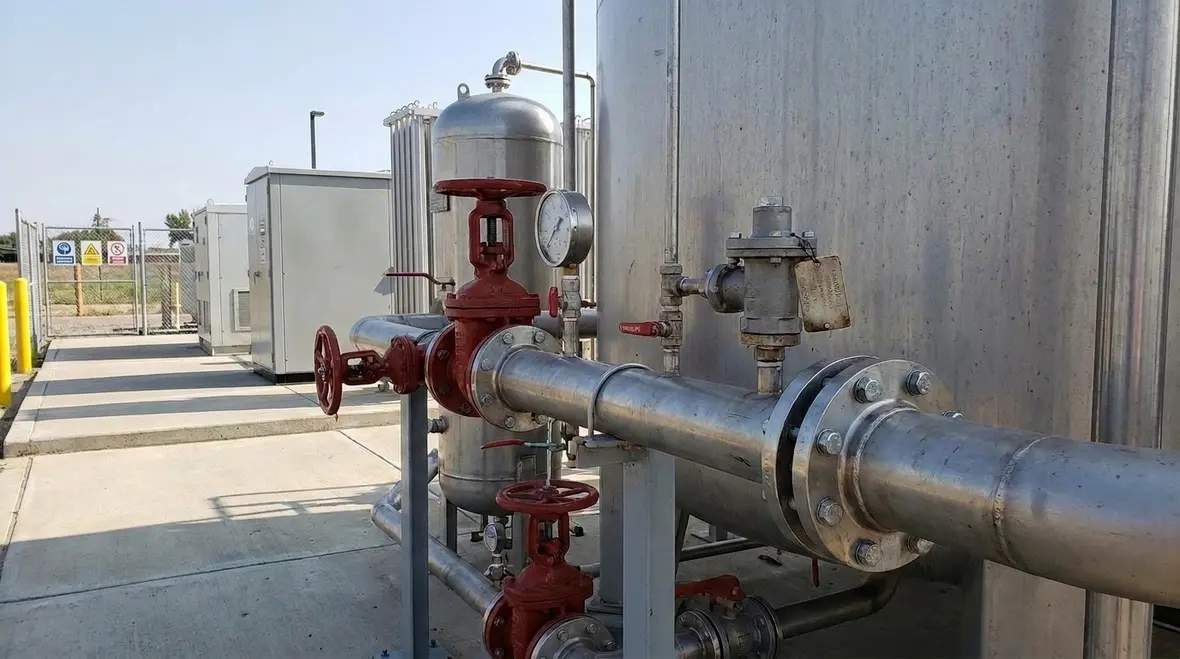
High pressure storage vessels are the clearest pressure containing elements. ASME-based construction and pressure testing support reliability over repeated thermal cycles, vibration exposure, and cycling pressures. Common commercial failure patterns include inadequate support during installation, improper torque on mounting hardware that stresses the vessel, and deferred inspection of protective coatings.
2) Piping and pressure piping systems
Piping that forms part of the pressure boundary requires alignment with recognized construction and joining practices. Common failure points include improper thread seal selection, damage to gasket surfaces during retrofit work, and undocumented modifications that break traceability to the original code-compliant configuration.
3) Pressure relief and venting interfaces
Relief devices and their discharge connections must be configured to safely manage worst case scenarios. Even if a relief device is compliant, poor alignment or an incorrect discharge routing can defeat the safety function. Maintenance programs must verify that discharge paths remain unobstructed and that vent penetrations and terminations remain in good condition.
4) Regulators, valves, and mechanical connections
Regulators and valves often act as the operational control boundary. ASME compliance typically ties to the design, testing, and documentation of pressure containing portions. In the field, the highest risk typically comes from nonconforming replacements, incompatible repair kits, or “like for like” swaps performed without confirming the required markings, pressure ratings, and conformance documentation.
How compliance verification usually fails, and how to prevent it
Most compliance gaps are not caused by a complete disregard for code requirements. They occur during procurement substitutions, repair activities, and turnover documentation failures. The most common issues include:
- Missing traceability: Facilities cannot produce ASME-related documentation, nameplates, or test records for the installed components.
- Unauthorized component substitutions: Replacements do not match the original specification and lack validated conformance.
- Inadequate inspection planning: Visual and functional checks do not address corrosion, insulation damage, or connection stress.
- Poor maintenance documentation: Service reports record what happened, but not what was inspected, measured, and verified against acceptance criteria.
To prevent these failures, facilities should implement a structured compliance system that ties component identification to inspection triggers. This includes maintaining a current equipment register, verifying markings, collecting manufacturer data reports, and auditing service work orders to ensure they do not introduce nonconforming parts into the pressure boundary.
Operational inspection and maintenance for ASME-aligned CNG systems
ASME compliance only remains meaningful when the facility performs effective inspection and maintenance. Kord Fire Protection supports commercial facilities by translating code intent into field-ready inspection routines that reduce risk during ongoing operations.
Inspection focus areas that matter day to day
- Pressure boundary condition: Look for evidence of corrosion, coating damage, abrasion, and stress at supports and connection points.
- Relief and discharge integrity: Confirm discharge routes are free of blockage and damage, and verify that connections remain secure.
- Leak prevention controls: Verify joint condition, gasket condition, and valve packing integrity using the facility’s established testing method.
- Documentation and markings: Validate nameplates and component identifiers so field inspections align with the installed configuration.
Common commercial maintenance workflow mistakes
- Performing repair tasks without confirming the replacement part’s rating and conformance documentation.
- Failing to inspect insulation interfaces where corrosion can develop undetected.
- Using inconsistent torque practices during valve and flange work, leading to recurring leak events.
Facilities can strengthen their program by aligning maintenance cycles with the manufacturer’s listed intervals and incorporating NFPA 52 expectations for safe operation. This is where dedicated fire protection and inspection services improve outcomes by providing consistent, code-aligned verification. For a broader look at how Kord approaches coordinated compliance support across systems, the fire protection services guide by Kord experts fits naturally alongside this maintenance conversation. ([kordfire.com](https://kordfire.com/fire-protection-services-guide-by-kord-experts/?utm_source=openai))
Compliance documentation and internal controls that satisfy audits
During inspections and internal audits, authorities and insurance partners typically look for evidence that the facility can demonstrate compliance, not just claim it. A robust documentation package for NFPA 52 ASME compliance CNG facility components usually includes:
- Component equipment register: Unique identifiers, location, component type, and service description.
- ASME and manufacturer documentation: Markings, data reports, test records, and applicable installation instructions.
- Installation verification records: Proof of pressure testing or functional acceptance performed per project requirements.
- Inspection and maintenance logs: Dates, findings, corrective actions, and verification that replacements match the specification.
- Change control records: Documentation for any modifications, swaps, or retrofit work.
For teams reviewing related NFPA 52 guidance on the same site, Kord’s article on operations and maintenance programs for CNG facilities is a strong contextual next read because it expands the documentation conversation into day-to-day program control. ([kordfire.com](https://kordfire.com/nfpa-52-section-4-5-operations-and-maintenance-programs-for-cng-facilities/?utm_source=openai))
Frequently Asked Questions
Next step: confirm your ASME compliance program
If your CNG facility lacks complete traceability, current inspection records, or documented change control for pressure boundary components, compliance risk increases quickly. Kord Fire Protection helps commercial sites validate NFPA 52 requirements, verify ASME-aligned documentation, and maintain inspection-ready evidence. Contact Kord Fire Protection to audit your component register, assess maintenance practices, and build a compliance workflow that holds up during inspections.
Join Our Newsletter!
Get the latest fire safety tips delivered straight to your inbox From our Newsletter.