NFPA 52 Section 6.1 General: Gas Detection, Alarm, and Emergency Shutdown Basics
Quick Answer: NFPA 52 Section 6.1 sets baseline requirements for gas detection systems that identify hazardous gas releases, initiate alarms, and support emergency shutdown actions. Effective compliance depends on correct sensor placement, verified setpoints, reliable alarm signaling, and documented testing and maintenance.
Facilities that need broader support across connected life safety systems can also explore methane gas detection and related compliance services, especially when gas detection performance has to align with ongoing inspection and maintenance planning.
What NFPA 52 gas detection alarm emergency shutdown general requirements cover in Section 6.1
NFPA 52 gas detection alarm emergency shutdown general provisions establish the foundational expectations for a system designed to detect flammable or toxic gas atmospheres, alert occupants and responders, and trigger emergency control functions when concentrations reach hazardous thresholds. While exact implementation varies by fuel gas, ventilation design, and site hazards, Section 6.1 emphasizes that detection must be purposeful, alarms must be dependable and understood, and emergency shutdown actions must be coordinated with the facility’s operating sequence.
In practical terms, commercial facilities must plan and document how the detection system will operate from sensor measurement through alarm annunciation and into any automatic shutdown of gas supplies, fuel trains, or associated equipment. Common compliance pitfalls include mismatched alarm setpoints, missing supervised wiring pathways, undocumented bypasses, and incomplete inspection records after maintenance activities.
How gas detection works: sensors, sampling, and alarm logic
Gas detection systems translate gas concentration into an electrical or digital signal. Field reliability depends on selecting the right sensor type for the gas hazard, ensuring the detector reaches its intended sampling environment, and maintaining sensor performance over time. NFPA 52 Section 6.1 general concepts require that detection be capable of responding as intended, which drives operational choices in the field.
1) Sensor selection and placement discipline
Sensor selection must align with the hazard profile. Flammable gas sensors typically require setpoints tied to combustible limits, while toxic gas sensors require setpoints related to exposure limits. Placement affects results because stratification and airflow can carry gas to unexpected locations. Facilities frequently struggle with “as-built versus as-designed” placement after renovations, ceiling changes, new ductwork, or altered traffic patterns around HVAC and process equipment.
2) Alarm thresholds and verification strategy
Alarm logic usually separates alert and emergency actions. An alarm may activate annunciation and initiate operational responses, while emergency shutdown triggers protective actions. Compliance requires that the alarm and shutdown functions reflect the approved hazard analysis and that setpoints remain correct after calibration, sensor swaps, or controller firmware updates.
3) System supervision and fail-safe behavior
Supervision and fail-safe behavior are vital for commercial uptime. Supervisory monitoring may include wiring integrity, fault conditions, detector health, and communication status. When supervision is missing or bypassed without controls, the system can fail silently during equipment malfunctions or cable damage.
Alarm signaling: designing response that people and operations can actually use
Section 6.1 general requirements assume that an alarm is not only a signal, but a functional component of emergency response. In commercial and retail occupancies, this often means coordinating audible and visual outputs with occupancy type, occupant notification expectations, and emergency procedures.
Alarm audibility, visibility, and zoning
Facilities must ensure alarms can be perceived in the locations where decisions and immediate actions occur. Zoning matters because not every area experiences gas exposure equally. Poor zoning can cause delays, such as responders searching the wrong area while the actual hazard continues to grow.
Alarm management: avoiding alarm fatigue
Frequent nuisance alarms drive crews to ignore signals. From a compliance perspective, this increases risk because the system is less likely to be treated seriously. Operators should correlate alarm events with airflow changes, process upsets, and sensor health. When nuisance alarms occur, the root cause must be corrected, not masked with ad hoc bypasses.
Integration with emergency procedures and training
Alarm annunciation must align with documented emergency shutdown procedures. Maintenance teams and operations personnel should know what the system does automatically, what actions they must take manually, and how to communicate the event. The most common operational failure is a shutdown sequence that functions mechanically but is not supported by consistent staff response.
Emergency shutdown basics: what must trip, how it trips, and what operators need to do next
Emergency shutdown actions prevent escalation by stopping or isolating the source of the gas release and controlling connected equipment. NFPA 52 Section 6.1 general concepts focus on ensuring shutdown actions are reliable, coordinated, and not dependent on chance.
Shutdown pathways: automatic actuation and coordinated control
Shutdown may involve closing automatic shutoff valves, de-energizing equipment that can ignite gas, stopping combustion-related processes, or commanding ventilation control strategies. Shutdown design should account for the facility’s operating logic so the system does not create new hazards while addressing the existing one.
Controller logic integrity and verification
Controllers execute logic based on detector inputs. Compliance is strengthened when shutdown logic includes defined thresholds, supervised inputs, and documented testing methods. Firmware updates and controller replacements must be managed carefully, with configuration verification to confirm that alarm and shutdown outputs match the approved intent.
Common failure points during real maintenance
- Uncontrolled bypasses that remain in place after service work.
- Valve actuation delays caused by pneumatic supply issues, aging solenoids, or control wiring faults.
- Incorrect interlocks introduced during equipment replacement or building automation changes.
- Improper post-maintenance testing where calibration occurs but shutdown verification does not.
Inspection, testing, and maintenance: the compliance work that prevents surprises
Section 6.1 general requirements reinforce that systems remain effective through inspection and maintenance. Commercial operators should treat gas detection maintenance as a lifecycle program, not a checkbox event.
What inspections should confirm
Inspections should validate detector cleanliness, physical security, correct mounting, cable and conduit integrity, annunciator operation, and controller health. Inspectors also need to confirm that installed components match the system design documents and that any modifications follow a controlled process.
Testing discipline: calibration and functional verification
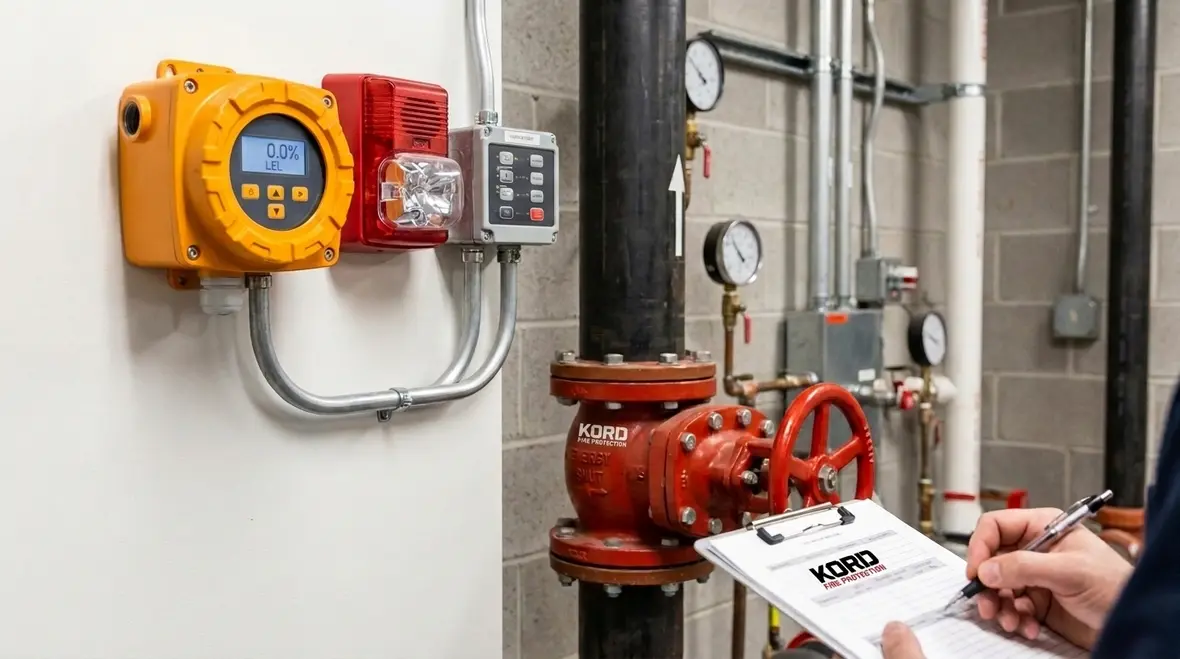
Testing typically includes calibration checks and functional tests that verify alarm annunciation and emergency shutdown outputs. A functional test proves the entire chain, from sensor signal to controller logic to the final output device.
Facilities frequently fail compliance when they only calibrate sensors but do not verify the shutdown function end-to-end. Even when calibration passes, output relays, solenoids, or valves can fail, especially after construction activity, corrosion exposure, or wiring disturbances.
Documentation and audit readiness
Audits and insurance reviews rely on evidence. Effective documentation includes test dates, results, calibration records, alarm and shutdown verification, sensor model and serial references, and corrective action reports. This documentation becomes critical during incident investigations where the question is not whether the system exists, but whether it worked as required.
For organizations that need consistent, defensible maintenance records, Kord Fire Protection supports commercial compliance through scheduled testing, documentation, and service planning aligned to the hazards and system design.
Learn more about related compliance support through fire alarm inspection, testing, and maintenance services, which reflects the same discipline used for life safety system verification and recordkeeping.
Where facilities commonly get stuck: practical compliance challenges
Commercial, industrial, and retail environments face recurring obstacles when implementing NFPA 52 gas detection alarm emergency shutdown general requirements. Addressing these issues early reduces rework and improves reliability.
Renovations and hidden changes
After interior modifications, airflow patterns change. Ceiling modifications can alter gas stratification and detector response. Without a controlled update process, detector locations may no longer represent the intended hazard points.
Tenant turnover and operational drift
In multi-tenant buildings and retail centers, process usage changes quickly. A gas detection system that was correct for one operational mode may become mismatched after new equipment installs, updated HVAC balancing, or changed operating schedules.
Maintenance resourcing and “temporary” overrides
Short-term bypasses can become long-term conditions when the work order does not close properly. A robust maintenance program uses clear authorization, time-stamped bypass tracking, and verified restoration with functional testing.
Alarm response alignment
If alarms do not match site emergency procedures and staffing responsibilities, crews can respond inconsistently. That inconsistency becomes a liability during drills and real events.
Frequently Asked Questions
Call to Action
Commercial facilities that rely on gas detection need more than installed equipment. They need verified performance, disciplined testing, and clear records that stand up to internal audits, insurance reviews, and emergency scrutiny. Kord Fire Protection helps organizations maintain compliant NFPA-aligned protection through scheduled inspection, functional testing, and documentation support. Schedule a service review to confirm alarm and emergency shutdown reliability for your specific site configuration.

Join Our Newsletter!
Get the latest fire safety tips delivered straight to your inbox From our Newsletter.