NFPA 52 Section 8.3 General: CNG Equipment Component Requirements Overview
Quick Answer: NFPA 52 Section 8.3 establishes the baseline performance and suitability expectations for CNG equipment components. It focuses on how components are designed, installed, protected from damage, and maintained to support safe system operation across typical commercial service conditions. Use it to guide inspection and maintenance planning.
This article explains how NFPA 52 CNG equipment components general requirements apply to the broad set of components found in compressed natural gas (CNG) fueling and supply systems. It also highlights practical compliance challenges that commercial, industrial, and retail facility teams encounter during installation, inspections, and ongoing maintenance. Where requirements depend on component type, the intent remains consistent: equipment must be compatible with CNG service, installed to prevent unsafe conditions, and kept in reliable operating condition.
Facilities strengthening maintenance workflows should also review NFPA 52 operations and maintenance program requirements for CNG facilities, since component condition is much easier to defend during inspections when the site’s broader program is documented and actively followed.
Why Section 8.3 “General” Matters in Real Operations
Section 8.3 acts as a foundation because most CNG systems are a combination of multiple subsystems: storage, pressure regulation, dispensing, piping, valves, fittings, pressure relief, instrumentation, and safety shutoff elements. The “general” language supports a common compliance test: do the components, as installed and as maintained, remain suitable for CNG service.
In commercial environments, the failure mode is often not a single catastrophic event. Instead, it typically emerges as progressive loss of integrity. Examples include damaged protective housings, degraded seals, misalignment from vibration and vehicle loading, and instrumentation drift that delays detection of abnormal pressure or flow. Section 8.3 requirements help prevent these problems by requiring suitability and appropriate protection.
What Counts as a CNG Equipment Component Under NFPA 52
Facilities often underestimate how broad the term “component” can be. For compliance planning under NFPA 52 CNG equipment components general requirements, the scope usually includes any part that directly influences safe pressure containment, controlled flow, or the functioning of protective features. That commonly covers:
- Valves and manual shutoffs
- Regulators and control devices that manage pressure
- Dispensing hardware and associated interfaces
- Fittings, couplings, and connection systems
- Pressure relief devices and safety-related components
- Hoses, connectors, and quick disconnect elements (where part of the system)
- Pressure and leak detection instrumentation used for safe system control
Practical takeaway: during audits, inspectors expect consistency between the component documentation and the actual configuration onsite. If a component is substituted, repaired, or modified without maintaining compliance intent, Section 8.3 becomes difficult to demonstrate.
Core Compliance Expectations: Suitability, Protection, and Installation Integrity
NFPA 52 Section 8.3 general requirements typically translate into three compliance themes. Facilities can use these themes as a quick internal checklist during commissioning and after repairs.
1) Suitability for CNG Service
Components must be appropriate for CNG exposure conditions, including pressure ranges, ambient temperatures, and the presence of methane. Suitability affects material compatibility, seal performance, and long term reliability. Commercial facilities that rely on vendors or contractors for component selection should keep documentation that links each component to its intended service.
2) Installation Integrity and Correct Configuration
Even compliant components can become noncompliant when installed incorrectly. Common issues that create Section 8.3-related problems include:
- Incorrect torque or improper connection practices leading to leak risk
- Missing or damaged protective components that expose parts to impacts
- Improper routing that places lines where they can be struck by equipment or vehicles
- Installations that impede inspection access or prevent verification of component condition
3) Protection Against Damage and Unsafe Conditions
Commercial and retail environments increase the likelihood of incidental impacts. Equipment is often installed near traffic routes, pedestrian access points, or maintenance work areas. Section 8.3 expectations support the need for physical protection and guard measures that preserve component integrity.
Where protective features exist, maintenance programs must include verification that guards, barriers, and covers remain in place and functional after routine service, landscaping work, or equipment repositioning.
Common Failure Points That Trigger Section 8.3 Scrutiny
Onsite deficiencies frequently originate from preventable operational and maintenance gaps. The following failure points align closely with the intent behind NFPA 52 CNG equipment components general requirements.
Degraded Seals, Connections, and Leak Potential
Leak risk often comes from repeated cycling, age-related seal hardening, contamination of connection interfaces, or improper reassembly after maintenance. Facilities should treat any connection opened for service as a controlled operation: confirm correct parts, follow approved assembly procedures, and verify leak tightness before returning to service.
Instrument Drift or Functional Misalignment
If instrumentation used for safe control provides inaccurate readings, operators may delay corrective actions. Drift may result from environmental exposure, electrical issues, or mechanical misalignment. A compliance focused maintenance plan includes functional verification intervals and clear acceptance criteria for return to service.
Physical Damage From Impacts and Environmental Exposure
Impact damage from vehicle traffic, equipment handling, or maintenance staging can deform fittings, bend lines, or compromise protective housings. Environmental damage such as corrosion can also threaten component integrity. Facilities should use inspection access pathways that support detection before a small defect becomes a system level concern.
Unauthorized Component Substitution
One of the most common compliance barriers is component replacement without documented equivalency. Facilities may swap parts to restore service quickly but later struggle to demonstrate that the substitute component satisfies general suitability requirements. Documented equivalency, compatibility verification, and traceable maintenance records help prevent this gap.
Inspection and Maintenance Practices That Support Ongoing Compliance
Section 8.3 general requirements emphasize that suitability does not end at installation. It continues through the lifecycle of the system. Commercial facilities should align maintenance procedures with a structured verification approach.
Maintenance Records That an Inspector Can Follow
Well organized records typically include:
- Component identification and make model data
- Work orders and repair procedures used
- Evidence of leak testing, functional verification, and acceptance criteria
- Date stamps and technician credentials where applicable
- As installed drawings or updates when modifications occur
Operational Checks Before Return to Service
After any maintenance event that touches valves, regulators, connections, relief devices, or instrumentation, facilities should implement a return to service workflow that verifies safe operation. This typically includes confirming that protective features remain intact and that system performance aligns with normal operating parameters.
Inspection Frequency and Targeting
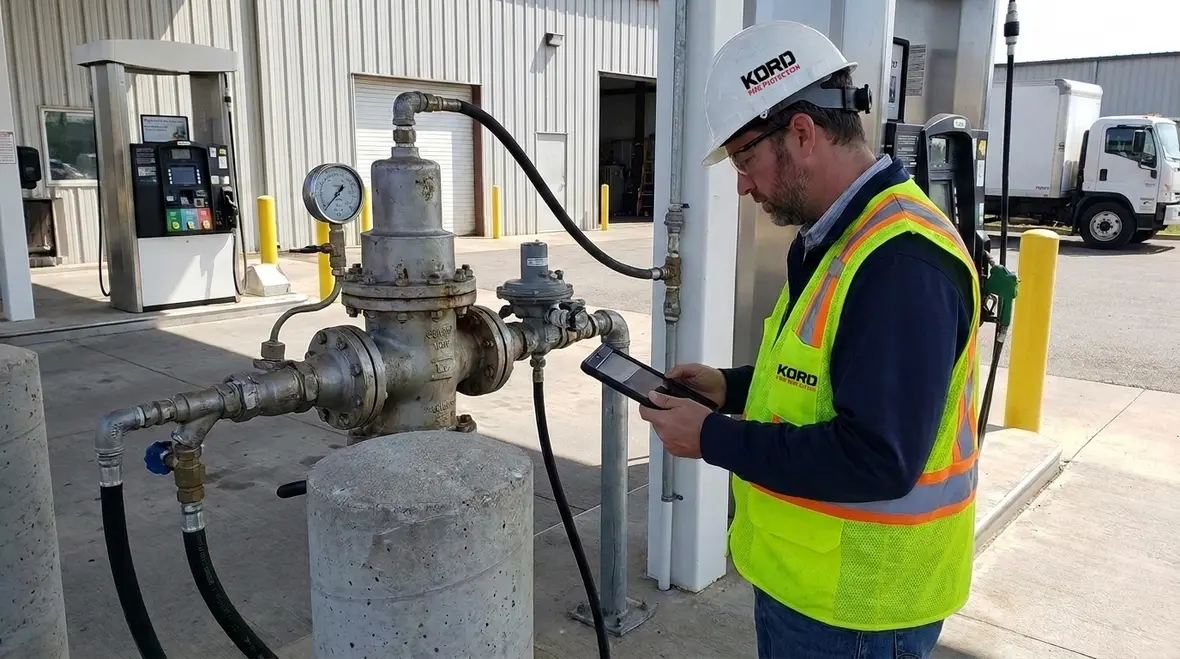
Facilities should focus inspection effort where failure risk is highest. High wear areas, areas exposed to impact, and components with frequent cycling deserve targeted attention. This is where Kord Fire Protection adds measurable value through inspection planning, documentation, and remediation support for commercial CNG facilities.
For additional compliance guidance and supporting resources, facilities can review other fire protection services, including methane gas testing, as well as broader Kord Fire Protection service information.
How Kord Fire Protection Helps Commercial Facilities Meet Section 8.3 Intent
Commercial fueling and industrial supply operations need more than a checklist approach. They require reliable verification that components remain suitable, protected, and maintained throughout daily operating demands. Kord Fire Protection supports facilities with inspection readiness, compliance documentation support, and maintenance coordination designed to reduce repeat findings.
Common benefits include:
- Guidance for inspecting component condition and protection measures
- Support in organizing documentation for component substitutions and repairs
- Help identifying high risk failure points before they escalate
- Coordination that supports safe return to service after maintenance
The goal is straightforward: keep CNG equipment functioning safely, with evidence that aligns to NFPA 52 CNG equipment components general requirements across ongoing operational cycles.
Frequently Asked Questions
Conclusion and Call to Action
NFPA 52 Section 8.3 general requirements protect the entire CNG system by focusing on component suitability, installation integrity, and protection throughout the lifecycle. Commercial facilities can reduce inspection risk by strengthening maintenance records, return to service verification, and component substitution controls. If your site needs inspection readiness or a practical compliance review, contact Kord Fire Protection to support ongoing testing, documentation, and maintenance coordination across your CNG equipment program.

Join Our Newsletter!
Get the latest fire safety tips delivered straight to your inbox From our Newsletter.