NFPA 52 Section 8.7: Pressure Gauge Requirements for CNG Facilities
Quick Answer: NFPA 52 Section 8.7 sets performance, placement, and condition expectations for pressure gauges on CNG systems. The requirements focus on accurate indication, appropriate range selection, protected installation, and periodic verification so gauges remain reliable for safe operations and inspections.
If you are reviewing broader compliance workflows, Kord Fire Protection also outlines how maintenance structure supports CNG safety in its NFPA 52 operations and maintenance program guide for CNG facilities.
What NFPA 52 CNG pressure gauge requirements actually demand
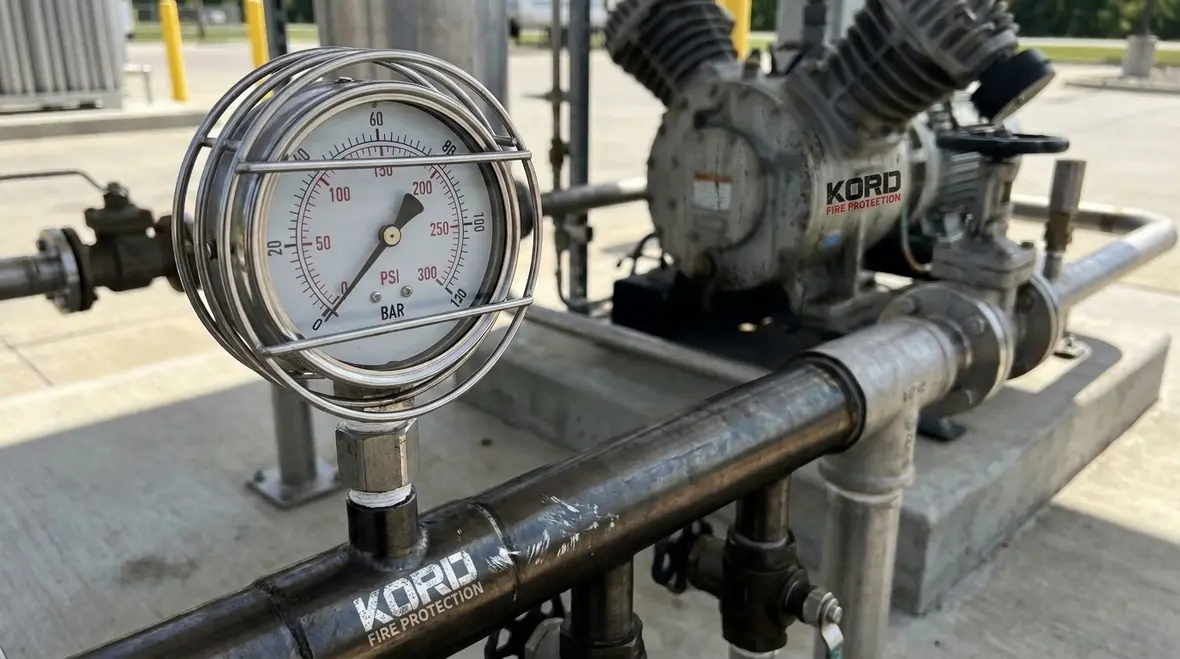
For commercial CNG facilities, NFPA 52 CNG pressure gauge requirements are not simply about installing a dial on a pipe. Section 8.7 drives gauge selection, mounting location, visibility, and maintenance so operators can confirm pressures during normal operations and emergency or abnormal conditions. Inspectors typically evaluate whether the gauge is suitable for the expected pressure range and whether it remains readable, protected, and dependable over time.
Where gauges must be installed and why location matters
Pressure gauges support real operational decisions. NFPA 52 Section 8.7 aligns gauge placement with system segments where verified pressure readings guide control actions, start up, shutdown, and safe response. In practice, facilities usually need gauge coverage for key points such as:
- Supply and distribution sides where pressure changes directly affect downstream operating envelopes
- Components or stations where operators must verify pressure before allowing transfer, dispensing, or isolation
- Any segment requiring clear operator awareness during routine operations and during abnormal events
Practical compliance challenge: Facilities sometimes install gauges where readings are technically available but not operationally usable, such as partially obstructed dials, gauges mounted too low or in difficult access positions, or gauges located where vibration or heat affects accuracy. A compliance program should verify not only “installed” status but also “readable and actionable” status during walkthroughs.
How gauge range and accuracy expectations influence safe operation
Even when gauges look correct, selection errors can undermine safety. Section 8.7 requires gauges that provide dependable indication within the pressures the facility expects to operate. This drives two common compliance checks:
- Correct pressure range: Gauges must be selected so the normal operating region sits in the readable portion of the dial. Too wide a range can compress normal readings into an unreadable band.
- Appropriate accuracy: The gauge must maintain sufficient accuracy to support operational decisions. Drift can occur due to overpressure events, pulsation, age, or exposure to contaminants and moisture.
Common failure points in commercial environments
- Pulsation and vibration loosening fittings or damaging internal sensing elements
- Moisture intrusion causing sticking and hysteresis
- Over range excursions from regulator malfunctions or upstream valve issues
- Dial damage, fogging, or illegible face markings after weather exposure
Installation details that protect gauge integrity
Pressure gauges must remain reliable in real field conditions. Section 8.7 expectations are typically evaluated through the lens of protection and maintainability. Installations that fail inspection often share similar issues:
- Inadequate protection: Gauges exposed to impact without guard protection, leading to face damage or internal misalignment
- Unstable mounting: Excessive pipe load, poor supports, or flexible connections placed incorrectly
- Improper connection fittings: Leaks at gauge connections, worn or incompatible adapters, or fittings that introduce turbulence and pressure spikes
- Accessibility problems: Gauges installed where teams cannot safely inspect, clean, or verify the device
Operational insight: Gauge readings only help when the installation prevents conditions that degrade accuracy. Facilities should confirm that gauges are protected from physical impacts, environmental extremes, and mechanical stressors that are common in outdoor and industrial settings.
Testing, verification, and maintenance programs for Section 8.7 compliance
NFPA 52 Section 8.7 effectively requires a compliance posture where gauges remain trustworthy. A commercial maintenance program should include:
- Planned calibration or verification: Schedule checks based on facility risk, operating frequency, and manufacturer recommendations.
- Post event verification: Inspect and verify gauge performance after regulator changes, pressure excursions, damaged protective enclosures, or any suspected measurement anomalies.
- Condition monitoring: Look for sticking needles, fogging, damaged glass, illegible markings, and leaks at gauge connections.
- Documentation: Maintain calibration records, change logs, and inspection results that support readiness for audits.
Where facilities struggle: Many CNG operators focus on compressor and regulator maintenance but treat gauges as low priority. In practice, gauges become “silent failures” when drift goes unnoticed until a discrepancy appears during operations. A robust program prevents drift from becoming a safety and compliance gap.
To support commercial CNG facility compliance, Kord Fire Protection provides ongoing technical services that align maintenance activities with inspection readiness. Teams use field experience to identify measurement integrity issues early, verify documentation quality, and help maintain consistent, audit-ready equipment performance. For more on related compliance support, reference Kord Fire Protection.
Inspection readiness: what auditors typically look for
During compliance reviews, the evaluation often centers on whether each gauge can be trusted and used immediately. Facilities should prepare for common audit observations:
- Gauge legibility: Clear markings and readable indicator positions from normal operating positions
- Correct device selection: Range and suitability for the station’s pressure conditions
- Physical protection and integrity: Guards, enclosures, and secure installations that reduce damage risk
- Maintenance evidence: Proof that gauges have been verified and corrected when drift or damage is found
- System alignment: Gauges correspond to the operating points the facility claims and that procedures rely upon
Recommended approach for commercial sites: Conduct internal walkdowns that mirror inspection logic. Validate readability, protection, and connection integrity first, then confirm the verification schedule and documentation. This reduces last minute corrective actions and improves audit confidence.
Frequently Asked Questions
Need help meeting NFPA 52 gauge requirements?
Kord Fire Protection supports commercial CNG facilities with compliance focused inspection readiness, maintenance support, and technical review workflows that help prevent gauge drift and installation gaps. Contact Kord Fire Protection to schedule an equipment and documentation review, identify pressure measurement weaknesses, and build a practical verification plan aligned with NFPA 52 Section 8.7 expectations.

Join Our Newsletter!
Get the latest fire safety tips delivered straight to your inbox From our Newsletter.