
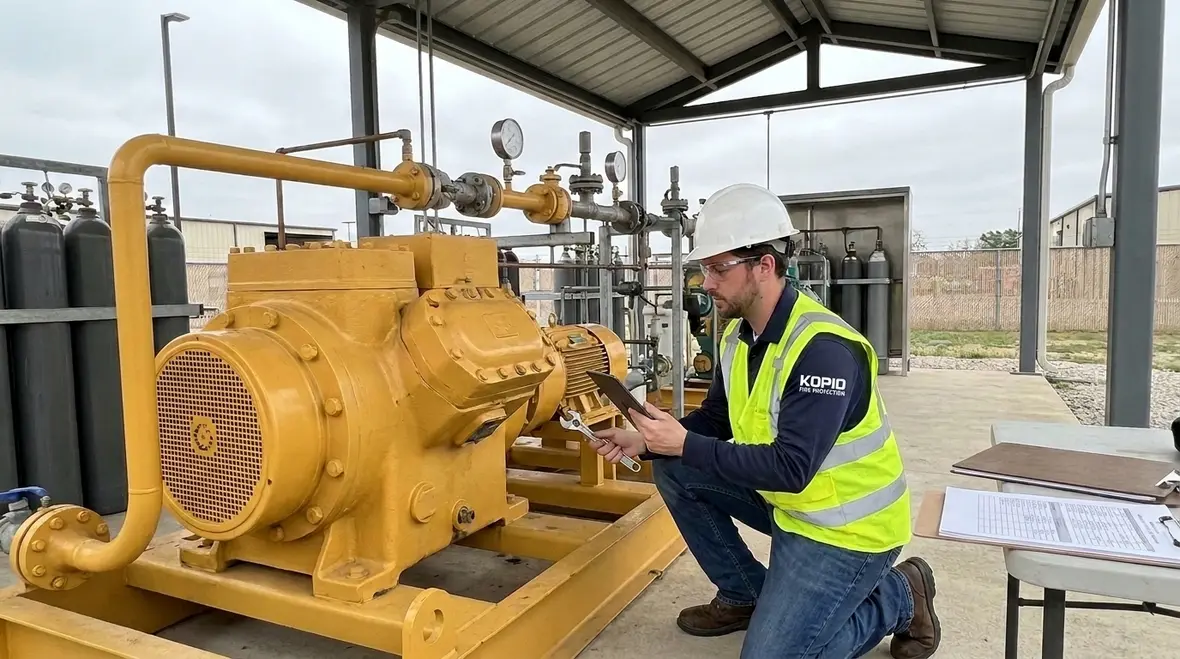
NFPA 52 Section 4.5: Operations and Maintenance Programs for CNG Facilities
Quick Answer: NFPA 52 Section 4.5 requires CNG facilities to maintain a documented operations and maintenance program that supports safe day to day control of gas hazards. The program must define responsibilities, inspection and testing intervals, corrective actions, and training to sustain compliance over time.
If your site also manages water-based fire protection infrastructure, Kord Fire Protection’s fire pump testing requirements guide is a useful companion for keeping broader life safety compliance from turning into a paperwork scavenger hunt. Different system, same reality: safe operation depends on disciplined testing, documentation, and follow-through. ([kordfire.com](https://kordfire.com/fire-pump-testing-requirements-things-to-know/?utm_source=openai))
What does NFPA 52 Section 4.5 require for a CNG site?
NFPA 52 Section 4.5 establishes the operational backbone for keeping a compressed natural gas (CNG) facility safe throughout its life cycle. For commercial owners and operators, the goal goes beyond “having procedures on paper.” The NFPA 52 CNG facility operations maintenance program must actively manage ignition hazards, leakage potential, component degradation, and emergency readiness through structured inspections, documented maintenance, and verification that corrective actions actually restore safe conditions.
Section 4.5 also connects operational controls to real-world facility conditions, such as outdoor exposure, vibration, weather, traffic impacts, and changes in demand that can alter compressor duty cycles. Facilities that treat operations and maintenance as a one time exercise often experience repeat failures in valves, regulators, relief devices, and detection systems because they lack disciplined verification and trending.
Building the NFPA 52 CNG facility operations maintenance program: roles, scope, and documentation
A compliant program starts with accountability. The NFPA 52 CNG facility operations maintenance program should identify who performs inspections, who approves maintenance releases, and who authorizes changes to operating parameters. Large retail and industrial sites often struggle when responsibilities are split across multiple vendors without a single internal standard for acceptance criteria, documentation, and closure timelines.
Program elements that need to be operational, not theoretical
- Written procedures tied to equipment lists: Pumps, compressors, storage cylinders, piping, valves, regulators, pressure relief, shutoff systems, ventilation, electrical classification controls, and gas detection.
- Defined inspection and testing intervals: Frequencies must match manufacturer requirements and the safety function of each component, including off cycle verification after maintenance.
- Corrective action process: Clear triggers for when conditions require immediate shutdown, when conditions can be managed, and how repairs get verified.
- Training and competency: Operator awareness of hazards, emergency actions, and safe work practices aligned to the actual facility configuration.
- Recordkeeping and audit trail: Work orders, calibration certificates, test results, and closure documentation that can withstand operational review.
Commercial facilities commonly fail audits when records capture “maintenance performed” but not “maintenance validated.” NFPA 52 expectations focus on ensuring the facility remains in a safe condition after interventions, including re verification of system performance.
How operations and maintenance integrate with CNG hazard control
Section 4.5 focuses on managing hazards continuously. That means the operations plan and maintenance plan must align to the facility’s safety functions, including detection, isolation, pressure control, ventilation, and emergency response. If operations monitoring identifies abnormal behavior but maintenance does not trend and correct root causes, the hazard control system becomes reactive instead of preventive.
Common failure points that the program must address
- Valve and actuator degradation: Sticking, slow response, or packing wear that reduces tight shutoff capability.
- Regulator and control instability: Drift, seat wear, and response lag that can push operating pressures toward limits.
- Relief device readiness issues: Impaired discharge paths, contamination, or components that do not meet required verification schedules.
- Gas detection problems: Calibration lapse, sensor aging, obstruction of sampling paths, or incorrect bump testing practices.
- Leakage sources in piping and fittings: Vibration and thermal cycling effects, especially at flexible connections and transition joints.
- Mechanical and electrical interface risks: Corrosion, grounding issues, and electrical equipment condition that can influence system reliability.
When these issues are not captured in the NFPA 52 CNG facility operations maintenance program, facilities often repeat the same repairs on a schedule rather than eliminating the cause.
Inspection and testing: what strong programs verify
Inspection and testing should confirm both condition and function. A robust program links each inspection activity to the hazard it prevents. For example, leak checks should include verification methods that match the system type and operating conditions, while functional tests should confirm response time and isolation capability where applicable.
Operational checks that should not be skipped
- Leak management verification: Documented methodology, pass fail criteria, and repeat checks after maintenance or component replacement.
- Detector performance checks: Calibration management, bump testing (where used per program), and replacement triggers for out of tolerance readings.
- Control system health: Alarm set points, monitoring interfaces, and confirmation that the facility responds correctly during abnormal conditions.
- Shutoff and isolation verification: Ensuring automatic and manual isolation functions operate as intended during simulated or controlled conditions, when permitted.
- Pressure control reliability: Verification of regulators and pressure limiting devices to prevent overpressure conditions.
For commercial, industrial, and retail properties, the operational challenge is maintaining consistency during peak service windows. A program that schedules tests without disrupting fueling operations often requires coordination of labor, access control, and planned downtime windows. That coordination is where experienced fire protection and gas safety service providers add measurable value.
How to handle corrective actions, change management, and trending
Section 4.5 expectations become most visible after something goes wrong. The NFPA 52 CNG facility operations maintenance program should define what triggers investigation, how repairs get prioritized, and how verification occurs before the equipment returns to service.
Corrective action workflow that auditors expect
- Document the condition: Capture the alarm event, test result, leak location, or performance deviation.
- Classify the risk: Determine whether immediate shutdown or operating restriction applies based on potential escalation.
- Contain and isolate: Secure the system to prevent continued hazard exposure.
- Root cause investigation: Look beyond the failed part to include installation factors, operating conditions, environmental impacts, and maintenance practice.
- Repair and verification: Confirm the original failure is corrected and safety functions return to required performance.
- Update records and the program: Improve intervals, procedures, or acceptance criteria when trends show recurring issues.
Facilities that trend only “failure counts” miss the bigger compliance risk: drift in calibration readings, repeated nuisance alarms, gradual isolation performance degradation, and recurring leak locations at the same fitting geometry. Trending must be tied to the hazard and the system functions defined in the program.
For a practical compliance approach, Kord Fire Protection supports CNG facility owners with documentation discipline, inspection readiness, and ongoing maintenance support to sustain safe operation. For related compliance services, see Kord Fire Protection.
FAQ: NFPA 52 Section 4.5 operations and maintenance programs
Conclusion: make your program audit ready and operationally effective
NFPA 52 Section 4.5 requires more than written procedures. A high performing NFPA 52 CNG facility operations maintenance program connects daily operations to inspection and functional verification, corrective action discipline, and staff competency. If your facility cannot quickly demonstrate testing, calibration, and closure evidence, it is time to strengthen your program. Contact Kord Fire Protection to support ongoing compliance, testing readiness, and maintenance verification for your CNG infrastructure.

Join Our Newsletter!
Get the latest fire safety tips delivered straight to your inbox From our Newsletter.


