
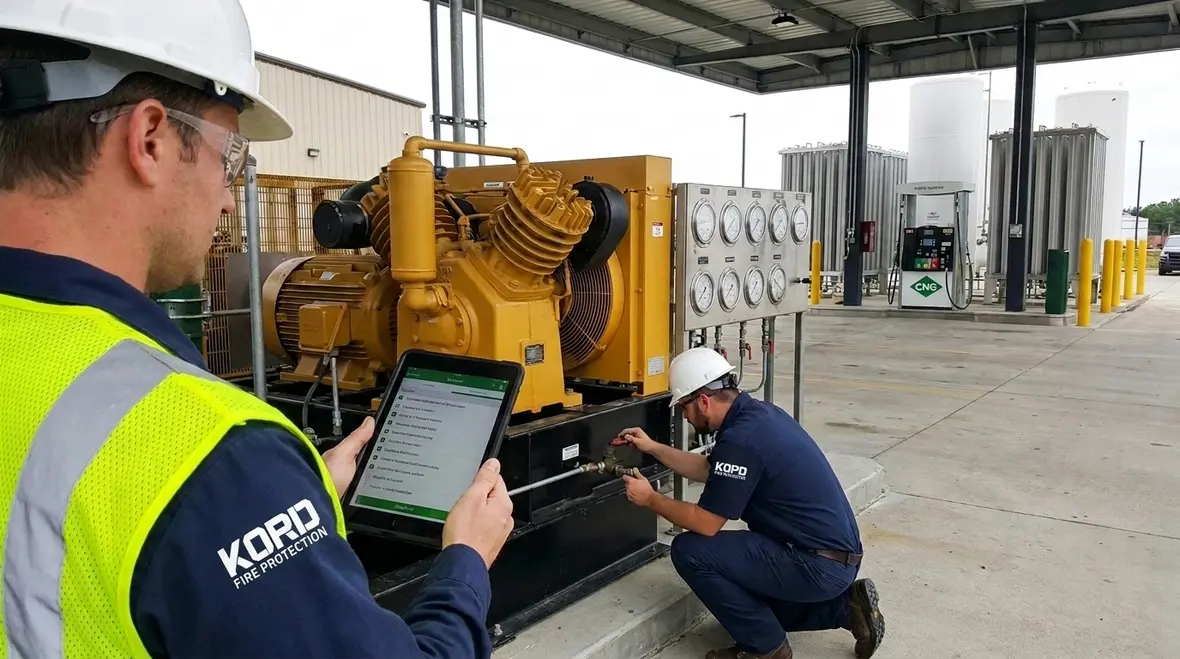
NFPA 52 Section 4.8: Validation of CNG Facility Management Programs
Quick Answer
NFPA 52 Section 4.8 requires that a CNG facility management program be validated through documented, systematic verification. Owners and operators must confirm the program’s processes effectively manage risks, training, inspections, maintenance, and change control for reliable safe operation.
Why NFPA 52 CNG facility program validation matters for real facilities
NFPA 52 CNG facility program validation is not a paperwork exercise. In commercial, industrial, and retail CNG environments, the facility’s management program determines whether hazards are identified, corrected, and prevented from recurring. Section 4.8 focuses on proving the program works in practice, especially after changes, equipment aging, or operational drift.
For facilities managing compressors, storage, dispensers, valves, regulators, controls, detection systems, and shutdown devices, a validated program provides operational certainty. It also reduces the likelihood that an inspection finds the same deficiencies repeatedly because the organization never confirmed the effectiveness of corrective actions.
If your team is reviewing adjacent compliance duties, it also helps to understand how an operations and maintenance program for CNG facilities supports the validation evidence Section 4.8 expects.
What Section 4.8 actually requires: validation as proof of effectiveness
NFPA 52 Section 4.8 centers on validation of facility management programs. Validation means the operator verifies that the processes established in the management program accomplish their intended safety objectives. This includes confirming that personnel execute procedures correctly and that preventive and corrective actions achieve lasting risk reduction.
In practical terms, validation typically involves a structured method to answer these questions:
- Are inspections completed at the required frequencies and by qualified staff?
- Do maintenance activities restore equipment to safe condition and prevent recurrence?
- Do operating procedures, safe work practices, and emergency actions perform as designed?
- Does training maintain required competency and documented proficiency?
- Are changes evaluated for safety impact and integrated into procedures promptly?
Validation should also account for the operational context. A retail dispenser environment has different failure signatures and staffing patterns than a fast response fueling station with multiple shift operators or a warehouse attached to industrial CNG storage.
Validation activities you should plan for before an inspection
To support defensible compliance, validation should be planned as an ongoing program element rather than something that starts after deficiencies appear. Strong validation documentation shows traceability from requirement to execution to measurable outcomes.
1) Management of inspections and condition-based evidence
Validation confirms that inspection programs detect deterioration early. Operators should verify that inspections cover key components and interfaces that commonly fail in the field, including:
- Fittings, connections, and hose assemblies for integrity and sealing performance
- Excess flow protection and upstream or downstream isolation behavior
- Pressure regulation response and evidence of drift or improper set points
- Control system alarms, interlocks, and shutdown triggers
- Gas detection coverage, calibration intervals, and functional test records
Validation should include a review of inspection results trends. If the same type of issue repeats, the validation process must identify why. Root cause analysis should extend beyond the immediate repair to the system that allowed the condition to persist.
2) Maintenance effectiveness and corrective action closure
Section 4.8 validation expects more than completion of work orders. The operator should confirm maintenance effectiveness by verifying that corrective actions prevent recurrence and restore safe operating parameters.
Commercial facilities often struggle with:
- Inconsistent parts replacement practices between shifts or contractors
- Calibration documentation gaps for instruments used in maintenance
- Corrective actions that do not update operating procedures, leading to repeat errors
- Insufficient verification testing after repairs or component swaps
Validation closes the loop by requiring objective evidence. For example, after regulator maintenance, validation verifies that performance returns to specified behavior. After detector service, validation confirms functional response and correct alarm set behavior.
3) Training verification and competency maintenance
Validation should confirm that training is effective, not simply delivered. For CNG sites, competency depends on understanding operating limits, hazard recognition, and correct responses to abnormal events.
Strong validation practices include:
- Demonstration or practical evaluation for critical tasks such as shutoff operations
- Retraining triggers tied to incidents, near misses, significant equipment changes, or repeated procedure errors
- Shift coverage verification so that operators on all shifts hold current competency
4) Change management and documentation control
Many facility program failures originate from changes that are not fully integrated. Validation should confirm that modifications to equipment, software, operating procedures, signage, or maintenance schedules trigger a safety impact review and updates to the management program.
Common commercial gaps include:
- Outdated procedure versions posted at stations, inconsistent with maintenance instructions
- Contractor scope changes that do not update program requirements
- Detector or control software updates without verification of alarm logic and interlocks
This is also where disciplined management of change practices fit naturally into the bigger validation picture.
How validation connects to inspections, functional testing, and common failure points
Validation strengthens the reliability of inspection and testing outcomes. It helps ensure that functional tests and maintenance procedures actually confirm safety performance under realistic conditions.
Functional testing that supports validation evidence
Validation should confirm the facility conducts and documents functional checks that correlate with system behavior. Typical validation evidence includes:
- Functional tests of shutdown sequences and interlocks
- Evidence that gas detection calibration and response testing follow established intervals and acceptance criteria
- Verification that alarm handling triggers corrective actions and appropriate operator response
- Records showing safe startup, normalization, and controlled return to service after maintenance
Where program effectiveness most often breaks down
Across commercial and industrial CNG assets, the most frequent breakdown points include:
- Recurring minor leaks or sealing failures due to incomplete detection thresholds, inconsistent torque practices, or worn components not identified during inspections
- Alarm fatigue caused by inadequate alarm management, resulting in delayed response to true abnormal events
- Inconsistent emergency response readiness, including unclear responsibilities and missing drill documentation
- Insufficient verification after repairs, where components are installed correctly but performance testing does not confirm safe behavior
These gaps commonly trigger enforcement attention when they persist across cycles. Validation provides the methodology to detect and correct systemic causes early.
Operational compliance documentation: what auditors expect to see
For defensible NFPA 52 compliance, a validated management program maintains a clear audit trail. Section 4.8 validation should show that the operator can demonstrate program effectiveness through records, reviews, and verified corrective action outcomes.
Auditor ready validation packages typically include:
- A documented management program scope and roles and responsibilities
- Inspection and maintenance records tied to equipment criticality and required frequencies
- Training records including competency verification and retraining triggers
- Functional test and calibration documentation for detection, control, and shutdown systems
- Change management evidence, including safety review approvals and procedure updates
- Corrective action documentation with root cause analysis and closure verification
To strengthen external confidence, the facility should also confirm consistency between field labeling, posted procedures, and internal documentation control. Differences between printed procedures and the actual installed configuration frequently undermine validation credibility.
For a broader readiness lens, Kord also has a useful fire protection compliance auditing guide that fits naturally with validation planning.
Need support? Kord Fire Protection helps validate and sustain program compliance
CNG facility management program validation requires disciplined execution across inspection, testing, training, maintenance, and change management. Kord Fire Protection supports commercial operators with practical compliance services designed to reduce operational risk and improve audit readiness. For teams that need repeatable results across multiple sites or contractors, Kord Fire Protection provides a structured partner approach to verification, documentation quality, and ongoing maintenance alignment.
If you want a pathway to strengthen your NFPA 52 program validation evidence, review Kord Fire Protection services.
Frequently Asked Questions
Conclusion and Call to Action
NFPA 52 Section 4.8 validation requires a method to prove your CNG facility management program works, not merely exists. Start by tightening inspection and maintenance effectiveness evidence, strengthening training competency verification, and enforcing change management with controlled documentation. If you want to improve audit readiness across commercial CNG assets, contact Kord Fire Protection to build a practical validation and maintenance approach tailored to your site operations.

Join Our Newsletter!
Get the latest fire safety tips delivered straight to your inbox From our Newsletter.


