NFPA 52 Section 8.1 Scope: CNG Facility Equipment Components
Quick Answer: NFPA 52 Section 8.1 defines what equipment components are included in the CNG facility system scope for inspection, maintenance, and compliance activities. It focuses on the mechanical and protective elements that affect safe operation, leak control, pressure handling, and emergency readiness.
For teams building broader inspection workflows, Kord Fire Protection’s commercial fire suppression services page is a useful companion resource for aligning code-compliant inspections, maintenance planning, and ongoing service support.
What does “scope” mean in NFPA 52 Section 8.1 for CNG facilities?
NFPA 52 Section 8.1 Scope sets the boundary for which CNG facility equipment components must be managed under the standard’s safety intent. In practice, this “scope” drives day to day compliance work: what gets inspected, how often it gets verified, what conditions trigger corrective action, and which failure modes matter most to commercial risk.
For operators and facility managers, the main value of the NFPA 52 CNG facility equipment components scope is operational clarity. A well implemented scope prevents compliance gaps that often show up during audits, such as missing documentation for regulators, incomplete inspection of protective devices, or inadequate inspection records for components that affect release control.
Which equipment components typically fall under the Section 8.1 scope?
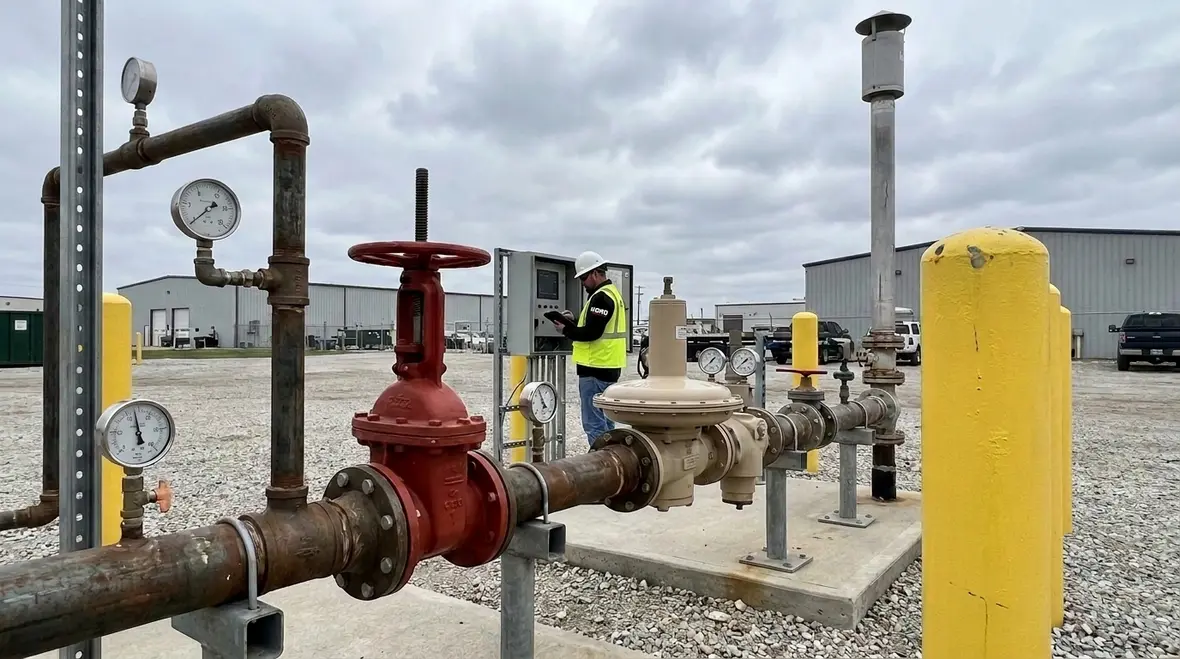
Section 8.1 focuses on components that materially influence the safe containment, control, and release behavior of compressed natural gas in a facility. While exact enumerations depend on the facility design and the edition used, the compliance workflow usually maps to a common set of equipment categories.
1) Pressure control and regulation equipment
Pressure regulation components maintain operating pressures within design limits and prevent overpressure conditions. Common compliance attention areas include regulator set points, condition of vents and vent discharge routing, and evidence of drift or malfunction.
Operationally, facilities often struggle with “soft failures,” such as regulators that cycle more frequently than design assumptions or exhibit unstable outlet pressures. These conditions can indicate contamination, moisture intrusion, worn internal parts, or incorrect installation of vent piping.
2) Isolation, shutoff, and emergency control devices
Isolation devices support safe maintenance and emergency response by stopping gas flow in defined scenarios. The inspection focus generally includes functional verification, actuator condition, and confirmation that valves can achieve the intended state under expected conditions.
Commercial sites frequently encounter issues tied to valve accessibility and signage. If valves are difficult to reach due to storage, temporary construction barriers, or inadequate marking, the equipment may technically meet code requirements but fail real world readiness.
3) Pressure relief and protective discharge pathways
Protective devices guard against overpressure. Compliance work typically addresses proper discharge routing, obstruction control, and evidence of correct installation as designed. A relief discharge pathway that cannot perform as intended becomes a downstream failure risk for personnel exposure and property impacts.
Recurring failure points include improper terminations, vegetation or debris blocking discharge, and missing protective measures at exhaust points. These issues are often detected during field verification even when documentation appears complete.
4) Piping, fittings, and leak relevant connections
Because piping systems are a dominant exposure pathway, scope work commonly includes verification of mechanical integrity and leak prone interfaces such as flanged connections, threaded joints where permitted, and transition couplings.
In commercial, industrial, and retail environments, vibration and third party work can introduce connection loosening over time. Facilities that rely only on reactive repairs often fail to detect early indicators such as minor odorization complaints, localized corrosion progression, or repeated sensor events.
5) Detection, monitoring, and alarm relevant equipment
Where installed, monitoring and detection systems help support safe response. The scope intent in this area typically emphasizes functional reliability, alarm thresholds, and verification that outputs support intended emergency actions.
Common challenges involve documentation mismatches, sensor drift not accounted for in the calibration program, and alarm notification paths that do not align with the actual emergency response process used on site.
How scope affects inspection, maintenance, and documentation in real facilities
NFPA 52 scope language has direct operational consequences. When scope is not translated into a formal compliance program, technicians and safety managers tend to prioritize “obvious” equipment while under servicing components that create conditional risk. The result is often a gap between inspection records and what auditors consider a complete scope based approach.
Turn scope into a component list with inspection triggers
Facilities should maintain a controlled inventory of CNG facility equipment components that fall within the Section 8.1 scope and align it with the site layout and operating modes. Each component category should map to inspection tasks, acceptance criteria, and corrective action thresholds.
- Define inspection intervals based on manufacturer instructions and the applicable NFPA 52 requirements for the installation type.
- Use event based triggers for abnormal operation, such as repeated regulator cycling, sensor fault status, or post maintenance re verification.
- Require evidence of functional verification, not only visual checks, for components that must perform in emergency scenarios.
Common compliance failure points that show up during audits
- Incomplete component coverage: Missing regulators, shutoff devices, or protective discharge elements in the inspection plan.
- Out of calibration evidence: Sensor calibration records that do not match the installed devices or the calibration method.
- Uncontrolled modifications: Temporary piping, repurposed discharge routing, or changed electrical interfaces without updates to the compliance documentation.
- Accessibility failures: Valves and equipment not reachable within the required response time due to facility layout changes.
Commercial compliance challenges by facility type (and what to standardize)
NFPA 52 compliance work differs based on facility operations, staff training levels, and how often contractors interact with the equipment area. The best compliance programs standardize procedures and ownership so scope coverage stays consistent even when staffing or schedules change.
Retail fueling and convenience oriented sites
Retail environments often experience frequent customer activity and contractor access. Compliance programs should emphasize barrier control, clear markings, and verification that protective devices remain unobstructed after daily operations.
Technician field work should include confirmation of discharge clearances, signage integrity, and documentation that matches the as built configuration.
Industrial and logistics facilities
Industrial sites often have heavy equipment movement, vibration, and higher rates of layout changes. Scope based compliance should include connection interface verification, corrosion monitoring routines, and a documented change management process for any work that affects CNG equipment areas.
Multi tenant and shared infrastructure sites
Shared infrastructure introduces complexity around responsibility boundaries. Facilities should clearly define which party controls inspection schedules, who owns corrective action closure, and how alarm responses are coordinated.
Without this structure, scope can become fragmented across parties and create inspection overlaps or missed components.
Why ongoing service matters: preventing scope gaps before they become incidents
Even when a facility starts with correct scope mapping, real world operations introduce drift. Equipment wear, environmental exposure, and operational changes can reduce reliability. The compliance risk increases when inspection tasks become checklist only instead of verification focused.
Kord Fire Protection supports commercial CNG facility operators by providing ongoing inspection, maintenance coordination, and documentation support that helps keep the NFPA 52 CNG facility equipment components scope aligned with installed conditions. For teams managing compliance across multiple locations, this reduces the administrative burden and supports consistent field execution.
To strengthen your compliance workflow, review Kord Fire Protection’s related guidance on commercial fire suppression integration with smart automation and use it to align inspection, testing, and maintenance resources with your operational needs.
Frequently Asked Questions (NFPA 52 Section 8.1 scope)
Conclusion and call to action
NFPA 52 Section 8.1 scope is the foundation for safe CNG facility compliance because it defines which equipment components must be included in inspection and maintenance planning. To protect uptime and reduce audit risk, operators should translate scope into a controlled component inventory, verified inspection tasks, and documented corrective action closure. Kord Fire Protection can help commercial teams maintain consistent scope coverage and field reliability. Contact Kord Fire Protection to review your current compliance program and strengthen ongoing inspection readiness.

Join Our Newsletter!
Get the latest fire safety tips delivered straight to your inbox From our Newsletter.