
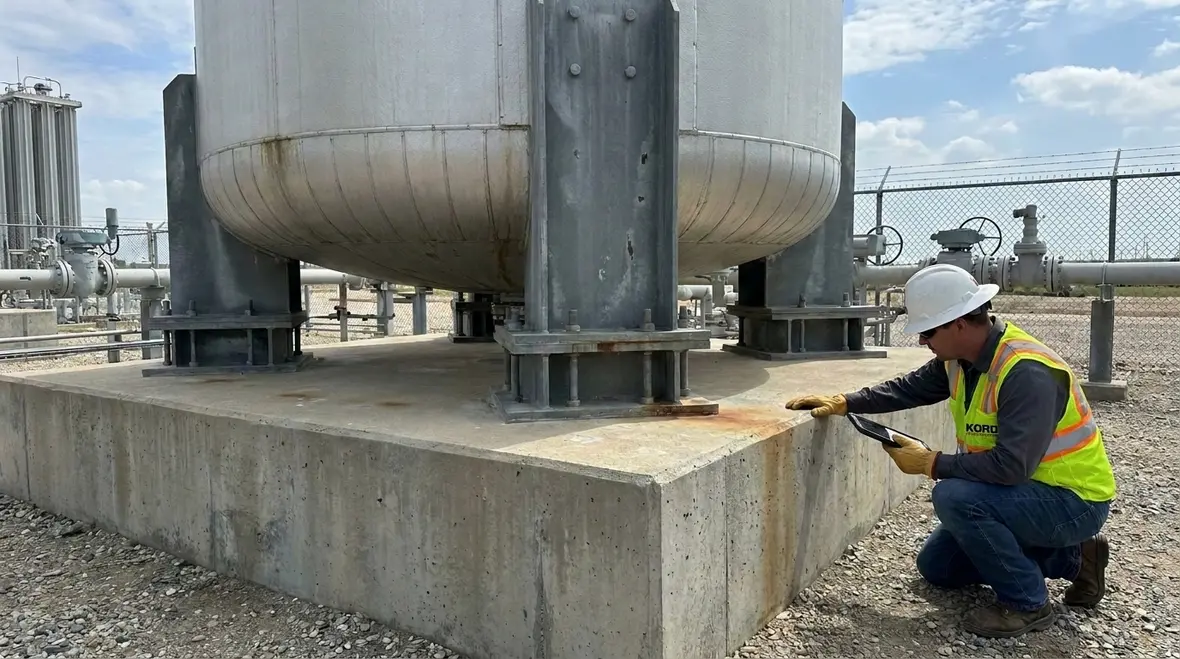
NFPA 52 Section 21.4: Foundations and Supports for LNG Containers
Quick Answer
NFPA 52 Section 21.4 sets performance focused requirements for LNG container foundations and supports to prevent unsafe movement, excessive stress, and loss of structural integrity. Compliance centers on proper design loads, stable placement, material compatibility, and ongoing inspection and maintenance.
For facilities building a broader compliance program, Kord Fire Protection’s fire protection services can help tie inspection planning, documentation, and ongoing maintenance support together.
Why NFPA 52 LNG container foundation support requirements matter on real sites
Commercial energy and industrial facilities often treat foundations as a civil scope item, but LNG containers behave like precision pressure and cryogenic systems. Any unacceptable differential settlement, vibration fatigue, or support degradation can create stress concentrations, misalignment, and localized failures that are difficult to detect during routine walk downs. That is why NFPA 52 LNG container foundation support requirements focus on both design adequacy and continuing condition.
In practice, facility teams must coordinate with engineering, contractors, and maintenance staff to ensure the foundation supports the container exactly as intended, including how the support system tolerates thermal contraction, wind and seismic loads, and operational movement. These obligations do not end at commissioning. They continue through inspection, testing, and maintenance activities.
What Section 21.4 typically requires for LNG container supports
NFPA 52 Section 21.4 addresses the foundation and support system beneath LNG containers. While project specific engineering is required, common compliance themes appear across deployments. The foundation and supports must:
- Maintain stable placement under normal operating conditions and credible external forces, including wind and seismic loading where applicable.
- Limit container movement to avoid harmful stresses at attachments, piping interfaces, and internal components.
- Support design loads as specified by the LNG container manufacturer and the registered design professional.
- Provide durable materials and detailing compatible with cryogenic service, moisture exposure, and any insulation or weather protection systems used.
- Prevent progressive deterioration such as corrosion, cracking, spalling, or loss of bearing capacity.
Facility teams often encounter the same operational reality: the foundation support system must perform reliably during commissioning transitions. This includes the period when the container cools down, insulation settles, and structural components experience thermal effects. If the foundation design or detailing does not account for that behavior, the risk of misalignment and stress buildup increases.
How supports are engineered to handle cryogenic conditions and operational loads
Supports under LNG containers do more than keep equipment upright. They manage load paths and movement mechanisms that interact with cryogenic contraction and thermal gradients.
Thermal effects and differential movement
LNG container components can contract as temperatures drop. If the foundation and support system restricts movement improperly, or if settlement occurs non uniformly, bending stresses can develop. These stresses can show up first at connection points, anchor interfaces, and areas where piping or instrumentation penetrates the container system.
Load combinations and stability
Even when daily operations feel steady, the support system must handle credible load combinations. Typical sources include:
- Wind and localized uplift loads on the container and appurtenances.
- Seismic forces and dynamic response of the support structure.
- Operational loading during normal filling, transfer, and pressure management cycles.
- Maintenance induced loads from temporary access, lifting, and replacement activities.
From a compliance standpoint, the critical task is not only that supports can withstand loads on paper, but that the as built foundation matches the engineering assumptions. Facility teams should verify that construction tolerances, anchor layouts, and bearing surfaces align with design requirements.
Common failure points that lead to noncompliance
Inspection findings often cluster into predictable categories. Identifying these early reduces downtime and minimizes the need for major foundation remediation.
Settlement, cracking, and loss of bearing
Differential settlement is one of the most common root causes. It may show as concrete cracking, tilting, or gaps at bearing points. Once settlement progresses, anchor loads can redistribute in ways that were not intended. That can increase stress at penetrations and compromise alignment.
Corrosion and moisture migration
Foundation support components can corrode due to water intrusion, poor drainage, or damaged coatings. Corrosion can thin steel elements, degrade concrete reinforcement, and create attachment looseness. In LNG installations, moisture management needs to remain effective year round because operational cycles and weather exposure continue.
Insulation and weather protection deterioration
Insulation systems and weather barriers protect cold surfaces and help control condensation and ice formation. If insulation becomes displaced or water traps behind barriers, it can accelerate deterioration and conceal early signs of support distress.
Improper installation or undocumented changes
Field changes that alter anchor patterns, shimming thickness, bearing materials, or support geometry can create compliance gaps. Even small deviations can matter when the system must tolerate thermal behavior without harmful stress buildup.
Inspection, maintenance, and documentation for ongoing compliance
NFPA 52 Section 21.4 compliance is best managed as a lifecycle program. A defensible approach includes defined inspection triggers, clear acceptance criteria, and documentation that ties inspections back to the as built configuration.
What to inspect and why
- Foundation condition: look for cracks, spalling, settlement indicators, and loss of grade support.
- Anchors and bearing interfaces: verify tightness, deformation, and evidence of gap formation or movement.
- Steel support components: check for corrosion, coating failure, and mechanical distortion.
- Drainage and moisture control: confirm drainage paths remain open and do not allow water to accumulate around support elements.
- Insulation and protective cladding: identify displacement, water intrusion, and damage that could mask support degradation.
How to document to support audits and incident prevention
Facilities should maintain an inspection record that includes the inspection date, observed conditions, photos when available, corrective actions taken, and the basis for acceptance. Strong documentation also tracks whether repairs changed the support arrangement. If modifications occur, the facility should coordinate updates to drawings, maintenance procedures, and any relevant commissioning records.
For many commercial operators, structured third party support improves consistency. Kord Fire Protection provides ongoing compliance services that help facilities stay aligned with LNG safety expectations through disciplined inspection planning, maintenance coordination, and practical reporting. For a broader compliance approach across fire and life safety systems, facility teams can also review Kord Fire Protection services.
Commercial compliance challenges you should plan for
In retail, industrial parks, and multi tenant commercial settings, LNG container sites often operate under tight scheduling constraints. The foundation support program must work around operations while still ensuring the support system remains in safe condition.
- Access constraints: cover removal and inspection may require coordinated lockout and safety permitting.
- Turnaround windows: major maintenance and inspection work must align with operational schedules and regulatory downtime expectations.
- Weather and corrosion environment: seasonal moisture and freeze thaw cycles can worsen foundation degradation, increasing inspection value.
- Contractor turnover: documentation continuity matters when different crews handle repairs, insulation replacement, or lifting operations.
By planning inspection tasks early and pairing them with documented acceptance criteria, commercial facilities can reduce the likelihood of last minute stop work events and costly rework.
Frequently Asked Questions
Call to action
Do not treat LNG container foundations as a one time civil deliverable. Build an inspection and maintenance plan that verifies stable support condition, moisture control, and as built alignment against NFPA 52 Section 21.4 expectations. Engage Kord Fire Protection for disciplined compliance support and practical documentation so your LNG site remains audit ready, operationally reliable, and safer year round.

Join Our Newsletter!
Get the latest fire safety tips delivered straight to your inbox From our Newsletter.


