
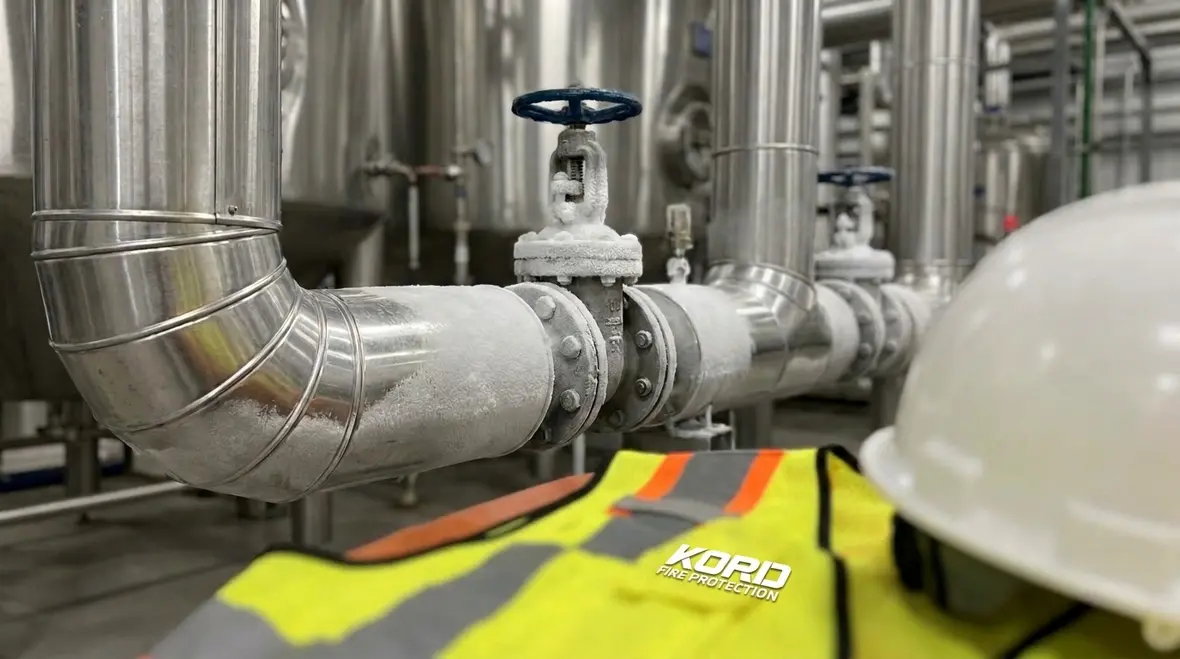
NFPA 52 Section 20.5: LNG Piping Systems and Components
Quick Answer: NFPA 52 Section 20.5 establishes performance and installation expectations for LNG piping systems and components, covering material suitability, joining practices, identification, support, protection, and inspection readiness. Compliance centers on preventing leaks, managing cryogenic stress, and maintaining integrity throughout service life.
Why Section 20.5 matters for commercial LNG piping integrity
Commercial facilities that handle liquefied natural gas depend on piping systems that remain reliable in cryogenic temperatures, resist thermal cycling, and manage pressure and mechanical loads. NFPA 52 LNG piping system component requirements translate into practical controls: correct component selection, verified joining and pressure boundary integrity, proper support and isolation, and documentation that enables timely inspection and maintenance.
For operators in industrial, commercial, and retail-adjacent settings, the most common compliance gaps do not come from a lack of written procedures. They come from field substitutions, undocumented modifications, inadequate corrosion and impact protection, and inspection activities that do not align with how components fail in service.
Teams tightening documentation and recurring verification can also review this fire protection compliance auditing guide by Kord for a broader readiness framework that fits naturally with LNG piping oversight.
What Section 20.5 covers: components, construction intent, and system reliability
Section 20.5 focuses on LNG piping systems and components as an engineered pressure boundary and as a cryogenic service network. The intent is to ensure that every component category you install can safely perform under LNG operating conditions, including the consequences of mechanical stress, vibration, thermal contraction, and potential release scenarios.
Component categories operators typically must control
Although projects differ by system design, Section 20.5 expectations commonly drive strict controls for:
- Cryogenic piping and tubing materials capable of withstanding low temperatures without embrittlement.
- Valves and fittings rated for LNG service, including pressure and temperature compatibility.
- Flanges, gaskets, and seals selected to maintain leak-tight performance as temperatures cycle.
- Joints and connections that preserve pressure boundary integrity under thermal movement.
- Supports, anchors, and hangers engineered to prevent over-stressing pipe walls.
- Identification and protection features that support inspection, maintenance, and emergency readiness.
From an auditing standpoint, compliance teams look for traceability. Operators should be able to show that installed parts match the approved design and that those parts were sourced, installed, and documented in a way that supports inspection and long-term reliability.
How NFPA 52 LNG piping system component requirements affect installation and joining practices
Most piping failures in LNG service start as preventable integrity problems. The prevention starts at installation and continues through pressure testing, joint verification, and documentation. NFPA 52 LNG piping system component requirements emphasize the pressure boundary as the foundation for safety.
Joining and connection controls that reduce real-world failure points
Joining methods and connection practices require consistency with cryogenic service intent. Common failure mechanisms in the field include poor fit-up, improper joint preparation, thermal stress concentrating at connection points, and seal performance degradation due to installation errors.
- Control workmanship quality: Ensure joint preparation, alignment, and installation sequence prevent unwanted stress and distortion.
- Protect gasket and seal performance: Confirm that gaskets and sealing materials are rated for the temperature range and installation conditions.
- Verify connection integrity: Use testing and inspection methods appropriate for LNG service, not generic process assumptions.
- Maintain documentation: Record materials, heat numbers, weld or joint identification, and test results so future inspections can be targeted.
Commercial operations also face a practical problem: contractors may replace a component due to availability. Section 20.5 compliance depends on whether the substitution maintains material and performance equivalence. Any gap in equivalency review typically becomes a compliance or safety issue long before it becomes a leak problem.
Support and anchoring: preventing hidden cryogenic stress
LNG piping systems contract during cool-down and expand during heat-up. Supports and anchors must allow predictable movement while preventing pipe stress from exceeding allowable limits. Inadequate support spacing, incorrect hanger selection, or missing anchors can cause fatigue cracking or deformation at joints.
In commercial facility environments, this failure risk increases when mechanical modifications occur without updating support calculations. Operators should treat support verification as part of normal change management, not as a one-time acceptance task.
Inspection, testing, and maintenance: aligning documentation with how components age
NFPA 52 compliance is not limited to the initial installation. Section 20.5 expects a system that remains inspectable, maintainable, and capable of safe performance over time. For LNG piping, the aging process can include seal degradation, corrosion under insulation, protective coating breakdown, and mechanical wear at interfaces.
Operational inspection focus areas
Effective inspection programs prioritize component interfaces where leaks most often originate and where cryogenic damage accumulates.
- Valve and actuator areas: Check packing, seals, and functional operation, especially after thermal cycling events.
- Flange and gasket joints: Verify integrity and evidence of leakage, as gasket compression can change with temperature cycles.
- Supports and insulation transitions: Look for signs of movement, water ingress, coating failure, or insulation compromise.
- Corrosion and protective barriers: Confirm that coatings and barriers remain intact and that drains and protections are functional.
To streamline compliance, operators should keep a component register that ties every critical fitting and valve to its installation record, test history, and maintenance activities. This enables faster incident response and less downtime during scheduled service.
Maintenance planning for cryogenic systems
Maintenance must account for the fact that LNG piping operates outside typical ambient conditions. Many “standard” maintenance actions can introduce new risk if they disrupt alignment, compromise insulation, or bypass documented repair procedures.
Kord Fire Protection supports commercial clients with inspection and ongoing compliance support designed for LNG and other life safety and fire protection systems. For teams building an integrated inspection and maintenance schedule, Kord can help align field activities with regulatory expectations and operational reliability needs. To explore related fire protection services and compliance support, review: Kord Fire Protection.
Common compliance challenges in commercial and industrial settings
Even when the design is correct, real-world execution can drift out of compliance. Commercial LNG facilities face recurring challenges that directly impact NFPA 52 LNG piping system component requirements.
1) Component substitutions without equivalency validation
Substitutions can change pressure rating, temperature range, gasket material compatibility, or sealing geometry. Compliance teams should require documented equivalency review before installation and should reconcile as-built records afterward.
2) Incomplete installation and pressure test documentation
When a facility cannot produce joint identification, test results, and component traceability, inspections become less effective and may trigger costly rework.
3) Hidden damage at insulation and support interfaces
Corrosion under insulation, insulation moisture intrusion, and mechanical wear can remain unseen until a planned access window. That is why condition-based triggers should be supported by inspection plans, not assumptions.
4) Change management gaps
Schedule pressures can cause modifications to proceed without updating support design, documentation, or inspection criteria. Facilities should require engineering review for any change that affects alignment, stress, or pressure boundary components.
How to build a defensible compliance program for Section 20.5
A defensible program links design intent to field execution and ongoing verification. Facilities that do this well treat compliance as a lifecycle activity with clear responsibilities.
Recommended compliance controls
- Establish a component register: List critical piping components, valves, fittings, and join types with material and rating information.
- Lock installation specifications: Require that field replacements match approved equivalency criteria and that documentation is updated immediately.
- Standardize inspection triggers: Align inspection frequency and methods with cryogenic aging mechanisms, not generic timelines.
- Verify support and movement assumptions: Confirm supports remain correct after maintenance or modifications.
- Maintain test records and inspection history: Make it easy to demonstrate that pressure boundary integrity was verified and remains controlled.
For many commercial operators, the fastest path to readiness is to pair internal compliance oversight with an experienced service partner. Kord Fire Protection helps organizations maintain compliance through structured inspection support, documentation discipline, and practical coordination for ongoing life safety readiness. See Kord Fire Protection for additional resources and service details.
Frequently Asked Questions
Call to action
Review your LNG piping system documentation, component traceability, and inspection program against NFPA 52 Section 20.5 expectations. If your facility cannot quickly verify materials, joining records, support conditions, and test history, schedule a compliance readiness assessment. Kord Fire Protection can support your ongoing maintenance and inspection workflow so your team stays aligned, audit-ready, and focused on real-world leak prevention.

Join Our Newsletter!
Get the latest fire safety tips delivered straight to your inbox From our Newsletter.


