Fire Protection Compliance Auditing Guide by Kord
When a building team needs real assurance, Fire protection compliance auditing becomes the calm, steady checklist that keeps everyone out of trouble. In this guide, Kord Fire Protection technicians explain what auditors look for, how they verify life safety systems, and how they turn messy documentation into clear next steps. The goal is simple: confirm the protection plan works, document the evidence, and fix gaps before they grow legs and walk into an incident report. And yes, those problems rarely show up politely during office hours like villains in a movie. They show up whenever nobody is ready.
A good audit does more than satisfy a checklist. It gives owners, facility managers, and compliance teams a reliable picture of what is happening across alarms, sprinklers, extinguishers, doors, controls, records, and maintenance habits. It also creates breathing room. Instead of scrambling before an inspection or after a complaint, the team gets a cleaner path to action. That matters because fire protection issues have a charming habit of appearing at the least convenient moment, usually right when budgets, schedules, and patience are all running on fumes.
Why fire compliance audits matter for owners and facilities
A fire protection compliance audit protects people, property, and budgets. It also protects the team from vague assumptions like “we think the system was tested.” Auditors verify that fire alarms, sprinklers, extinguishers, and related controls match the applicable rules and the actual building conditions. That means the review is not only about what should exist on paper. It is about whether the systems in the building actually line up with those expectations when real eyes and real hands check them.
Just as importantly, an audit creates a record. Regulators, insurers, property stakeholders, and internal risk teams often want proof that inspections happened, deficiencies were noted, and corrections were completed. A solid audit process reduces uncertainty and helps speed up approvals when questions appear. It also gives leadership a practical way to justify repairs and planning decisions. Kord Fire Protection technicians often note that the audit is not a punishment. It is a structured way to find weak spots early, when fixes are cheaper, scheduling is easier, and nobody is standing in a hallway saying, “How did this become my problem?”
Audits turn assumptions into evidence
Facilities run on routines, and routines can hide blind spots. A monthly glance at a panel is not the same as documented testing. A service call is not the same as full closure on a deficiency. Compliance auditing slows the process down just enough to ask the useful questions. What was required, what was done, what evidence supports it, and what still needs attention? That is where clarity shows up, and clarity is a lot cheaper than guessing wrong.
Scope of Fire protection compliance auditing starts with the building and code set
Fire safety does not work well with one size fits all. Auditors begin by confirming the building type, occupancy, and current fire protection systems. Next, they match the requirements to the correct standard set and local enforcement expectations. Depending on jurisdiction and project history, the rules may reference life safety codes, local amendments, fire marshal requirements, and adopted inspection schedules. If the scope is wrong at the beginning, the rest of the audit becomes a very organized way to look in the wrong direction.
Kord Fire Protection technicians explain scope in plain terms. They define what systems fall under the review, what documentation counts as evidence, and what inspection intervals apply. Then, they map the audit plan to floor layouts, system drawings, and maintenance logs. That way, the audit does not wander like a confused tourist. It moves with purpose. This is also the point where teams can identify whether the building would benefit from stronger record discipline, updated diagrams, or outside support for alarm inspections and testing.
For teams that need a stronger baseline for alarm documentation and recurring verification, Kord Fire Protection also covers fire alarm inspection and testing for commercial buildings. That resource pairs well with auditing because it helps define how consistent inspection records support a smoother compliance review.
What belongs inside the audit boundary
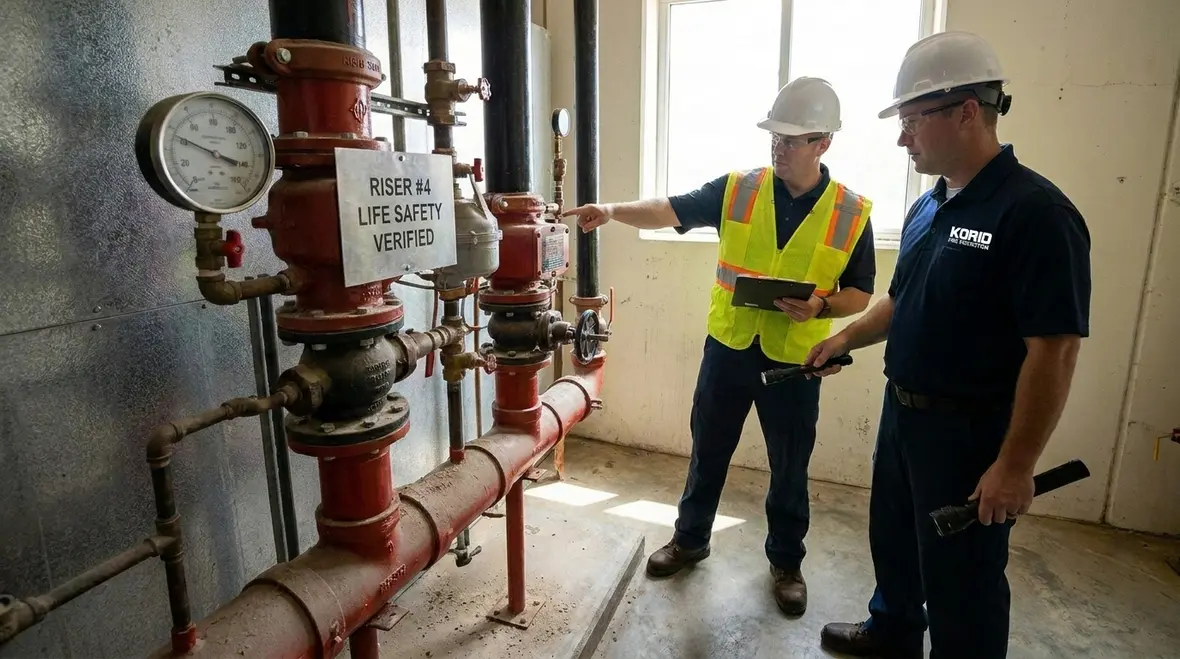
A well-defined scope usually includes detection, notification, suppression, portable extinguishers, supporting controls, and any records that prove inspection, testing, and maintenance activity. It may also include related interfaces such as monitoring, supervisory conditions, door function, emergency power, and access concerns. If a system can affect life safety performance or compliance proof, it should not be treated like an afterthought buried at the bottom of a binder.
What auditors check during onsite verification
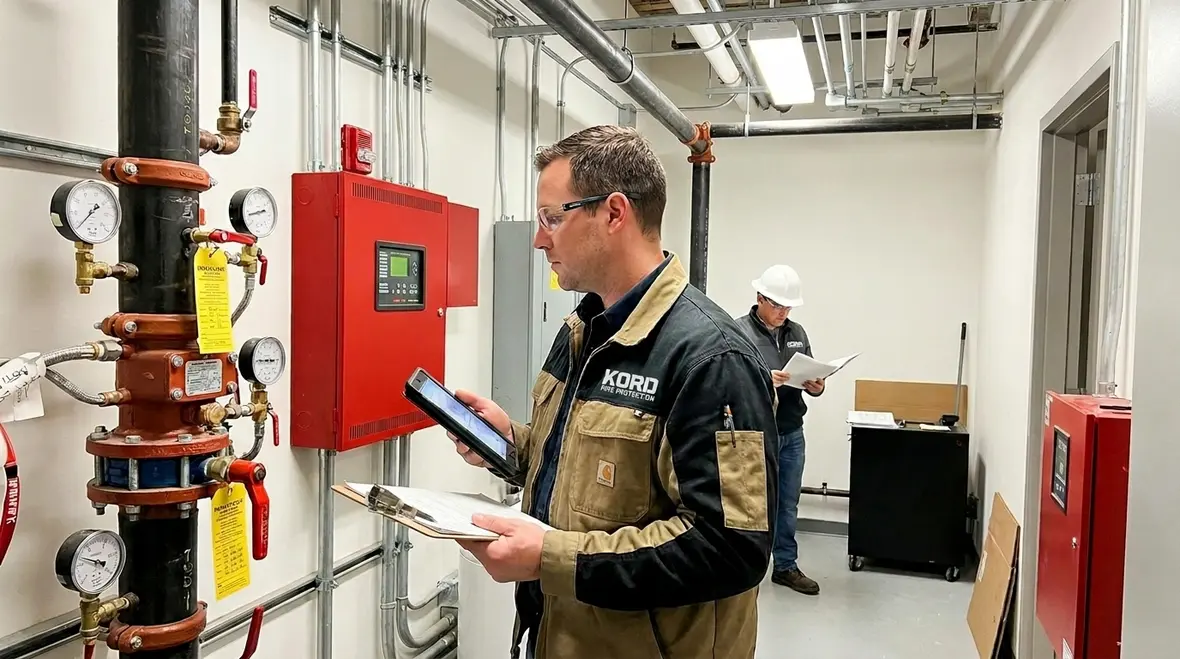
After documentation review, the onsite portion tests whether the system looks correct and behaves correctly. Auditors typically focus on fire alarm device condition and labeling, including panels, detectors, pull stations, and notification appliances. They review sprinkler system details such as valve supervision, water supply indicators, and visual readiness. They inspect fire extinguishers for placement, access clearances, and inspection tags. They also check fire doors and related hardware when required, emergency power and control interfaces when applicable, and housekeeping issues that block access or hide devices behind storage that should have been moved about three inventory cycles ago.
In addition, auditors cross-check what the plans say with what the building shows. Therefore, even if records look neat, mismatched device types, outdated diagrams, missing labels, inaccessible components, or absent parts can become findings. Kord Fire Protection technicians emphasize that “close enough” does not work here. Fire systems live in the real world, not in a binder. If a detector is the wrong type, a valve is not properly supervised, or a panel record does not match the field condition, the audit has done its job by catching it before an emergency does.
Field conditions matter more than tidy assumptions
Some of the most frustrating findings are simple ones: blocked pull stations, painted sprinklers, unreadable tags, extension cords living where they should not, or storage piled too close to equipment. None of these issues are glamorous, but they tell auditors a lot about maintenance discipline. When field conditions drift, compliance drifts with them. The audit brings both back into the same room.
How documentation review reduces surprises later
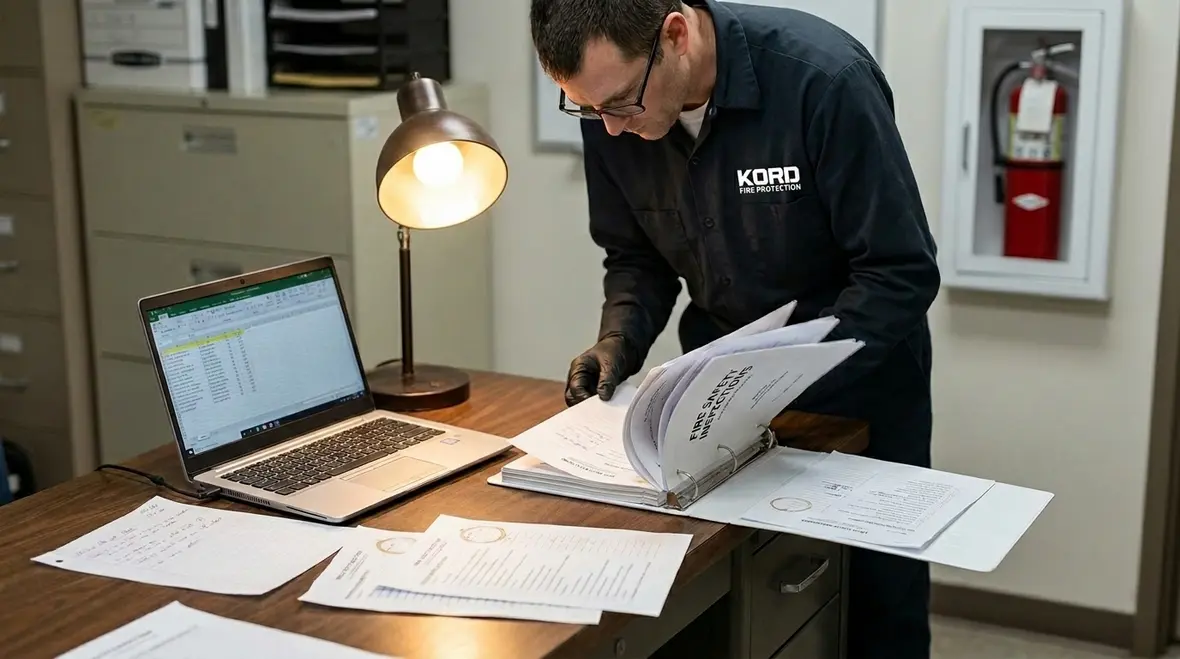
Most problems start on paper, then multiply in the field. To prevent that, Fire protection compliance auditing includes careful review of inspection and maintenance records, testing reports, and corrective action history. Auditors examine inspection dates and intervals, test results, acceptance documentation, work orders, proof of repairs, as-built updates, contractor records, and closeout notes. Next, they look for patterns. Repeated trouble codes, recurring supervisory issues, or maintenance items that never seem to fully close can point to a deeper reliability problem.
Meanwhile, missing signature trails, vague descriptions, or notes that read like they were written during a moving vehicle create doubt. Kord Fire Protection technicians often say documentation should read like a story with a beginning, middle, and end. If the story ends mid-sentence, the audit will flag it. That is one reason their article on fire safety system documentation for compliance is so useful for teams trying to tighten records before a formal review. Better documentation means fewer surprises, faster decisions, and much less detective work under pressure.
Why recurring paperwork gaps become recurring audit findings
When records are scattered across emails, old binders, vendor portals, and somebody’s desktop folder called “final final use this one,” audit readiness drops fast. A centralized documentation process helps teams prove not only that service happened, but that it happened on time, was reviewed properly, and led to the necessary updates in the field. Audits reward consistency. Chaos, sadly, never submits clean paperwork.
Common findings and how teams fix them without drama
Every audit can find issues, but the best outcomes happen when findings lead to targeted corrections. Typical findings include expired extinguisher tags, obstructed access, gaps in inspection intervals, missing labeling, outdated drawings, or a system component that never received proper service after a prior repair. None of these are rare. What matters is how the team responds once the issue is clear.
To handle findings well, teams should do three things quickly. First, categorize items by risk and impact on life safety. Second, assign owners and deadlines so nothing “waits for next quarter” like an unpaid bill. Third, verify closure with evidence, not vibes. Kord Fire Protection technicians often recommend a corrective action worksheet that links each finding to a specific repair, a verification method, and a document update. That process keeps repairs from disappearing into vague promises and calendar fog.
Teams should also review root cause. If a certain device type fails repeatedly, if one area keeps producing access problems, or if tags and reports keep missing the same details, the building may need a stronger maintenance strategy rather than another round of temporary patchwork. In other words, the goal is not just to close the audit. The goal is to prevent the next one from finding the same problem in a slightly different costume.
Manage the audit process with clear reporting and follow up
A solid audit ends with clear reporting. Auditors should provide findings, supporting evidence, and recommended actions. Ideally, the report shows severity levels and includes details that the maintenance team can execute without guessing. Then leadership can prioritize work based on risk, budget, and available downtime. If the report is too vague, the team loses time translating it into action, and vague reports have a way of aging badly on shelves.
After corrections begin, teams should schedule verification. This step confirms the repairs meet the requirement and that documentation reflects reality. Follow-up reduces repeat findings and helps the facility track improvement over time. Kord Fire Protection technicians routinely stress that reporting should be usable. If the report cannot guide the fix, it does not earn its place on the shelf. Facilities looking for broader support across inspections, service, and readiness can also review Kord’s full fire protection services near the end of planning to turn audit results into actual field work, not just another meeting agenda.
One more thing: audit timing matters. Conducting routine reviews ahead of major inspections, tenant turnover, renovations, or occupancy changes helps prevent the last-minute scramble. Fire safety does not wait, and neither should the planning. A scheduled audit is almost always less painful than an urgent explanation after someone else finds the problem first.
FAQ: Fire protection compliance auditing
Conclusion: Start your compliance audit before the next incident waits
A clear Fire protection compliance auditing plan helps a facility protect people, stay ready for inspections, and control costs. When Kord Fire Protection technicians lead the review, teams get real evidence, practical findings, and a path to closure that maintenance can actually complete. That is the difference between a document that looks official and a process that actually improves readiness. Good auditing creates confidence because it shows what works, what does not, and what needs attention next.
Do not treat this like a once-a-year checkbox. Reach out to Kord Fire Protection to schedule an audit, align scope with your building needs, and fix gaps while they are still easy to solve. If you are ready to move from findings to action, explore Kord’s full fire protection services and take the next step with a team built for compliance, service, and steady follow-through. Because the only thing that should surprise you is how fast the audit report becomes a working tool.

Join Our Newsletter!
Get the latest fire safety tips delivered straight to your inbox From our Newsletter.