
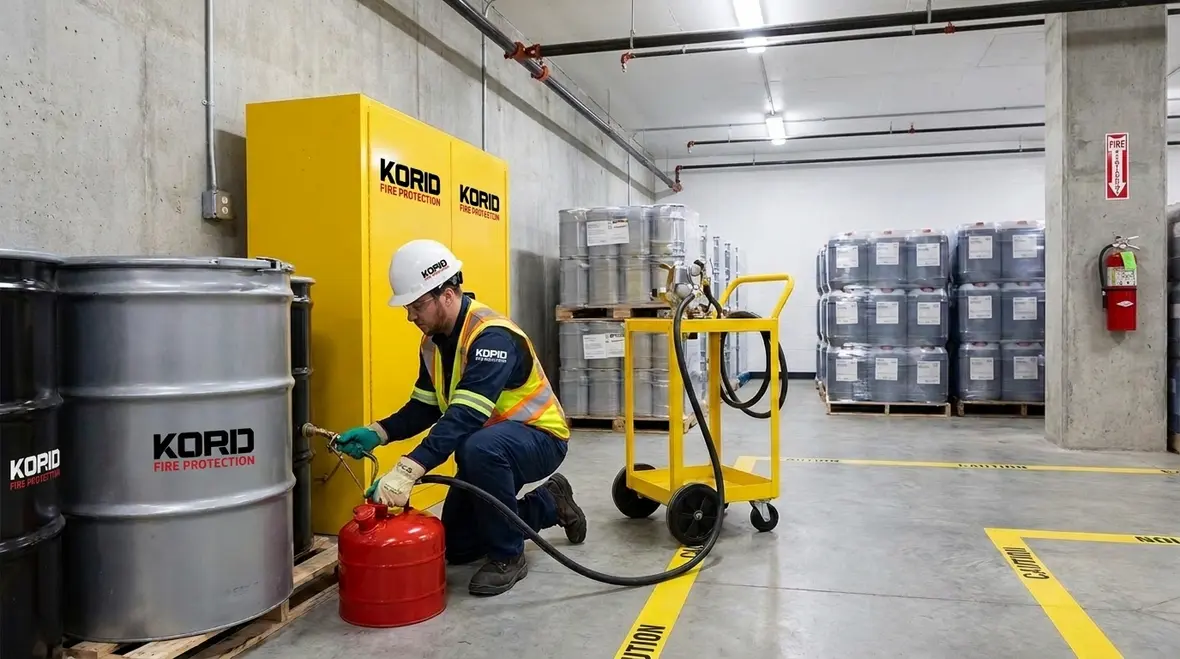
NFPA 33 Section 8.1 General: Ignitible Liquid Storage and Distribution
Quick Answer: NFPA 33 Section 8.1 establishes baseline requirements for managing ignitible liquids during storage and distribution. It focuses on controlling ignition sources, container integrity, safe transfer practices, and maintaining compliant systems so facilities reduce fire and explosion risk throughout routine operations and maintenance.
Facilities looking to strengthen related protection strategies can also explore engineered fire protection systems to better align hazard controls, documentation, and real world system performance.
What the NFPA 33 ignitible liquid storage handling scope covers
The NFPA 33 ignitible liquid storage handling scope under Section 8.1 frames general safety expectations for commercial, industrial, and retail operations that store or distribute ignitible liquids. It sets the compliance foundation before more specific requirements apply to containers, piping systems, transfer areas, and related control measures. For facilities, this means operational discipline, documented procedures, and ongoing inspection and maintenance of key protective features.
Section 8.1 intent: Why general requirements matter in the real world
NFPA 33 Section 8.1 focuses on preventing ignitable liquid incidents by managing the conditions that enable ignition and escalation. In practice, the “general” nature of the section still demands tangible controls across the full life cycle of storage and distribution, including design intent, daily operations, abnormal condition response, and maintenance activities. Common compliance failures typically occur when written procedures do not match how equipment is actually used, or when protective features degrade but remain unreported and uncorrected.
For example, a facility may technically have approved containers, but still experience increased risk if spill control, ventilation, bonding and grounding verification, or transfer area housekeeping do not meet NFPA 33 expectations. Section 8.1 serves as the baseline for aligning operational practices with fire prevention and protection outcomes.
Key compliance expectations: storage, containers, and distribution controls
1) Control of ignition potential across storage and transfer areas
Section 8.1 expectations typically require that ignitable liquid operations minimize ignition sources in areas where vapor hazards may exist. Commercial sites often face increased risk during distribution activities because connections, hoses, pumps, and fittings introduce leakage and vapor release opportunities.
Practical facility controls include:
- Managing electrical and mechanical ignition risks in hazardous locations and within operational boundaries.
- Limiting open flames and non rated equipment near transfer points.
- Maintaining safe work practices during hose connection and disconnection.
- Ensuring warning signage and access control remain visible and enforced.
2) Container integrity and safe placement for routine operations
Ignitible liquid storage relies on containers that remain closed, sound, and properly selected for the liquid handled. Operational drift is common when teams replace damaged components with “equivalent” parts that do not meet the original compatibility or retention intent.
Facilities reduce risk by enforcing:
- Clear labeling and segregation by liquid type and hazard characteristics.
- Secure placement that limits impact damage and prevents unauthorized movement.
- Routine checks for container deformation, corrosion, lid seal failure, and valve malfunction.
- Procedures for promptly addressing leaks and switching equipment out of service.
3) Safe distribution practices that prevent vapor release
Distribution activities are where small deviations often create major consequences. Section 8.1 general requirements support safe transfer practices that control release pathways, reduce static ignition potential, and maintain the integrity of transfer systems.
Operational details that typically require strict enforcement include:
- Bonding and grounding verification before transfers where static electricity risk exists.
- Approved hoses and couplings designed for the liquid and pressure conditions.
- Proper loading and unloading techniques that minimize splash and uncontrolled venting.
- Documented steps for spill response, isolation, and equipment reset.
Common failure points during inspections and internal audits
Even well managed facilities can fall out of compliance if maintenance and operational discipline do not keep pace with real usage. The most frequent failure points that drive findings during safety surveys and insurance inspections include these categories.
Hose and connection problems
Wear, cracking, degraded gaskets, and mismatched fittings create leakage points and vapor migration. A frequent pattern is the delayed replacement of components after minor seepage becomes a “normal inconvenience.” Section 8.1 expectations push facilities to treat leakage risk as a safety defect, not a maintenance preference.
Bonding, grounding, and continuity gaps
Facilities that rely on periodic checks rather than workflow based verification often experience missed bonds during equipment changes or temporary setups. Disconnection after testing, damaged clamps, corrosion at contact points, and missing continuity checks can defeat the protective purpose.
Housekeeping and spill control breakdowns
Flammable vapors can be generated from small residues if spills are not controlled. Section 8.1 general requirements align with maintaining clean, controlled transfer zones, promptly addressing residue, and ensuring spill response equipment remains accessible and functional.
Documentation and training drift
Commercial and retail operations often rotate staff across tasks, and written procedures can become outdated. NFPA 33 compliance depends on workers understanding the “how” of safe storage and distribution, not only the “what” in a binder. Training effectiveness declines when procedures are not reinforced during operational changes, equipment replacements, or seasonal staffing.
How commercial facilities operationalize Section 8.1: inspections, maintenance, and records
Section 8.1 compliance becomes measurable when facilities implement a repeatable inspection and maintenance framework that supports both day to day operations and formal program verification.
Routine inspections that match how work is performed
Inspections should occur at frequency levels that reflect risk and usage intensity, with documented results tied to corrective actions. Effective checks include container condition, closure performance, visible leakage indicators, transfer hose condition, valve operation, spill control readiness, and continuity evidence where bonding and grounding applies.
Preventive maintenance on distribution equipment
Preventive maintenance should address seals, fittings, pump components, hose reels and hangers, and connection hardware. Maintenance activities must also preserve the intent of engineered controls. If an approved component is replaced, the facility should confirm compatibility with the specific ignitable liquid and the hazards associated with distribution.
Recordkeeping that supports audit readiness
Records should show completion of inspections and corrective actions, including when components were removed from service, repaired, or replaced. This helps demonstrate that the facility’s ignitible liquid management system remains active and current, not just “set up once and forgotten.”
Partner support that reduces operational risk
Kord Fire Protection helps commercial and industrial sites maintain NFPA aligned fire safety readiness through practical inspection, testing coordination, and ongoing compliance support. Facilities benefit when a specialist verifies that storage and distribution controls remain effective as equipment, staffing, and processes change over time.
To strengthen your program across related requirements, Kord Fire Protection can also support coordination of hazardous systems and documentation. For more information, visit Kord Fire Protection and discuss how your facility manages ignitible liquid storage and distribution hazards under applicable codes.
Frequently Asked Questions
Call to Action: Review how your staff actually stores and distributes ignitible liquids, then compare those workflows to your NFPA 33 compliance controls. If you want a clear, documented path to sustained readiness, contact Kord Fire Protection to assess inspection coverage, maintenance effectiveness, and evidence quality for Section 8.1 aligned risk management.

Join Our Newsletter!
Get the latest fire safety tips delivered straight to your inbox From our Newsletter.



