NFPA 52 Section 16.2: Fire Protection, Safety, and Security for LNG Sites
Quick Answer: NFPA 52 Section 16.2 sets requirements for fire protection, safety, and security at liquefied natural gas (LNG) facilities. It emphasizes risk-based planning, prevention, detection, protection systems, safe operations, and security measures that remain effective through maintenance and inspection.
If your team is translating code language into recurring field checks, inspection, testing, and maintenance support is a practical way to keep system performance aligned with audit expectations.
What Section 16.2 is trying to prevent at LNG facilities
NFPA 52 LNG site fire protection safety security provisions focus on preventing loss of life, protecting property, and limiting fire escalation scenarios that can occur when cryogenic liquids, flammable vapors, and ignition sources overlap. Section 16.2 addresses the integrated nature of fire protection and operational safety, but it also treats security as a functional part of risk reduction.
In commercial and industrial environments, the practical compliance challenge is that these obligations do not remain static. They require documented procedures, ongoing inspection, reliable system performance, and disciplined change management across contractors, maintenance teams, and operations staff.
Where Section 16.2 fits within an LNG safety program
Section 16.2 does not operate in isolation. It supports a broader LNG risk framework by connecting fire protection actions with safety and security responsibilities. For an operator, the key is to translate code intent into day to day controls that reduce likelihood and severity across the site lifecycle.
Core operational controls typically expected
Fire protection system readiness: Detection, alarm, extinguishing, exposure protection, and emergency shutdown interfaces remain capable of performing on demand.
Safety procedures: Safe work controls, emergency response expectations, and operational safeguards remain aligned with actual plant configurations.
Security outcomes: Controls reduce unauthorized access, protect critical equipment, and support response time objectives during abnormal events.
For commercial, industrial, and retail adjacent LNG operations, alignment is often needed across tenant boundaries, shared utilities, and third party maintenance. That coordination is frequently the difference between “paper compliance” and defensible audit results.
Fire protection requirements: systems must perform under site specific conditions
Section 16.2 expects that fire protection measures at LNG sites support effective control of fires involving flammable gas and associated hazards. The operational detail matters: systems that pass a static test but fail in a real scenario due to configuration drift, poor maintenance, or delayed response still increase risk.
Inspection and testing focus areas that commonly fail
Detection performance reliability: Detectors must remain within sensitivity and placement assumptions. Drift, contamination, and wiring issues can degrade performance without obvious visual indicators.
Alarms and notification effectiveness: Verification must include audibility, coverage, and the ability to trigger correct actions. Partial alarm faults often remain undetected until a walkthrough identifies gaps.
Emergency shutdown and interface integrity: Fire and gas interfaces, logic controllers, and override conditions must match the current hazard scenario and operating mode.
Water and cooling support readiness where applicable: Exposure protection strategies depend on system availability, valve positions, and flow paths that can be altered during maintenance.
Extinguishing agent delivery reliability: Cylinders, release devices, and maintenance intervals must reflect the equipment manufacturer requirements and site environment.
Operational procedures that keep systems “meaningful”
NFPA 52 expectations become enforceable when procedures connect system readiness to staffing and response. That typically includes documented inspection frequencies, corrective action timelines, functional testing routines, and clear responsibilities for operators versus maintenance contractors.
To support these outcomes, many operators use commercial fire protection partners for recurring verification work. Kord Fire Protection provides ongoing inspection, testing, and maintenance support to help facilities sustain dependable performance and meet audit expectations over time.
Safety expectations: risk controls that stay current through change
At an LNG site, safety controls must function during abnormal events and also during routine work that can introduce ignition sources, ignition pathways, or new exposure patterns. Section 16.2 supports an approach where safety is a continuous program, not a one time project deliverable.
Common compliance challenges during everyday operations
Hot work and temporary modifications: Permits and isolation methods must match current field conditions, including weather, ventilation changes, and equipment layout changes.
Training alignment with current configurations: Staff must understand what to do when alarms activate, when to isolate, and what authority changes during emergencies.
Documentation drift: Drawings, one line diagrams, and system cause and effect documentation often lag behind actual field updates.
Contractor interface risks: Third party access and work windows can affect critical equipment protection and detection coverage.
What “defensible” looks like during audits
Defensible compliance typically includes traceable records of inspections, testing, corrective actions, and management of change. It also includes evidence that safety procedures are understood and applied by frontline staff, not just stored in a binder.
Security requirements: protecting people and critical systems
Security in NFPA 52 LNG site fire protection safety security requirements supports the premise that unauthorized access, tampering, or delayed detection can increase fire likelihood and reduce response effectiveness. In practice, security measures must integrate with safety functions such as alarm response, emergency access routes, and protection of detection and control equipment.
Security and fire protection must be designed to work together
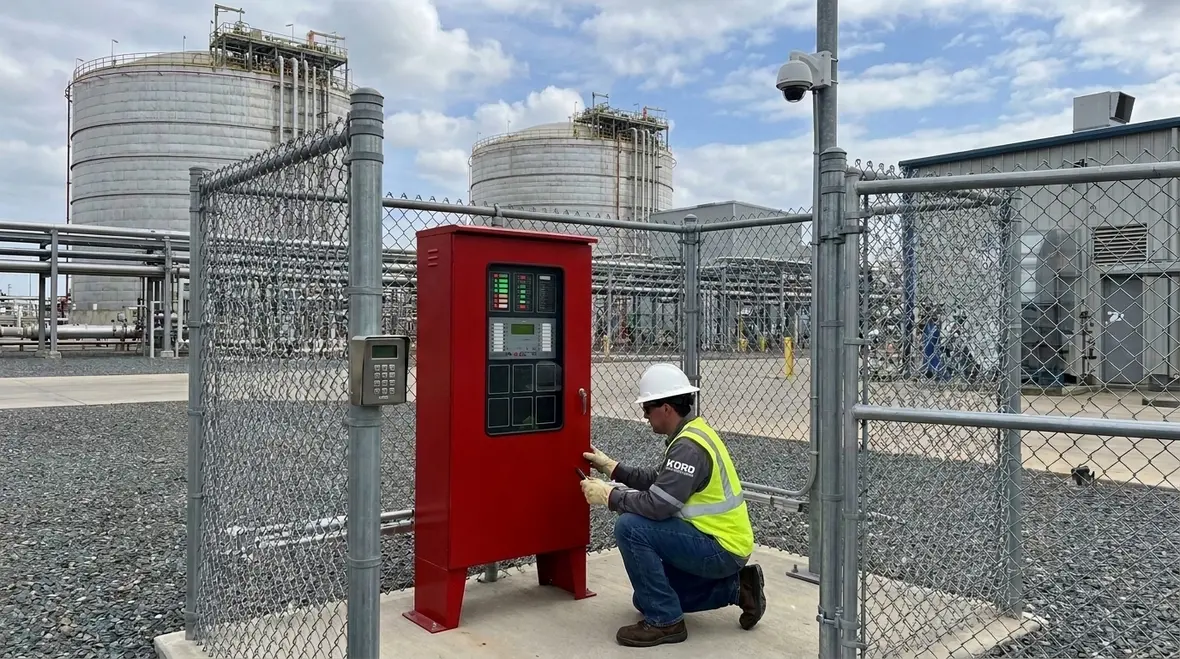
Critical equipment protection: Detection and control panels need physical protection appropriate to site threat levels while maintaining serviceability for inspections and testing.
Controlled access and escort expectations: Access control procedures should ensure that emergency teams can reach critical zones quickly without creating bottlenecks.
Monitoring and response coordination: Security response must connect to the site incident command structure and ensure that alarms trigger the correct actions without delay.
Maintenance access planning: Security should not obstruct maintenance verification. Instead, planning should enable safe access while maintaining site integrity.
For operators, a common failure point is treating security and fire protection as separate compliance programs. Section 16.2 expectations become easier to meet when the operator uses one integrated system for hazard review, inspection schedules, and incident response coordination.
How to implement Section 16.2 in a working LNG site compliance plan
A practical implementation plan translates code requirements into operational behaviors, recurring verification activities, and documented corrective action. The goal is to prevent performance degradation between scheduled maintenance events.
Step by step: the compliance workflow
Confirm system boundaries and responsibilities: Define what belongs to operations, fire protection systems, safety procedures, and security controls. Ensure ownership is explicit.
Build an inspection and testing matrix: Map the required checks to equipment types, interfaces, and acceptance criteria. Include post maintenance verification steps.
Integrate management of change: Require a safety and fire protection review before equipment relocation, software updates, interface edits, or process changes.
Train to the cause and effect: Ensure responders understand how alarms, shutdown sequences, and security actions connect.
Close corrective actions quickly: Track deficiencies through documented root cause and verification of repair effectiveness.
To keep commercial facilities aligned with these expectations, many operators engage Kord Fire Protection for recurring inspection, testing, and maintenance execution. This partnership approach helps facilities protect continuity of performance and reduces audit friction related to testing gaps and undocumented maintenance outcomes.
If you are developing or upgrading compliance documentation, review additional guidance on commercial fire safety audit processes and broader fire protection maintenance practices.
Frequently Asked Questions
Next step: confirm readiness before the next inspection
Section 16.2 compliance depends on ongoing system performance, current procedures, and coordinated security and response. Kord Fire Protection can support your inspection, testing, and maintenance program to reduce performance gaps and strengthen audit readiness. Contact Kord Fire Protection to review your fire protection, safety, and security readiness and build a practical verification plan that stays current through change.

Join Our Newsletter!
Get the latest fire safety tips delivered straight to your inbox From our Newsletter.