NFPA 52 Section 4.3: Qualifications for CNG Facility Personnel
Quick Answer
NFPA 52 Section 4.3 sets expectations for who can operate, inspect, maintain, and manage compressed natural gas (CNG) facilities. The rule focuses on demonstrated competency, task-based authorization, and documented training and experience, so personnel can safely prevent ignition hazards, release events, and equipment failures.
For facilities building a stronger inspection and documentation routine, Kord Fire Protection’s fire protection services guide offers a practical overview of how inspections, testing, maintenance, and compliance support work together in the real world.
What NFPA 52 CNG facility personnel qualifications actually require
NFPA 52 Section 4.3 requires that CNG facility personnel meet defined qualifications for the roles that keep the installation safe and compliant. For commercial, industrial, and retail fueling environments, this means the facility does not rely on informal “on the job” learning. Instead, it uses a structured approach to verify competency, assign responsibilities to properly authorized individuals, and keep training and records available for review.
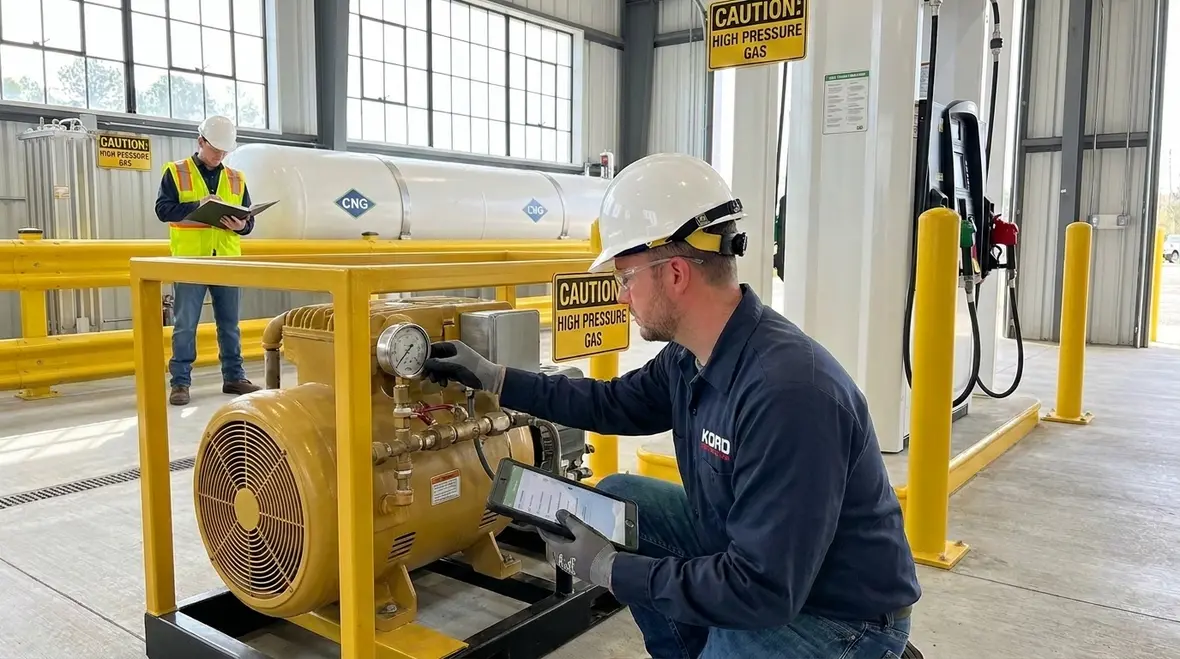
In practice, NFPA 52 CNG facility personnel qualifications focus on a few recurring outcomes. Personnel must understand the hazards associated with natural gas, the behavior of high pressure systems, and the function and limitations of protective equipment. They must also demonstrate the ability to carry out inspection and maintenance tasks correctly, including gas detection, pressure regulation and relief, electrical classification considerations, and emergency response actions.
Section 4.3 role-based competency: who is qualified and why
NFPA 52 qualification requirements generally follow a task based model. The standard does not treat every job title as equal when the work carries different safety consequences. Facilities typically define qualifications by role and by specific responsibilities such as:
- Operating personnel who start, stop, control, and monitor fueling or dispensing equipment
- Maintenance personnel who perform inspections, adjustments, troubleshooting, and component replacement
- Technicians responsible for protective systems such as detection, shutdown logic, ventilation interlocks, and relief path verification
- Supervisory personnel who ensure work authorization, document compliance, and confirm that maintenance records are current
Commercial facilities often struggle when staff coverage changes due to shift rotation, contractor scheduling, or “cross training” without verified competence. NFPA 52 compliance demands that the facility can show the organization matched personnel qualifications to actual tasks, not just job descriptions.
Training and documentation: how qualified personnel are proven
Qualified personnel are not only trained. They must be able to perform work correctly the first time and continue performing it safely over time. NFPA 52 Section 4.3 expectations are commonly satisfied through a combination of:
- Documented training that covers CNG system components, operating limits, and hazard controls
- Experience demonstrating familiarity with high pressure fuel systems and fueling operations
- Formal authorization by the facility based on competency and assigned duties
- Maintained records showing training, assessments, and role approvals
In day to day operations, the most frequent compliance gap is missing evidence. Facilities may believe training occurred, but cannot produce records that connect the training to role responsibilities. Another frequent issue is outdated training when equipment upgrades occur, such as replacement of dispensers, changes to compressors or cascade systems, or modifications to gas detection and shutdown circuits.
Because CNG systems evolve across the equipment lifecycle, ongoing competence checks are critical. Kord Fire Protection supports commercial sites with inspection, testing, and maintenance planning designed to align with recurring compliance cycles and reduce documentation gaps that complicate audits.
Competence in field operations: common failure points personnel must control
Qualification is meaningful only when personnel understand the real operational failure modes that create unsafe conditions. In commercial and retail CNG settings, NFPA 52 CNG facility personnel qualifications should prepare staff to recognize and control problems such as:
- Leak risks at high consequence interfaces: connections, fittings, seals, regulators, and hose assemblies where small failures can escalate quickly due to pressure.
- Improper response to abnormal indications: alarms, pressure fluctuations, or detector activation handled incorrectly rather than investigated with the correct procedure and isolation steps.
- Relief device and discharge hazards: incorrect handling of relief valves, blockage or misrouting in discharge paths, and failure to verify that discharge remains safe and unobstructed.
- Shutdown logic and protective system integrity: incomplete functional checks, bypassing interlocks without authorization, or failing to validate restoration steps after troubleshooting.
- Electrical and ignition source considerations: misunderstanding equipment ratings, improper maintenance practices, or incomplete verification after repairs.
These issues become operational incidents when staff have inadequate task training or lack familiarity with the specific facility configuration. A qualified individual should not only “know the standard.” They should also understand the site specific layout, control philosophy, emergency shutoff locations, and inspection frequency commitments.
Commercial compliance workflows: inspections, maintenance, and readiness
Qualified personnel support safe readiness through repeatable workflows. A strong commercial compliance program typically includes:
- Planned inspections: documented checks on fueling equipment, protective systems, and safety related controls at defined intervals
- Maintenance release controls: confirmation that correct parts, procedures, and verification steps are used before returning equipment to service
- Functional testing of safety systems: verification that detectors, shutdown actions, and alarms operate as intended
- Emergency response capability: drills and clear procedures so personnel understand what happens after alarms and loss of containment events
Where facilities often fall short is in the handoff between operations and maintenance. For example, operating staff may identify an abnormal condition, but maintenance personnel may not follow a documented method to isolate and validate. This creates inconsistent outcomes and weak audit evidence. Kord Fire Protection can help commercial operators implement inspection and maintenance support that strengthens readiness and reduces the risk of incomplete safety system validation.
If you want a practical view of fire protection services that complement NFPA based compliance programs, review Kord Fire Protection and discuss how ongoing testing and maintenance support can be integrated into your site’s compliance calendar.
Facilities managing interconnected detection, alarm, and shutdown pathways may also benefit from reviewing Kord Fire Protection’s commercial fire alarm services, especially where system testing and documentation need to stay tight instead of turning into a clipboard scavenger hunt.
How to audit NFPA 52 qualifications at your facility
Facilities can verify their own qualification posture by conducting a simple qualification audit. The goal is to confirm the right people perform the right tasks with proof that supports compliance. A practical audit approach includes:
- Mapping facility tasks to job functions, including contractor work where applicable
- Reviewing training records and competency assessments tied to each task
- Confirming authorization lists for operation, maintenance, and supervisory responsibilities
- Checking that inspection and maintenance records show the correct qualified personnel performed the work
- Verifying that training remains current after equipment modifications or control system updates
When this process is skipped, compliance becomes reactive. Personnel credentials are discovered during incident reviews, insurance inquiries, or regulatory inspections, often after weaknesses have already created operational risk.
Frequently Asked Questions
Conclusion and call to action
Qualified personnel are the backbone of NFPA 52 CNG facility personnel qualifications. Instead of treating qualification as a one time checkbox, maintain task based authorization, proof based documentation, and ongoing readiness through functional testing and inspection discipline. Kord Fire Protection can help commercial operators build a practical compliance rhythm with testing and maintenance support that strengthens safety outcomes. Contact Kord Fire Protection today to align your qualification evidence and inspection program with real operational needs.

Join Our Newsletter!
Get the latest fire safety tips delivered straight to your inbox From our Newsletter.