NFPA 52 Section 4.1 General: CNG Facility Operations, Maintenance, and Management Basics
Quick Answer: NFPA 52 Section 4.1 establishes the baseline expectations for how a CNG facility operates, maintains, and manages safety-critical systems. It emphasizes trained personnel, documented procedures, inspection and testing, and consistent corrective action so risk stays controlled over time.
If your team is tightening documentation and service coordination, Kord Fire Protection also covers practical strategies in fire safety compliance management with automated documentation, which fits naturally with the recordkeeping and corrective action discipline discussed here.
Why NFPA 52 Section 4.1 matters for daily CNG safety
Commercial CNG facilities must keep fueling and containment systems safe during routine operations, planned maintenance, and unexpected abnormal conditions. NFPA 52 Section 4.1 General provides the management framework that supports safe equipment performance, reliable inspections, and timely repair. For teams that manage multiple assets across industrial and retail sites, these general obligations create consistency that prevents “drift” from what the system was designed to do.
The keyword for this topic, NFPA 52 CNG facility operations maintenance management, reflects the reality that compliance is not a one-time checklist. It is an ongoing operational discipline that blends human performance, equipment integrity, and verification through inspections and tests.
What Section 4.1 requires in practice: operations and management controls
Section 4.1 centers on general duties that influence every other part of the standard. Organizations typically satisfy these obligations through a documented management system and field-ready procedures. In a commercial setting, the goal is to ensure that each shift, each contractor, and each maintenance event supports the same safety outcomes.
1) Establish operating procedures that match real equipment configuration
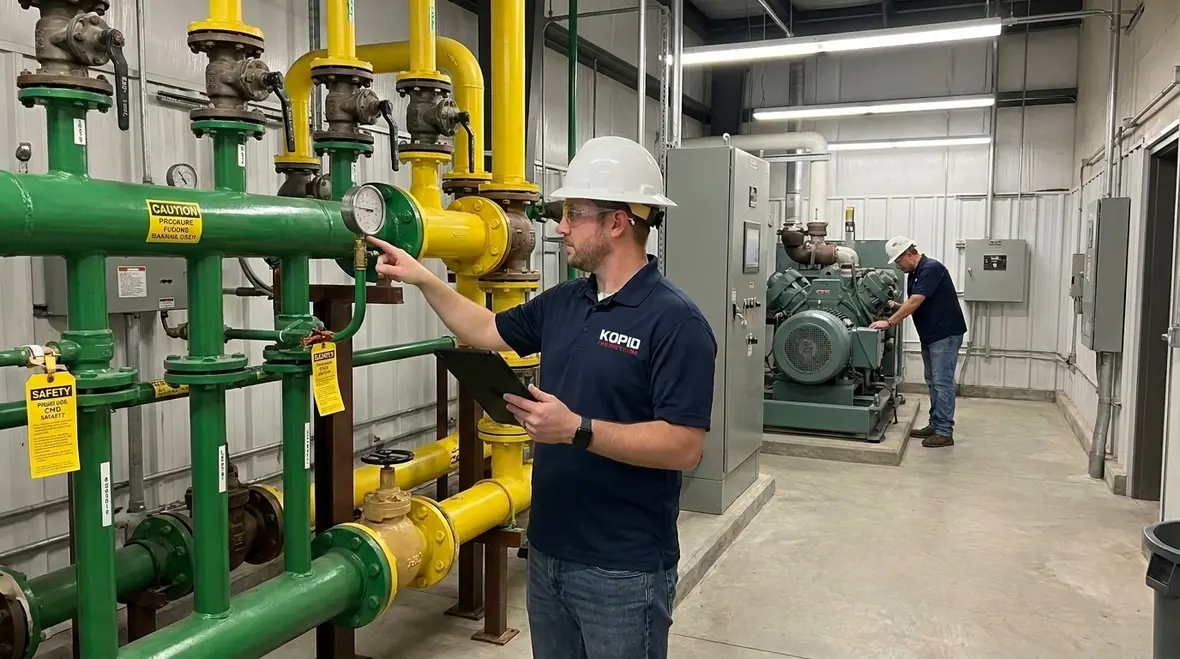
Facilities often fail compliance because procedures remain generic. Section 4.1 expects operations to be aligned with the facility’s actual CNG layout and equipment list. That means procedures should address how personnel operate compressors, storage, dispensers, piping, valves, relief devices, and ventilation or detection components where applicable. Procedures also need clear acceptance criteria, safe startup and shutdown steps, and limits that prevent unsafe operating ranges.
2) Manage personnel competence and supervision
Even well-designed hardware becomes unsafe when operators lack system knowledge. Facilities should implement training plans that include initial training, periodic refresher training, and task-specific competency verification. Common high-risk tasks include lockout and tagout execution, controlled depressurization steps, valve manipulation, manifold operations, and responding to alarms or abnormal pressure behavior.
3) Control contractors and onsite work authorization
Commercial and industrial sites often rely on multiple contractors for electrical work, mechanical repairs, calibration, and instrumentation replacement. Section 4.1’s general management expectations mean the facility operator must control contractor scope, verify qualifications, and ensure contractor work aligns with the facility procedures. Without that control, the risk increases for incorrect valve positions, improper torque or alignment on connections, or incomplete documentation after changes.
Maintenance basics under NFPA 52: how compliance stays measurable
Maintenance under NFPA 52 is not just “keeping equipment running.” It is preserving the engineered safety functions built into the CNG system. Section 4.1 sets the operational and management foundation that makes inspection and repair effective. A practical approach uses risk-based planning, documented work instructions, and verification that the system returns to safe operating condition.
Build maintenance around inspection, testing, and documented corrective action
A strong facility maintenance program typically includes:
- Scheduled inspections tied to components and operating conditions, not only calendar dates.
- Functional testing of safety-relevant controls, alarms, and interlocks where required by the overall standard scope.
- Documented repair and return-to-service steps that prevent “partial completion.”
- Corrective action tracking that addresses root cause, not only symptom replacement.
Commercial facilities should also ensure that maintenance documentation links each work order to the specific system component, measured results, calibration records, and any configuration changes. This linkage reduces audit friction and shortens troubleshooting when similar faults repeat.
Focus on typical failure points that trigger recurring risk
In operational experience, the highest recurring issues often involve:
- Valve and regulator performance drift, including sticking, leaks, or out-of-range behavior after frequent cycling.
- Hose, coupling, and connection integrity, where wear and improper handling can create leak paths.
- Instrumentation calibration and sensor reliability, including detection and pressure measurement accuracy.
- Control system logic and setpoint changes that occur during upgrades without full verification.
- Corrosion and mechanical degradation of exposed components that can develop gradually in outdoor environments.
These issues often appear first as nuisance alarms or minor performance deviations. A disciplined NFPA 52 CNG facility operations maintenance management program treats early signals as safety-relevant data and ensures corrective action before performance fully degrades.
Operating discipline: daily procedures, abnormal conditions, and shift handoffs
Section 4.1 general expectations impact daily operations more than personnel realize. The facility must manage routine operations and abnormal events with procedures that prevent escalation. Many incident-prevention opportunities occur at shift handover and during routine checks.
Shift handoff practices that prevent “lost context”
Commercial operators benefit from a structured handoff format that covers:
- Current operating status and any active alarms
- Work completed during the shift and what remains open
- Any temporary operating restrictions
- Verification of maintenance hold points and system return to service
When teams treat handoff as a formality, they miss operational trends such as repeated pressure fluctuations or recurring minor leaks that were not fully corrected.
Abnormal condition response: keep safety functions intact
Personnel should follow defined alarm response steps that include escalation criteria, safe shutdown or isolation actions, and documentation requirements. The facility should ensure that emergency procedures do not conflict with maintenance activities occurring at the same time. In practice, operations and maintenance must coordinate the timing of depressurization, isolation, and lockout decisions so that safety systems remain predictable.
Audits, records, and documentation: proving the system stays compliant
NFPA 52’s general management emphasis means the facility must be able to demonstrate that operating and maintenance activities meet required expectations over time. Records are not administrative overhead. They are evidence that safety-critical tasks occur with defined controls and measurable outcomes.
What auditors and internal safety reviews typically verify
- Written procedures that match the installed configuration and operating modes
- Training records showing competence for relevant tasks
- Inspection and test reports, including results and pass fail documentation
- Maintenance history connected to component IDs and work orders
- Corrective action closure with root cause and verification steps
Facilities with multiple locations often consolidate documentation to maintain consistent standards. The key is ensuring that records reflect local equipment configurations, not just a corporate template.
How Kord Fire Protection supports ongoing NFPA 52 compliance
NFPA 52 CNG facility operations maintenance management requires consistent inspection discipline, testing support, and practical compliance guidance across the lifecycle of the facility. Kord Fire Protection works with commercial teams to strengthen their compliance posture through field-relevant service planning and documentation support. For facility operators who need dependable verification, consistent testing coordination, and a partner that understands real-world constraints, working with Kord Fire Protection can reduce risk and improve audit readiness.
For additional fire and life safety services that support operational readiness, visit Kord Fire Protection.
Teams that want a broader reliability mindset may also find value in Kord Fire Protection’s guidance on protecting fire protection system uptime, especially when maintenance windows, return-to-service checks, and documentation all need to play nicely together for once.
Frequently Asked Questions
Call to action
Review your current operating procedures, maintenance plans, training records, and corrective action workflow against the expectations of NFPA 52 Section 4.1 General. If gaps exist, schedule an assessment that focuses on field verification and documentation traceability. For sustained confidence in NFPA 52 CNG facility operations maintenance management, partner with Kord Fire Protection to strengthen inspection and compliance readiness across your sites.

Join Our Newsletter!
Get the latest fire safety tips delivered straight to your inbox From our Newsletter.