
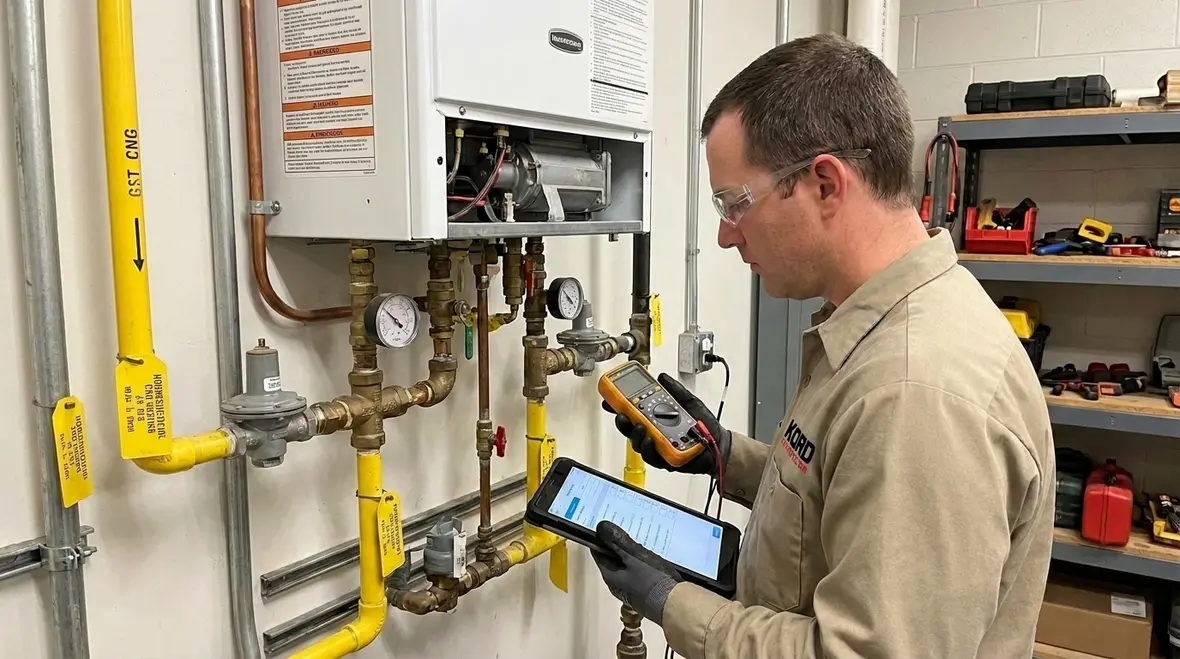
NFPA 52 Section 14.4: Maintenance and Inspection of Nonresidential CNG Appliances
Quick Answer
NFPA 52 Section 14.4 establishes how nonresidential CNG appliances must be maintained and inspected to preserve safe operating conditions. Owners must follow required inspection intervals, verify appliance performance, and correct deficiencies promptly, using qualified personnel and documented procedures.
Facilities building out a stronger compliance workflow can also review operations and maintenance programs for CNG facilities for a broader site-level framework that fits naturally alongside appliance inspection planning.
Why NFPA 52 nonresidential CNG maintenance inspection requirements matter on real job sites
Nonresidential CNG systems operate in demanding commercial environments where components experience vibration, temperature swings, contamination, and frequent duty cycles. NFPA 52 nonresidential CNG maintenance inspection requirements focus on appliance integrity because appliance failures often present as degraded combustion performance, improper valve operation, leakage risk, or unsafe regulator and venting conditions. For facilities such as CNG fueling stations, light industrial sites, warehouses with specialty CNG equipment, and retail operations, compliance also supports insurance underwriting expectations and protects ongoing service availability.
In practice, compliance succeeds or fails based on the facility’s ability to execute repeatable inspection steps, maintain records, and close corrective actions quickly. A documented program aligned with NFPA 52 Section 14.4 reduces the probability of hidden deterioration and helps demonstrate due diligence during inspections and incident investigations.
What Section 14.4 covers: appliance-focused maintenance and inspection scope
NFPA 52 Section 14.4 targets the maintenance and inspection of nonresidential CNG appliances, meaning the appliances that consume natural gas in commercial applications. While the broader NFPA 52 document covers system-wide safety concepts, Section 14.4 concentrates on appliance condition and performance, including the components that control fuel delivery and safe operation.
Operationally, the program typically needs to address these themes:
- Condition-based and interval-based checks that identify deterioration before it becomes a safety hazard.
- Verification of proper operation of key appliance controls and safety devices.
- Leak assessment and elimination where applicable to appliance interfaces and connections.
- Corrective action tracking with proof of completion before returning equipment to service.
How inspection works: the practical sequence used to stay audit-ready
Facilities typically implement inspection processes that align with Section 14.4 by following a repeatable workflow. The goal is to prevent missed failure points and to capture objective evidence that maintenance actions actually restored safe condition.
1) Prepare the appliance for safe inspection
Technicians follow a controlled work approach: securing operating modes as required by the appliance and site procedures, confirming safe conditions, and preventing inadvertent energization or fuel flow. This step supports both safety and the integrity of test results.
2) Perform visual and functional checks
Visual inspection focuses on signs of damage, corrosion, loose or damaged fasteners, and abnormal appliance condition. Functional verification typically includes confirming correct valve operation, confirming regulator and control behavior as applicable to the specific appliance, and ensuring that safety devices respond as required by design and manufacturer instructions.
3) Evaluate connections, fittings, and interfaces
Many appliance issues originate at interfaces. Technicians check the integrity of connections and inspect for wear patterns that indicate movement or stress. Where the appliance design includes seals, unions, or flexible connections, the inspection must verify they remain serviceable and correctly assembled.
4) Confirm safe performance criteria
For combustion or heat producing appliances, inspections should include verification that the appliance operates within expected parameters. Where test procedures apply, technicians document the results so the facility can demonstrate compliance over time and identify trends.
5) Document results and track corrective actions
Audit readiness depends on records. A compliant program records what was inspected, what was found, what corrective actions were required, who performed the work, and when the appliance returned to service. Maintenance records become critical when regulators, insurers, or internal safety reviews evaluate program effectiveness.
Common failure points technicians find during nonresidential CNG appliance inspections
Commercial environments accelerate deterioration mechanisms. The most frequently observed issues during nonresidential CNG appliance inspections typically include:
- Leak-prone interfaces at appliance connections, unions, and fittings exposed to vibration and thermal cycling.
- Control and valve performance drift, including sticking, delayed actuation, or improper response due to contamination or wear.
- Regulator and pressure control irregularities that cause unstable operation or inconsistent delivery.
- Worn or degraded seals that compromise containment.
- Improper venting or vent component condition where design requires maintained clear pathways and integrity.
- Environmental damage such as corrosion or physical impact from operations, housekeeping activity, or external maintenance.
These failure points align with the practical intent behind NFPA 52 Section 14.4: ensure appliance components remain in safe operating condition through structured maintenance and verified inspection results. When a deficiency is found, the facility should not treat the issue as “routine wear.” Instead, corrective action should return the appliance to safe performance prior to use.
Compliance challenges for commercial, industrial, and retail facilities
Even when a facility understands the required maintenance intent, compliance can still fail due to execution and documentation gaps. Typical challenges include:
Limited downtime and production schedules
Many nonresidential CNG applications support revenue generating processes. Facilities often struggle to schedule inspection windows without compromising safety. A well-planned maintenance calendar with coordinated shutdown procedures reduces risk and avoids skipped checks.
Mixed appliance inventories and ownership boundaries
Retail and industrial sites may have appliances installed by different contractors or managed by different departments. Consistent appliance labeling, a unified inventory list, and responsibility mapping help the facility meet inspection expectations without missing units.
Recordkeeping inconsistencies
Compliance depends on repeatable documentation. Facilities that maintain logs inconsistently or do not link corrective actions to return-to-service decisions create exposure during audits and incident reviews. Technicians and safety teams should ensure each inspection produces an actionable record.
Maintenance quality and technician competency
Appliance inspection requires more than basic mechanical competence. Technicians need CNG-specific understanding of components, safe test procedures, and proper handling of deficiencies. Using qualified service partners helps standardize outcomes.
As a practical support option for ongoing compliance, Kord Fire Protection provides fire safety inspections and preventive maintenance that help facilities manage scheduled inspection work, document results, and maintain readiness.
Program best practices: how to operationalize Section 14.4
To meet NFPA 52 Section 14.4 intent and maintain confidence in safety outcomes, facilities should implement a program that is more than a checklist.
Build an appliance register and inspection schedule
Create a complete list of nonresidential CNG appliances, including location, model or service description, responsible owner, and service interval expectations. Then tie inspections to a schedule that accounts for duty cycle and operational risk.
Use written procedures and standardized work steps
Written work instructions reduce variability and improve audit defensibility. Each inspection should define what to check, how to verify performance, and the threshold for taking a unit out of service pending repair.
Close findings with clear return-to-service criteria
Deficiencies should drive corrective actions with verified completion. A unit should return to service only after the appliance operates safely and the record demonstrates the deficiency was resolved.
Track trends and repeat high-risk issues
Trend data improves future inspections. If a specific component repeatedly fails, the facility should evaluate root causes such as installation conditions, vibration exposure, water or contamination ingress, or inadequate upstream protection.
Frequently Asked Questions
Call to action
Use NFPA 52 Section 14.4 to build an appliance inspection program that is scheduled, documented, and actionable. If your facility needs help standardizing inspection workflows, tracking corrective actions, or maintaining compliance readiness, contact Kord Fire Protection to support ongoing testing, maintenance coordination, and safety documentation for your nonresidential CNG appliances.

Join Our Newsletter!
Get the latest fire safety tips delivered straight to your inbox From our Newsletter.


