
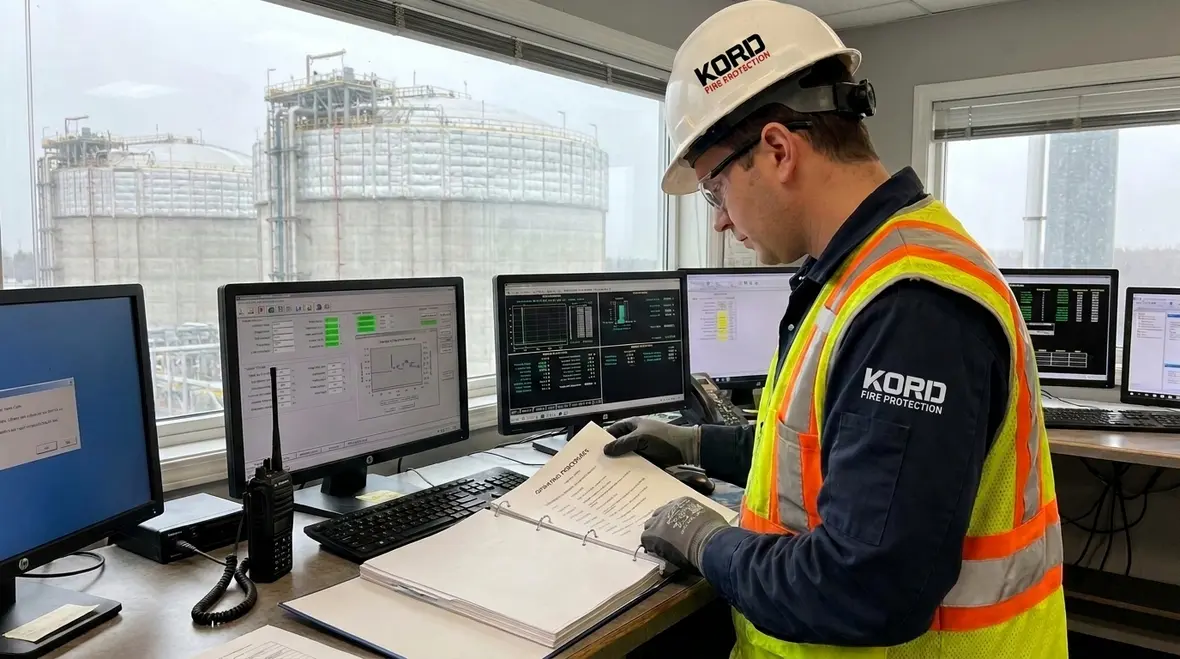
NFPA 52 Section 15.6: Operating Procedures Manuals for LNG Facilities
Quick Answer
NFPA 52 Section 15.6 requires LNG facility operating procedures manuals that define safe, repeatable operational practices. These manuals support training, audits, and incident prevention by detailing operating steps, abnormal conditions, and verification methods aligned to facility hazards.
For a broader look at how inspections, testing, maintenance, and documentation stay connected over time, see Kord Fire Protection’s full lifecycle of fire protection servicing.
What NFPA 52 Section 15.6 Requires, in Plain Terms
NFPA 52 Section 15.6 focuses on operational control. It requires LNG facilities to maintain an NFPA 52 LNG facility operating procedures manual that documents how the facility operates under normal conditions and how personnel respond to deviations. The intent is straightforward: when conditions change, trained operators follow defined steps rather than improvising.
For commercial operators, retail adjacent properties, industrial terminals, and maintenance contractors, the practical challenge is not writing a document once. The challenge is keeping the manual accurate as equipment ages, setpoints change, alarms evolve, and inspection findings reveal new failure modes.
What Goes Into an Operating Procedures Manual That Passes Compliance Reviews?
An effective operating procedures manual should translate safety expectations into operational instructions. In practice, auditors look for completeness, clarity, and alignment between the manual and what crews actually do on site. The manual should include at minimum the following operational categories:
Normal operating procedures and operating boundaries
- Startup, shutdown, and transfer procedures for LNG handling systems
- Operating limits, thresholds, and permissives tied to hazard controls
- Required checks before and after each operational phase
- Documented responsibilities for operators, supervisors, and shift leads
Abnormal operations and response actions
- Steps for responding to out of tolerance conditions
- Criteria that trigger escalation, isolation, or controlled shutdown
- Actions tied to alarms, trip conditions, and interlocks
- Guidance for safe response to process upsets and instrument failures
Emergency operations integration
- How operators coordinate with emergency response plans
- Operational actions that must happen before, during, and after evacuation
- Procedures for safe securing of energy sources and system states
Maintenance and verification references
- Cross references to inspection, testing, and preventive maintenance requirements
- Guidance for confirming that critical safety functions remain available
- Documentation requirements for repairs, replacements, and setpoint updates
From a compliance standpoint, the manual should not read like a general policy statement. It should read like a system specific playbook that maps operational phases to safety critical equipment, defined responsibilities, and measurable verification steps.
How Operators Use the Manual During Real Shift Conditions
NFPA 52 Section 15.6 expects operating procedures that remain usable under pressure. That means the manual should support decision making when multiple alarms occur, instrumentation provides ambiguous signals, or operations require a controlled hold.
Alarm driven workflow and interlock awareness
Operators should be able to quickly determine:
- Which alarms represent process deviations versus safety critical interlocks
- Whether the response is continue with monitoring, reduce load, isolate a section, or shut down
- What confirmations prove the safety objective has been met
Common failure point: procedures describe alarm response, but they do not reference the instrument tags, expected ranges, or the verification actions that confirm the system is in a safe state.
Operational change control and configuration drift
Manuals become outdated when valves are replaced with different actuation times, sensors are recalibrated, or control logic updates change setpoints. A compliance ready manual includes a clear change control expectation so operational procedures reflect actual equipment behavior.
Training, competency, and recordkeeping
NFPA 52 requirements function as an operational control framework. The manual supports training and competency by defining:
- What each role must know and demonstrate
- How procedures are validated after updates
- How refresher training aligns with incident trends and inspection results
Inspection, Testing, and Maintenance Links That Matter Most
Operating procedures do not stand alone. They must align with inspection and maintenance realities for critical systems. The best manuals explicitly connect operational actions to the verification steps required to ensure safety functions remain effective.
Common compliance gaps found at LNG facilities
- Critical equipment listed in the manual but not maintained to a documented schedule
- Maintenance records that do not show verification of safety critical performance
- Procedures that assume equipment performance that no longer matches field results
- Unclear responsibilities for completing checks after maintenance work
Why ongoing fire and life safety service partnerships matter
For commercial, industrial, and retail adjacent LNG operations, keeping safety systems aligned with procedure manuals requires disciplined testing, documentation, and corrective action. Kord Fire Protection supports facilities with practical compliance services that help reduce the risk of operational drift by ensuring safety systems remain inspection ready and serviceable.
To explore related compliance and inspection services, visit Kord Fire Protection.
Writing and Maintaining the Manual as a Living Compliance Document
A compliance ready document behaves like an operational control system, not a static binder. Facilities should treat the NFPA 52 LNG facility operating procedures manual as a controlled document that updates on a predictable cadence.
Best practice: tie each procedure to a validation method
- Define what personnel must check before proceeding
- Define what performance evidence confirms readiness
- Define what actions follow failure to meet criteria
Best practice: align procedures to equipment mechanisms
When procedures ignore equipment mechanisms, execution fails under abnormal conditions. For example, operator actions should account for the practical effects of:
- Valve actuation time and stroke completion logic
- Instrument response time and sensor filtering behavior
- Control system permissives that may block commanded actions
- Alarm rationales that clarify why a trip occurred
Best practice: document lessons learned
Near misses, upset events, and recurring alarm scenarios should feed back into the manual. This reduces future errors and improves the speed and quality of operator decisions.
Frequently Asked Questions
Conclusion and Call to Action
NFPA 52 Section 15.6 demands operating procedures that remain accurate, usable, and aligned to safety critical equipment throughout the facility lifecycle. To strengthen compliance and reduce operational drift, implement a controlled review process, connect procedures to verification and maintenance, and maintain inspection ready safety systems. Work with Kord Fire Protection to support ongoing testing, inspection readiness, and documentation discipline. Contact Kord Fire Protection today to assess your current procedures and service coverage.

Join Our Newsletter!
Get the latest fire safety tips delivered straight to your inbox From our Newsletter.


