NFPA 52 Section 14.3: Operation of Nonresidential CNG Fueling Appliances
Quick Answer: NFPA 52 Section 14.3 governs how nonresidential CNG fueling appliances operate to maintain safe fuel transfer, protect against ignition sources, and ensure equipment reliability. The standard emphasizes correct startup, fueling control, monitoring, maintenance, and readiness to respond to abnormal conditions.
For a broader compliance foundation before diving into day-to-day operation, review NFPA 52 Section 14.1 general nonresidential CNG fueling appliance requirements to connect this operational section to the bigger safety picture.
What NFPA 52 Section 14.3 is trying to prevent during fueling
NFPA 52 Section 14.3 focuses on operational safety for commercial CNG fueling appliances. In practical terms, NFPA 52 nonresidential CNG fueling appliance operation aims to prevent uncontrolled gas release, limit ignition potential, and ensure that the appliance functions only within its designed parameters. Commercial sites such as fleet yards, industrial facilities, and retail forecourts face additional exposure because fueling happens more frequently and often under tighter operational schedules.
Compliance is not limited to a one-time installation inspection. The standard’s operational expectations require that facilities maintain correct device behavior throughout daily use, during abnormal operating scenarios, and across changing conditions like temperature swings, loading cycles, and wear of mechanical components.
How NFPA 52 nonresidential CNG fueling appliance operation works in the real world
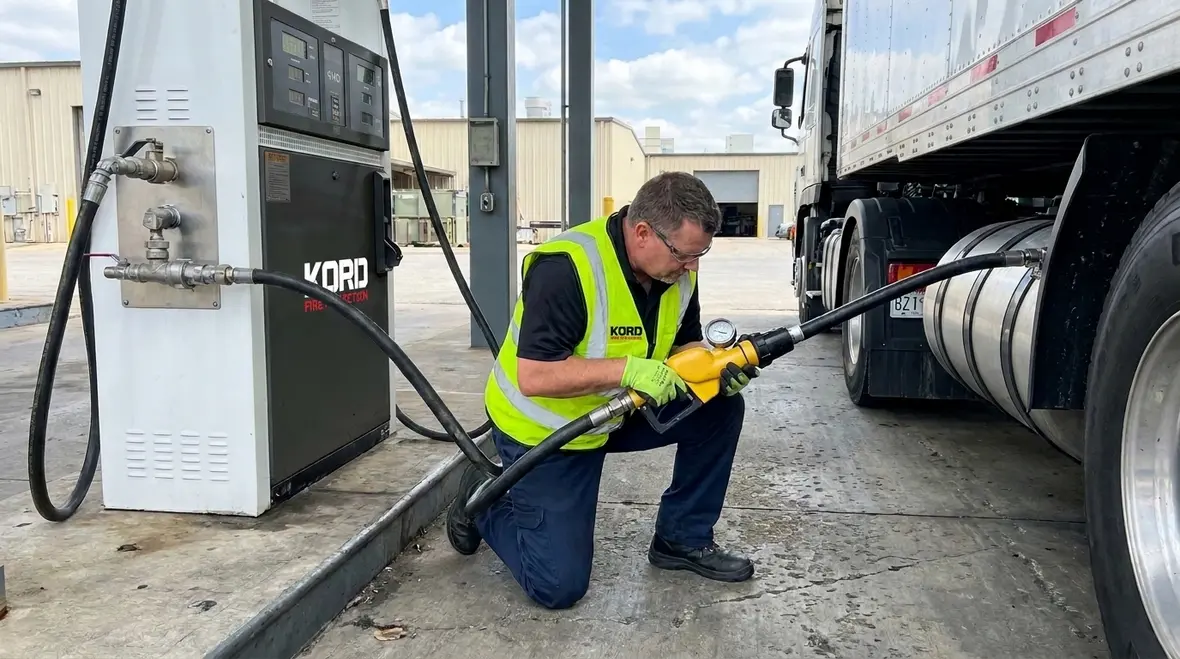
NFPA 52 nonresidential CNG fueling appliance operation follows a controlled sequence that keeps pressure, flow, and electrical and mechanical interactions within safe limits. While appliance configurations vary by manufacturer and site design, most nonresidential CNG fueling systems share core operational elements that must behave as designed:
- Controlled transfer and shutoff: Fueling should start, run, and stop based on approved logic and safe shutoff design. The system should prevent partial or “stuck” states that could cause continued flow or unsafe conditions.
- Pressure regulation and monitoring: Operating pressure must remain within the approved range, with monitoring that detects abnormal deviations.
- Vent and purge behavior: Any venting, purging, or residual gas handling must operate as intended to avoid releasing gas outside of designed safety pathways.
- Safety interlocks: Interlocks prevent operation when conditions are outside acceptable limits, such as incorrect equipment status, unsafe electrical or mechanical states, or loss of required system conditions.
- Hose and connector integrity controls: Proper engagement, leak resistance, and mechanical integrity support safe transfer and minimize coupling-related failures.
Facilities frequently discover that compliance gaps arise not from the fueling sequence itself, but from operational drift, such as bypassed steps, incorrect user practices, or inadequate response to fault conditions. A compliant operation program treats abnormal indications as a stop and verify event, not a “continue and see” decision.
Operational procedures: what operators must do, and what systems must enforce
1) Start-up, readiness, and pre-fueling verification
NFPA 52 Section 14.3 expects that fueling appliances operate only when they are in a safe, ready condition. That typically means verified status of key subsystems before fueling resumes. Commercial operators should establish procedure based on the appliance’s documented manual and the site’s risk analysis. Common readiness elements include confirming the absence of active faults, verifying system pressures and conditions, ensuring correct status of detection and safety devices, and confirming that the fueling area conditions meet site expectations for safe operation.
2) During fueling: controlled flow and continuous safety awareness
During a fueling transaction, operational control should rely on the appliance’s designed logic and the operator’s defined role. Operators should not override safety functions, bypass alarms, or attempt manual adjustments that defeat fault detection. The most common commercial failure pattern involves a misunderstanding of what a fault indication means and how quickly the system can return to a safe state.
When alarms or abnormal behaviors occur, the correct operational response typically includes stopping the fueling attempt, following the site’s emergency and abnormal event procedures, and documenting the event for maintenance follow-up. This operational discipline reduces recurrence and prevents “repeat failures” from becoming normal.
3) Shut-down, fault clearing, and return to service
Return to service should not happen automatically after a fault clears. A compliant approach verifies that the underlying condition has been corrected. For example, the fault may clear due to pressure equalization or temperature changes, but the cause may still be present, such as a degrading valve component, connector wear, or sensor drift.
Kord Fire Protection supports commercial facilities by aligning operational expectations with inspection, testing, and maintenance realities. That coordination helps facilities document that return to service is based on verified safe condition, not on time or convenience.
Where compliance most often breaks: maintenance, inspection, and common failure points
NFPA 52 Section 14.3 is operational, but it depends on ongoing equipment condition. In commercial CNG facilities, the failure modes that most often threaten safe fueling usually fall into predictable categories:
Mechanical and connection issues
- Couplings and hoses: Wear, improper seating, or damage can increase leak risk and lead to unreliable fueling performance.
- Valves and regulators: Stiction, seal degradation, and regulator drift can cause flow control problems that may trigger faults or unsafe behavior.
- Actuators and linkages: Partial movement or slow response can produce abnormal operating sequences.
Sensing, controls, and interlock performance
- Detection devices: Sensor fouling, calibration drift, or environmental impacts can reduce confidence in safety indications.
- Control logic behavior: Software or setpoint changes, inconsistent fault handling, or undocumented overrides can create operational noncompliance.
Operational drift and training gaps
Many compliance incidents are operational, not hardware-only. Operators may interpret faults inconsistently, handle hoses improperly, or use fueling equipment in ways that differ from procedures. Facilities benefit from practical training that ties each step of fueling to the safety purpose behind it and clarifies what actions require escalation.
For additional context on maintaining commercial fire and life safety compliance around energy systems, facilities often consult Kord Fire Protection resources and service planning. To streamline your compliance strategy, review Kord Fire Protection for commercial support options related to inspection readiness, testing coordination, and ongoing maintenance alignment.
Commercial implementation: inspection records, documentation, and readiness audits
NFPA 52 nonresidential CNG fueling appliance operation requires more than “passing tests.” Facilities should maintain a documentation trail that shows operational procedures, maintenance actions, and verification steps that lead to safe operation.
What a strong compliance package includes
- Operating procedures: Clear steps for startup, fueling, fault handling, and shutdown, based on the appliance manual and site design.
- Training records: Evidence that operators understand operational steps and emergency responses relevant to CNG.
- Inspection and testing documentation: Records that show periodic verification of safety and control components.
- Maintenance work orders with cause and correction: Documentation that confirms the root cause is addressed before return to service.
- Trend tracking: Logs that identify repeating fault patterns, component degradation, or frequent connector-related issues.
When sites should schedule deeper checks
Even when day-to-day fueling appears normal, periodic performance verification helps identify degradation before it becomes a safety issue. Consider scheduling more detailed evaluations after repeated fault events, seasonal temperature changes, high utilization periods, component replacements, or modifications to electrical or control systems.
How Kord Fire Protection supports NFPA 52 operational compliance
Commercial sites need an approach that connects NFPA 52 requirements to day-to-day fueling operations. Kord Fire Protection helps facilities reduce compliance risk by supporting inspection readiness, testing coordination, and maintenance planning that reflects how nonresidential appliances actually run.
By pairing operational expectations with verification and service discipline, Kord Fire Protection supports facilities managing multiple hazards and tight business schedules. This proactive approach helps keep fueling appliances reliable, documented, and aligned with safe operation principles expected under NFPA 52.
If your team is strengthening its inspection workflow, a practical next step is exploring the full lifecycle of fire protection servicing to better connect documentation, testing, maintenance, and return-to-service discipline.
Frequently Asked Questions
Call to action
Ensure your NFPA 52 nonresidential CNG fueling appliance operation stays safe and verifiable throughout real-world use. Kord Fire Protection can help you connect operational procedures to inspection and maintenance readiness, strengthen documentation, and reduce the risk of recurring failures. Contact Kord Fire Protection today to review your fueling appliance compliance approach and plan practical ongoing support.

Join Our Newsletter!
Get the latest fire safety tips delivered straight to your inbox From our Newsletter.