
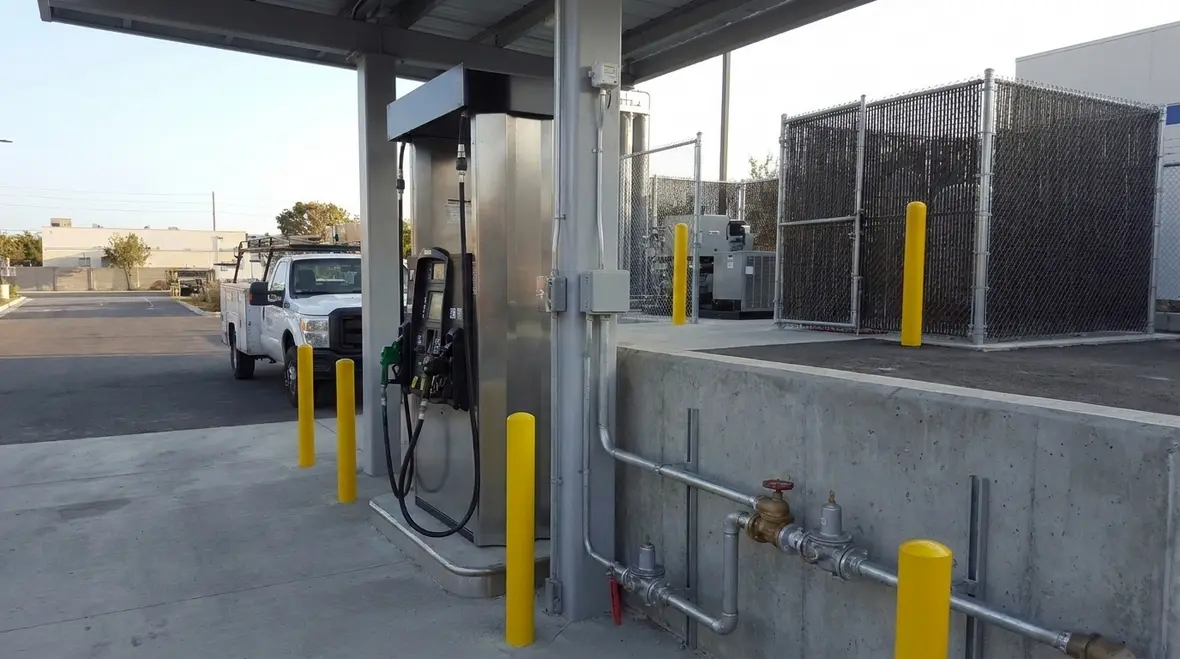
NFPA 52 Section 14.2: Installation of Nonresidential CNG Fueling Appliances
Quick Answer
NFPA 52 Section 14.2 sets the minimum safety requirements for NFPA 52 nonresidential CNG fueling appliance installation in commercial settings. Compliance depends on correct siting, ventilation, electrical classification, piping and hose practices, detector and shutoff integration, and documented commissioning, inspection, and maintenance.
What Section 14.2 is trying to prevent
NFPA 52 Section 14.2 focuses on risk control during the installation phase of nonresidential compressed natural gas (CNG) fueling appliances. The central objective is to limit ignition potential and reduce the consequences of a release by enforcing safe layouts, compatible components, and life safety system integration. In real commercial facilities, the most common gaps occur when the mechanical and electrical scopes are treated separately, when gas detection and shutdown are not fully commissioned, or when maintenance access and inspection pathways are not planned up front.
For facilities planning or upgrading fuel systems, the key to passing inspections is not only following the letter of NFPA 52, but also aligning installation details with operational realities: vehicle interface clearances, traffic patterns, electrical equipment location practices, and the facility’s maintenance and testing schedule.
If you’re mapping the broader compliance picture, it also helps to review nonresidential CNG fueling appliance general compliance so the installation details in Section 14.2 line up with the bigger operational framework.
Which appliances and installations fall under nonresidential requirements?
Section 14.2 applies to nonresidential CNG fueling appliances installed to support commercial or industrial fueling operations. This typically includes equipment used to compress, store, dispense, and control CNG at fueling sites. The “appliance” concept matters because the installation must account for how the appliance interfaces with the surrounding hazards controls, including gas detection, emergency shutdown logic, ventilation, and electrical classification boundaries.
In practical terms, a compliant NFPA 52 nonresidential CNG fueling appliance installation requires coordinated design and installation work across disciplines:
- Fueling appliance package integration (compressor and storage interface, dispenser interface, and control hardware mapping).
- Gas piping and tubing design (routing, supports, protection against damage, and compatible joining methods).
- Release mitigation systems (detection coverage, alarm and shutdown action, and manual emergency controls).
- Electrical and instrumentation alignment (hazardous location considerations and cable pathway integrity).
- Commissioning and documentation (test records and as installed labeling).
Where the appliance sits matters as much as how it works
Section 14.2 installation compliance begins with the layout. The facility must provide adequate separation from ignition sources, allow safe ventilation behavior where applicable, and maintain clear access for inspection and maintenance. The most frequently missed compliance factor is “as installed” reality. Equipment that fits on paper can end up obstructing access panels, compressing clearances, or routing cables and piping through areas that change the hazard profile.
Common layout compliance challenges in commercial facilities
- Insufficient working space around manifolds, shutoff valves, and control panels, leading to incomplete inspections.
- Unplanned cable routing that crosses zones or violates the intended segregation between hazardous and nonhazardous areas.
- Piping runs near traffic impacts where vehicle strikes or equipment movement can damage tubing or fittings.
- Maintenance access blocked by adjacent structures such as bollards, canopies, or stored materials.
From an inspection standpoint, the evaluator typically looks for consistent separation, labeled components, and the ability to verify alarm and shutdown behavior without dismantling safety-critical hardware.
How piping and release controls must be installed together
During NFPA 52 nonresidential CNG fueling appliance installation, the piping and hose systems must be installed so that a release is detected and controlled quickly. A compliant design does not just include hardware, it creates predictable cause and effect: detection, alarm annunciation, automatic shutdown, and safe stopping of fueling operations.
Piping, supports, and protection from damage
Installation practices should maintain proper support and alignment so that stresses do not compromise seals and fittings over time. Tubing and piping must also be protected from mechanical damage. In commercial and industrial settings, this includes impact protection where forklifts, carts, or vehicles operate close to the piping pathway.
Valves, regulators, and emergency shutoff pathways
Valving arrangements and control components must be installed so that emergency shutoff actions are reliable and repeatable. Installers must also confirm that manual emergency controls are reachable and clearly identified. Incorrect labeling, swapped control leads, or incomplete integration of shutdown logic can cause systems to fail acceptance testing even when components themselves are correct.
Hose management and dispenser interface
Dispensing interfaces must support safe hose handling. The installation must account for hose routing during normal fueling and for hose behavior during typical connector engagement and disengagement. Poor hose pathway design can increase abrasion points and can contribute to leaks that remain undetected if the detector layout does not match the release trajectory.
Electrical safety, detection coverage, and commissioning tests
Section 14.2 compliance depends on more than mechanical work. The installation must integrate electrical systems and instrumentation in a way that matches the expected hazardous location approach and preserves the intended failure modes. Gas detection and emergency shutdown controls require commissioning to demonstrate correct behavior from sensor activation to valve closure and system shutdown.
What inspectors look for during acceptance verification
- Detection coverage aligned with credible leak points such as dispenser connections, manifold areas, and potential damage zones.
- Alarm and shutdown logic that performs as designed during functional tests.
- Correct annunciation and labeling so operators can respond without guesswork.
- Electrical device installation integrity including secure conduit and cable terminations, and confirmation that equipment is suited to the intended environment.
Commissioning is where many NFPA 52 nonresidential CNG fueling appliance installation projects stumble
Commissioning typically reveals integration issues that are not visible during rough-in. Examples include incorrect sensor wiring polarity, time delay settings that do not match operating intent, and shutdown interlocks that do not engage because a control input was missed. A disciplined commissioning process verifies the cause and effect chain and ensures the as built system matches the documented sequence of operation.
For ongoing verification and risk reduction, Kord Fire Protection supports commercial facilities with inspection readiness planning, functional testing support, and documentation that supports recurring compliance cycles. If the site is also maintaining fire alarm, suppression, or detector systems, coordination reduces schedule conflicts and prevents coverage gaps.
For more on commercial life safety preparation, see Kord Fire Protection’s inspection and testing support services for a structured approach to testing expectations and operational readiness.
After installation: the maintenance program that keeps compliance real
NFPA 52 compliance does not end when the appliance starts operating. In commercial, industrial, and retail environments, the most common failure points show up during long term use: damaged hoses, loosening fittings from vibration or mechanical stress, drift in detector performance, and operator work practices that bypass safe procedures.
High value maintenance and inspection activities
- Routine leak checks for hose and connection points, with documentation of results.
- Detector functional verification to confirm response and alarm and shutdown actions.
- Valve and actuator checks to confirm emergency shutoff performance and full travel.
- Visual inspections of supports and protection for mechanical damage, corrosion, and abrasion.
- Record retention that ties tests to dates, equipment IDs, and any corrective actions.
Facility standard alignment: procedures operators can follow
Many compliance issues occur because installed systems and operating procedures drift. A robust maintenance plan includes operator training, clear abnormal condition responses, and a defined process for reporting and correcting defects. The facility also needs to ensure that maintenance work does not change electrical classifications, bypass detectors, or leave labeling incomplete.
Kord Fire Protection helps commercial teams maintain readiness by supporting structured testing, inspection support, and documentation practices that reduce time spent resolving deficiencies during audit windows.
Frequently Asked Questions
Next step
Plan the NFPA 52 nonresidential CNG fueling appliance installation around measurable inspection outcomes: verified shutdown sequences, detector coverage aligned to credible leak points, correct electrical installation integrity, and complete commissioning documentation. Then establish a maintenance program that operators can follow and auditors can verify. Contact Kord Fire Protection to support testing readiness, functional verification coordination, and ongoing compliance support for commercial CNG fueling sites.

Join Our Newsletter!
Get the latest fire safety tips delivered straight to your inbox From our Newsletter.


