
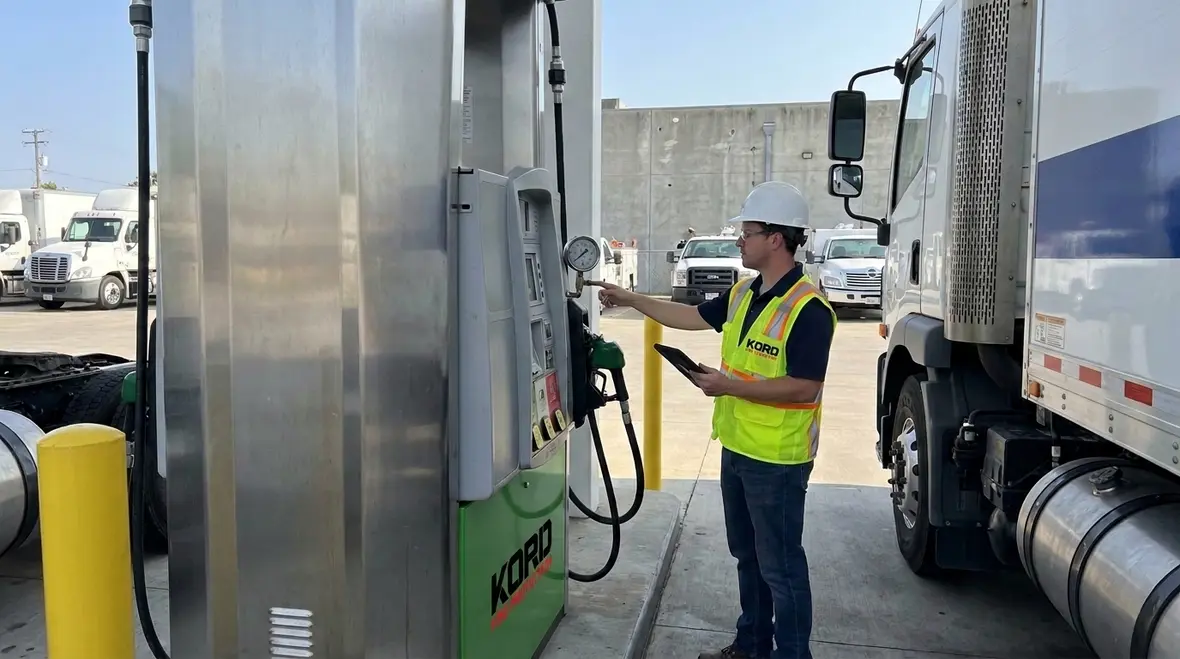
NFPA 52 Section 14.1 General: Nonresidential CNG Fueling Appliances Overview
Quick Answer: NFPA 52 Section 14.1 sets the baseline requirements for nonresidential CNG fueling appliances. It covers how commercial fueling systems must be designed, installed, protected, and maintained to reduce fire and explosion risks, and it establishes enforcement expectations for inspections and operating controls.
For facilities tightening up inspection readiness across multiple life safety systems, it helps to pair fueling compliance planning with broader fire protection services so documentation, maintenance, and corrective actions stay coordinated.
What does NFPA 52 Section 14.1 address for nonresidential CNG fueling?
NFPA 52 Section 14.1 provides the general framework for NFPA 52 nonresidential CNG fueling appliance general compliance. In practice, it sets the “rules of the road” that apply before you evaluate specific components such as dispensers, connectors, piping, pressure regulators, and protective devices. For commercial operators, this matters because failure modes typically originate in interface areas: appliance connections, isolation and venting strategies, electrical classifications, and maintenance practices that drift over time.
Commercial facilities often install CNG fueling appliances in or near truck bays, maintenance yards, parking structures, and industrial processing areas. Those environments intensify the consequences of poor detailing, deferred maintenance, and inadequate inspection documentation. Section 14.1 helps standardize the baseline expectations that fire safety professionals and code authorities use when assessing whether the appliance arrangement supports safe operation.
Core compliance themes in the NFPA 52 nonresidential CNG fueling appliance general scope
Although the details of NFPA 52 vary by appliance type and system layout, Section 14.1 generally drives four operational outcomes. Facilities and their contractors typically struggle most when these outcomes get treated as administrative rather than engineering and maintenance realities.
1) Design intent that limits ignition and escalation
Nonresidential fueling appliances operate under high pressure and include components that move, seal, vent, or control gas flow. NFPA 52 expectations are designed to reduce the chance that a leak becomes an ignitable event and to limit how quickly a fault can escalate. This includes proper selection and arrangement of materials, protective enclosures where required, and installation practices that prevent unintended exposure to damage, corrosion, impact, or vibration.
2) Appliance interfaces that do not create hidden leak paths
Where fueling appliances connect to hoses, dispensers, piping, fittings, and valves, small defects can become persistent leak sources. The compliance challenge typically shows up at gaskets, couplings, hose ends, and protective boot interfaces. Section 14.1 expectations support the idea that interfaces must be installed and maintained so they remain within acceptable performance tolerances across normal operating cycles.
3) Controlled venting and safe discharge behavior
CNG systems can release gas during normal and abnormal operation, including pressure relief events or specific controller actions. For commercial sites, the placement and behavior of vents must support safe dispersion and avoid creating ignition hazards near electrical equipment, vehicle traffic areas, or building openings. A common failure pattern involves vent terminations that become obstructed, corroded, or relocated during site modifications without updating safety documentation.
4) An enforceable inspection and maintenance posture
NFPA 52 relies on ongoing inspection and maintenance to keep appliances operating as installed and as designed. In day to day operations, this means written procedures, competent personnel, documented testing results, and fast correction of defects. If the facility treats inspection as a one time task, the system gradually drifts away from the safe condition assumed by the code.
How Section 14.1 impacts installation quality at commercial, industrial, and retail sites
Commercial fueling facilities rarely face “blank page” installations. They often retrofit CNG appliances into existing sites that already have traffic patterns, electrical service upgrades, and maintenance workflows. Section 14.1 effectively raises the bar for how those integration activities get managed.
Facility standards that drive inspection readiness
Fire safety teams frequently encounter the same operational gaps during pre inspection preparation:
- Incomplete as built documentation: Missing equipment identification, tag maps, and vent location records complicate authority review and follow up inspections.
- Uncontrolled change management: Construction activity can alter clearances, relocate bollards, damage protective barriers, or introduce ignition sources near fueling equipment.
- Inconsistent housekeeping: Oil residue, debris accumulation, and damaged floor finishes can mask leak indications or create ignition sources.
- Utility conflicts: Electrical conduit routing, lighting upgrades, and grounding changes can affect the safe operation posture expected for the appliance location.
Operational procedures that influence compliance outcomes
Fueling appliance compliance does not end at installation. Facility procedures must support safe operation and rapid defect response. This includes training for attendants and maintenance technicians on abnormal indications such as abnormal regulator behavior, unusual venting sounds, connector issues, or repeated controller faults. When procedures are unclear, defects persist longer and lead to higher risk conditions.
Common failure points within nonresidential CNG fueling appliances (and what inspections look for)
While Section 14.1 sets general expectations, inspection findings often cluster around recurring mechanical and operational failure points. Understanding these patterns helps facilities prioritize corrective actions and reduce downtime risk.
Gas tightness at connections and seals
Leak paths frequently originate at interfaces subject to flexing and wear. Inspectors commonly look for damaged couplings, degraded seals, improper torque, corrosion at fittings, and connector behavior that indicates seal loss. Facilities should verify that the appliance remains within the manufacturer’s acceptable performance and that replacement parts match specified requirements.
Regulator and valve performance drift
Regulators and control valves can degrade due to contamination, wear, or moisture exposure. Signs include repeated nuisance faults, unstable fueling pressure, or abnormal response to control commands. A maintenance program should include criteria for cleaning, replacement intervals, and performance testing, not just visual checks.
Venting systems that become compromised
Vent outlets can corrode, collect debris, or become obstructed by site changes. Inspections commonly include confirming that vent discharge remains unobstructed, correctly positioned, and free of damage. Facilities should also verify that vent piping is supported and protected against impact in vehicle traffic areas.
Electrical and detection interface considerations
Many sites rely on electrical classification controls, grounding, and alarm or shutdown logic. Even when the system “works,” a misalignment between equipment condition and safety logic can create unacceptable risk. Inspections typically include verification that devices remain functional and that control actions occur as required during simulated or actual fault conditions, consistent with the system design.
Testing, maintenance, and documentation: what keeps you inspection ready
For the NFPA 52 nonresidential CNG fueling appliance general scope, the strongest compliance signals come from documentation plus evidence of corrective action. Authorities expect the facility to demonstrate that the system remains in a safe condition over time.
Maintenance records that reduce enforcement friction
Facilities should maintain clear records that support the inspection narrative. Effective documentation typically includes:
- Component identification: Appliance serial numbers, model details, and locations tied to a site map.
- Maintenance actions: What was serviced, when it was serviced, and which parts were replaced.
- Testing evidence: Results of leak checks, functional checks, and any performance verification aligned with the appliance design.
- Defect closure: Timelines showing how issues were corrected and confirmed.
Operational checks that protect against repeat defects
Beyond compliance sampling, facilities benefit from routine operational checks tied to the appliance failure points described above. For example, tracking recurring regulator faults can reveal contamination or maintenance gaps before a full component failure occurs.
To support ongoing compliance management and field readiness, Kord Fire Protection assists commercial operators with inspection support, maintenance coordination, and documentation workflows tailored to fueling system risk. For additional background on inspection planning and coordinated system support, see NFPA 52 Section 9.3: CNG Fueling Systems Requirements and Proactive Maintenance for Fire Pump System Reliability.
FAQs about NFPA 52 Section 14.1 general requirements
Conclusion: schedule compliance support before your next inspection
NFPA 52 Section 14.1 provides the baseline safety and operational expectations for nonresidential CNG fueling appliances. Facilities that invest early in installation verification, maintenance execution, and inspection ready documentation reduce risk, downtime, and enforcement friction. Kord Fire Protection helps commercial operators keep fueling appliances aligned with code intent through practical field support and compliance planning. Contact Kord Fire Protection to assess your current program and strengthen ongoing readiness.

Join Our Newsletter!
Get the latest fire safety tips delivered straight to your inbox From our Newsletter.


