NFPA 52 Section 14.4: Maintenance and Inspection of Nonresidential CNG Appliances
Quick Answer
NFPA 52 Section 14.4 sets clear maintenance and inspection expectations for nonresidential CNG appliances, focusing on safe operating condition, verified components, and documentation. Facilities must follow scheduled inspections, address deterioration promptly, and use qualified procedures to reduce leakage, ignition, and operational hazards.
For a broader look at ongoing compliance support and maintenance documentation strategy, see Kord Fire Protection services. If your facility is also tightening supporting infrastructure around commercial systems, industrial electrical safety audit services can fit naturally into a wider inspection readiness program.
What Section 14.4 Requires for Nonresidential CNG Appliance Safety
NFPA 52 nonresidential CNG maintenance inspection requirements drive a practical goal: keep appliances and connected components in safe, reliable condition throughout their service life. For commercial, industrial, and retail occupancies, this means moving beyond a one time verification and instead implementing a controlled maintenance program with periodic inspection, functional checks, and defect correction.
Because appliance performance depends on regulators, shutoff valves, fittings, control components, and venting pathways, Section 14.4 expectations typically translate into routine verification of key safety functions and leak integrity. When documentation is incomplete or inspections become informal, the risk profile increases and facilities often discover issues during audits, planned downtime, or incident investigations.
Who Must Comply and Where These Appliances Commonly Exist
Section 14.4 applies to nonresidential installations and their CNG appliances, which commonly appear in environments such as:
- Commercial vehicle fueling sites with CNG vapor recovery or ancillary appliance systems
- Industrial process installations that use CNG as a fuel source
- Retail or fleet maintenance facilities with on site compression, distribution, or appliance assemblies
- Multi bay service centers where appliances support controlled release and safe operation of CNG systems
Facilities in these settings often face compliance pressure from multiple stakeholders, including AHJs, insurance carriers, and corporate safety standards. A defensible approach requires aligning maintenance and inspection tasks with site operating realities, appliance manufacturer guidance, and NFPA 52 requirements.
How Inspection Typically Works Under NFPA 52: Mechanisms and Failure Points
Nonresidential CNG appliances rely on components that degrade through vibration, thermal cycling, contamination, and repeated actuation. Effective NFPA 52 nonresidential CNG maintenance inspection requirements focus on detecting changes early, before they become operational failures or leak events.
1) Leak integrity and the ignition risk chain
Even small leaks can create hazardous mixtures when combined with ignition sources. Inspections generally prioritize:
- Fittings and threaded connections that can loosen under vibration
- Seals and O rings exposed to aging, swelling, or improper lubrication
- Hoses and flexible connectors that can develop abrasion or cracking
- Pressure boundary interfaces at regulators and shutoff assemblies
Operational checkouts then verify that appliance behavior matches design intent, including safe shutdown and proper response to normal operating transitions.
2) Regulating and control components
Appliances depend on regulators and controls to maintain stable pressure and safe flow characteristics. Common failure patterns include:
- Sticking or inconsistent regulator performance from contamination
- Worn diaphragms or damaged seats leading to unstable delivery pressure
- Control faults that do not fully isolate the fuel path when commanded
Inspections should evaluate whether the regulator and controls maintain expected operating characteristics and whether adjustments remain within permitted limits.
3) Valves, venting, and protective features
For many CNG appliance setups, valves and protective or venting arrangements manage flow direction and limit hazardous conditions. Failure points include:
- Valve actuation issues caused by binding, corrosion, or packing deterioration
- Improper vent discharge routing, blockage, or damage that changes safety performance
- Protective relief paths that require verification for freedom of movement and unobstructed conditions
Inspection and maintenance should confirm that safety devices work as intended and remain accessible for future checks.
4) External condition, labeling, and serviceability
Nonfunctional labeling, missing guards, or blocked access can defeat safety controls. Inspections should confirm that:
- Identification labels remain legible and match the installed configuration
- Appliance areas are kept clear for safe operation and leak response
- Protection systems, where present, remain intact
What a Compliant Maintenance Program Looks Like (Beyond the Checklist)
To meet NFPA 52 Section 14.4 intent, facilities should treat maintenance as a managed lifecycle, not a periodic task. A defensible program typically includes the elements below.
Written procedures tied to appliance configuration
Maintenance personnel need procedures that describe how each appliance is inspected and repaired, including acceptance criteria for defects. A strong program maps tasks to the appliance’s specific components instead of using generic language.
Scheduled inspection intervals and documented evidence
Section 14.4 expectations generally require routine inspection and timely corrective action. Facilities should ensure inspection records include:
- Appliance identification, location, and service conditions
- Date and method of inspection
- Defects found, disposition, and repairs completed
- Verification results after corrective action
During compliance review, documentation quality matters as much as field work. Incomplete records, missing dates, or unverifiable repairs can result in failed inspections even when the system is operating.
Corrective action and return to service verification
When inspection reveals deterioration, the facility must correct issues before placing the appliance back into service. Return to service should verify that:
- Leak integrity is restored to acceptable conditions
- Functional safety controls operate as designed
- Any replaced components match the correct specification
Qualified technicians and safe work practices
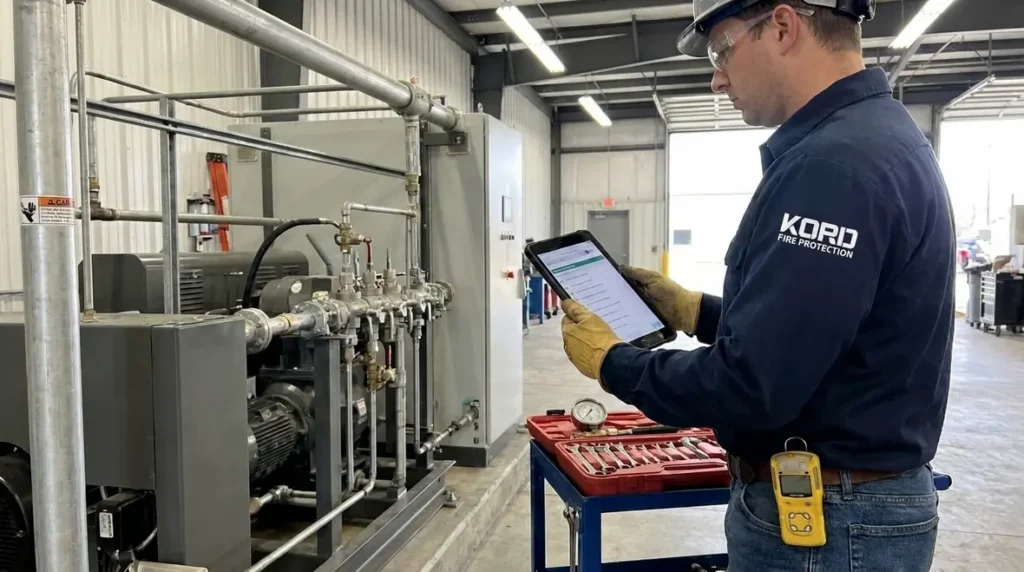
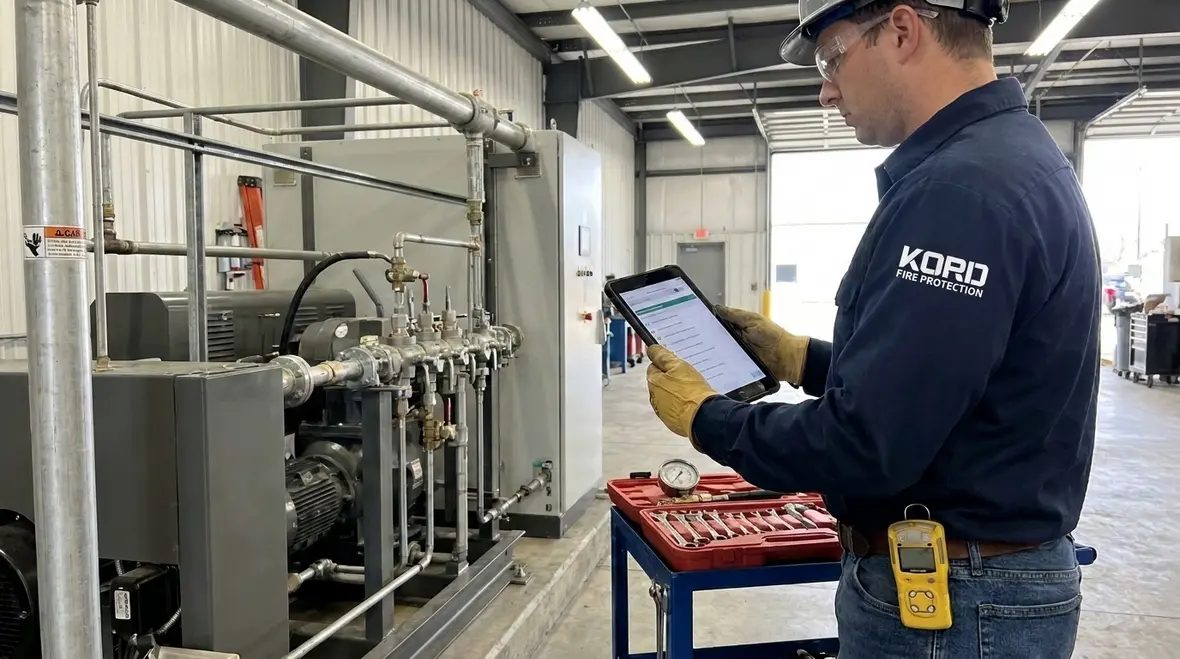
In practice, compliance depends on the competence of the personnel and the safety of the work process. Facilities should ensure that technicians follow CNG safe work controls, including hazard assessment, lockout and isolation methods where applicable, and proper test equipment usage.
Common Compliance Challenges at Commercial Sites
Commercial facilities often experience recurring barriers to meeting NFPA 52 nonresidential CNG maintenance inspection requirements. Addressing these early reduces repeat findings.
- Unclear appliance boundaries: Many sites treat connected piping, regulators, valves, and appliance assemblies as one system. Compliance becomes harder when responsibilities and inspection scope remain undefined.
- Mixing manufacturer guidance with NFPA requirements inconsistently: Manufacturer procedures support safe operation, but facilities should still align maintenance intervals and acceptance criteria with NFPA 52 expectations.
- Inspection tooling and calibration gaps: Leak detection and verification tools must remain reliable and correctly used. Calibration lapses can invalidate results.
- Deferred repairs due to downtime constraints: A weak return to service standard allows small defects to persist, increasing risk of escalation.
- Recordkeeping that does not support audits: If the facility cannot show what was inspected, how it was verified, and what was corrected, compliance becomes vulnerable.
Kord Fire Protection helps commercial facilities manage these challenges through structured inspection planning, documented maintenance workflows, and practical field support that aligns operational needs with code expectations. For organizations needing ongoing assistance, Kord Fire Protection can support repeatable compliance outcomes rather than reactive troubleshooting.
If you want additional context on inspection based compliance practices, review Kord Fire Protection services for commercial fire protection support and maintenance documentation strategies.
Frequently Asked Questions
Next Steps to Stay Audit Ready
Schedule an NFPA 52 aligned inspection review for every nonresidential CNG appliance on site, then tighten your maintenance program to ensure scope clarity, documented evidence, and timely corrective action. If you need a reliable partner for ongoing compliance support, contact Kord Fire Protection to help plan inspections, manage records, and keep your systems operating safely.

Join Our Newsletter!
Get the latest fire safety tips delivered straight to your inbox From our Newsletter.