
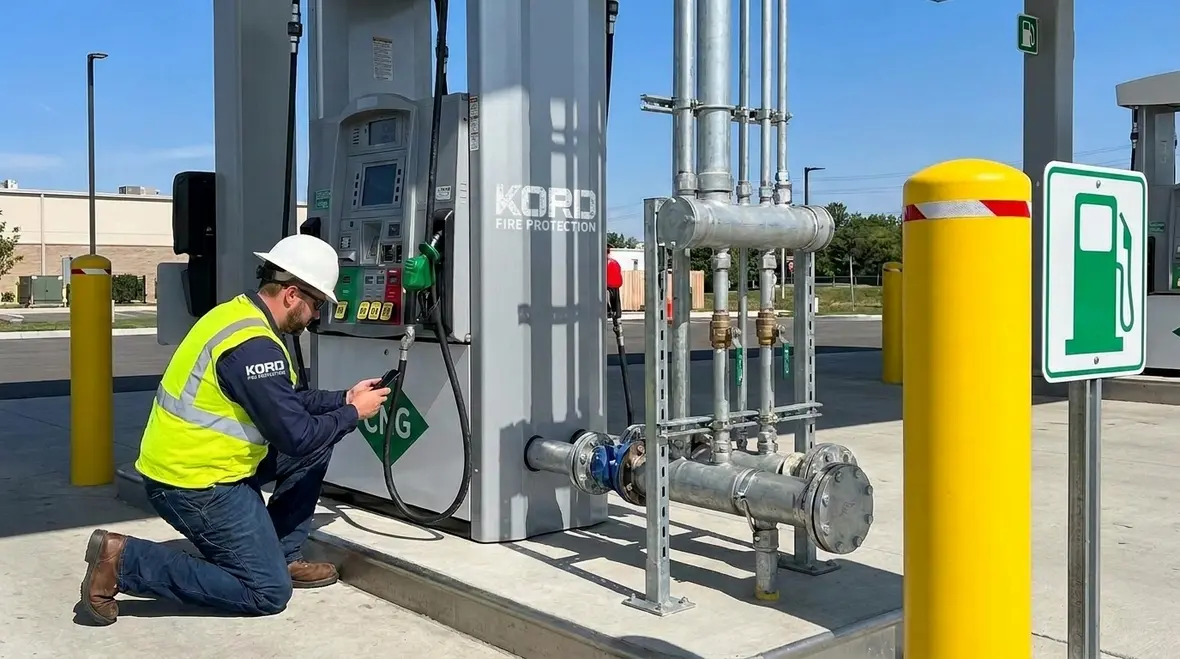
NFPA 52 Section 9.3: CNG Fueling Systems Requirements
Quick Answer
NFPA 52 Section 9.3 sets design, installation, protection, inspection, and operational requirements for CNG fueling systems. It focuses on safe gas containment, pressure regulation, leak control, ignition hazard management, and ongoing maintenance. Facilities must align equipment, signage, testing, and documentation with code intent.
If your team is building a broader compliance framework around gas hazards and fueling operations, Kord Fire Protection also covers special hazard requirements for CNG facilities, which pairs naturally with Section 9.3 by reinforcing ignition control, ventilation awareness, and corrective action discipline.
What NFPA 52 Section 9.3 is trying to prevent
NFPA 52 CNG fueling systems requirements under Section 9.3 concentrate on reducing the most common real world failure pathways in natural gas fueling operations. Commercial fueling sites typically experience risk during high pressure transfer, component replacement, pressure regulator performance shifts, and maintenance related disturbance. Section 9.3 addresses these conditions by requiring systems to operate within defined safety parameters, maintain positive control of pressure and flow, and ensure that credible leak and ignition scenarios do not escalate.
From a compliance standpoint, the practical challenge is that many issues are not dramatic at first. Minor regulator drift, worn seals, or a partially obstructed vent can create hazardous release conditions over time. A code compliant program treats inspection and maintenance as safety critical, not routine paperwork.
Systems coverage: where Section 9.3 requirements apply
Section 9.3 applies to the fueling system components that manage CNG from storage through dispensing. For commercial and retail facilities, this usually includes, but is not limited to:
- High pressure piping and fittings used for transfer and distribution
- Pressure regulation and control components that maintain safe operating pressures
- Isolation valves and emergency shutoff arrangements where required
- Dispenser interfaces and associated metering or control hardware
- Vent and relief pathways designed to prevent hazardous accumulation
- Monitoring and shutdown logic tied to safe operating limits
Facilities should map each physical component to the applicable documentation and inspection checkpoints. During audits, inspectors frequently verify that the installed configuration matches the design basis and that inspection records reference the correct components, not just the fueling equipment as a whole.
Safety design essentials: containment, pressure control, and ignition risk
1) Gas containment and leak management
CNG systems rely on tight mechanical integrity because gas under pressure can escape through small defects. Under NFPA 52 CNG fueling systems requirements, the system design must support reliable containment. In practical terms, this means ensuring connections, seals, and couplings remain compatible with CNG service conditions and are installed per design specifications.
Common compliance pain points include incorrect seal selection after maintenance, torque not matched to manufacturer guidance, and reuse of components where replacement is required. Facilities that standardize procedures and maintain a controlled parts inventory reduce the risk of “as found” conditions drifting away from design intent.
2) Pressure regulation and control integrity
Pressure regulation is often the operational backbone of CNG fueling. When regulators drift, sticking occurs, or control valves wear, the station can operate outside safe limits. Section 9.3 expectations center on maintaining pressure control mechanisms that prevent unsafe states during typical fueling cycles and abnormal conditions.
Operationally, pressure related failures show up as inconsistent fill behavior, abnormal discharge conditions, or repeated shutdowns. Maintenance teams should treat regulator and control component inspection as high priority, with calibrated verification aligned to the facility’s commissioning baseline.
3) Venting and relief pathways
Vent and relief systems manage gas that must be directed away from ignition sources and away from occupied or hazardous areas. NFPA 52 CNG fueling systems requirements require that discharge pathways support safe dispersion and do not create new ignition hazards. A frequently missed issue is that modifications, landscaping changes, or temporary construction can inadvertently obstruct vent discharge locations.
Commercial sites should incorporate vent pathway checks into site management routines, especially during civil work, fencing changes, and building modifications.
Inspection, testing, and maintenance: the compliance lifecycle
One of the biggest misconceptions in commercial operations is that NFPA 52 CNG fueling systems requirements are satisfied at installation. In practice, Section 9.3 compliance depends on continued verification that the system maintains safe operating characteristics. Kord Fire Protection supports commercial, industrial, and retail facilities by implementing repeatable compliance programs tied to inspection frequency, documentation control, and corrective action tracking.
What inspections typically focus on
Effective inspection programs verify both the physical state of equipment and the performance indicators that show whether safety functions remain functional. For fueling systems, that often includes checks for:
- Physical condition of piping, supports, and protective enclosures
- Integrity of valves, regulators, and emergency shutdown related components
- Condition of couplings, seals, and any flexible connectors where applicable
- Proper labeling and signage at fueling areas and system components
- Accessibility of manual shutoff devices and clear identification of controls
- Verification that vent and relief discharge routes remain unobstructed
Common failure points that trigger recurring nonconformities
Across commercial fueling sites, recurring problems usually stem from maintenance changes, equipment aging, or inconsistent verification. Common failure points include:
- Seal degradation or incorrect replacement after maintenance
- Loose or improperly torqued fittings leading to slow leaks
- Regulator performance drift from contamination or wear
- Vent obstructions caused by site changes or accumulated debris
- Documentation gaps where inspection results do not clearly identify components
Documentation and corrective action that hold up under audit
Inspections matter less than what facilities do with the findings. A strong compliance program includes documented acceptance criteria, timely repair, and evidence that repaired components return to safe operating limits. Kord Fire Protection helps facilities organize compliance records so they are audit ready and aligned to the actual installed system configuration.
If your organization also manages broader fire and life safety duties, pair CNG fueling compliance with a coordinated safety strategy. For example, Kord Fire Protection’s guidance on fire protection services supports facilities that need consistent documentation, testing support, and field implementation across systems.
Operational procedures: training and safe fueling practices
Engineering controls and tested equipment reduce risk, but operational procedures prevent incorrect use and slow responses to abnormal conditions. Facilities should ensure fueling staff understand the system’s normal operating behavior, the location and function of shutoff controls, and the correct response to suspected leaks or abnormal fueling indications.
Practical training elements that strengthen real world compliance include:
- Fueling station walkthroughs that confirm recognition of normal versus abnormal indications
- Hands on familiarity with isolation valves and emergency actions
- Clear step sequences for planned maintenance and verification of restored service readiness
- Requirements for incident reporting and segregation of equipment following shutdown events
Facilities that document training and periodically refresh staff knowledge reduce variability. This is especially important where multiple vendors or contractors service components across the year.
Building a compliant program: how to meet NFPA 52 CNG fueling systems requirements
To meet NFPA 52 CNG fueling systems requirements for Section 9.3 in a sustainable way, facilities should combine three layers: correct installation, verified performance, and disciplined maintenance. The most effective approach includes:
- Component mapping: maintain an as built inventory linking each fueling system component to inspection and test references.
- Inspection cadence: align field checks to the station’s risk profile, manufacturer guidance, and regulatory expectations.
- Test and verification discipline: calibrate measurement devices used for verification and document results clearly.
- Corrective action workflow: route findings to accountable owners with documented closure and return to service criteria.
- Contractor control: require that any third party maintenance follows the same parts, torque, and verification requirements.
Kord Fire Protection helps commercial owners and operators build this lifecycle into an operational rhythm. That support reduces downtime, lowers the chance of recurring findings, and ensures the fueling system continues to meet the intent of Section 9.3.
Frequently Asked Questions
Next step: make compliance measurable
If your facility needs to strengthen adherence to NFPA 52 Section 9.3, involve qualified fire protection and inspection support early. Kord Fire Protection can help you verify fueling system readiness, organize audit ready documentation, and implement maintenance and testing workflows that reduce recurring findings. Contact Kord Fire Protection today to schedule a compliance review and build a plan for sustained NFPA alignment.

Join Our Newsletter!
Get the latest fire safety tips delivered straight to your inbox From our Newsletter.


