
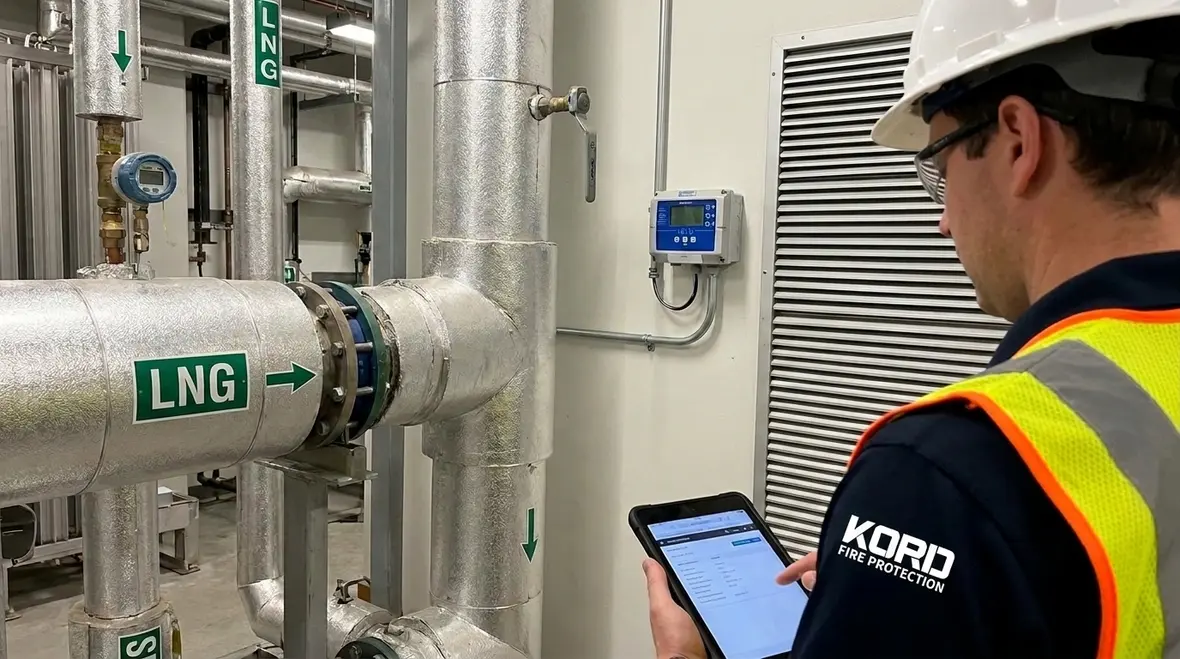
NFPA 52 Section 11.9: LNG Supplemental Requirements for Indoor Stations
Quick Answer: NFPA 52 Section 11.9 sets supplemental safety requirements for indoor LNG stations, tightening controls around vapor management, detection, ventilation, ignition control, emergency response, and maintenance. Facility owners must align station design and ongoing operating procedures to reduce leak and fire risk in enclosed spaces.
If your team is tightening inspection evidence and records around indoor station safety, it helps to review fire protection system documentation checklists early, before the next audit turns into a paperwork scavenger hunt.
What does NFPA 52 Section 11.9 require for indoor stations?
NFPA 52 indoor LNG supplemental requirements in Section 11.9 apply when an LNG station operates within an enclosed indoor setting. The intent centers on life safety and property protection where a leak can rapidly reach hazardous concentrations before it disperses outdoors. In commercial and industrial facilities, the indoor environment also creates coordination challenges with HVAC systems, building code constraints, and tenant operations.
In practice, compliance means the station must manage cryogenic hazards and flammable vapor risks through layered engineering and operational controls. These controls typically include vapor detection, properly designed ventilation, classified areas and electrical equipment, emergency shutdown strategies, and disciplined inspection and maintenance to prevent small failures from becoming catastrophic events.
Where indoor LNG stations create unique compliance risks
Indoor stations shift the risk profile. Outdoors, natural airflow can help dilute vapor. Indoors, dilution and removal depend on engineered ventilation and the performance of detection and controls.
1) Vapor accumulation and delayed dispersion
LNG boil off and leak vapor behave differently than many other fuels. If vapor migrates into enclosed volumes, detectors must be positioned and sized so alarms trigger before flammable limits occur. Common failure points include detector spacing that does not reflect actual airflow patterns, obstructions that alter stratification, and ventilation modes that change during normal building operation.
2) Operational cross interference in commercial buildings
Retail and light industrial facilities often share air handling equipment, building management systems, and maintenance schedules. Indoor LNG station controls must remain stable across fire door operations, roof exhaust schedules, seasonal HVAC changes, and tenant-driven housekeeping activities. Lack of interface discipline can undermine alarm thresholds, ventilation performance, and emergency recall procedures.
3) Electrical and ignition source management
Indoor spaces require strict separation of ignition sources and correct use of classified equipment. Even where design initially meets intent, later changes such as cable routing, panel modifications, temporary power use, or unapproved portable equipment can create ignition risks. These “small changes” frequently trigger nonconformities during inspections because they alter the hazardous location control strategy.
Core elements of NFPA 52 indoor LNG supplemental requirements
Section 11.9 focuses on supplemental indoor controls, which typically map to the following practical compliance categories. Facility teams should treat these as a compliance checklist tied to inspection evidence, not just design drawings.
Vapor detection and alarm management
Indoor detection must support rapid recognition of an abnormal condition. Detectors should align with expected vapor behavior, ventilation airflow direction, and potential leak locations around hoses, couplings, valves, and tank appurtenances. A frequent operational gap involves maintenance. When sensors are not calibrated on schedule, alarms can drift, nuisance alarms can lead to tampering, or fail safe behavior may be compromised.
Ventilation performance and control logic
Indoor stations rely on engineered ventilation to dilute and remove flammable vapor. Compliance depends on ventilation control sequences during normal operations and under emergency conditions. Consider how the system behaves during power interruptions, fire alarm activations, or building management overrides. A common failure point is an interlock that does not achieve the design intent because the building’s operating mode changes after commissioning.
Ignition control and electrical classification
Indoor installations must control ignition sources through classified area designation and proper equipment selection. Ongoing compliance depends on inspections of seals, conduit integrity, junction boxes, and any field modifications. Maintenance activities such as replacing lighting fixtures, adding sensors, or changing wiring routes must be managed through a formal change control process aligned with hazardous area requirements.
Emergency shutdown and emergency response enablement
Supplemental indoor requirements typically demand robust emergency shutdown strategies that limit hazard escalation. Operational procedures should include clear steps for safe evacuation, shutdown of valves and pumps, ventilation response, and notification pathways. For commercial and industrial sites, the emergency plan must also account for building-specific response actions, including coordination with facility security and fire department access constraints.
How to verify compliance: inspections, tests, and maintenance evidence
Compliance success depends on verification. Indoor conditions amplify the consequences of degraded systems, so evidence must demonstrate reliability over time. The following verification steps align with how inspectors and internal safety audits typically evaluate readiness.
1) Detector calibration and functional testing
Maintain a documented calibration program and ensure functional tests verify alarm and shutdown setpoints. Kord Fire Protection commonly supports commercial clients by building inspection routines that connect detector testing results to your station operational modes and interlock sequences.
2) Ventilation interlocks and airflow confirmation
Test ventilation control logic for both normal and emergency scenarios. Verify that interlocks drive the designed ventilation mode, and confirm the system achieves the expected performance, not just that commands were issued. Where airflow patterns change due to seasonal HVAC adjustments, revalidate the control strategy or update the operating parameters accordingly.
3) Pressure relief and cryogenic integrity checks
Indoor station design can include pressure management and relief strategies. Maintenance procedures must ensure that relief devices, discharge paths, and valves remain unobstructed and functional. Cryogenic insulation issues, moisture ingress, or gasket degradation can create leaks that are difficult to detect without rigorous inspection frequency.
4) Hot work and change control discipline
Indoor LNG environments require tight control over hot work, temporary equipment, and modifications. A written permit process should require review of ignition risk, hazardous area boundaries, and ventilation readiness. Evidence of training and audits helps show that change control is not optional.
For broader fire protection system planning and documentation strategies, facility teams can reference Kord Fire Protection’s resources here: industrial fire suppression system design.
Common failure points during indoor station audits
Most audit findings do not stem from a fundamental design flaw. They arise from drift between the installed system and how it gets operated and maintained.
Alarm nuisance versus missed alarm risk
Nuisance alarms can lead to alarm masking or temporary bypasses. The risk is that bypasses can remain longer than intended, or the bypass logic conflicts with shutdown sequences. Teams must document how alarms are handled, who can acknowledge them, and how resets occur.
Ventilation override by building management systems
Commercial facilities often operate building systems with schedules, occupancy logic, or energy optimization strategies. These routines can unintentionally override LNG station ventilation commands. Audits frequently uncover that station interlocks are present, but the building management layer defeats the intended response.
Detector placement mismatch to actual airflow
Detectors are typically installed based on design assumptions. After occupancy changes, ceiling configuration changes, or duct modifications, airflow can shift. This can delay detection relative to the real vapor plume. Revalidation becomes critical after renovations.
Insulation degradation and small leak accumulation
Small leaks can persist for extended periods and produce low grade exposure conditions that escalate during demand changes. Indoor accumulation makes that escalation faster. Preventive inspections of joints, couplings, and insulation should be treated as high priority items in the maintenance plan.
Because indoor environments demand disciplined verification, many commercial operators partner with Kord Fire Protection for ongoing testing, documentation support, and maintenance coordination that helps sustain compliance between formal inspections. Teams dealing with building controls and interface logic may also want to review fire protection system integration strategies with electrical controls.
Frequently Asked Questions
Conclusion: take action before the next audit
NFPA 52 Section 11.9 compliance for indoor LNG stations depends on verified performance, not just initial design. Facility teams should confirm detector calibration records, ventilation interlock logic, classified equipment integrity, and emergency procedures that match how the building actually operates. Build a maintenance and testing program that prevents drift and supports documentation during inspections. Contact Kord Fire Protection to assess your indoor station readiness and strengthen your ongoing compliance program.

Join Our Newsletter!
Get the latest fire safety tips delivered straight to your inbox From our Newsletter.


