NFPA 52 Section 11.5: Ventilation Requirements for Indoor Gas Fueling Stations
Quick Answer
NFPA 52 Section 11.5 sets ventilation expectations for indoor gas fueling stations to limit the accumulation of flammable vapors and control ignition hazards. Compliance requires engineered air change strategies, proper exhaust placement, continuous operating logic where required, and documented inspection and maintenance of ventilation equipment.
For a broader look at how inspection, testing, and documentation support code-ready facilities over time, see the full lifecycle of fire protection servicing.
What NFPA 52 indoor gas fueling station ventilation requirements mean in practice
NFPA 52 indoor gas fueling station ventilation requirements focus on how a facility keeps hazardous gas concentrations from building up in enclosed fueling areas. In the real world, compliance depends less on signage and more on verified airflow performance, functional controls, and reliable maintenance routines that stand up during audits and operational disruptions.
For commercial operators, the common challenge comes from balancing building HVAC behavior, door cycling, and thermal effects with the ventilation strategy intended for fueling zones. Facilities that do not regularly verify exhaust performance frequently discover that “installed” ventilation systems drift out of specification long before the next compliance window.
NFPA 52 Section 11.5 scope and ventilation intent
Section 11.5 addresses ventilation for indoor gas fueling stations, emphasizing the prevention of flammable vapor accumulation and the management of air movement in hazardous areas. The engineering intent typically involves providing adequate exhaust and controlling airflow paths so that any released gas is captured and removed instead of spreading into occupied spaces or ignition-prone locations.
Commercial sites often apply the ventilation design across multiple operational modes such as normal operation, scheduled fueling, emergency conditions, and abnormal events like equipment faults. The ventilation system must support each mode with clear control logic and measurable performance.
Core ventilation elements: exhaust capture, airflow pathways, and controls
1) Exhaust placement and capture effectiveness
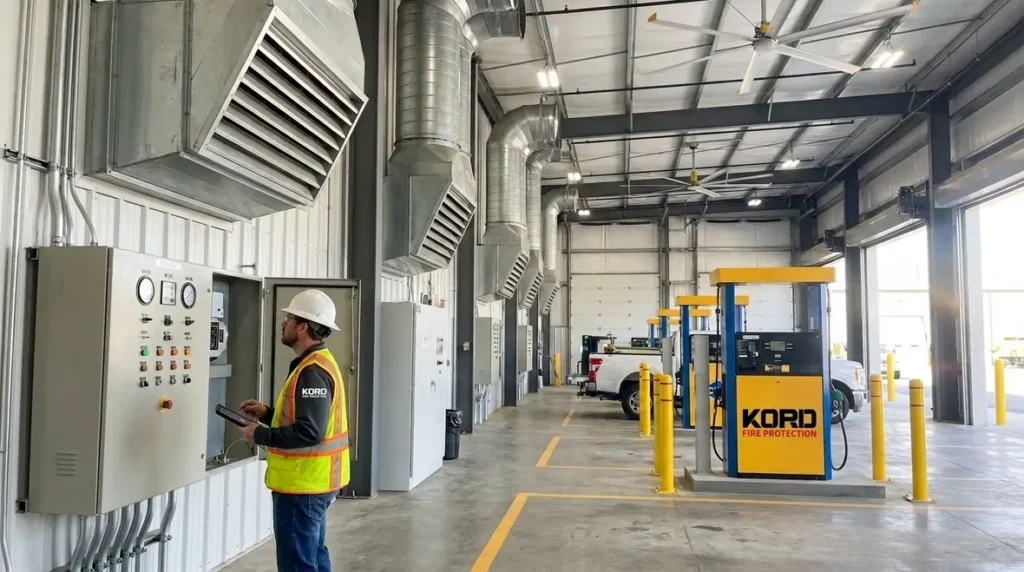
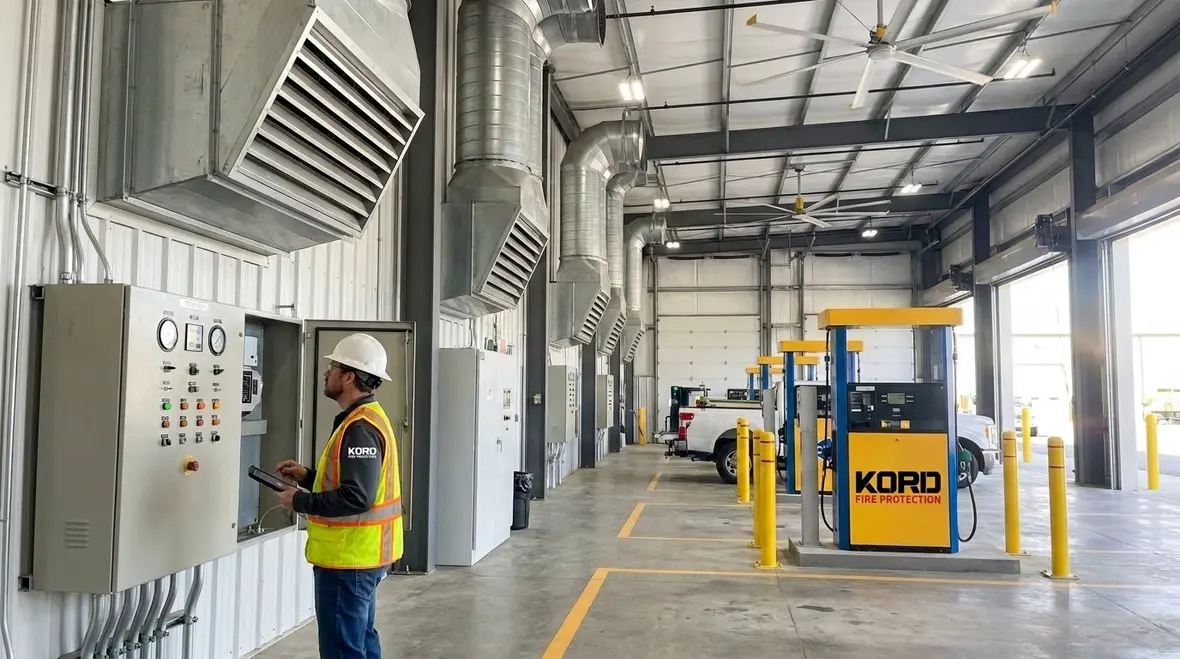
Exhaust systems must remove gas at the source and in the expected release zones. Placement decisions matter because gas does not behave like a uniformly mixed contaminant. Exhaust that sits too far from potential release points may fail to capture stratified vapor layers, especially in areas with airflow obstructions such as equipment housings, hoses, and cable trays.
Operational takeaway: A ventilation system can look “on” while still underperforming. Inspections should verify that exhaust is physically positioned for credible vapor capture and that louvers, duct dampers, and hood interfaces remain unobstructed.
2) Air movement strategy and preventing unwanted spread
Ventilation design needs a controlled pathway from supply air to exhaust so that air movement does not push gas toward ignition sources or occupied areas. Many facilities unintentionally create short circuit flow paths when building HVAC supply registers, ceiling fans, or make up air systems override the fueling station ventilation strategy.
Operational takeaway: Facilities should coordinate building HVAC operation with the fueling station ventilation sequence and confirm that door operations, traffic patterns, and fan cycling do not reverse airflow direction during fueling.
3) Fan operation logic and automatic control behavior
Section 11.5 expectations generally require that ventilation operate in a manner tied to fueling activity and hazard control logic, rather than relying on manual intervention. Control schemes should include fail-safe behavior and a practical method to demonstrate that ventilation continues to perform when fueling starts, during ongoing operation, and through relevant standby or emergency scenarios.
Common failure points include missing interlocks, incorrect wiring on ventilation starters, dampers that do not fully open, and control relays that drift out of calibration. These defects often remain hidden until a timed functional test reveals that the system does not reach the intended operating state.
Compliance verification: inspection, testing, and maintenance that hold up
NFPA 52 ventilation compliance depends on more than initial commissioning. Commercial facilities need an inspection and maintenance program that verifies actual ventilation performance and functional control behavior.
What to verify during routine inspections
- Ducting integrity: Confirm no loose joints, disconnected sections, damaged liners, or blocked duct segments that reduce flow.
- Dampers and louvers: Verify full travel, correct operation, and freedom from sticking due to corrosion, dust buildup, or mechanical wear.
- Fan condition: Check belts or couplings, motor temperature indicators, vibration concerns, and correct rotation direction where applicable.
- Control system status: Confirm that interlocks, ventilation start commands, and alarm logic behave as designed under real operating sequences.
- Exhaust capture confirmation: Ensure that obstructions such as signage, stored items, or hose placement do not block hood or inlet effectiveness.
Functional testing and performance measurement
Many facilities fail compliance because they test “component operation” rather than “ventilation performance.” A defensible program measures relevant performance parameters such as exhaust airflow rates, damper positions, and control response timing under fueling mode conditions.
When building systems change, the ventilation baseline often changes too. Renovations, replacement of HVAC components, duct cleaning, and changes to airflow setpoints can all affect ventilation outcomes. A robust test plan should trigger re verification after these events.
Where ventilation controls interact with other building safety systems, it also helps to review how Kord approaches HVAC shutdown sequences, relay logic, and coordinated testing in commercial environments.
Commercial compliance challenges for retail, industrial, and fleet facilities
Indoor gas fueling stations exist in a variety of operational environments, and each introduces unique ventilation risks.
Retail and convenience operations
Door cycling, customer traffic, and changes in the store’s HVAC operation can disrupt intended airflow patterns. If the station relies on building make up air during fueling, any retail HVAC schedule shift can create overpressure or undercapture conditions.
Industrial and fleet fueling bays
Forklifts, overhead doors, maintenance activities, and stored equipment can alter the airflow pathway. Ventilation intakes and exhaust outlets can become partially obstructed, and temporary work orders sometimes leave dampers in the wrong position.
Common root causes seen during field evaluations
- Unauthorized adjustments: Facilities sometimes tune controls to reduce noise or energy use, inadvertently compromising vapor control strategy.
- Deferred maintenance: Corroded dampers, clogged filters, and aging fans reduce airflow without immediate operational symptoms.
- Control logic drift: Interlocks may fail during equipment upgrades, leaving ventilation dependent on manual actions.
- Building HVAC conflicts: Competing air handling units create unintended airflow reversals.
Why Kord Fire Protection supports ongoing ventilation compliance
Kord Fire Protection helps commercial operators maintain reliable compliance programs for indoor gas fueling ventilation. The practical goal is simple: keep the ventilation system performing as designed, with documentation and test results that withstand inspections.
For ongoing NFPA-aligned readiness, Kord Fire Protection typically supports performance focused verification, functional testing discipline, and maintenance planning that reduces “silent failure” risk in ventilation controls, fans, dampers, and duct systems.
To understand how ventilation and other life safety systems are managed throughout a facility lifecycle, explore additional Kord Fire Protection resources here: Kord Fire Protection.
Frequently Asked Questions
Conclusion and next step
Indoor gas fueling ventilation compliance under NFPA 52 Section 11.5 depends on verified performance, not assumptions. Facilities should review airflow strategy, confirm control sequences, and implement maintenance and testing that detects airflow loss, damper problems, and HVAC conflicts. Contact Kord Fire Protection to schedule a compliance focused ventilation assessment, functional testing, and an ongoing maintenance plan designed for commercial fueling environments.

Join Our Newsletter!
Get the latest fire safety tips delivered straight to your inbox From our Newsletter.