
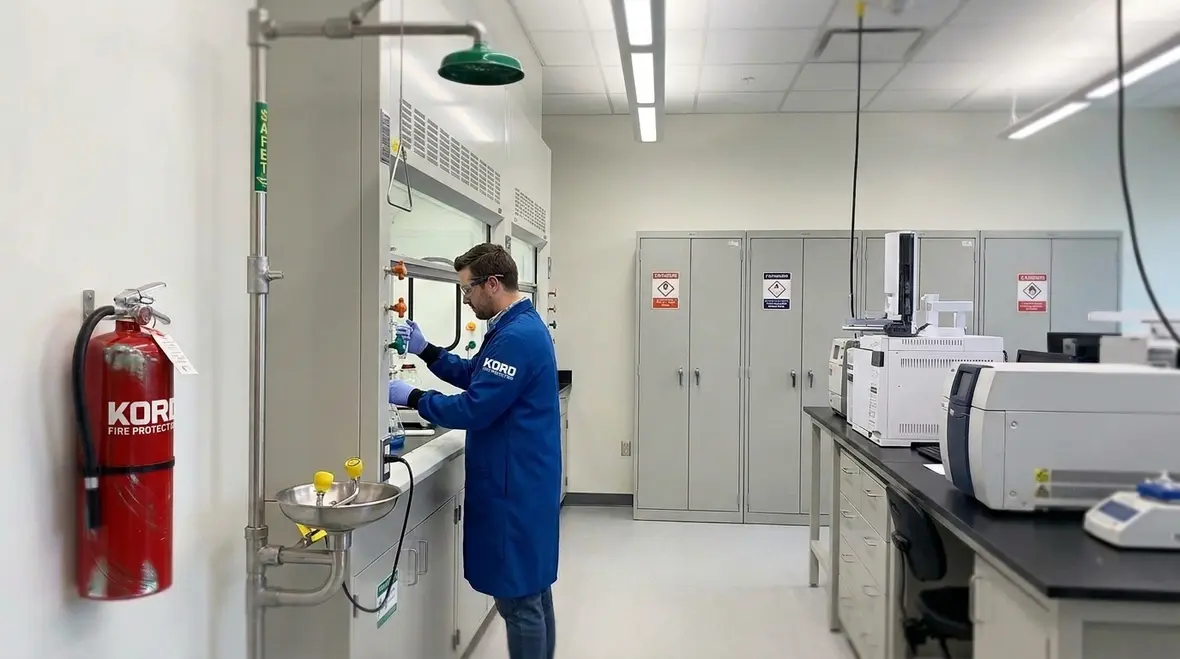
NFPA 45 Section 1.2 Purpose: Fire Safety Goals for Chemical Labs
Quick Answer
NFPA 45 Section 1.2 defines the fire safety goals for facilities that use hazardous chemical processes. It frames how laboratories and chemical storage areas should manage ignition sources, combustible loading, suppression readiness, and life safety. This enables consistent NFPA 45 purpose laboratory fire protection decisions across the facility.
Facilities managing chemical hazards often benefit from a broader fire suppression system service program that keeps testing, maintenance, and repair aligned with compliance readiness.
What does NFPA 45 Section 1.2 actually require?
NFPA 45 Section 1.2 establishes the intent and overarching fire safety goals for laboratory and chemical process environments. In commercial terms, it sets the performance direction behind the standard, so facility owners, engineers, and fire protection professionals design and maintain systems that reduce risk to people, property, and operations.
Rather than functioning as a checklist of every inspection item, Section 1.2 provides the “why” that governs many “how” decisions throughout NFPA 45. That matters for chemical labs because hazard severity changes with experiment type, chemical quantities, ventilation modes, and operating schedules.
The NFPA 45 purpose laboratory fire protection approach aligns fire protection with real lab workflows, including everyday operating conditions and upset or abnormal conditions where ignition, release, and rapid fire growth can occur.
Fire safety goals: how Section 1.2 drives lab risk reduction
Section 1.2 emphasizes goals that support effective prevention and protection in chemical laboratory settings. Commercial facility teams typically translate those goals into practical controls across three layers:
- Prevention of ignition and fire initiation through equipment selection, electrical safety, hot work controls, and disciplined housekeeping.
- Limiting fire development and spread through management of combustible loading, chemical storage practices, and compartmentation where applicable.
- Ensuring life safety and response effectiveness by maintaining alarm, detection, suppression, and emergency preparedness at a state that supports safe evacuation and fire control.
For chemical labs, these layers must remain reliable as experiments change. The same room can contain different hazard classes across a week, and those changes can outpace static documentation if maintenance and inspection programs do not address workflow variability.
Where chemical labs commonly fail compliance in practice
NFPA 45 Section 1.2 is often well understood at a design level. The compliance challenge emerges during operations because fire protection performance depends on ongoing operational discipline.
1) Control of ignition sources during lab work
Common gaps include unmanaged hot surfaces, improvised power connections, and failure to verify that equipment is appropriate for the chemical environment. Even when engineering controls exist, ignition risk rises when teams change procedures without updating risk assessments or work permits.
2) Combustible loading and storage practices drift
Chemical labs can accumulate packaging, paper, solvent containers, absorbents, and lab bench clutter. Over time, that additional load increases fire growth potential and undermines the assumptions used in the fire safety strategy tied to the NFPA 45 purpose laboratory fire protection philosophy.
3) Detection and suppression readiness degrades
Fire protection systems can lose effectiveness through obstructed detectors, improper pre action or detection thresholds, inactive maintenance due to scheduling pressure, and delayed restoration after routine service. If the facility cannot quickly return systems to a tested and monitored state, it fails the underlying purpose of the fire safety goals.
Inspection, testing, and maintenance activities that support Section 1.2 goals
Commercial facilities should treat NFPA 45 fire safety goals as operational outcomes that must remain true year round. That means inspection and maintenance must be built around how the lab actually runs.
Detectors and alarm systems
Routine inspection should confirm that devices are accessible, unobstructed, and free from contamination that can alter sensitivity. Functional testing should verify that signal processing and annunciation work as intended, including any linkage to control systems used in lab operations.
Suppression systems and quick restoration
Maintenance programs should focus on response confidence. That includes validating pressures, unobstructed discharge paths, correct supervisory status, and the ability to restore readiness quickly after system shutdowns or component replacement.
Teams handling restoration workflows may also want to review restoring fire protection systems to service for related readiness and documentation considerations.
Housekeeping and storage verification
Operational inspections should check for the presence of ignition capable conditions and excess combustibles. The objective is not only visual compliance but confirmation that storage and waste practices remain consistent with the underlying fire safety goals for chemical labs.
Documentation tied to actual operations
Maintaining compliance requires records that match equipment status and lab configurations. If the room layout, chemical inventory practices, or ventilation modes change, the facility should verify that fire protection assumptions remain valid.
For ongoing compliance support, Kord Fire Protection works with commercial and industrial organizations to structure maintenance and testing programs that preserve readiness and operational integrity, supporting the intent behind NFPA 45 purpose laboratory fire protection.
Labs using specialized suppression methods may also find useful context in Kord Fire Protection’s article on clean agent fire suppression for labs, especially where uptime and sensitive equipment are part of the equation.
Compliance takeaways for commercial, industrial, and retail stakeholders
Chemical labs exist within broader commercial operations, including shared utilities, common corridors, and sometimes retail-adjacent office or service areas. Section 1.2 goals should therefore influence not just the lab room but the full response ecosystem.
- Coordination with building operations: Facilities management should coordinate alarm access, shutdown procedures, and restoration timelines with fire protection requirements.
- Contractor control: Work performed by outside contractors can introduce ignition hazards or storage changes that alter fire risk. Permit and control processes should remain active even during off hours.
- Training and drill readiness: Fire safety goals depend on people performing correct actions under stress. Training should align with detection and suppression behaviors tied to the lab hazards.
Where these elements are managed as a cohesive system, the facility can maintain confidence that the fire safety goals described in NFPA 45 Section 1.2 remain met.
To support a broader life safety and protection strategy, facilities often benefit from guidance on integrated building fire safety practices. For complementary information, refer to Kord Fire Protection for commercial fire protection services that support testing, maintenance, and compliance readiness.
Frequently Asked Questions
Conclusion: take action to protect chemical lab fire safety goals
NFPA 45 Section 1.2 establishes fire safety goals that must remain true through everyday lab changes, not just through initial design. Facilities should audit ignition controls, combustible loading practices, and the operational readiness of detection and suppression systems. Then they should schedule disciplined inspections, functional testing, and restoration workflows so systems stay reliable. Contact Kord Fire Protection to validate your program, close common failure points, and support ongoing NFPA 45 purpose laboratory fire protection readiness.

Join Our Newsletter!
Get the latest fire safety tips delivered straight to your inbox From our Newsletter.



